
Beauty Unlocked
Illustrator Turns People And Their Pets Into Cartoon Characters
Jun
Some people hang family portraits in the living room. Others commission oil paintings of ancestors with serious expressions and suspiciously dramatic lighting. And then there are the truly enlightened among us: the people who look at their dog, their cat, their parrot, or their suspiciously judgmental rabbit and think, “Yes, this household deserves its own cartoon universe.”
The idea behind “Illustrator Turns People And Their Pets Into Cartoon Characters” is simple, charming, and wildly shareable: take real photos of people with their beloved pets, then reimagine them as animated characters full of personality. The result is not just a cute drawing. It is a small visual story. A sleepy bulldog becomes a heroic sidekick. A cat with one eyebrow’s worth of attitude becomes the villain, the queen, and the entire legal department. A smiling owner and an anxious Chihuahua suddenly look like they belong in a weekend anime episode about friendship, snacks, and one very dramatic walk around the block.
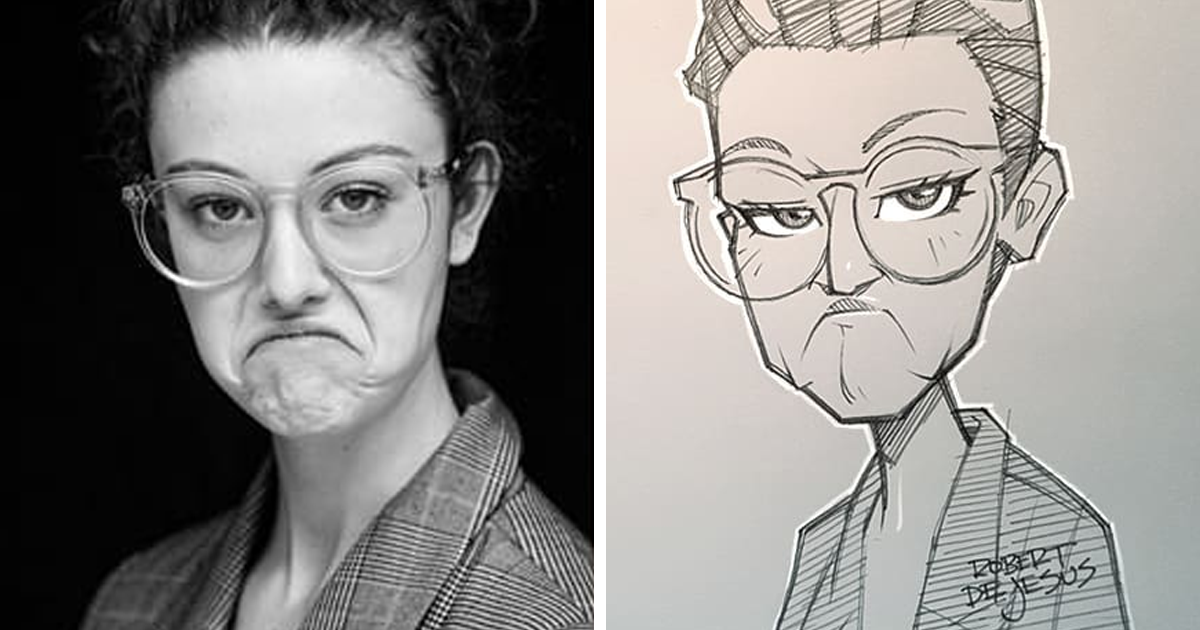
One of the best-known artists connected with this kind of work is American illustrator Robert DeJesus, whose anime-inspired portraits have circulated widely online. His style blends caricature, manga influence, and warm humor, turning ordinary reference photos into expressive character designs. What makes these illustrations especially delightful is the way they preserve the emotional bond between humans and animals. The drawings are funny, but never mean. Cute, but not empty. Stylized, but still recognizable. In short, they do what great cartoon art does best: they make reality feel more real by exaggerating it.
Why Cartoon Pet Portraits Are So Irresistible
Pet portraits are not new. People have painted dogs, horses, cats, birds, and other animal companions for centuries. What has changed is the style, speed, and cultural meaning. Today’s pet owners do not only want a realistic painting of their golden retriever looking noble beside a fireplace. They may want that same retriever drawn as a cheerful animated prince, a space explorer, a comic-book detective, or a fluffy sidekick who clearly knows where the treats are hidden.
Cartoon pet portraits work because they meet three emotional needs at once. First, they celebrate the pet as an individual. Second, they capture the relationship between pet and owner. Third, they turn that relationship into something fun enough to share. In an online world overflowing with selfies, a custom illustration of a person and their pet has a special kind of charm. It says, “This is us,” but with better hair, bigger eyes, and fewer laundry piles in the background.
There is also a deeper reason these portraits connect with people. In the United States, pets are widely treated as family members, not just animals who happen to live indoors and occasionally destroy expensive furniture. Dogs and cats appear in holiday cards, birthday parties, Halloween costumes, wedding photos, memorial tattoos, and custom wall art. So when an illustrator turns a pet into a cartoon character, the artwork reflects something many owners already feel: this animal has a personality large enough for its own show.
The Art Behind Turning Real People Into Animated Characters
At first glance, a cartoon portrait may look simple. Big eyes, small nose, rounded cheeks, cute expressiondone, right? Not quite. A strong cartoon portrait requires careful observation. The artist has to decide which real features to keep, which to simplify, and which to exaggerate. That decision-making is where the magic happens.
Great cartoon portraits begin with shape
Character design often starts with basic shapes. Round forms tend to feel soft, friendly, and approachable. Squares can suggest strength or steadiness. Triangles can add energy, sharpness, or mischief. When an illustrator looks at a person’s face, hairstyle, glasses, smile, posture, and clothing, they are not simply copying details. They are translating those details into a visual language.
The same is true for pets. A pug’s round head, giant eyes, and compact body almost beg to become a cartoon. A greyhound’s long nose and elegant legs suggest speed and grace. A fluffy cat may become a majestic cloud with whiskers. A parrot’s beak and posture can become instant comedy. The best artists do not force every animal into the same cute template. They let the animal’s natural design lead the drawing.
Expression is everything
Cartoons live and die by expression. A small change in eyebrow angle can turn a character from innocent to suspicious. A tilted head can add curiosity. A half-closed eye can suggest sarcasm, sleepiness, or the emotional state of a cat who has just been informed that dinner is three minutes late.
When drawing people with pets, expression becomes a conversation. The owner may be smiling proudly while the dog looks confused. The cat may look like it owns the home, the furniture, and probably the owner’s credit score. The human may lean toward the animal with affection, while the pet’s expression says, “I tolerate this because you have thumbs.” That contrast is comedy gold, and good illustrators know how to use it without losing tenderness.
Robert DeJesus and the Appeal of Anime-Inspired Portraits
Robert DeJesus became widely recognized online for turning photographs of real people into anime-like cartoon portraits. His approach has a playful, polished quality: faces become softer, eyes become more expressive, hairstyles gain bounce, and ordinary poses start to feel like character introductions. Instead of producing harsh caricatures, his portraits often flatter the subject while still exaggerating enough to make the transformation exciting.
His work with people and pets stands out because it captures relationships. The animals are not treated as accessories. They are co-stars. A dog is not just placed beside its owner; it becomes part of the visual rhythm. A cat is not simply copied from a photo; it is given attitude, presence, and a tiny animated soul. The owner and pet begin to look as if they belong to the same fictional world.
This is why the portraits are so shareable. Viewers can recognize the formula immediately: real photo on one side, cartoon version on the other. The transformation is quick to understand and satisfying to compare. People enjoy spotting what changedthe larger eyes, the cleaner lines, the simplified clothing, the expressive animal face. It is a before-and-after reveal, but instead of weight loss or a room makeover, the final result is “you, but ready for Saturday morning television.”
Why Pets Make the Perfect Cartoon Sidekicks
Every great animated character needs a memorable companion. Think of the loyal dog, the sarcastic cat, the brave horse, the talking fish, the chaotic bird, or the tiny creature that somehow causes 80 percent of the plot. Pets naturally fit this role because they already behave like cartoon characters in real life.
Dogs overreact to doorbells as if defending a medieval kingdom. Cats knock objects off counters with the emotional calm of trained assassins. Hamsters run on wheels at 2 a.m. like they are late for a meeting. Birds repeat phrases at exactly the wrong moment. Rabbits chew cables with the confidence of tiny electricians. No wonder illustrators love turning pets into animated characters. The material is already there.
What makes a pet sidekick work visually is contrast. A giant dog beside a tiny owner creates instant comedy. A small dog with a huge personality can be drawn with heroic posture. A lazy cat can be given royal proportions, lounging like a furry emperor. A nervous rescue pup might be drawn with oversized eyes and tucked paws, emphasizing vulnerability and sweetness. Each pet offers a different emotional hook.
From Photo to Cartoon: How the Transformation Usually Works
Most custom cartoon portraits begin with a reference photo. A strong reference photo gives the artist useful information: facial features, posture, hairstyle, clothing, pet markings, body shape, and the emotional mood between the subjects. The best photos are usually clear, well-lit, and full of personality. A technically perfect photo is helpful, but a funny or meaningful photo can be even better.
Step 1: Choosing the right photo
A good commission starts with choosing an image that tells a story. A person hugging their dog, a cat sitting like royalty beside its owner, or a child laughing with a puppy gives the artist something to build on. Blurry photos can still inspire a portrait, but clear photos help preserve recognizable details such as fur patterns, eye shape, glasses, freckles, and that one ear that refuses to behave.
Step 2: Simplifying the design
Cartooning is not about drawing less because it is easier. It is about drawing less because it is smarter. Too much detail can make a cartoon portrait feel stiff. The artist has to reduce the subject to the most important visual clues. For a person, that might be round glasses, curly hair, a bright smile, or a favorite jacket. For a pet, it might be floppy ears, a spotted nose, a curled tail, or a permanently offended expression.
Step 3: Exaggerating with kindness
Traditional caricature sometimes exaggerates features in ways that feel sharp or mocking. Modern cartoon pet portraits often take a gentler route. The goal is not to embarrass the subject. The goal is to amplify charm. Big hair becomes bigger. A goofy dog grin becomes goofier. A cat’s unimpressed stare becomes legendary. The exaggeration is affectionate, like a friend telling a joke everyone enjoys.
Step 4: Adding personality through pose and styling
Once the main shapes are set, pose and styling complete the character. A confident owner may stand with a heroic stance while their dachshund looks ready for battle. A shy person may be drawn sitting quietly with a cat curled beside them. Matching expressions can show closeness; opposite expressions can create humor. This is where the portrait becomes more than a drawing. It becomes a tiny scene.
The Rise of Custom Pet Art in the Digital Age
Custom pet portraits have become a major part of online gift culture. Marketplaces, independent artist shops, social media pages, and commission platforms are full of personalized pet drawings in countless styles: watercolor, digital painting, comic book, chibi, Disney-inspired, anime-inspired, minimalist line art, royal portrait parody, Renaissance pet portrait, and more. There is truly a style for every type of pet parent, from “my dog is my child” to “my cat is my landlord.”
Digital tools have made the process easier for both artists and customers. An owner can send photos from a phone, discuss preferences through messages, approve a sketch, and receive a printable file. Artists can work with clients across the country or around the world. Social media then turns each finished portrait into a mini advertisement. When someone posts a cartoon version of themselves and their corgi, friends immediately ask, “Where did you get that?” That question keeps the commission economy wagging its tail.
These portraits also make popular gifts. They are personal without being overly formal, sentimental without being boring, and funny without requiring the recipient to pretend they needed another candle. A custom cartoon portrait can work for birthdays, anniversaries, holidays, adoption days, memorials, moving gifts, wedding presents, or simply as a tribute to a pet who has mastered the art of looking adorable while doing absolutely nothing.
What Makes a Pet Cartoon Portrait Feel “Alive”?
The secret is not realism. In fact, too much realism can work against a cartoon. What makes a pet portrait feel alive is selective truth. The artist chooses the details that matter most and gives them energy.
For example, a dog’s exact number of whiskers may not matter. But the tilt of its head absolutely matters. A cat’s precise fur texture may be simplified, but the pattern around its eyes may be essential. A person’s shirt buttons can disappear, but their smile must stay. Cartooning is a constant negotiation between accuracy and appeal.
Strong pet cartoons also understand body language. A happy dog does not just smile; its whole body leans forward. A nervous dog may shrink slightly, with ears back and eyes wide. A confident cat may sit upright with a lifted chin. A sleepy cat may melt into a puddle with paws. These gestures help viewers recognize not just what the pet looks like, but who the pet is.
Why People Love Seeing Themselves as Cartoon Characters
There is something joyful about being turned into a cartoon. It removes the pressure of looking perfect. A cartoon version of you does not need flawless skin, professional lighting, or the ability to pose naturally without wondering what to do with your hands. It only needs personality.
For many people, a cartoon portrait feels more flattering than a photograph because it captures spirit rather than every tiny detail. It can make a person look brighter, softer, sillier, braver, or more magical. Add a pet to the scene, and the portrait becomes even more meaningful. It shows not just how someone looks, but what they love.
This is especially powerful for pet owners because animals often represent comfort, routine, loyalty, and emotional support. A cartoon portrait can preserve a happy chapter of life: the dog who joined every road trip, the cat who supervised every work-from-home meeting, the rescue pup who slowly learned to trust, or the old pet who still deserves to be remembered with color and joy.
Tips for Commissioning a Cartoon Portrait of You and Your Pet
If you are thinking about ordering a custom cartoon portrait, start by reviewing the artist’s portfolio. Style matters. Some artists create soft and sweet portraits; others lean into comedy, anime, comic-book drama, or bold graphic design. Choose someone whose existing work already feels close to what you want.
Next, gather several reference photos. Include clear images of your face, your pet’s face, full-body shots if needed, and any special markings or accessories. If your dog has one blue eye and one brown eye, mention it. If your cat has a tiny mustache marking and you consider it central to their brand identity, absolutely mention that too.
Be specific, but not controlling. Tell the artist the mood you want: playful, cozy, heroic, magical, funny, romantic, or memorial. Share details about your pet’s personality. Is your Labrador a sunshine machine? Is your tabby cat a chaos goblin? Is your senior dog gentle and wise? These notes help the artist create a better character, not just a better copy.
Finally, respect the artist’s process. Custom illustration takes time, thought, and revision. A good portrait is not a filter slapped on a photo. It is a handmade interpretation. That is the difference between a novelty image and a keepsake.
Human Artists, AI Tools, and the Future of Cartoon Portraits
AI image tools have made photo-to-cartoon effects more accessible than ever. Anyone can upload a picture and receive a stylized result in seconds. These tools can be fun, especially for quick social posts. But custom human illustration still offers something different: intention.
A human illustrator can understand context. They can notice that the dog is leaning protectively into its owner, that the cat’s grumpy face is actually the family joke, or that a memorial portrait should feel gentle rather than silly. They can make creative choices based on emotion, not just pattern recognition. They can also revise thoughtfully, explain decisions, and build a portrait around a story.
The future will likely include both. AI may help people explore styles, generate ideas, or create quick avatars. Human artists will continue to shine when the goal is a meaningful, customized piece of art. After all, when someone wants a portrait of the dog who got them through college, a generic cartoon effect may not be enough. That dog deserves a proper character arc.
Specific Examples of Cartoon Transformation That Work
Imagine a photo of a woman holding a pug. In real life, it is already cute. In cartoon form, the pug’s round head becomes even rounder, the eyes become glossy little planets, and the tongue may flop out like a tiny pink flag of joy. The woman’s smile is simplified into a clean, bright expression, and suddenly the pair looks like the opening scene of a comedy series.
Now picture a man sitting beside a large German shepherd. A cartoonist might sharpen the dog’s ears, widen the chest, and give the animal a noble guardian pose. The owner might be drawn with relaxed confidence, creating a buddy-cop dynamic: one human, one dog, both ready to solve the mystery of who ate the sandwich.
A child with a kitten creates another kind of story. The artist may make the child’s eyes wide with wonder while the kitten appears curious, wobbly, and full of tiny mischief. The portrait becomes sweet because it captures discovery. It is not just “kid plus cat.” It is the beginning of a friendship.
Then there is the classic dramatic cat portrait. The owner beams warmly. The cat stares forward with the intensity of a retired monarch. In cartoon form, the contrast becomes hilarious. The artist can exaggerate the cat’s unimpressed eyes, fluff the chest fur, and create the impression that the animal has just reviewed the household budget and found everyone lacking.
Why This Trend Keeps Winning Online
The internet loves transformation. Before-and-after content is easy to understand, quick to enjoy, and satisfying to share. Cartoon portraits of people and pets fit perfectly into that pattern. Viewers get the pleasure of comparison: photo versus drawing, reality versus imagination, normal pet versus animated legend.
The trend also works because it is positive. Social media can be noisy, argumentative, and exhausting. A charming illustration of a person and their pet offers a tiny emotional vacation. No debate required. No complicated explanation needed. Just a dog with heroic eyes, a cat with suspicious eyebrows, and a human who looks thrilled to have been accepted into the cartoon dimension.
For artists, these portraits are also excellent portfolio pieces. They show technical skill, humor, likeness, and emotional storytelling in one image. For pet owners, they are personal treasures. For casual viewers, they are snackable joy. That combination is why the format continues to travel across blogs, social platforms, and art communities.
Experience Section: What It Feels Like to See Yourself and Your Pet as Cartoon Characters
There is a particular little thrill that happens when you first see a cartoon portrait of yourself and your pet. It is not exactly like seeing a photograph, because a photograph says, “Here is what happened.” A cartoon says, “Here is what it felt like.” That difference matters.
Imagine opening the finished file and spotting your dog first. The artist has captured the floppy ear that never sits correctly, the slightly crooked smile, and the bright eyes that appear every time someone says “walk.” Maybe your dog looks braver in the drawing than in real life, but that feels right because, emotionally, your dog has always been a tiny superhero. Then you notice yourself beside them. Your hair is simplified, your face is softer, your posture is more expressive, and somehow you look more like yourself than you do in half the pictures on your phone.
The best part is noticing the relationship. Maybe the artist drew your cat leaning away from affection with royal disapproval, which is painfully accurate. Maybe your senior dog is curled beside you with a peaceful expression, turning the portrait into something tender. Maybe your puppy is drawn mid-wiggle, while your cartoon self looks amused and slightly overwhelmed. That is when the portrait stops being just decorative. It becomes personal history with cleaner linework.
People often underestimate how emotional pet art can be. A cartoon style may look playful, but it can carry serious feeling. For someone whose pet is still young and chaotic, the portrait becomes a celebration of daily comedy. For someone with an older animal, it becomes a way to hold onto a season of companionship. For someone grieving a pet, it can become a gentle reminder that love does not have to be represented only through solemn images. Sometimes memory looks like big eyes, soft colors, and a tail drawn in the perfect curve.
There is also the joy of sharing it. Friends and family react quickly because the image is easy to love. They recognize the pet’s personality immediately. Someone says, “That is exactly his face.” Someone else says, “The artist nailed her attitude.” The portrait becomes a conversation piece, a profile image, a framed print, a holiday card, or a gift that causes the recipient to make the dangerous face people make when they are trying not to cry in public.
In a world where many digital images are forgotten within seconds, a custom cartoon portrait has staying power. It is funny enough to enjoy today and meaningful enough to keep for years. That balance explains why the trend continues to grow. People do not simply want pictures of their pets. They want proof of the personalities, routines, jokes, and bonds that make those pets unforgettable. Turning people and their pets into cartoon characters gives that love a bright, animated formand honestly, most pets have been acting like main characters all along.
Conclusion
“Illustrator Turns People And Their Pets Into Cartoon Characters” is more than a cute internet headline. It describes a style of art that blends humor, character design, personal storytelling, and the powerful bond between humans and animals. Artists like Robert DeJesus show how a simple reference photo can become something lively and memorable when filtered through skill, exaggeration, and affection.
These portraits remind us that pets are not background details in our lives. They are companions, comedians, emotional support experts, snack inspectors, and occasionally tiny criminals with excellent branding. Turning them into cartoon characters feels natural because, in many homes, they already behave like animated stars. The illustrator simply gives them the official poster.
Whether created as a gift, a memorial, a profile picture, or a piece of wall art, a custom cartoon portrait of a person and their pet captures something photographs sometimes miss: the shared personality of a household. It is art with a wink, a wag, and maybe a few suspicious cat eyes. And that is exactly why people keep loving it.

