
Makeup
How to Control Your Pets in The Sims 4: 8 Steps
Jun
Note: This article is based on real gameplay mechanics from The Sims 4: Cats & Dogs, official EA/Maxis information, and long-standing community gameplay knowledge. It is fully rewritten in original language for web publishing.
Pets in The Sims 4 are adorable, chaotic, dramatic, and occasionally determined to roll in puddles at the exact moment your Sim is late for work. If you came from The Sims 3: Pets, you may have clicked your dog expecting a full control panel, only to discover that your fluffy companion has a stronger sense of independence than most adult Sims. Surprise: in the standard version of The Sims 4: Cats & Dogs, cats and dogs are not directly controllable like human Sims.
But that does not mean you are helpless. You can still guide your pets, shape their behavior, meet their needs, train dogs, manage their environment, and use interactions that make your household feel less like a fur-covered circus. The trick is learning how the game wants you to “control” pets: indirectly, through your Sims, objects, routines, commands, and a little patience.
This guide explains how to control your pets in The Sims 4 in eight practical steps. Whether your cat keeps jumping on counters, your dog refuses to stop barking at ghosts, or your puppy has turned the living room into a bathroom with furniture, these tips will help you create a calmer, happier, more obedient pet household.
Can You Directly Control Pets in The Sims 4?
In the official The Sims 4: Cats & Dogs expansion, cats and dogs cannot be selected and controlled in the same way as human Sims. You cannot normally queue their actions, see their full needs panel, or command them to perform every activity on demand. This was a design choice: pets are meant to feel like independent creatures with their own personalities, habits, fears, quirks, and random little moments of comedy.
That means pet gameplay is less about micromanaging every pawstep and more about influencing behavior. Your Sim becomes the pet parent, trainer, chef, janitor, emotional support human, and occasional negotiator with a cat who believes the kitchen counter is a throne.
However, there are several ways to take control in a practical sense. You can use training, household setup, praise, scolding, pet care objects, vet visits, leashes, doors, lot design, and optional mods if you play on PC or Mac and are comfortable using custom content.
How to Control Your Pets in The Sims 4: 8 Steps
Step 1: Understand That Pet Control Is Indirect
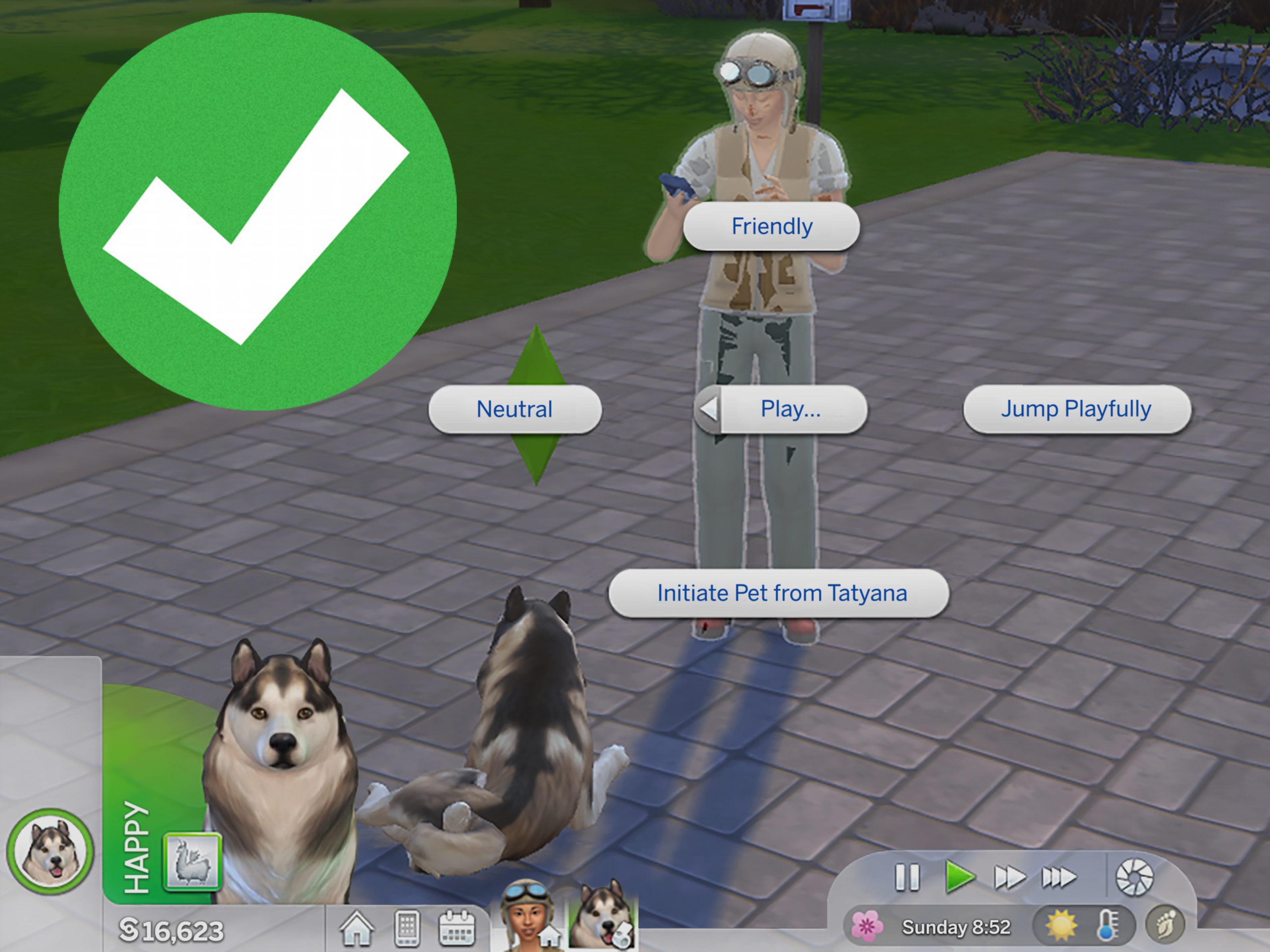
The first step is accepting the game’s pet system. In vanilla The Sims 4, you control pets by controlling the Sims around them. Click on the pet with a human Sim selected, and you will see interaction menus such as Friendly, Pet Care, Training, or other context-based options. These change depending on the pet’s species, age, traits, mood, relationship level, and current situation.
For example, if your dog is dirty, your Sim may be able to give it a bath. If your pet is hungry, you can fill the bowl. If your cat is misbehaving, you can lecture it. If your dog has learned commands, you can use trained commands to direct specific actions.
This system can feel strange at first, especially if you expected pets to function like regular Sims. Think of it this way: your pet is not a second Sim wearing a fur coat. It is a semi-autonomous household member that responds to care, training, environment, and relationship strength. Basically, it is like a real pet, except real pets rarely clip through couches.
Step 2: Build a Strong Relationship With Your Pet
If you want your pets to listen, start with the relationship bar. Pets respond better when they trust and like your Sim. A neglected pet will not suddenly become a perfectly trained angel because your Sim clicked “Lecture” once between breakfast and a panic nap.
Use friendly interactions often. Pet them, talk to them, hug them, brush them, play with them, and offer treats when appropriate. Dogs especially benefit from regular attention and play. Cats may be more independent, but they still need social interaction and care. A strong relationship makes training smoother and helps pets behave more predictably.
Specific examples include using “Get to Know,” “Talk To,” “Pet,” “Praise,” “Brush,” and “Play.” If your Sim has a busy career or a full household, schedule pet care into the daily routine. Feed the pet in the morning, play after school or work, and check on them before bed. The game rewards consistent attention.
Also pay attention to pet traits. A lazy dog may not behave like an active one. A prowler cat may roam more. A spoiled or stubborn pet may need more repeated correction. Traits shape personality, and personality affects control. In other words, do not adopt a wild, mischievous pet and expect it to behave like a decorative throw pillow with whiskers.
Step 3: Meet Their Basic Needs Before Training
A hungry, dirty, lonely, or exhausted pet is not in the mood to become the next obedience champion of Brindleton Bay. Before you start training or correcting behavior, make sure your pet’s basic needs are handled.
Because you cannot normally see a pet’s full needs panel, you must read clues. Pets may whine, bark, meow, look uncomfortable, scratch furniture, wake Sims, beg near food bowls, or show thought bubbles. If you are unsure what is wrong, use the “What’s Wrong?” interaction when it appears. Your Sim can often figure out whether the pet needs food, attention, a bathroom break, or medical care.
Keep food bowls filled. Place litter boxes in accessible locations for cats. Give dogs regular opportunities to go potty outside. Provide pet beds so animals have a reliable place to sleep. Add toys to reduce boredom. Use scratching posts for cats and chew toys for dogs if you want your furniture to survive longer than a Sim’s New Year’s resolution.
Basic care is the foundation of control. A well-fed, rested, clean pet is easier to manage. A neglected pet becomes unpredictable, unhappy, and more likely to cause trouble. The game may be cute, but it is still quietly judging your pet parenting.
Step 4: Use the Pet Training Skill for Dogs
The Pet Training skill in The Sims 4 is one of the best tools for controlling dogs. This minor skill has five levels and allows Sims to teach dogs commands and tricks. To begin, select your dog with a Sim active, then look for training interactions. Your Sim can teach commands such as sit, lie down, speak, roll over, fetch, heel, shake, and play dead as the skill improves.
Training takes time, but it pays off. Once a dog learns a trick, the interaction usually moves into a trained commands menu. This means your Sim can ask the dog to perform that command later. It is not the same as directly controlling the dog, but it gives you more reliable influence over what the dog does.
Training also improves the relationship between Sim and dog. It creates a useful gameplay loop: train the dog, build the bond, unlock more commands, and gain better control. If your Sim is aiming for a pet-centered storyline, such as a trainer, veterinarian, animal lover, or Brindleton Bay dog-show enthusiast, this skill is essential.
For best results, train when your Sim and dog are both in decent moods. Do not wait until the dog is exhausted, filthy, or starving. That is not “training”; that is a lawsuit with paws.
Step 5: Correct Bad Behavior With Praise and Lecture
Pets in The Sims 4 can develop habits. Some are cute, such as greeting Sims at the door. Others are less charming, such as drinking from puddles, scratching furniture, barking too much, jumping on counters, eating human food, or waking everyone like a tiny alarm clock with teeth.
When a pet does something wrong, your Sim may get the option to lecture or scold them. Use it quickly. Timing matters. Correcting a behavior right after it happens helps the game associate the lecture with the action. Waiting until six hours later is not helpful. Even Sims are not that good at retroactive parenting.
You can also praise good behavior. If your pet uses the litter box, sleeps in its bed, listens to a command, or behaves well, positive interactions strengthen the relationship and reinforce good habits. The game uses repeated interactions to shape behavior over time, so consistency is more powerful than one dramatic lecture in the kitchen.
Be careful not to overuse negative interactions. A household full of constant scolding can damage relationships. Balance correction with affection. The goal is not to turn your Sim into the mayor of No Fun Town. The goal is to guide pets toward better habits while keeping them happy.
Step 6: Control the Environment With Objects and Layout
One of the smartest ways to control pets is to design the home around them. Pets follow autonomy, but autonomy depends heavily on what objects and spaces are available. If you do not want a cat scratching the sofa, place scratching posts nearby. If you do not want a dog chewing random objects, provide toys. If you want pets to sleep in a specific area, give them comfortable pet beds.
House layout matters. Keep food bowls, litter boxes, pet beds, and toys easy to reach. Make sure doors are not blocking pets from essential areas. If you have a large lot, consider placing pet objects in multiple zones so animals do not waste half the day wandering from one side of the house to the other.
For cats, litter box placement is especially important. Do not trap the litter box behind locked doors or cluttered furniture. For dogs, access to outdoor space helps with potty training and daily care. Puppies may need extra attention because they cannot do everything adult dogs can do.
You can also use fences, gates, and locked doors to limit where pets roam. This is helpful if you want to keep pets out of bedrooms, nurseries, kitchens, or carefully decorated rooms where one scratch would emotionally destroy you. The build mode solution is often more reliable than yelling “Stop!” at a digital cat who has never respected authority.
Step 7: Use Vet Care, Wellness Treats, and Pet Supplies
Sick pets are harder to manage. If your pet is glowing, drooling, walking strangely, acting dizzy, or showing unusual symptoms, take them to a veterinary clinic. The Cats & Dogs expansion includes veterinarian gameplay, and Sims can visit clinics or run their own vet business.
Keeping pets healthy gives you more control because healthy pets behave more normally. Sick pets may refuse interactions, act uncomfortable, or interrupt household routines. If you run a busy Sim family, a sick pet can derail the day faster than a broken toilet during a dinner party.
Stock useful pet supplies when possible. Food bowls, automatic feeders, litter boxes, toys, beds, obstacle course equipment, and grooming items all support better pet management. If your Sim has the veterinarian skill or access to vet-related items, wellness treats can help keep pets in good condition.
Regular care also reduces emergencies. Brush pets, bathe dogs when needed, clean litter boxes, refill food, and watch for odd behavior. This is the unglamorous side of pet control: half love, half maintenance, and occasionally half wondering why the dog is blue.
Step 8: Consider Mods Carefully If You Want Direct Control
If you play on PC or Mac, mods can make pets selectable or reveal their needs. Popular pet control mods have existed in the community for years, including mods designed to make cats and dogs selectable. These can let you view pet needs or access debug-style commands, depending on the mod.
However, mods are not official features. They may break after game updates, conflict with other custom content, or behave unpredictably. Always download from trusted creators, read the instructions, check update dates, and back up your saves before installing anything. Console players generally cannot use script mods in the same way PC and Mac players can.
For many players, mods are worth it because they restore a feeling closer to older Sims pet gameplay. For others, vanilla gameplay is better because pets remain surprising and more lifelike. There is no single correct choice. If you love total control, a selectable pets mod may be appealing. If you enjoy chaos, keep the official system and let your cat become the household’s tiny furry landlord.
Extra Tips for Better Pet Control
Choose Traits That Match Your Play Style
When creating or adopting a pet, traits matter. If you want calm gameplay, avoid choosing only high-energy or mischievous traits. If you want a lively household, go wild. Just remember that a hyper, stubborn, vocal pet will behave like a hyper, stubborn, vocal pet. The game is doing exactly what you asked. Unfortunately, it is doing it on your rug.
Train Dogs Early
Start training dogs as soon as possible. Early training builds the Sim’s Pet Training skill and gives you useful commands sooner. Even basic commands can make the dog feel more responsive.
Use Routines
Create a daily pet care pattern. Feed in the morning, play in the afternoon, train in the evening, and check needs at night. The more predictable the household, the easier pets are to manage.
Do Not Ignore Notifications
The game often tells you when pets are scared, sick, hungry, dirty, or uncomfortable. Pay attention to pop-ups and thought bubbles. A pet warning is usually not decorative. It is the game politely saying, “Your dog is about to become a problem.”
Common Mistakes When Controlling Pets in The Sims 4
Expecting Pets to Work Like Human Sims
This is the biggest mistake. Pets are not fully playable Sims in the official expansion. If you try to manage them like regular Sims, you will get frustrated. Use indirect control instead.
Forgetting Pet Objects
A pet without toys, beds, food bowls, or litter boxes will create problems. The game gives pets needs, and pets will attempt to solve those needs with whatever is available. Sometimes that “solution” is your furniture.
Only Scolding and Never Praising
Correction matters, but praise helps too. Use both. A good relationship makes pets easier to guide.
Training at the Wrong Time
Training a hungry, exhausted dog is inefficient. Handle needs first, then train. Your Sim would not learn rocket science while starving either, unless they had the Genius trait and poor boundaries.
Experience Section: What It Feels Like to Control Pets in The Sims 4
Playing with pets in The Sims 4 is a little like inviting a charming tornado into your household. At first, many players expect full control. You adopt a dog, give it a heroic name like Waffles von Barkington, and imagine a disciplined companion trotting gracefully beside your Sim. Then Waffles immediately rolls in something suspicious, barks at the refrigerator, and falls asleep in the doorway while your Sim is trying to leave for work. Welcome to pet ownership, Sims-style.
The most important experience I have learned from pet gameplay is that control comes from preparation, not panic. If the house is set up well, pets behave better. A food bowl in a sensible place, a pet bed near the family area, a toy box in the living room, and easy outdoor access for dogs can prevent many problems before they start. When I build a pet-friendly home, I think less like an interior designer and more like a tired parent asking, “Can this creature reach everything it needs without causing a disaster?”
Training dogs is one of the most satisfying parts of the expansion. The first few sessions can feel slow, but once commands start unlocking, the dog becomes much easier to guide. Teaching “sit” or “lie down” may seem small, yet it changes the rhythm of the household. Suddenly the dog is not just wandering around like a confused Roomba with emotions. It can respond. It can perform. It can become part of the story you are telling.
Cats are a different experience. You do not train cats the same way, and honestly, that feels accurate. Cats in The Sims 4 often behave like tiny celebrities who happen to live rent-free in your house. You can influence them with objects, affection, and correction, but you will not turn every cat into a perfectly obedient companion. The best approach is to give cats appropriate outlets: scratching posts, litter boxes, toys, and cozy places to sleep. A bored cat will find entertainment. You may not like its choice.
Another useful lesson is to pay attention to behavior patterns. If a pet keeps misbehaving in the same room, change the room. If the dog keeps waking Sims, adjust sleeping spaces. If the cat keeps jumping on counters, lecture consistently and provide alternative objects. The game rewards repeated, steady guidance. It does not reward ignoring chaos for three Sim days and then getting mad when the house smells like regret.
Vet visits also add realism. When a pet gets sick, it interrupts the household in a way that feels inconvenient but memorable. Taking a pet to the clinic, waiting for treatment, and bringing them home healthy again creates a story moment. It reminds you that pets are not just animated decorations. They are part of the family, even when they are glowing purple and making your Sim late for a date.
For players who want total control, mods can be tempting. Selectable pet mods can make gameplay more direct, especially for storytelling or screenshots. Still, I prefer using vanilla control first because it teaches you how the expansion was designed. Once you understand indirect control, you can decide whether you actually need a mod or simply need a better routine.
The funniest part of controlling pets in The Sims 4 is that you never control them completely. That is the point. They surprise you, annoy you, make your Sims happier, and occasionally ruin the furniture. But with training, care, smart home design, and consistent interactions, you can turn the chaos into a manageable, entertaining part of the game. And when your dog finally listens or your cat finally stops attacking the sofa, it feels like a tiny victory. A furry, pixelated, slightly dramatic victory.
Conclusion
Learning how to control your pets in The Sims 4 starts with understanding that cats and dogs are not directly playable in the official Cats & Dogs expansion. Instead of selecting them like human Sims, you guide them through your Sims’ interactions, training, pet care routines, praise, correction, objects, and household design.
The best results come from combining several methods. Build a strong relationship, meet your pet’s basic needs, train dogs with the Pet Training skill, correct bad habits quickly, create a pet-friendly home, and use veterinary care when needed. If you want direct control, PC and Mac mods may help, but they should be used carefully and kept updated.
Pets in The Sims 4 are meant to be a little unpredictable. That unpredictability is part of their charm. With the right approach, you can enjoy the chaos without letting it take over your household. After all, a well-trained Sim pet is wonderfulbut a slightly mischievous one is usually where the best stories begin.

