
Hair Care
Totally Transform Your Boring Wreath With a String of LED Lights From the Dollar Store
Jul
A plain wreath is like a blank stare on your front door. It technically does the job, but nobody is stopping in the driveway to whisper, “Wow, that circular collection of greenery changed my life.” The good news? You do not need a designer budget, a garage full of tools, or a craft room that looks like a glitter tornado moved in. One simple string of LED lights from the Dollar Store can totally transform your boring wreath into a glowing, cozy, “wait, you made that?” piece of home decor.
This easy DIY lighted wreath project is budget-friendly, beginner-friendly, and renter-friendly. It works for Christmas wreaths, fall wreaths, Halloween wreaths, spring floral wreaths, patriotic wreaths, wedding decor, party backdrops, and everyday front-door charm. In other words, if your wreath has been quietly collecting dust and judgment, it is time to give it a little sparkle therapy.
LED string lights are especially useful for wreath decorating because they are lightweight, energy-efficient, cool to the touch compared with older incandescent options, and easy to hide among greenery, ribbon, berries, pinecones, faux flowers, or grapevine branches. Battery-operated LED lights are even better for wreaths because you do not have to run an extension cord across your door like your house is wearing a belt.
Why Dollar Store LED Lights Are a DIY Decor Secret Weapon
The Dollar Store has become a treasure cave for budget crafters. You walk in for paper towels and somehow leave with ribbon, faux eucalyptus, tiny ornaments, floral wire, batteries, command hooks, a seasonal gnome, and the confidence of a person about to start a craft blog. Among the best finds are small LED string lights, fairy lights, micro lights, themed lights, and battery-operated decorative strands.
These lights are ideal for wreath makeovers because they are usually short enough to wrap neatly around an average wreath form without creating a tangled light jungle. A strand of 10 to 30 tiny LED bulbs can add just enough glow to make the wreath look intentional, warm, and expensive. The trick is not to make the wreath look like a landing strip for Santa’s sleigh. The goal is soft sparkle, not airport runway.
The best types of LED lights for wreaths
For a classic look, choose warm white LED fairy lights. They flatter greenery, burlap, gold ribbon, pinecones, and neutral farmhouse decor. For a modern look, cool white lights work well with silver accents, flocked greenery, white berries, and icy winter themes. Multicolor lights are great for playful Christmas wreaths, kids’ rooms, dorm doors, or maximalist holiday decor. Themed lights, such as tiny pumpkins, leaves, hearts, stars, or snowflakes, can make a simple wreath feel seasonal in about five minutes.
Battery-operated lights with a small switch box are usually the easiest choice. If the light strand has a timer function, even better. A timer lets your wreath glow automatically in the evening, which is very fancy behavior from something that may have cost less than a latte.
What You Need for a DIY Dollar Store Lighted Wreath
You do not need complicated materials. Start with a wreath you already own, or pick up a basic wreath form from a dollar store, craft store, thrift store, or seasonal clearance bin. Grapevine wreaths, faux evergreen wreaths, wire wreath frames, foam wreaths, and floral wreaths can all work.
Basic supplies
- One wreath, either old or new
- One battery-operated LED string light strand
- Fresh batteries, preferably good-quality or rechargeable
- Floral wire, twist ties, pipe cleaners, or zip ties
- Ribbon, faux flowers, ornaments, pinecones, berries, or greenery
- Scissors or wire cutters
- Hot glue gun, optional
- Wreath hanger, hook, or removable adhesive hook
If you are decorating an outdoor wreath, check that the lights are labeled for outdoor use. Indoor-only lights should stay indoors, even if your porch is covered and you feel emotionally persuasive. Moisture has no respect for optimism.
Step-by-Step: How to Transform a Boring Wreath With LED Lights
Step 1: Fluff, clean, and inspect the wreath
Before adding lights, give the wreath a quick makeover. Shake out dust, fluff the greenery, straighten ribbon, and remove anything broken, faded, or sad-looking. If the wreath has faux pine branches, bend them outward to create depth. If it has flowers, spread them so the wreath looks balanced instead of like one side got into a fight.
This is also the moment to decide your theme. Do you want cozy Christmas cottage, elegant winter glam, spooky Halloween glow, rustic fall farmhouse, soft spring garden, or year-round front-door welcome? Choosing a theme keeps the finished wreath from looking like the craft drawer exploded.
Step 2: Test the LED lights before wrapping
Always test the light strand before attaching it. Add batteries, turn it on, and make sure every bulb works. This takes less than a minute and saves you from the deeply personal betrayal of finishing the wreath, hanging it proudly, flipping the switch, and seeing absolutely nothing.
Inspect the strand for cracked bulbs, exposed wires, loose connections, or a damaged battery case. If anything looks unsafe, do not use it. Decorative lights are fun; mystery sparks are not part of the aesthetic.
Step 3: Plan where the battery pack will hide
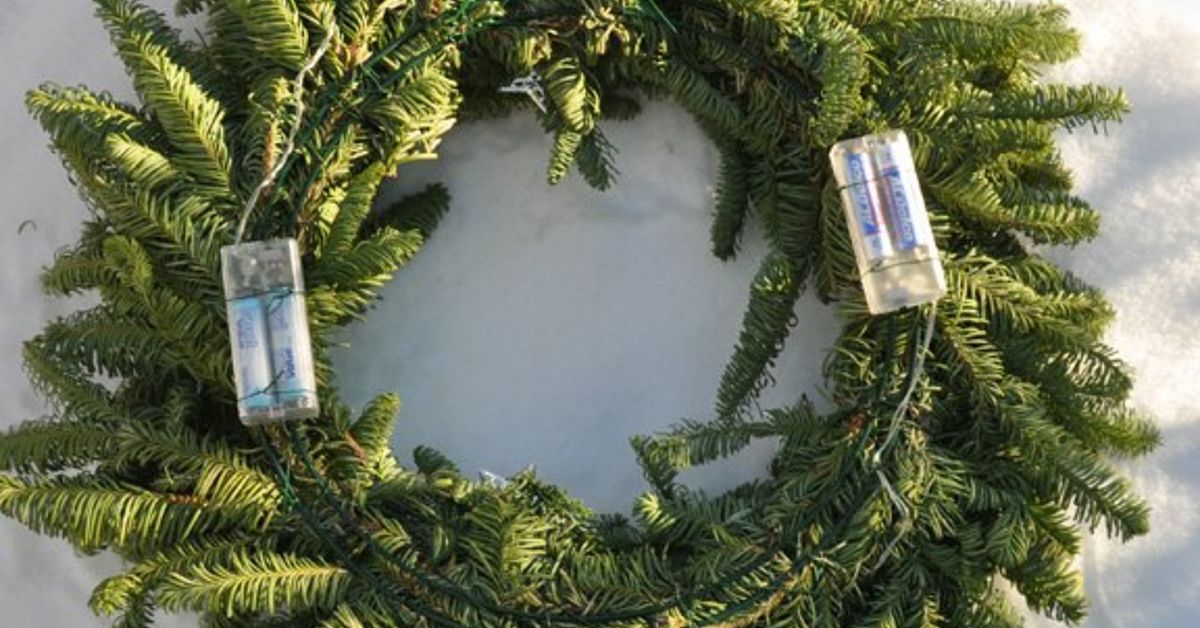
The battery pack is the least glamorous part of a lighted wreath, but it is important. Place it on the back of the wreath near the bottom or side, where it will be hidden but still accessible. Do not bury it under permanent glue, thick ribbon, or floral picks. You will eventually need to change the batteries, and future you deserves kindness.
Use floral wire, a pipe cleaner, or a small zip tie to secure the battery box to the wreath frame. If the box is heavy, attach it in two places so it does not swing around every time the door opens. A swinging battery pack is basically a tiny wrecking ball with seasonal intentions.
Step 4: Wrap the lights evenly
Start near the battery pack and gently weave the LED strand around the wreath. Tuck the wire into greenery, grapevine, ribbon folds, or floral stems. Space the bulbs evenly so the glow looks balanced from a few feet away. Step back often and check your work. Wreath decorating is one of those crafts where the close-up view can lie to you.
For a subtle look, push the lights slightly deeper into the wreath. For a brighter look, let the bulbs sit near the surface. If your wreath has a strong focal point, such as a bow, sign, cluster of ornaments, or large flowers, place a few lights nearby to highlight it. Think of the LEDs as tiny stage lights. Your bow is the lead actor. The pinecones are supporting cast.
Step 5: Secure the strand without crushing it
Use small pieces of floral wire, twist ties, or green pipe cleaners to hold the strand in place. Avoid pulling the wire too tightly. The lights should be secure, not strangled. If you use hot glue, apply it carefully and sparingly. Glue the wire to sturdy parts of the wreath, not directly onto the tiny bulbs or battery case.
For grapevine wreaths, the easiest method is to weave the lights through the natural branches. For evergreen wreaths, bend the faux branches around the strand. For foam wreaths wrapped in fabric or ribbon, use floral pins or discreet glue dots to guide the lights around the shape.
Design Ideas for Every Season
Christmas lighted wreath
Use warm white lights, red berries, pinecones, a velvet bow, and a few small ornaments. Gold bells add classic charm, while plaid ribbon gives the wreath a cozy cabin feeling. If your wreath is flocked, cool white LEDs can create a snowy glow.
Fall lighted wreath
Choose amber or warm white lights with faux maple leaves, mini pumpkins, wheat stems, burlap ribbon, and copper accents. Tuck the lights behind the leaves so the wreath glows like late afternoon sunlight. This is the kind of wreath that says, “Yes, I own cinnamon, and I know how to use it.”
Halloween lighted wreath
Use purple, orange, or green LED lights with black ribbon, plastic spiders, mini skulls, bats, or a painted grapevine base. A black wreath with tiny orange lights can look spooky without becoming a haunted-house clearance bin.
Spring floral wreath
Pair micro LED lights with faux peonies, tulips, lavender, eucalyptus, or cherry blossoms. Keep the lights soft and minimal. Spring wreaths look best when the glow feels magical, not like the flowers are being interrogated.
Everyday farmhouse wreath
Use a grapevine wreath, eucalyptus stems, white berries, a neutral linen bow, and warm white fairy lights. This style works year-round and looks great on front doors, kitchen walls, mirrors, and entryway hooks.
Where to Hang a Lighted Wreath
The front door is the obvious choice, but it is not the only one. A lighted wreath can brighten a mantel, interior door, mirror, kitchen window, bedroom wall, hallway, covered porch, bookshelf, or party backdrop. In small spaces, a glowing wreath can act like soft accent lighting without taking up table space.
If you hang the wreath on a mirror, the reflection doubles the sparkle. If you hang it above a mantel, coordinate the wreath lights with candles, garland, or small lanterns. If you hang it on a bedroom door or dorm wall, use battery-powered lights so you do not have to hunt for an outlet.
Safety Tips for LED Wreath Decorating
LED lights are generally a smart choice for decorative wreaths because they use less energy and produce less heat than older incandescent bulbs. Still, any lighted decor should be used responsibly. Inspect lights before use, follow the product label, and turn off the wreath before going to bed or leaving the house if the lights do not have a safe timer feature.
Do not use indoor lights outdoors unless the packaging clearly says they are rated for outdoor use. Keep battery packs dry. Do not overload outlets if you use plug-in lights. Avoid nails, staples, or sharp fasteners that could pierce the wire. Keep lighted wreaths away from open flames, heaters, fireplaces, and curious pets who believe every decoration is a personal challenge.
If your wreath includes small ornaments, berries, button batteries, faux candy, or removable parts, hang it out of reach of young children. A pretty wreath should welcome guests, not become a snack tray for toddlers.
How to Make a Cheap Wreath Look Expensive
The secret is layering. Cheap wreaths often look flat because everything sits on one level. Add depth by mixing textures: soft ribbon, glossy ornaments, matte pinecones, fuzzy faux stems, metallic picks, and tiny lights. Use odd-numbered clusters, such as three pinecones or five ornaments, because odd groupings tend to look more natural.
Choose one main color palette. Red, green, and gold feels classic. White, silver, and blue feels wintery. Orange, copper, and cream feels autumnal. Pink, white, and green feels fresh for spring. Black, purple, and orange works for Halloween. A tight color palette makes dollar-store supplies look curated instead of random.
Also, upgrade the bow. A limp bow can make even a nice wreath look tired. Use wired ribbon because it holds shape. Create large loops, fluff them generously, and let the tails fall naturally. Place a light or two near the bow so it becomes the focal point.
Common Mistakes to Avoid
Using too many lights
More lights do not always mean better decor. Too many bulbs can overpower the wreath and hide the pretty details. One short strand is often enough for a standard wreath. If the wreath is large, use two strands, but keep the spacing even.
Forgetting battery access
Never glue the battery pack into a decorative tomb where no human hand can reach it. Hide it, yes. Imprison it, no. Make sure the switch and battery compartment remain accessible.
Wrapping lights only around the outside edge
This can make the wreath look like a glowing tire. Weave lights through the inner and outer areas so the glow feels dimensional.
Ignoring the door color
A wreath that looks amazing on a craft table may disappear on a dark door or clash with a bright one. If your door is black, navy, or deep green, use warm lights and lighter accents. If your door is white or cream, richer greenery and deeper ribbon colors can add contrast.
Budget Breakdown: How Much Does This DIY Cost?
If you already own a wreath, this project can cost only the price of the LED lights and batteries. If you are starting from scratch, you can still keep the project inexpensive by using a dollar-store wreath frame, garland, ribbon, floral stems, and one light strand. Many DIYers can create a simple lighted wreath for under $10 to $15, depending on the materials they choose.
Compared with buying a pre-lit wreath, the savings can be significant. Store-bought lighted wreaths often cost much more, especially if they include realistic greenery, timers, large bows, or branded seasonal designs. Making your own also lets you customize the look, which means you are not stuck with a wreath that screams “generic hotel lobby December.”
Storage Tips So Your Wreath Survives Next Year
When the season ends, remove the batteries before storing the wreath. Batteries can leak over time and damage the battery pack. Gently wrap the wreath in tissue paper, a plastic bag, or a wreath storage container. Store it in a dry, cool place where it will not be crushed.
If the lights are delicate, avoid stacking heavy decorations on top of the wreath. You can also label the storage container with the season and color scheme, such as “Fall LED Wreath” or “Christmas Warm White Wreath.” Next year, you will feel like an organized genius, even if the rest of the closet says otherwise.
Real-Life Experience: What This Dollar Store Wreath Upgrade Actually Feels Like
The first time you add Dollar Store LED lights to a wreath, you may underestimate the transformation. On the table, the project looks simple. A wreath, a thin wire strand, a battery box, maybe a bow that is behaving suspiciously. But the magic happens when the lights turn on in a dim room. Suddenly, the wreath stops looking like leftover seasonal decor and starts looking like something you meant to do.
One of the biggest lessons from making lighted wreaths is that perfection is overrated. In fact, a slightly imperfect wreath often looks more natural. The lights do not need to be spaced with scientific precision. The ribbon does not need to look like it graduated from bow university. The best wreaths have a little movement, a little texture, and a little personality.
For example, an old evergreen wreath with flattened branches can look completely revived after five minutes of fluffing and one strand of warm white LEDs. Add a plaid bow and three pinecones, and it suddenly gives cozy lodge energy. The same idea works with a grapevine wreath. Weave micro lights through the branches, tuck in eucalyptus stems, add a neutral ribbon, and you have a year-round piece that looks boutique rather than bargain-bin.
Another useful experience: battery placement matters more than you think. If the battery box sits too low, it can knock against the door. If it sits too high, it may tilt the wreath forward. The sweet spot is usually on the back side, slightly low and close to the frame. Secure it tightly, but keep the switch reachable. After changing batteries in a badly planned wreath once, most people become deeply passionate about accessible battery packs.
Lighting also changes the mood of a room. A lighted wreath inside an entryway creates a warm welcome before anyone even takes off their shoes. On a mantel, it adds height and glow without needing extra candles. On a kitchen window, it can make a regular weeknight feel festive. This is why small LED lights are such a satisfying DIY tool: they offer instant atmosphere without major effort.
Dollar Store supplies also encourage experimentation. Because the materials are inexpensive, you can try a bold theme without feeling like you are gambling your retirement fund on ribbon. Want a pink Christmas wreath? Try it. Want a Halloween wreath with purple lights and tiny bats? Absolutely. Want a patriotic summer wreath with red, white, and blue accents? Go forth and sparkle responsibly.
The best experience, though, is seeing people react. Guests notice lighted wreaths because they create contrast. During the day, the wreath looks pretty. At night, it becomes a focal point. It frames the door, softens the entry, and makes the whole space feel more intentional. People may not know the lights came from the Dollar Store, and honestly, they do not need to. Let them imagine you paid boutique prices. Your secret is safe with the battery pack.
This project is also a confidence builder. It proves that good decorating does not require expensive materials. It requires paying attention to proportion, color, texture, and glow. Once you learn how to light a wreath, you start seeing other possibilities: lighted garlands, glowing centerpieces, illuminated baskets, fairy-light lanterns, seasonal wall decor, and party backdrops. One tiny strand of LEDs can create a dangerous level of DIY confidence.
Conclusion
Transforming a boring wreath with a string of LED lights from the Dollar Store is one of the easiest ways to make your home feel warmer, brighter, and more personal. It is affordable, flexible, and beginner-friendly, yet the final result can look surprisingly polished. With the right light strand, a smart battery-pack hiding spot, a few decorative accents, and basic safety habits, an ordinary wreath can become a glowing showpiece for any season.
Whether you are refreshing an old Christmas wreath, creating a spooky Halloween door decoration, adding sparkle to a fall wreath, or making an everyday farmhouse accent, LED lights bring instant charm. The best part is that this project does not ask for much. It only wants a little time, a few supplies, and your willingness to believe that even the most boring wreath deserves its main-character moment.
Note: This article is written in original American English and synthesizes practical DIY wreath-making, LED decorating, budget craft, and holiday safety guidance from reputable U.S. home, craft, retail, energy, and consumer-safety resources.

