
Beauty Tools & Accessories
Hey Pandas, Draw The Best Fanart You Possibly Can
Jul
Note: This original article synthesizes Bored Panda community examples and fan-art coverage with creative guidance from PBS, Getty, Smithsonian, APA, the National Endowment for the Arts, Adobe, DeviantArt, ArtStation, a
American Psychological Association
+4
PBS
+4
Bored Panda
+4
U.S. Copyright Office
+12
Bored Panda
+12
Bored Panda
+12
>
Some drawing prompts politely suggest an idea. This one practically dares you to put a panda in a superhero cape, hand it a coffee mug, surround it with internet chaos, and somehow make the scene look intentional.
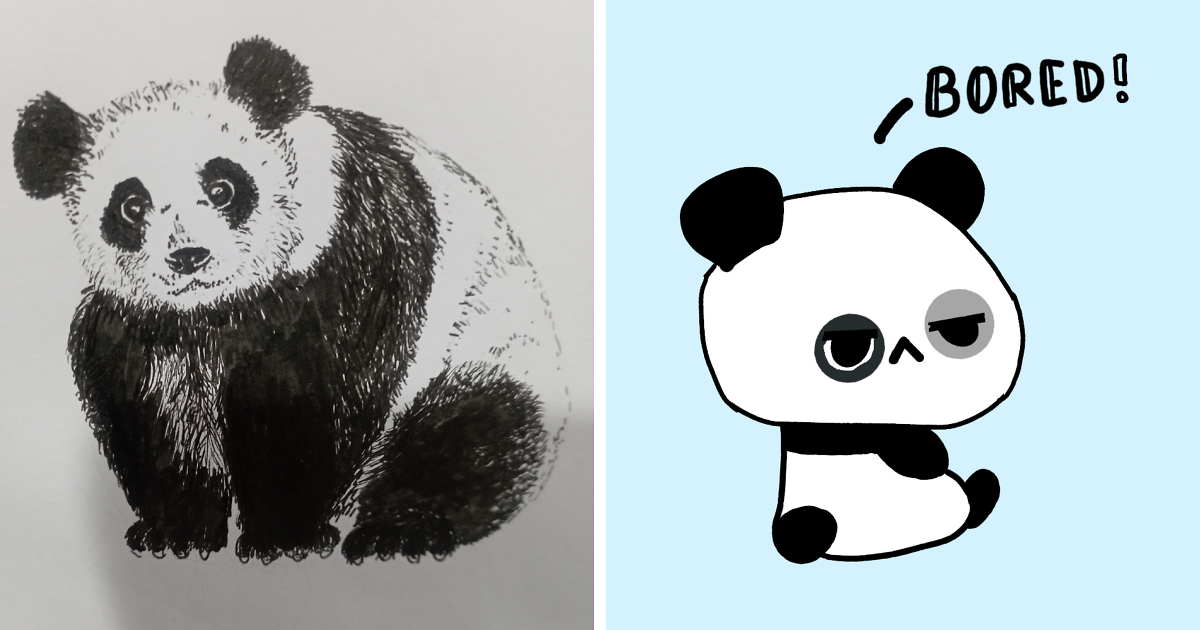
“Hey Pandas, Draw The Best Bored Panda Fanart You Possibly Can” is not about producing a museum-ready masterpiece or drawing perfect paws. It is a celebration of the wonderfully strange Bored Panda community. Use graphite, markers, watercolor, pixels, clay, collage, or the back of a grocery receipt. The goal is simple: make something unmistakably panda-powered and unmistakably yours.
What Makes Bored Panda Fanart Feel Like Bored Panda?
Bored Panda is associated with visual storytelling, humor, artistic discoveries, relatable moments, and animals behaving like tiny landlords. Strong Bored Panda fanart can borrow from any of those ingredients. The panda theme provides recognition, but curiosity and playfulness provide personality.
Your drawing might show a panda scrolling through funny posts at 2:00 a.m., guarding the internet’s strangest stories in a fantasy library, or leading hundreds of creative “Pandas” around a giant sketchbook. The image does not need to explain an entire website. It only needs to capture the feeling of finding something so clever, wholesome, funny, or bizarre that you immediately send it to a friend.
Recognition Matters, but Originality Wins
Keep a few recognizable traitsround ears, black-and-white coloring, expressive eyes, and a playful editorial moodthen push the idea through your own style. A cubist panda, cyberpunk panda, storybook panda, or panda drawn like a medieval manuscript can all work. Treat the source as a starting line, not a parking lot.
Start With a Concept You Can Explain in One Sentence
Before sharpening twelve pencils with the seriousness of a swordsmith, describe your idea in one sentence. A clear concept keeps the drawing focused and prevents the composition from becoming a visual junk drawer.
Try one of these starting points:
- A sleepy panda editor racing to publish one last hilarious story.
- A Bored Panda astronaut discovering a planet of creative community members.
- A panda artist whose sketches escape and take over the studio.
- A fantasy panda collecting rare memes instead of magical crystals.
- A tiny panda trying to draw with a pencil ten times taller than it is.
- A newsroom where cats, dogs, raccoons, and pandas debate the cutest headline.
Pick the strongest idea and save the others for the inevitable Panda Cinematic Universe.
Build a Strong Fanart Composition
A funny idea can disappear if every object fights for attention. Decide what viewers should notice first, second, and third. The main panda usually needs the clearest silhouette, strongest contrast, or most expressive face.
Use Thumbnails Before the Final Drawing
Make three to six tiny sketches. Ignore details and test placement, camera angle, and negative space. A quick thumbnail may reveal that your heroic panda looks less like it is leaping into action and more like it has slipped on a banana peel.
Let the Pose Tell the Joke
Body language should communicate before a caption does. Tilt the head, curve the spine, exaggerate the paws, and direct the eyes toward important details. A confident panda facing a blank canvas tells one story; the same panda hiding behind it tells another.
Give the Background a Job
A cluttered desk can suggest creative panic. Pinned sketches can imply community activity. Floating comments can turn a studio into an internet-inspired world. Add enough detail to establish the setting, then stop before the stapler develops a tragic backstory.
Choose a Style That Feels Natural
You do not need professional software or expensive materials. Traditional and digital tools simply offer different routes to the same destination.
Traditional Fanart
Pencil is ideal for expressive lines and value studies. Ink suits bold cartoons and posters. Colored pencils allow careful layering, while watercolor creates a soft storybook mood. Markers produce crisp color, although they may invade the next sheet of paper, so use a protective page underneath.
Digital Fanart
Digital drawing makes it easy to test colors, move characters, and correct proportions. Separate the sketch, line art, colors, shadows, highlights, and background into layers. Name them as you work. “Layer 47 copy final FINAL” is not organization; it is a distress signal.
Mixed Media
Try cut paper, collage, embroidery, clay, cardboard, recycled packaging, or a miniature diorama. A panda newsroom built inside a shoebox may stand out precisely because it breaks from the expected illustration format.
Seven Bored Panda Fanart Ideas to Spark Your Imagination
1. The Ultimate Panda Editor
Draw a determined panda surrounded by photos, sticky notes, coffee cups, and headlines. Add a folder labeled “Emergency Capybaras” or a button marked “Publish More Cats.”
2. A Panda Through Art History
Create a Renaissance panda portrait, an impressionist bamboo picnic, a pop-art grid, or a cave painting in which the panda has already discovered Wi-Fi.
3. The Community Portrait
Fill a group scene with painters, photographers, sculptors, comic artists, meme-makers, and readers. Give every creative Panda a distinctive pose or tool.
4. Panda Versus Creative Block
Turn creative block into a monster made of erasers, unfinished sketches, and judgmental blank pages. Let the panda defeat it with a pencil or a supportive comment.
5. The Bored Panda Multiverse
Bring together detective panda, pirate panda, space panda, cottagecore panda, and exhausted office panda. Their mission may be heroic, or they may argue over the last clean coffee cup.
6. The Internet Museum
Imagine a gallery devoted to funny animals, clever designs, wholesome rescues, and strange inventions, with a panda guide pretending everything is perfectly normal.
7. The Tiny Artist
Draw a miniature panda balancing on a paintbrush, climbing sketchbooks, or using an eraser as a sofa. Oversized supplies create instant storytelling and visual comedy.
Make the Artwork Personal
Include a favorite medium, cultural pattern, recurring character, familiar room, or private joke. Draw the panda in your usual painting clothes or beside the pet that supervises your work by sitting on the exact part of the desk you need. Specific details make an image feel observed rather than assembled.
Share Your Fanart Like a Good Internet Panda
Crop unnecessary space, straighten photographed pages, and make sure the image is bright enough to view. Include a sketch or progress image when useful. Process shots remind beginners that polished art rarely appears in one irritation-free leap.
Add a brief caption explaining the concept, materials, and one challenge you faced. Credit inspirations honestly. Do not upload another person’s work, remove watermarks, or hide tracing. Fan art can also raise copyright and trademark issues. A noncommercial tribute is not automatically fair use, so original interpretation, proper attribution, permission where appropriate, and respect for rights-holder policies are sensible habits.
Give Feedback Artists Can Use
Specific comments are more helpful than “nice.” Mention the readable pose, unusual palette, funny detail, or clear focal point. When critiquing, describe the effect: “The dark background competes with the face” is more useful than “Change it.” Also respect whether the artist wants encouragement or detailed analysis.
A Simple Workflow From Blank Page to Finished Panda
- Collect references: Study pandas, poses, props, clothing, and environments.
- Write the concept: Describe the scene in one sentence.
- Draw thumbnails: Test several compositions quickly.
- Choose a clear silhouette: Make sure the action reads at a small size.
- Refine the sketch: Correct proportions and clarify overlaps.
- Plan values and color: Keep the focal point easy to find.
- Add selective details: Put the sharpest jokes near important areas.
- Take a break: Return with fresh eyes and fix what your tired brain ignored.
- Export carefully: Preserve detail without creating an enormous file.
- Share it: Finishing is an artistic skill too.
Experience Notes: What a Bored Panda Fanart Challenge Can Feel Like
The following is a composite experience based on familiar moments shared by artists in online drawing communities. It begins with unreasonable confidence. The blank page looks friendly. The idea seems obvious: draw a panda at a desk, add a few funny headlines, color it, and finish before dinner. Ten minutes later, the artist has drawn fourteen circles and discovered that none of them possesses the spiritual qualities of a panda head.
The first useful breakthrough comes from stopping the final drawing and making thumbnails. One version places the panda directly in the center, but it feels stiff. Another shows the desk from above, which looks interesting until the character becomes a black-and-white potato with headphones. The third sketch uses a low angle, tilts the chair backward, and sends papers flying through the scene. Suddenly, the picture has energy. The panda is not merely sitting at a desk; it is surviving the internet.
Reference images solve the next problem. Panda paws do not behave exactly like cartoon gloves, and real ears sit differently than expected. Studying photographs makes the simplified design more convincing. The artist does not copy a single image. Instead, several references answer separate questions about posture, fur, furniture, and lighting.
Then comes the awkward middle stage, when the polished idea briefly resembles evidence from an unsolved printer accident. The linework feels too heavy. The desk perspective is suspicious. A coffee mug appears large enough to contain a swimming pool. The temptation to abandon the piece arrives right on schedule.
Instead, the artist reduces the mug, lightens several background lines, and darkens the panda’s face and front paw. The focal point returns. Small jokes are added: a sticky note reading “More wholesome chaos,” a folder titled “Dogs Who Forgot How Chairs Work,” and a tiny framed portrait of a capybara in formal clothing. These details are not necessary for understanding the scene, but they reward anyone who looks longer.
Posting the artwork creates a different kind of nervousness. During the drawing, every decision was private. Now strangers can see the crooked chair, the imperfect ellipses, and the area where the artist definitely covered a mistake with a convenient stack of paper. Yet the first comments do not mention those flaws. People respond to the expression, the motion, and the hidden jokes. One viewer notices the capybara portrait. Another says the chaotic desk feels painfully familiar.
The most useful critique points out that the flying papers create a tangent with one ear, making the silhouette less clear. The artist had stared at the image for hours and never noticed. That observation becomes a lesson for the next piece rather than a reason to dislike this one.
By the end, the greatest reward is not that the drawing looks exactly as imagined. It does not. The finished work is stranger, livelier, and more personal than the original plan. The challenge has turned a familiar mascot into a small storytelling laboratory. It has also provided proof that an imperfect finished drawing teaches more than a perfect idea that never leaves the sketchbook.
Conclusion: Your Best Fanart Is the One You Finish
“Best” does not mean technically flawless. It means using your current skills, strongest idea, favorite tools, and weirdest sense of humor with genuine effort. A beginner’s pencil sketch can be as memorable as a professional digital painting when the concept is clear and the personality is real.
So draw the panda. Give it a costume, mission, creative crisis, or army of tiny animal assistants. Hide a joke in the background, share the result, encourage another artist, and remember that every impressive gallery began with someone making a mark and deciding not to erase the whole thing.
“`

