
Beauty Unlocked
The Three Best ‘Futurama’ Episodes, According to John DiMaggio, the Voice Behind Bender
Jun
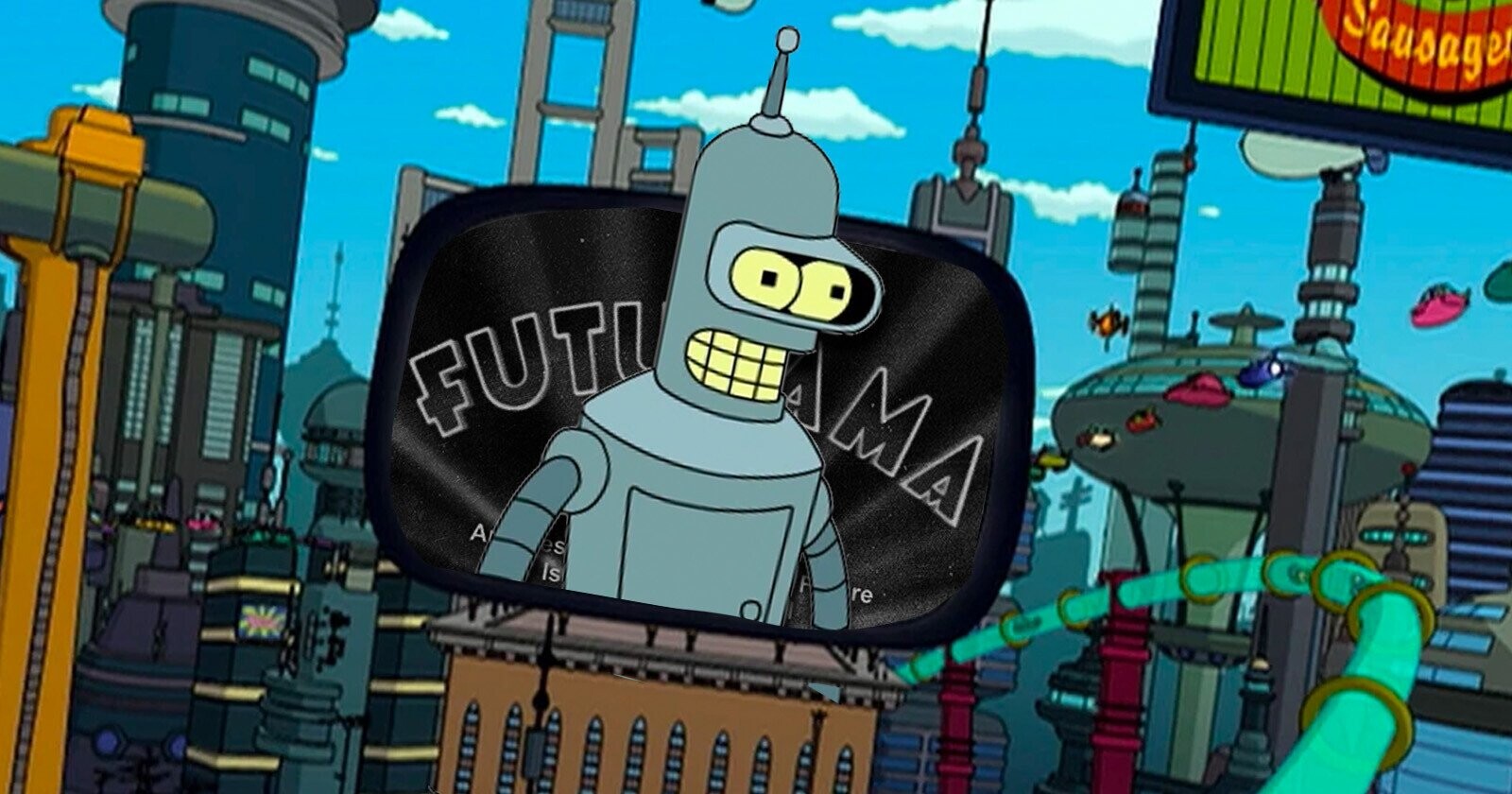
Good news, everyone: if you have ever stared at the endless galaxy of Futurama episodes and wondered where to begin, John DiMaggio has already done some of the heavy lifting. DiMaggio, the unmistakable voice behind Bender Bending Rodríguez, named three personal favorites that say a lot about why the show still feels so sharp, strange, and weirdly lovable decades after its 1999 debut.
His choices are not just “the episodes where Bender yells the loudest,” although that would also be a respectable scientific method. Instead, DiMaggio’s picks reveal the full recipe of Futurama: celebrity guest magic, time-travel chaos, emotional weirdness, sci-fi parody, risky jokes, and the kind of absurd writing that can make a robot, a lobster doctor, and a delivery boy from the year 2000 feel like old friends.
The three best Futurama episodes according to John DiMaggio are “Amazon Women in the Mood,” “Roswell That Ends Well,” and the “Anthology of Interest” episodes. Each one captures a different side of the series. One is a gloriously ridiculous character comedy. One is a near-perfect time-travel farce. One is a playground for “what if?” madness. Together, they form a mini-binge that explains why Futurama remains one of the smartest dumb shows ever made, or one of the dumbest smart shows. Either way, Bender would invoice you for the compliment.
Why John DiMaggio’s Futurama Picks Matter
John DiMaggio is not a casual observer of Futurama. He is part of its engine room. As Bender, he gives the show one of its loudest comic weapons: a robot who is selfish, dramatic, shameless, strangely loyal, and somehow more emotionally expressive than half the humans on television. Bender is a walking contradiction, which is impressive for a character who technically does not walk so much as stomp into a room and demand attention.
DiMaggio’s perspective matters because voice actors understand episodes differently from fans. Viewers remember jokes, twists, and favorite lines. A performer remembers the room, the rhythm, the guest star, the challenge of landing a joke, and the way a scene felt before it became animation. That is why his list feels personal rather than algorithmic. It is not just a ranking of famous episodes; it is a map of memorable creative experiences.
Futurama, created by Matt Groening and developed by David X. Cohen, has always lived in a strange orbit. It is a workplace comedy, a sci-fi parody, a romance, a math-joke delivery system, and a surprisingly emotional story about loneliness and belonging. The show follows Philip J. Fry, a pizza delivery guy accidentally frozen on New Year’s Eve 1999 and thawed out in the 31st century. There, he joins the Planet Express crew with Leela, Bender, Professor Farnsworth, Hermes, Amy, Zoidberg, and a rotating circus of aliens, robots, heads in jars, and bureaucratic nightmares.
That blend is exactly what DiMaggio’s three choices highlight. They are funny, yes, but they also show how Futurama could take a silly premise and over-engineer it until it became something brilliant.
1. “Amazon Women in the Mood” Season 3, Episode 1
The Episode That Proves Big Jokes Can Still Have Character
“Amazon Women in the Mood” is one of those Futurama episodes that sounds like it escaped from a late-night writers’ room after drinking too much Slurm. The Planet Express crew becomes involved in a disastrous double date, a restaurant spaceship goes wildly off course, and the characters end up on a planet ruled by giant Amazonian women and a computer leader called the Femputer.
The episode is loud, goofy, and packed with memorable lines. But the reason it survives as more than a one-joke premise is that it gives several characters room to shine. Kif and Amy’s relationship gets genuine development. Zapp Brannigan is at maximum Zapp, which means he is somehow both overconfident and immediately doomed. Fry and Bender bring their usual panic-and-opportunism energy. Leela, as usual, is the only person in the room who seems to understand that everyone else is a workplace safety violation with shoes.
For DiMaggio, the episode is especially meaningful because of Bea Arthur, who guest-starred as the Femputer. DiMaggio has spoken warmly about getting the chance to work with her, describing the experience as a career-highlight kind of surreal. That behind-the-scenes detail adds an extra layer to the episode. Fans remember the absurd comedy; DiMaggio remembers sharing the booth with a television legend who understood the joke and played it with perfect deadpan authority.
Why It Works as a Bender Episode
Bender is not the sole focus of “Amazon Women in the Mood,” but he is essential to its comic chemistry. He thrives in chaos because chaos gives him more chances to be selfish, theatrical, and useful by accident. Bender’s best episodes often place him in situations where he can be both part of the problem and weirdly part of the solution. Here, he functions as a metallic amplifier: every bad idea sounds worse, funnier, and somehow more confident when Bender is nearby.
The episode also shows how Futurama could balance crass humor with actual sitcom structure. Modern viewers may read some of the jokes differently than audiences did in 2001, and that is fair. Comedy ages the way robots rust: sometimes charmingly, sometimes with sparks. But the episode’s strongest material still comes from performance, timing, character contrast, and the show’s gift for making a ridiculous planet feel like a functioning society with its own logic.
2. “Roswell That Ends Well” Season 3, Episode 19
A Time-Travel Classic With Maximum Futurama Energy
If someone asked a team of scientists to build the most Futurama episode possible, the result might look a lot like “Roswell That Ends Well.” It has time travel, 1940s America, alien autopsy paranoia, military confusion, causality jokes, and Fry making the kind of decisions that prove the universe has a sense of humor and poor supervision.
The episode sends the Planet Express crew back to Roswell, New Mexico, in 1947. From there, the story gleefully tangles itself in classic sci-fi mythology. Zoidberg becomes part of the alien-sighting panic. Bender ends up separated from his body. Fry accidentally interferes with his own family history. The whole thing is written with the confidence of a show that knows exactly how far it can push a paradox before the audience starts yelling at the television.
“Roswell That Ends Well” is often placed near the top of Futurama rankings, and for good reason. It won the Primetime Emmy Award for Outstanding Animated Program in 2002, and it remains one of the cleanest examples of the show’s joke engineering. Every storyline feeds the same central disaster. Every character has a reason to be there. The sci-fi references are funny even if you do not catch every one of them, which is the difference between smart parody and a trivia quiz wearing a hat.
Why DiMaggio’s Choice Makes Perfect Sense
DiMaggio has pointed to the episode’s dialogue and absurdity as part of its charm. That makes sense because “Roswell That Ends Well” is not just conceptually clever; it is musically funny. The line readings matter. Fry’s confusion, Bender’s outrage, Zoidberg’s panic, and the Professor’s questionable ethics all hit with perfect rhythm.
Bender’s role is especially fun because he spends part of the episode as a head, which is very Bender: remove most of his body and he still finds a way to complain like a full-service narcissist. His storyline also gives the episode a great long-game joke, as Bender’s predicament stretches across time with the casual cruelty only Futurama can make feel delightful.
What makes “Roswell That Ends Well” great is its confidence. It does not stop to apologize for being strange. It trusts the audience to keep up, then rewards that trust with one of the most satisfying half-hours in animated science fiction comedy. In a show filled with time machines, brain swaps, robot devils, and giant space bees, this episode remains one of the best examples of Futurama turning a complicated idea into a joke machine that never overheats.
3. The “Anthology of Interest” Episodes Futurama’s What-If Playground
When the Show Lets the Writers Break the Universe
For his third choice, DiMaggio did not pick just one episode. He picked the “Anthology of Interest” episodes as a group. That is a very Bender move: why choose one dessert when you can steal the whole buffet?
The “Anthology of Interest” format lets Futurama ask absurd “what if?” questions through Professor Farnsworth’s What-If Machine. Instead of following one normal plot, these episodes deliver short alternate-reality stories. What if Bender were enormous? What if Leela were more impulsive? What if Fry had never been frozen? What if Bender became human? What if life looked like a video game? The answers are usually ridiculous, occasionally clever, and frequently both.
The format works because Futurama is already a flexible universe. It can do cyberpunk one week, family drama the next, then a parody of old video games, fantasy quests, nature documentaries, anime, or Saturday-morning cartoons. Anthology episodes give the writers permission to bend continuity without breaking the show. In other words, they are the narrative equivalent of letting Bender drive the ship: dangerous, irresponsible, and almost always entertaining.
Human Bender and the Genius of Bad Choices
One of the most memorable anthology segments imagines Bender as a human. The joke works because Bender’s personality is already built around indulgence. Turn him into flesh and suddenly all his favorite habits become even more chaotic. The segment is not just “Bender, but with skin.” It is a clever character test: if Bender had human limits, would he develop self-control? Of course not. This is Bender. Self-control is something that happens to other people.
That is why DiMaggio’s affection for the anthology episodes feels so natural. These segments often stretch Bender to his most cartoonish extremes. Giant Bender, human Bender, alternate Bender, genre-parody Bender all of them let DiMaggio push the character’s voice and attitude into new shapes while keeping the core intact. Bender can be a robot, a man, a monster, or a punchline with elbows, but he is always Bender because DiMaggio anchors him with the same rough-edged charisma.
What These Three Picks Reveal About Futurama
Futurama Is at Its Best When the Joke Has Machinery
The common thread in DiMaggio’s picks is construction. These episodes are not random collections of jokes. They are machines. “Amazon Women in the Mood” builds a social farce out of a date gone wrong. “Roswell That Ends Well” builds a time-travel paradox out of bad decisions. The “Anthology of Interest” episodes build mini-laboratories where the writers can test alternate versions of the characters.
That machinery matters because Futurama has always been a show for viewers who enjoy jokes with hidden wiring. A throwaway line can become lore three seasons later. A background gag can reward a paused screen. A mathematical idea can become an entire plot. But the show rarely feels cold because the characters are messy, needy, foolish, and oddly tender. Fry wants love and purpose. Leela wants belonging. Bender wants attention, profit, and possibly a parade in his honor. That emotional simplicity keeps the scientific nonsense grounded.
Bender Is the Perfect Futurama Character
Bender may not be the moral center of the show. In fact, if Bender found a moral center, he would probably pawn it. But he is the perfect Futurama character because he expresses the show’s philosophy: the future is amazing, humanity is ridiculous, and technology will not save us from being idiots.
DiMaggio’s performance gives Bender a strange warmth under the bluster. The character can be cruel, greedy, and absurdly vain, yet he never becomes empty. That is because DiMaggio plays him like a person who believes every emotion is an emergency. Bender does not simply get annoyed; he declares war on inconvenience. He does not simply enjoy attention; he treats applause like oxygen. He does not simply love his friends; he would deny it loudly while helping them anyway.
That complexity is why these episode choices feel so right. They show Bender in different modes: ensemble chaos, sci-fi disaster, and alternate-reality lunacy. They also show why DiMaggio’s voice work is not just funny but foundational. Without Bender’s rusty thunder, Futurama would still be smart. It just would not swagger into the room the same way.
How to Watch These Episodes as a Mini-Binge
If you want a tight John DiMaggio-approved Futurama watchlist, start with “Amazon Women in the Mood.” It is broad, fast, and guest-star driven, making it a perfect reminder that Futurama can be pure comedy chaos. Then watch “Roswell That Ends Well,” which shows the series at peak structural confidence. Finally, move into the “Anthology of Interest” episodes when you are ready to see the show toss continuity into a blender and somehow pour out something recognizable.
This order also works for newer viewers. You do not need a Ph.D. in Futurama lore to enjoy these episodes, though it would be very on-brand if one existed. Each selection explains the show from a different angle. “Amazon Women in the Mood” introduces the ensemble’s comic friction. “Roswell That Ends Well” showcases the sci-fi brain. “Anthology of Interest” displays the writers’ love of format-breaking experimentation.
For longtime fans, the list is also a reminder that Futurama is bigger than any single ranking. Some viewers would argue for “Jurassic Bark,” “The Luck of the Fryrish,” “Godfellas,” “The Devil’s Hands Are Idle Playthings,” “The Late Philip J. Fry,” or “The Prisoner of Benda.” They would not be wrong. One of the best things about Futurama is that its greatest episodes are great in different ways. Some are heartbreaking. Some are mathematically elegant. Some are just Bender yelling with the force of a malfunctioning leaf blower.
Experience Section: Rewatching Futurama Through Bender’s Eyes
Rewatching these three DiMaggio-approved picks is a different experience when you pay attention to Bender rather than treating him as the show’s resident noise cannon. The first time many people watch Futurama, Bender is simply the funniest character in the room. He says the outrageous thing. He makes the selfish choice. He turns a normal scene into a workplace incident. But after a few rewatches, you start to notice how carefully DiMaggio controls the chaos.
In “Amazon Women in the Mood,” Bender’s reactions help keep the episode moving. The premise is huge, but the comedy often lives in small shifts of tone: Bender’s confidence, Fry’s panic, Zapp’s heroic incompetence, Kif’s exhausted sincerity. Watching it again, the funniest part is not only the famous lines; it is how quickly the cast sells the escalation. Everyone behaves as if the absurd situation is both shocking and completely normal for their lives. That is the secret sauce of Futurama. The future may be insane, but the characters still have to get through the workday.
“Roswell That Ends Well” is even better on rewatch because the plot clicks together like a puzzle box. Once you know where the story is going, you can appreciate how confidently it plants jokes and consequences. Bender’s separated-head storyline could have been a disposable gag, but it becomes part of the episode’s time-spanning absurdity. Fry’s family-history disaster is outrageous, but the writing treats it with the straight-faced seriousness of classic science fiction. That contrast is what makes the episode so rewatchable. It is ridiculous and disciplined at the same time, like a clown with an engineering degree.
The “Anthology of Interest” episodes are the most casual rewatch of the three because they invite you to snack on the show rather than consume a full meal. Each segment has a different flavor. Some are sharper than others, but the format gives the cast permission to exaggerate. Human Bender is especially fun because it turns his personality into a stress test. Could Bender survive being human? Emotionally, absolutely. Practically, not for long. The joke lands because DiMaggio does not play him as a different character. He plays him as Bender discovering a new operating system and immediately abusing every feature.
As a fan experience, these episodes also make you appreciate why voice acting matters so much in animation. Bender’s design is simple: metal body, antenna, big eyes, permanent attitude. But DiMaggio gives him texture. He can sound wounded, smug, furious, delighted, bored, and fake-sincere within a few seconds. That range turns Bender from a joke machine into a character audiences actually miss when he is not around.
These episodes are also great for introducing Futurama to someone who thinks animated comedy is only background noise. Start with the jokes, then point out the craft. Show them how “Roswell That Ends Well” handles time travel better than many serious sci-fi stories. Show them how the anthology format lets writers experiment without losing the characters. Show them how “Amazon Women in the Mood” uses a guest star not as a cheap cameo, but as a comic centerpiece. By the end, they may not admit they are impressed, but they will probably ask for one more episode. That is how Futurama gets you. Quietly, cleverly, then all at once.
Conclusion: John DiMaggio’s Picks Are a Perfect Futurama Starter Pack
John DiMaggio’s three favorite Futurama recommendations are not just nostalgic selections from the man behind Bender. They are a compact guide to what makes the series last. “Amazon Women in the Mood” shows the power of ensemble comedy and unforgettable guest performance. “Roswell That Ends Well” captures the show’s genius for turning science-fiction logic into comic mayhem. The “Anthology of Interest” episodes prove that Futurama can break its own format and still feel completely like itself.
Most importantly, these picks remind us that Bender is more than a catchphrase machine with a shiny metal attitude. Through DiMaggio’s voice, he becomes the spark that makes the Planet Express crew feel unpredictable, rude, funny, and alive. Whether he is trapped in a time-travel problem, exploring an alternate reality, or simply making a bad situation louder, Bender remains one of television animation’s great comic creations.
So if you are planning a Futurama rewatch, DiMaggio’s list is a terrific place to begin. It has absurdity, intelligence, nostalgia, chaos, and just enough emotional wiring under the metal plating. In other words, it is exactly what a great Futurama binge should be: smart enough to admire, silly enough to quote, and weird enough to make you wonder why more shows do not feature a robot with this much confidence.
Note: This article is based on publicly reported interview details, episode information, entertainment coverage, and widely available series history, rewritten in original language for web publication without source-link clutter or citation artifacts.

