
Beauty Tools & Accessories
40 People That Had The Audacity To File Complaints For The Most Stupid Reasons, Only To Be Shamed Online
Jun
Note: This article is an original, fully rewritten piece based on real online complaint culture, workplace anecdotes, consumer-review research, and public discussions about how ridiculous complaints spread across the internet.
Some complaints are useful. A broken product? Fair. A service charge nobody disclosed? Absolutely worth speaking up about. A hotel room with a mysterious smell that seems to have signed a long-term lease? Please alert management immediately. But then there are the other complaintsthe ones so wildly unnecessary that they make the entire internet pause, blink twice, and ask, “Are we sure this person meant to hit send?”
That is the chaotic charm behind stories of people who had the audacity to file complaints for the most stupid reasons, only to be shamed online. From customers reporting employees for being too young, too cheerful, or too honest, to neighbors writing formal letters because someone laughed during daylight hours, these stories prove one thing: the complaint box has seen things. Terrible things. Hilarious things. Things that should probably have stayed in someone’s drafts folder forever.
Online review platforms, social media, workplace forums, and community threads have turned everyday complaints into public entertainment. A silly grievance that once would have died quietly in a manager’s inbox can now become a viral cautionary tale. And while nobody should mock legitimate concerns, ridiculous complaints reveal a lot about entitlement, communication failures, and the strange expectation that every business, coworker, neighbor, dentist, barista, cashier, and firefighter should be a mind reader with a customer-service cape.
Why Ridiculous Complaints Go Viral
Funny complaint stories spread because they combine three irresistible ingredients: confidence, confusion, and consequences. The person filing the complaint usually believes they are completely right. The person receiving the complaint is usually completely bewildered. Then the internet steps in like a jury wearing pajama pants.
People love these stories because they are tiny social dramas. They let us safely laugh at the gap between what someone expected and what reality was prepared to provide. A customer complains that a cappuccino has foam. A patient reports a dentist for recommending a cleaning. Someone files an HR complaint because a coworker reads books during lunch. These examples are funny because the “offense” is not offensive at allit is normal life wearing a fake mustache.
40 Ridiculous Complaint Examples That Deserve a Place in the Hall of Shame
The following examples are inspired by real patterns found in viral complaint threads, consumer stories, workplace discussions, and public review culture. They are rewritten and summarized in a fresh, original way.
1. The Firefighter Who Helped Too Quickly
A firefighter responded to an emergency involving an elderly woman who needed immediate help. The complaint? A family member was upset that responders did not wait hours for him to arrive with a key. Apparently, emergency services should also offer calendar coordination.
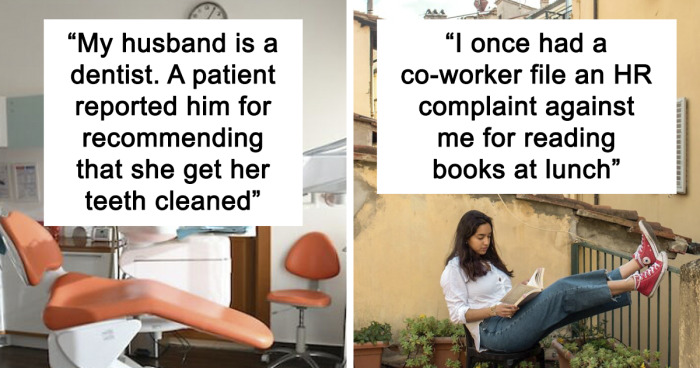
2. The Worker Reported for Reading at Lunch
One employee was reportedly complained about for reading books during a lunch break. Not ignoring customers. Not skipping work. Reading. The horror of literacy struck again.
3. The Pet Store That Did Not Carry a Competitor’s Brand
A customer complained because a pet store did not sell a brand exclusive to a different pet store. This is like yelling at a pizza place because it refuses to sell another restaurant’s secret sauce.
4. The Student Accused of Lying About His Own Name
A child with an uncommon name was sent to the office because a substitute teacher thought he made it up. Imagine getting in trouble because your birth certificate was too creative for the room.
5. The Teen Employee Reported for Rejecting a Date
A young worker was complained about after declining repeated romantic attention from a much older customer. That is not customer service. That is a boundary, and boundaries are not available for refund.
6. The Neighbor Who Complained About Laughter
Someone once wrote a complaint because people laughed for a few minutes in the middle of the day. Not at 3 a.m. Not during a wedding vow. Just normal daytime laughter. Some people hear joy and immediately ask for a manager.
7. The Red-Faced Coworker Accused of Being Angry
A worker was accused of looking angry because his face was naturally red. This is a bold reminder that human skin tones are not a performance review.
8. The Membership Discount With No Membership Info
A customer wanted a discount but refused to provide the card, phone number, or name needed to find the account. That is not a transaction; that is a magic trick with no magician.
9. The Stranger Who Filed a Wild Legal Claim
Some complaints leap over silly and sprint directly into bizarre. One person reportedly faced a family-court claim from a stranger over a child who did not exist. Reality filed a countercomplaint.
10. The Dentist Reported for Suggesting a Cleaning
A dentist recommended a dental cleaning. The patient complained. Somewhere, a toothbrush quietly resigned.
11. The Employee Whose Emails Were Too Good
One worker’s well-written emails became suspicious to management. Apparently, clarity was considered a workplace threat.
12. The Customer Offended by “Have a Great Day”
A retail employee used a friendly goodbye, not knowing the customer was upset about a personal situation. The complaint blamed the worker for not possessing psychic powers. The crystal ball department remains understaffed.
13. The Young Employee Who Was Too Competent
A customer gave poor feedback because the service was handled by someone young. The request was completed well, but age bias somehow found a way to squeeze into the comment box wearing muddy shoes.
14. The Cappuccino With Foam
A customer complained that a cappuccino had foam, which is rather like complaining that soup arrived wet. Some menu items come with built-in plot twists.
15. The Elevator Complaint That Security Footage Debunked
A worker was accused of saying something offensive in an elevator. Footage showed a normal, friendly conversation. Cameras may not make coffee, but they do occasionally save careers.
16. The Roast Beef Lawsuit
One small-claims story involved bizarre accusations about stolen roast beef and tanning lamps. It sounds less like a legal case and more like a grocery list written during a fever dream.
17. The Barista Who Was Too Happy
A customer complained because a coffee-shop worker was cheerful. This is brave behavior from someone entering a place that literally sells mood improvement in a cup.
18. The Employee Who Laughed Too Enthusiastically
In one workplace story, a person was reported because they laughed too much at a joke someone else made. HR departments deserve hazard pay for paperwork like this.
19. The Friendly Worker Who Did Not Smile Enough
A secret shopper described an employee as friendly but complained about the lack of a smile. Service quality was fine, but apparently the face failed the final exam.
20. The Trainer Reported for Explaining a Break Rule
A worker training a new employee explained how breaks worked, only to be written up after the trainee complained. Few things are as exhausting as being punished for helping accurately.
21. The Birthday Hug Treated Like a Scandal
A coworker gave another coworker a birthday gift, received a hug, and someone reported it as inappropriate. Some offices contain three printers, two coffee machines, and one person permanently allergic to goodwill.
22. The Fishing Rod That Would Not Catch Fish
A customer returned a fishing rod because it did not catch fish. Equipment matters, sure, but even the finest rod cannot personally negotiate with trout.
23. The Restaurant That Closed at Closing Time
An employee was complained about for not letting a customer in after the business had closed. Doors, clocks, and posted hours all testified for the defense.
24. The Worker Written Up for a Harmless Joke
Someone jokingly said they felt disgruntled and ended up in trouble for damaging team morale. It is hard to boost morale when morale is busy filling out forms.
25. The Cake That Needed Refrigeration
A customer complained because a fresh cream cake required refrigeration. Dairy products remain stubbornly committed to the laws of food safety.
26. The Late Fee Accusation
A video-store employee was accused of applying late fees for personal reasons instead of, you know, the item being late. Sometimes the simplest explanation is right there wearing a due-date sticker.
27. The Paper Bag With a Tiny Tear
A shopper reportedly tried to get an employee fired over a small tear in a paper bag. The bag survived emotionally, but barely.
28. The Velcro Shoe Incident
A kid got in trouble after joking that another child’s shoe was untied, even though it had Velcro. If this is the crisis, recess must be going exceptionally well.
29. The Toe-Tapping Employee
Someone was written up for tapping along to music. The rhythm was harmless, but management apparently preferred a workplace with the emotional range of a filing cabinet.
30. The Customer Who Wanted a Stove Repaired by Firefighters
Emergency workers have many talents. Appliance repair is not usually one of them. Yet some people still expect every uniform to come with a toolbox and a warranty plan.
31. The Motorcycle Storage Request
A person complained after being told they could not store a motorcycle at a fire station for the winter. Public safety buildings are not seasonal garages, shocking as that may be.
32. The Complaint About Nice Emails
Another worker was judged for writing messages too professionally, as though grammar and courtesy were suspicious workplace contraband.
33. The “Too Young to Help Me” Feedback
Some customers equate age with competence, even after receiving good service. It is an odd little bias that deserves to be returned to sender.
34. The “You Guys” Greeting
Regional language can be tricky, and workers should be thoughtful. Still, turning a casual greeting into a corporate incident can feel like using a leaf blower to move one crumb.
35. The Complaint About Normal Noise
People have complained about footsteps, laughter, talking, and other signs that humans exist nearby. Apartment living is not a sensory-deprivation tank with rent.
36. The Customer Who Refused Every Solution
Retail workers know this type well: the person who rejects every reasonable option while demanding the impossible. They do not want a solution; they want a stage.
37. The Return Because Expectations Beat Physics
Some returns happen because the product did exactly what it was supposed to do, just not what the customer imagined in a dream. Reality rarely honors imaginary warranties.
38. The Complaint Built on Assumptions
Many ridiculous complaints begin with someone assuming bad intentions without checking facts. The internet is full of stories where security footage, receipts, or basic explanations solved the mystery in eight seconds.
39. The Manager-Please Complaint Over Nothing
Some people escalate instantly. A polite answer becomes “rude.” A policy becomes “personal.” A closed register becomes “discrimination by barcode.”
40. The Complaint That Accidentally Shamed the Complainer
The funniest complaints are the ones that backfire. The person tries to shame an employee or neighbor, only for everyone else to realize the complaint says more about the complainer than the target.
What These Ridiculous Complaints Reveal About People
At first glance, these stories are just funny. But beneath the comedy, there is a serious pattern: many complaints are not really about the incident. They are about control, embarrassment, impatience, bias, or unmet expectations.
A customer who complains that a cappuccino has foam may not be angry about foam; they may be angry about feeling corrected. A neighbor who complains about laughter may not be fighting noise; they may be fighting loneliness, resentment, or the tragic absence of hobbies. A coworker who reports someone for reading at lunch may simply dislike watching another person enjoy peace.
This does not excuse bad behavior, but it explains why silly complaints can become so intense. People often turn small frustrations into formal grievances when they feel ignored, powerless, or determined to be right at any cost. Unfortunately, the internet is not always gentle with that kind of energy.
The Fine Line Between a Valid Complaint and a Ridiculous One
A valid complaint identifies a real problem and asks for a reasonable fix. The food was unsafe. The employee was genuinely rude. The product arrived broken. The bill included a charge nobody explained. Those complaints help businesses improve and protect other customers.
A ridiculous complaint usually has at least one of these ingredients: impossible expectations, missing context, personal bias, refusal to accept a solution, or outrage over something completely normal. Complaining because a store does not carry another company’s exclusive product? Ridiculous. Complaining because an employee harassed you? Valid. Complaining because a dentist recommended cleaning your teeth? Please take a seat, preferably in the waiting room of common sense.
Why Online Shaming Happens So Fast
Social media rewards stories that are easy to understand and emotionally satisfying. Ridiculous complaints are perfect viral material because the audience immediately knows who is being unreasonable. The story needs no complicated chart. The villain is the person yelling at foam.
But online shaming can also go too far. A silly complaint can be funny without turning into harassment. The best versions of these stories laugh at the behavior, not at someone’s private identity or personal struggles. Humor works best when it punches up at entitlement, not down at vulnerability.
How Businesses and Workers Can Handle Absurd Complaints
For workers, the first rule is simple: document everything. Keep calm, write down what happened, save receipts or messages when appropriate, and involve a supervisor before a small issue becomes a full circus with popcorn.
For businesses, the best response is polite, factual, and short. A defensive reply can make even a silly complaint look bigger than it is. A calm response shows future customers that the business listens without surrendering to nonsense.
For customers, the golden rule is equally simple: before filing a complaint, ask yourself whether the issue is real, whether the person could reasonably have controlled it, and whether your desired outcome makes sense. If the answer is no, maybe drink some water and give the complaint form a day off.
Experiences Related to Ridiculous Complaints
Anyone who has worked in retail, food service, hospitality, healthcare, education, or customer support probably has at least one ridiculous complaint story tucked away like a cursed souvenir. The experience usually starts innocently. A worker follows policy, explains a rule, offers a solution, or simply exists with a normal human face. Then suddenly, the complaint appearsdramatic, official, and somehow allergic to context.
One common experience is the “policy is personal” complaint. A cashier says a coupon expired, and the customer hears, “I personally oppose your happiness.” A hotel employee explains that check-in begins at 3 p.m., and the guest behaves as if time itself has committed fraud. A server says the kitchen is out of a dish, and the diner responds like the server personally erased the potatoes from history. Workers quickly learn that some people do not want an explanation; they want the universe rewritten in their favor.
Another familiar experience is the “mind reader” complaint. Customers expect employees to know personal details they were never told. Someone is upset by a cheerful goodbye because they are having a bad day. Someone dislikes a greeting because it does not match their preferred wording. Someone wants a discount but refuses to provide the information needed to find the account. These moments are exhausting because the worker is being blamed for not knowing invisible facts. If customer service required telepathy, the job description would include a crystal ball and significantly better pay.
Workplace complaints can be even stranger because they often come wrapped in professionalism. A coworker may complain that someone is too quiet, too cheerful, too efficient, too well-spoken, too young, too old, too focused, or too relaxed during lunch. These complaints are rarely about performance. They are often about discomfort. Some people feel threatened by competence, bothered by boundaries, or irritated by personalities that do not orbit their own.
There is also the “backfire complaint,” the most satisfying category. This happens when someone files a complaint expecting sympathy, only for the facts to expose how unreasonable they were. Security footage shows nothing happened. A receipt proves the worker followed policy. A manager realizes the customer is angry because a cappuccino contained foam. The complaint becomes a boomerang, and the internet applauds when it returns to sender.
The lesson from these experiences is not that all complaints are bad. Complaints are important when they protect people, improve service, and hold businesses accountable. The real lesson is that complaining should come with a tiny pause button. Before escalating, people should ask: Did someone actually do something wrong? Do I have the facts? Is my request reasonable? Am I solving a problem, or am I trying to punish someone for not bending reality?
Ridiculous complaints are funny because they reveal how dramatic people can become over tiny inconveniences. But they are also reminders to be fair. The employee across the counter, the neighbor next door, the coworker at lunch, and the person answering the phone are all human beings, not complaint-absorbing robots. Sometimes the best response to a minor irritation is not a formal report. Sometimes it is a deep breath, a little perspective, and the radical decision to move on.
Conclusion
The funniest complaint stories live in the gap between expectation and reality. People complain because a cappuccino has foam, a dentist recommends cleaning, a worker reads at lunch, or a firefighter responds to an emergency without waiting five hours for a key. These stories are absurd, but they are also deeply human. They show how quickly frustration can turn into entitlement when common sense leaves the building without clocking out.
Still, the internet’s laughter comes with a lesson. Good complaints matter. They help fix unsafe products, unfair policies, dishonest advertising, and genuinely poor service. But silly complaints waste time, drain workers, and often end up embarrassing the person who filed them. Before pressing submit, everyone should ask one humble question: “Is this a real problem, or am I about to become a screenshot?”

