
Makeup
The Best Wall Mounts and Brackets for Your TV
Jun
Mounting a TV on the wall is one of those home upgrades that feels suspiciously simpleuntil you are standing in the living room holding a 65-inch screen, a bag of mystery bolts, and a stud finder that beeps like it has stage fright. The good news? Choosing the right TV wall mount does not have to be dramatic. The right bracket can save space, improve viewing angles, protect your television from accidental bumps, and make your entertainment setup look clean enough to appear in a real estate listing.
The best wall mounts and brackets for your TV depend on your screen size, TV weight, VESA pattern, room layout, wall type, and how much movement you want. Some people need a simple fixed mount that keeps the TV nearly flush with the wall. Others need a full-motion TV wall mount that swivels toward the kitchen, tilts away from window glare, and politely forgives every strange seating arrangement in the house.
This guide breaks down the best types of TV wall mounts, top bracket styles to consider, installation factors, and real-world buying advice so you can mount your TV securely, safely, and without turning your wall into Swiss cheese.
Why a Good TV Wall Mount Matters
A TV wall mount is not just a piece of metal that keeps your screen from occupying a media console. It is the foundation of your viewing experience. A good mount helps position the screen at a comfortable height, reduces glare, keeps cables organized, and makes the room feel larger. A bad mount, on the other hand, can wobble, sag, block ports, or make you question every life choice that led to Saturday afternoon DIY.
Modern TVs are thinner and lighter than older flat panels, but many large-screen models still require serious support. A 75-inch TV may not look heavy when it is floating beautifully in a showroom, but when you are lifting it onto a bracket, it suddenly becomes a very expensive sheet of anxiety. That is why weight capacity, VESA compatibility, wall construction, and installation hardware are not boring details. They are the entire plot.
The Main Types of TV Wall Mounts
Fixed TV Wall Mounts
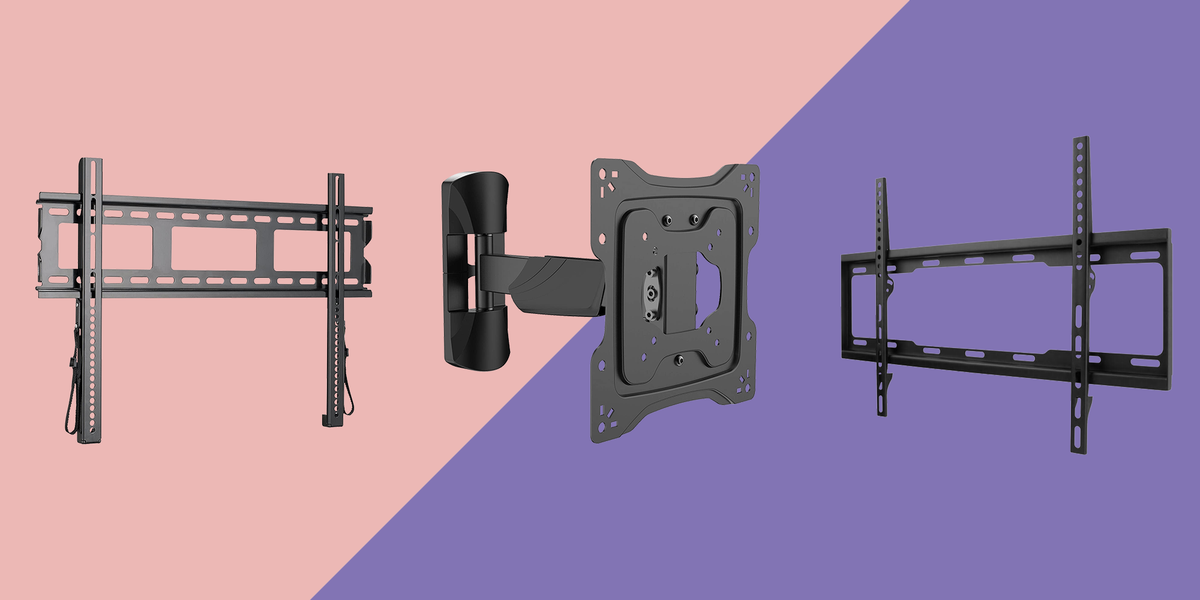
A fixed TV wall mount holds the screen in one position, usually very close to the wall. This is the cleanest and slimmest option, making it ideal for living rooms, bedrooms, offices, and minimalist setups where the seating position is directly in front of the TV.
Fixed mounts are typically affordable, sturdy, and easy to install. They have fewer moving parts, which means less chance of sagging or adjustment issues. The trade-off is flexibility. Once the TV is mounted, you cannot tilt or swivel it to reduce glare or change the viewing angle. If your sofa is centered and your room lighting is predictable, fixed is fantastic. If your TV needs to serve three seating zones and a snack bar, fixed may feel a little too committed.
Tilting TV Wall Mounts
A tilting TV mount allows the screen to angle up or down. This is especially useful when the TV is mounted higher than eye level, such as above a dresser, in a bedroom, or above a fireplace. A slight downward tilt can reduce neck strain and help manage reflections from ceiling lights or windows.
Tilting mounts are a smart middle ground: more flexible than fixed mounts, but usually slimmer, cheaper, and easier to install than full-motion brackets. They are one of the best choices for most households because they solve the most common wall-mounting problemglarewithout adding unnecessary complexity.
Full-Motion TV Wall Mounts
A full-motion TV wall mount, also called an articulating mount, can extend, retract, swivel, and tilt. This is the most versatile type of TV bracket. It is ideal for open-concept spaces, corner placements, rooms with multiple seating areas, and anyone who wants to pull the TV away from the wall to reach HDMI ports without performing advanced yoga.
Full-motion mounts are more expensive and usually require more careful installation because extended arms create more leverage on the wall. For larger TVs, a dual-arm full-motion mount is generally more stable than a single-arm design. The best full-motion TV mounts feel smooth when adjusted, hold their position without drooping, and include post-installation leveling to correct tiny mistakes. Because yes, even careful humans occasionally mount things one eyebrow higher than intended.
Ceiling TV Mounts
Ceiling mounts are less common, but they are useful in rooms where wall space is limited or walls are not suitable for mounting. They can work well in gyms, covered patios, commercial spaces, kitchens, or rooms with unusual layouts. Many ceiling brackets offer height adjustment, tilt, and swivel.
However, ceiling mounts require extra attention to structure. You need to anchor into solid framing, not just drywall or ceiling panels. If the phrase “ceiling joist” makes you nervous, professional installation is a very reasonable idea.
Best TV Wall Mounts and Brackets by Use Case
Best Overall for Most People: Tilting Mounts Like Mounting Dream MD2268-LK
For most homes, a reliable tilting mount offers the best balance of price, stability, and practicality. Models similar to the Mounting Dream MD2268-LK are popular because they support a wide range of TV sizes, usually sit fairly close to the wall, and offer enough tilt to reduce glare. This type of bracket is great for 37- to 70-inch TVs in living rooms, bedrooms, and family rooms.
The biggest advantage is simplicity. You get a sturdy installation without the bulk of full-motion arms. If your TV will stay in one primary viewing position and you only need a little angle adjustment, a tilting wall mount is the sweet spot.
Best Full-Motion Mount: Echogear Full-Motion Series
Full-motion mounts from brands like Echogear are strong options for viewers who want flexibility. These mounts typically support large TVs, offer generous extension from the wall, and allow swivel and tilt adjustments. A full-motion bracket is especially helpful if your room has side seating, a sectional sofa, or an open kitchen where someone inevitably wants to watch the game while pretending to cook.
Look for a full-motion mount with a wide wall plate, dual arms, cable management, and post-installation leveling. For larger TVs, stability matters more than saving a few dollars. A smooth full-motion mount should feel controlled, not like you are wrestling a metal octopus.
Best Premium Large-TV Mount: Sanus Advanced or Premium Tilt Mounts
Large TVs deserve mounts with excellent engineering. Premium brackets from Sanus are often recommended for big screens because they focus on strength, adjustability, and installer-friendly details. For TVs in the 75- to 90-inch range, a premium tilting or full-motion mount can make the installation process easier and safer.
Premium mounts often include better hardware, smoother adjustment, improved cable access, and more forgiving post-installation features. That matters when you are dealing with a massive TV that costs more than your first car. If your screen is huge, ultra-thin, or mounted in a high-visibility living room, spending more on the mount is usually worth it.
Best Budget Option: Basic Fixed or Tilting Mounts
If you have a mid-size TV and a straightforward wall setup, a basic fixed or tilting mount can do the job beautifully. Many budget mounts support common VESA patterns and reasonable weight limits. The key is not to buy purely by price. Check the supported TV size, maximum weight, VESA range, stud spacing, included hardware, and user feedback about installation.
A budget mount is fine for a 43- or 55-inch TV in a simple setup. It is less ideal for a very large TV, a corner installation, or a mount that needs to extend far from the wall. Cheap is nice. Cheap and wobbly is a suspense movie.
Best for Small TVs: Compact Full-Motion Mounts
For small TVs in kitchens, bedrooms, dorm rooms, home offices, and workout areas, compact full-motion mounts are extremely useful. Brands such as Perlesmith, Pipishell, and similar bracket makers offer small-screen mounts that can tilt and swivel without requiring a large wall plate.
These mounts are ideal for 13- to 42-inch screens, depending on the model. They are also helpful for computer monitors, guest rooms, and secondary TVs. Just make sure the TV has a compatible VESA pattern. Some smaller or specialty TVs may use unusual mounting holes, and discovering that after opening the box is the DIY version of stepping on a LEGO.
Best for Corners: Full-Motion Corner Mounts
Corner TV mounting is tricky because the screen needs to extend and swivel far enough to face the room. A full-motion corner mount, often with a longer arm and strong articulation, is the best solution. These mounts are excellent for bedrooms, apartments, small living rooms, and awkward layouts where the only available wall space is not centered.
When shopping for a corner mount, focus on extension length, swivel range, TV weight capacity, and arm strength. A short extension may not clear the corner properly, while a weak arm may sag over time. For corner installations, measure twice, imagine the TV’s full width while turned, and then measure again because corners are sneaky.
How to Choose the Best Wall Mount for Your TV
Check the VESA Pattern
The VESA pattern is the distance between the mounting holes on the back of your TV, measured in millimeters. Common patterns include 200×200, 300×300, 400×400, and 600×400. Your wall mount must support your TV’s VESA pattern. Most modern mounts list a VESA range, but you should confirm before buying.
You can usually find the VESA pattern in the TV manual, manufacturer specifications, or by measuring the horizontal and vertical distance between the four mounting holes. This is one of the most important compatibility checks. A mount may support your TV’s size, but if the VESA pattern does not match, the bracket will not fit correctly.
Know Your TV’s Weight
Always compare your TV’s weight without the stand to the mount’s maximum weight capacity. Do not cut it close. If your TV weighs 82 pounds, do not buy a mount rated for 85 pounds and call it destiny. Choose a mount with a comfortable safety margin, especially for full-motion designs.
Remember that wall strength matters too. A mount rated for 150 pounds still needs to be anchored properly into studs, masonry, or another approved structure. The rating assumes correct installation. Drywall alone is not a magical force field.
Consider Your Wall Type
Most U.S. homes have drywall over wood studs, often spaced 16 or 24 inches apart. Many TV mounts are designed for this setup. If you have concrete, brick, metal studs, plaster, or an older home with unusual framing, you may need special hardware or professional help.
For wood studs, lag bolts are commonly used. For masonry, concrete anchors are typically required. Metal studs often need specialized toggle anchors or mounting plates. Never assume the hardware in the box works for every wall type. The wall is not being difficult; it just has boundaries.
Match the Mount to Your Room Layout
Think about where people sit, where windows are located, and whether the TV needs to serve multiple areas. If the sofa is directly in front of the screen, fixed or tilting works well. If the room has a sectional, side chairs, or a kitchen view, full-motion is worth considering.
Also think about future access. If your TV has rear-facing HDMI ports, an ultra-slim fixed mount may make cable changes annoying. A tilting or full-motion mount gives you more room to plug in streaming devices, game consoles, soundbars, and other accessories.
Choose the Right TV Height
For comfortable viewing, the center of the TV should generally sit near eye level when seated. In many living rooms, that means the center of the screen lands around 40 to 45 inches from the floor. Larger TVs and higher seating may require adjustments, but the goal is simple: your neck should not file a complaint after one movie.
Mounting above a fireplace is common, but it is not always ideal. The TV may sit too high, heat can be an issue, and viewing comfort may suffer. If you must mount above a mantel, use a tilting mount and confirm the area does not get too hot for electronics.
Important Features to Look For
Post-Installation Leveling
Post-installation leveling lets you slightly adjust the TV after it is already mounted. This is a lifesaver when the bracket is almost level but not quite. Without this feature, correcting a tiny tilt may require removing the TV and adjusting the wall plate. That is not fun. That is cardio with consequences.
Extension and Swivel Range
For full-motion mounts, extension length determines how far the TV can move away from the wall. Swivel range determines how much the screen can turn left or right. Larger TVs may have less practical swivel than smaller TVs because the screen width can hit the wall sooner. Always consider the real-world movement, not just the advertised angle.
Low Profile Design
A low-profile mount keeps the TV close to the wall for a clean, modern look. Fixed mounts are usually the slimmest, followed by tilting mounts. Full-motion mounts sit farther out because they need room for moving arms. If aesthetics are your top priority, choose a slim mountbut make sure you can still access cables.
Cable Management
Cable management can make or break the final look. Some mounts include clips or channels to guide wires along the arms. You can also use paintable cable raceways or in-wall cable kits where allowed by local code. Avoid running standard power cords inside the wall unless they are specifically rated for in-wall use. A clean setup is great; an unsafe setup is not.
UL Certification and Build Quality
Look for mounts with strong steel construction, clear weight ratings, quality hardware, and safety testing. UL-listed or safety-certified mounts add confidence, especially for large TVs. Also check customer reviews for comments about sagging, missing hardware, unclear instructions, or difficult leveling.
Installation Tips for a Safer TV Mount
Use the Right Tools
Most installations require a stud finder, drill, drill bits, socket wrench, screwdriver, tape measure, pencil, and level. For large TVs, you also need a second person. Technically, you can try to lift a 75-inch TV alone, but that is how people become cautionary tales at family gatherings.
Find the Studs Carefully
Use a stud finder and confirm the stud location with small pilot checks when needed. Do not rely on guesswork. Wall studs are the backbone of most TV installations. Missing the stud by even a small amount can weaken the mount and create serious risk.
Drill Pilot Holes
Pilot holes help lag bolts enter the stud cleanly and reduce the risk of splitting wood. Follow the mount manufacturer’s instructions for drill bit size and depth. Over-tightening bolts can damage the wood fibers, so tighten firmly but do not go full superhero.
Attach the TV Brackets Correctly
Before lifting the TV, attach the vertical mounting brackets to the back of the screen using the correct screws and spacers. Many TVs have curved or recessed backs, so spacers may be necessary. If the screw feels too short or too long, stop and check the manual. Forcing the wrong screw into a TV is a very expensive way to learn patience.
Test Before Letting Go
Once the TV is hung on the wall plate, confirm that safety locks, pull cords, screws, or latches are engaged. Gently test the TV’s stability before letting go completely. If the mount includes final leveling adjustments, make them slowly and carefully.
Common Mistakes to Avoid
Buying by Screen Size Alone
Screen size matters, but it is not enough. A mount must match the TV’s VESA pattern and weight. Two 65-inch TVs can have different weights, hole patterns, and cable layouts. Always check the specifications before buying.
Mounting Too High
A TV mounted too high can look stylish for about five minutes and then turn every show into a neck endurance challenge. Keep the center of the screen close to seated eye level whenever possible.
Ignoring Cable Access
Ultra-slim mounts look beautiful, but they can make rear ports hard to reach. If you frequently connect game consoles, streaming sticks, or soundbars, consider a tilting or full-motion mount. Also think about right-angle HDMI adapters for tight spaces.
Trusting Drywall Alone
Drywall is not designed to hold large TVs by itself. Use studs, masonry anchors, or approved mounting systems for your wall type. When in doubt, hire a professional installer. It is cheaper than replacing a TV, repairing drywall, and explaining what happened.
Real-World Experience: What Actually Matters After the TV Is on the Wall
After comparing mount styles and helping with several home setups, one lesson becomes clear: the “best” TV wall mount is the one that fits how the room is actually used, not how the room looks in your imagination. In the showroom fantasy, everyone sits perfectly centered, lights are dimmed, cables disappear, and nobody ever needs to plug in a new HDMI device. In real life, someone watches from the kitchen, sunlight blasts through one window at 4 p.m., the game console moves twice a year, and the dog believes the TV stand area was built for tail-based destruction.
In a simple living room with a sofa directly across from the TV, a tilting mount often feels like the smartest choice. It is slim, stable, and adjustable enough to deal with glare. You do not pay for movement you rarely use. In one typical setup with a 55-inch TV, the tilting bracket made the screen look nearly flush while still allowing enough room to connect a soundbar cable. That little bit of tilt also helped reduce reflection from recessed lights. It was not flashy, but it worked every day, which is the highest compliment you can give a wall mount.
Full-motion mounts shine in trickier rooms. For example, in an open-plan living room where the TV is watched from both the sofa and the kitchen island, a full-motion bracket makes the space feel more flexible. Pulling the TV out and swiveling it slightly can turn a single-purpose screen into an all-room entertainment hub. It also makes cable changes much easier. If you have ever tried to plug an HDMI cable into the back of a flush-mounted TV while holding a flashlight in your teeth, you already understand the emotional value of full motion.
However, full-motion mounts need respect. The farther the TV extends from the wall, the more force is placed on the mounting points. That is why I prefer sturdy dual-arm models for large TVs and would rather overspend a little than wonder if gravity is quietly plotting. A heavy-duty bracket with smooth movement feels better immediately. It does not creak, sag, or require a wrestling match every time you adjust the angle.
The most underrated part of mounting a TV is planning the cable path before drilling. People often focus on bracket strength and forget about power, HDMI, Ethernet, antenna cables, soundbar connections, and streaming devices. A clean installation starts with knowing where every wire will go. Even a basic paintable raceway can make the finished result look dramatically better. If you want a truly premium look, an in-wall cable management kit may be worth it, as long as it is installed safely and correctly.
Height is another area where practical experience beats guesswork. Many people mount TVs too high because it looks balanced above furniture or a fireplace. But after a few nights of watching, comfort wins. A TV should feel natural to watch, not like the front row of a movie theater. Before drilling, tape a paper outline on the wall and sit in your normal viewing spot. If your chin starts drifting upward, lower the plan.
Finally, never underestimate the value of a helper. Even if the bracket is easy to install, lifting the TV onto the mount is a two-person job for most medium and large screens. One person guides, the other supports, and both silently agree not to drop the expensive rectangle. That teamwork may not be glamorous, but neither is explaining a cracked OLED panel.
Final Verdict: Which TV Wall Mount Should You Buy?
The best wall mount for your TV depends on your setup. For most people, a tilting TV wall mount is the safest recommendation because it offers useful adjustment, a slim profile, and good value. For flexible rooms, open layouts, and corner installations, a full-motion TV wall mount is worth the extra cost. For a clean home theater look, a fixed mount can be perfect if the seating and lighting are already dialed in.
Before you buy, confirm four things: your TV’s VESA pattern, TV weight, wall type, and preferred viewing angle. Then choose a mount with a strong weight rating, clear instructions, compatible hardware, and enough adjustment for your room. A great TV deserves more than a random bracket from the bargain bin. Give it the sturdy, level, glare-fighting throne it deserves.
Note: This article is written for general educational and shopping guidance. Always follow the TV and wall mount manufacturer’s installation instructions, and consult a professional installer for complex walls, oversized TVs, metal studs, masonry, or uncertain structural conditions.

