
Beauty Unlocked
Moomah Cafe in New York City
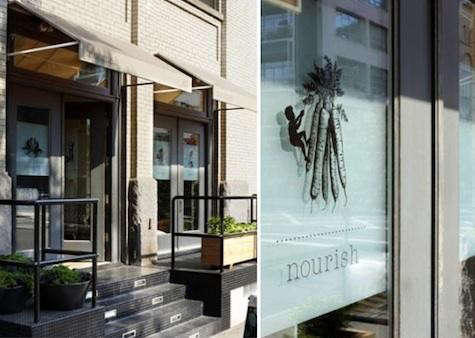
Jun
Note: Moomah Cafe in New York City is no longer operating as a public café. This article looks at Moomah as a memorable Tribeca family café, creative play space, and small-but-bright chapter in New York’s kid-friendly dining history.
Introduction: A Cafe Where Kids Could Be Kids and Parents Could Exhale
New York City has never suffered from a shortage of cafés. There are espresso bars where laptops outnumber chairs, bakeries where croissants sparkle like edible architecture, and tiny coffee counters where ordering a latte can feel like auditioning for a very serious indie film. But for a few years in Tribeca, Moomah Cafe in New York City offered something unusually warm: a place where children could make art, parents could drink good coffee, and nobody had to apologize because a toddler discovered glitter with the enthusiasm of a tiny hurricane.
Moomah was located at 161 Hudson Street in Tribeca, a downtown Manhattan neighborhood known for cobblestone charm, converted industrial buildings, celebrity sightings, stroller traffic, and the occasional sandwich that costs more than a sensible umbrella. The café was founded by Tracey Stewart and became known as a family-friendly destination that combined food, art, classes, dramatic play, thoughtful design, and interactive experiences. It was not simply a café with crayons tossed in a cup. It was a carefully imagined environment where creativity was part of the menu.
Although Moomah eventually closed, its legacy still matters. It represented a style of family-centered urban hospitality that felt ahead of its time: part coffeehouse, part art studio, part playroom, part community living room. For parents searching “Moomah Cafe NYC” today, the most important thing to know is that the original venue is gone, but the idea behind it still feels fresh. In a city where families often squeeze joy between subway delays and snack emergencies, Moomah made space for wonder.
What Was Moomah Cafe?
Moomah Cafe was a creative arts café and family play space in Tribeca. Its concept was built around a simple but powerful question: What if a family café served the needs of both children and adults without making either group feel like an afterthought?
The answer was a venue where parents could enjoy coffee, pastries, light meals, and a calm atmosphere while children explored hands-on art projects and imaginative activities. Moomah offered “Do-It-Together” style projects, classes, food, events, and a famous interactive room called the Funky Forest. The experience was intentionally collaborative. Instead of parking kids in front of a screen while grown-ups recovered from the morning, the café encouraged families to make, build, draw, glue, paint, and discover together.
That distinction is important. Moomah was not a traditional indoor playground where children ran in circles until gravity resigned. Nor was it a formal art school with stiff chairs and a stern teacher guarding the paintbrushes. It was more relaxed, more whimsical, and more social. Kids could create something tangible. Parents could participate or simply breathe for a few minutes. The place understood a sacred truth of family life: sometimes everyone needs a snack, a table, and permission to make a beautiful mess.
Location: Why Tribeca Was the Perfect Home
Tribeca was a fitting setting for Moomah. The neighborhood has long blended old New York character with modern family life. Former warehouses now house lofts, galleries, restaurants, boutiques, and schools. Sidewalks fill with strollers, dogs, scooters, and people carrying coffee cups with the seriousness of legal documents.
Moomah’s address at 161 Hudson Street placed it near the Canal Street subway area, making it relatively accessible for downtown families and visitors coming from other neighborhoods. Its surrounding streets offered the kind of urban texture that made a family outing feel like a small adventure: cast-iron buildings, quiet corners, and the sense that every doorway might hide either a design studio or a very expensive chair.
The location also helped shape Moomah’s identity. Tribeca parents wanted places that were stylish but practical, child-friendly but not chaotic, creative but not precious. Moomah answered that need with a café that looked thoughtfully designed and still welcomed little hands. That balance is harder than it sounds. Anyone can put a high chair in a room. It takes vision to build a space where a child’s art project feels as important as the cappuccino.
The Design: Whimsy Without the Plastic Overload
One of the reasons Moomah Cafe in New York City is still remembered fondly is its design. Instead of relying on the loud primary-color chaos that often defines children’s spaces, Moomah embraced a softer, more organic look. The café featured vintage touches, handmade details, charming illustrations, terrarium-like elements, and a visual language that felt earthy and imaginative.
The branding was built around values such as connection, creativity, discovery, and nourishment. That philosophy showed up in the environment. Moomah did not feel like a place designed only to survive children. It felt like a place designed to respect them. There is a difference. One says, “Please do not destroy the furniture.” The other says, “Here is a table. Let’s make something wonderful.”
The café’s visual personality also appealed to adults. Parents did not have to sit under fluorescent lights next to a wall decal of a cartoon giraffe with suspiciously large eyes. They could enjoy a room that felt cozy, curated, and adult enough to make a cup of coffee taste like a small vacation. For New York parents, that was no small luxury.
The Funky Forest: Moomah’s Most Magical Feature
Ask people what made Moomah memorable, and the Funky Forest often appears near the top of the list. This interactive digital forest room was designed to respond to children’s movement and touch. Kids could interact with projected trees, water, light, and environmental elements, creating the feeling of stepping into a playful ecosystem.
Long before every museum wanted an immersive digital room with glowing walls and a hashtag-ready corner, Moomah was giving children a sensory environment that encouraged movement, curiosity, and cause-and-effect learning. The Funky Forest was especially exciting for younger children because it turned the room into a living game. A hand movement could make water ripple. A child’s action could help imaginary trees grow. For toddlers and preschoolers, that kind of feedback is basically wizardry.
The experience also fit Moomah’s larger mission. It was not technology for technology’s sake. It was technology used to support imagination, environmental awareness, and active play. In other words, it was not a screen replacing human connection. It was a room inviting families to move, laugh, point, and say, “Did you see that?” approximately 47 times.
Food and Drink: A Cafe Parents Actually Wanted to Visit
Moomah took its café side seriously. It served coffee, pastries, snacks, light meals, juices, smoothies, and kid-friendly options. Sources from the period mention Counter Culture coffee, pastries from respected bakeries, bagels, quiche, soup, gluten-free choices, and other locally minded offerings. The point was not fine dining. The point was thoughtful dining in a space where families could relax.
That mattered because many children’s venues have historically treated adult food as an afterthought. Parents were expected to survive on burnt coffee, packaged crackers, and whatever half banana remained in the diaper bag. Moomah raised the bar. It recognized that parents are people too, and people sometimes deserve a real pastry while supervising a glue stick.
The food also supported the café’s broader atmosphere. A good family café needs to solve several problems at once: hungry children, tired adults, limited time, unpredictable moods, and the eternal question of whether a snack can prevent a meltdown. Moomah’s menu gave families a reason to linger. A visit could include lunch, an art project, playtime, coffee, and maybe a sweet treat. That made it more than a quick stop. It became an outing.
Art Projects and Classes: The Joy of Making Something Together
At the heart of Moomah were its art projects. Children could choose from rotating activities that included crafts, cards, painting, embroidery-inspired projects, shadowboxes, decorated objects, and seasonal creations. Some projects were simple enough for younger children, while others invited more parent-child teamwork.
This “Do-It-Together” approach was a clever alternative to the usual “drop the kid off and flee” model. Moomah encouraged adults and children to collaborate. That did not mean every project emerged looking like museum-quality folk art. In fact, the charm of children’s art is that it often looks like a raccoon made a decision and stood by it. But the value was in the process: choosing colors, handling materials, solving small problems, and creating a shared memory.
Classes expanded the concept beyond casual drop-in crafting. Moomah offered activities connected to art, animation, dramatic play, music, and movement. The café also hosted workshops and events, including family art sessions and adult-oriented craft gatherings. This made it useful for everyday visits, birthday parties, rainy afternoons, and community meetups.
Why Moomah Worked for Families
Moomah succeeded emotionally because it understood the rhythm of family life in New York City. Parents are often looking for places that meet several needs at once. They want somewhere safe for children, interesting enough to justify the subway ride, comfortable enough for adults, and flexible enough to survive the unpredictable behavior of small humans who may suddenly become deeply offended by a sandwich.
Moomah offered that flexibility. A family could stop in for a short café visit, stay longer for a craft project, attend a workshop, or plan a party. The venue gave children agency without making parents feel abandoned to chaos. It also had a rare quality in kid-friendly spaces: taste. Not taste as in “fancy,” but taste as in care. The tables, materials, menu, branding, and layout all suggested that families deserved beauty, not just convenience.
That is why the café developed a devoted following. It served a practical need, but it also offered emotional relief. For parents of young children, a place where everyone feels welcome can seem like a minor miracle. Add coffee, art supplies, and a magical forest room, and suddenly you have the kind of spot people remember years after it closes.
The Closing, Reopening, and Final Goodbye
Moomah’s story includes a bittersweet ending. The original café announced plans to close in 2012, with reports noting that the team intended to pursue a new venture connected to creative parenting and broader community work. Soon after, Moomah briefly returned in a scaled-down form, sometimes described as a kiosk-style café with snacks, drinks, and take-away art kits rather than the full original experience.
That smaller version did not last. By mid-2012, Moomah had closed again, this time for good. The spirit of the place continued through online creative-parenting ideas and projects, but the physical café at 161 Hudson Street became part of New York’s long list of beloved places that live on in memory, photos, old reviews, and parents saying, “There used to be this amazing spot…”
Its closure was disappointing, but not unusual. Family-centered hospitality in New York City faces tough economics. Rent is high, staffing is expensive, space is limited, and a business serving young families must balance affordability with sustainability. A café with art materials, classes, play space, food service, and interactive installations is far more complex than a standard coffee shop. Moomah’s ambition was part of its magic, and possibly part of the challenge.
Moomah’s Legacy in NYC Family Culture
Even though Moomah Cafe is closed, it remains worth writing about because it captured something New York families still want: spaces that treat children as creative people and parents as whole human beings. That combination is surprisingly rare.
Modern family venues can learn from Moomah’s formula. First, design matters. Families do not need every child-friendly place to look like a toy box exploded in a gymnasium. Second, food matters. Parents remember the places where they could get a decent coffee. Third, participation matters. Moomah’s best activities were not passive entertainment; they invited children and adults to make something together. Finally, atmosphere matters. The café created a mood of calm curiosity, which is exactly what many families crave in a city that often runs at blender speed.
Moomah also anticipated trends that became more common later: immersive play, maker-style activities, family cafés, sensory environments, and experience-driven businesses. Today, children’s museums, art studios, and family restaurants often blend these ideas. Moomah was part of that early wave, proving that a café could become a miniature creative ecosystem.
Should You Visit Moomah Cafe Today?
No, because Moomah Cafe is closed. Anyone searching for “Moomah Cafe in New York City” should know that the original Tribeca location is not available for visits, reservations, parties, or coffee runs. If someone offers to meet you there tomorrow, they either have a time machine or need a more recent map.
However, the search is still useful for parents, travel writers, design lovers, and people interested in New York’s family-friendly culture. Moomah remains a strong example of how hospitality, education, art, and play can blend in one space. It also offers inspiration for anyone planning a children’s café, creative studio, boutique playroom, or community-centered family business.
If you are looking for similar experiences in New York today, consider searching for current children’s museums, family art studios, indoor play cafés, creative workshops, and neighborhood cafés with kid-friendly programming. The names and locations have changed, but the need Moomah served has not disappeared. Families still want places to gather, make things, eat snacks, and survive the afternoon with dignity intact.
Experience Section: What a Visit to Moomah Cafe Felt Like
To understand the appeal of Moomah Cafe in New York City, imagine arriving on a cool downtown morning with a child who has already asked three questions about pigeons, two questions about pancakes, and one question about whether glue is a food group. You step off the sidewalk into a space that feels calmer than the city outside. There is coffee. There are tables. There are art materials. There are other parents wearing the familiar expression of people who love their children deeply and also need caffeine immediately.
The first experience would likely be visual. Moomah did not look like a generic kids’ room. It had character. The furnishings felt vintage and homey, the details were handmade and whimsical, and the overall design suggested that someone had thought carefully about how children see the world. For a parent used to loud play spaces, the atmosphere could feel almost suspiciously pleasant. You might wonder, “Is this allowed? Are we still in Manhattan?”
Then came the art. A child could choose a project, sit at a table, and begin the serious work of creation. Adults know it as crafting. Children know it as destiny. There might be paper, paint, fabric, images, glue, markers, or small objects waiting to become something new. The project did not have to be perfect. That was the point. A slightly crooked card or glitter-heavy placemat could become a treasure because it carried the child’s decisions. In a city full of polished surfaces and fast schedules, Moomah gave families permission to slow down and make something with their hands.
The café experience added another layer. Parents could order coffee or a snack while children worked or played. That sounds simple, but in family life simple things are often heroic. A warm drink in a pleasant room while your child is happily occupied can feel like a spa treatment, except with more crayons. The food and drink made the visit feel complete, not like a waiting-room compromise.
For many kids, the Funky Forest would have been the grand finale. Walking into an interactive digital forest gave children the thrill of entering a secret world. The room responded to movement, turning play into discovery. A child could see that actions had visible effects, and that sense of control is powerful. The experience blended physical movement with imagination, making it especially memorable for younger visitors.
A visit to Moomah also offered something quieter: community. Parents could see other families navigating the same small dramas of childhood. Someone spilled something. Someone refused a snack and then demanded the same snack four minutes later. Someone proudly displayed artwork that seemed to contain seventeen different artistic movements at once. In that shared environment, the everyday comedy of parenting felt less isolating.
That is why Moomah’s memory has lasted. It was not just the coffee, the crafts, or the digital forest. It was the feeling of being welcomed as a family. The café understood that children are loud, curious, sticky, brilliant, impatient, hilarious, and constantly learning. It also understood that parents need beauty, humor, and a chair. Moomah gave both generations a place at the table, which is exactly why it still stands out in New York City’s family-culture story.
Conclusion: Why Moomah Still Matters
Moomah Cafe in New York City was more than a cute Tribeca café. It was a thoughtful experiment in family-friendly hospitality, creative learning, and community design. It combined coffee, food, art projects, classes, interactive play, and warm aesthetics in a way that respected both children and adults. Although the physical café is now closed, its influence remains easy to understand. Moomah showed that a family venue could be imaginative without being chaotic, stylish without being stiff, and educational without feeling like homework in disguise.
For anyone researching Moomah today, the lesson is clear: the best family spaces do not merely entertain children. They invite connection. They give parents room to relax. They treat creativity as a shared experience. And, when they are really good, they leave behind the kind of memory that survives long after the lights go out and the last glitter particle finally settles.

