
Hair Care
Russia’s Sunken Nuclear Submarines May Pose Environmental Danger
Jul
The Arctic Ocean has long served as both a strategic highway and an inconvenient storage closet for the nuclear age. During the Cold War, the Soviet Union operated a vast fleet of nuclear-powered submarines, but retiring damaged reactors and radioactive equipment was expensive, technically difficult, and not especially compatible with a government famous for keeping secrets. The solution was sometimes brutally simple: tow unwanted nuclear material north and drop it into the sea.
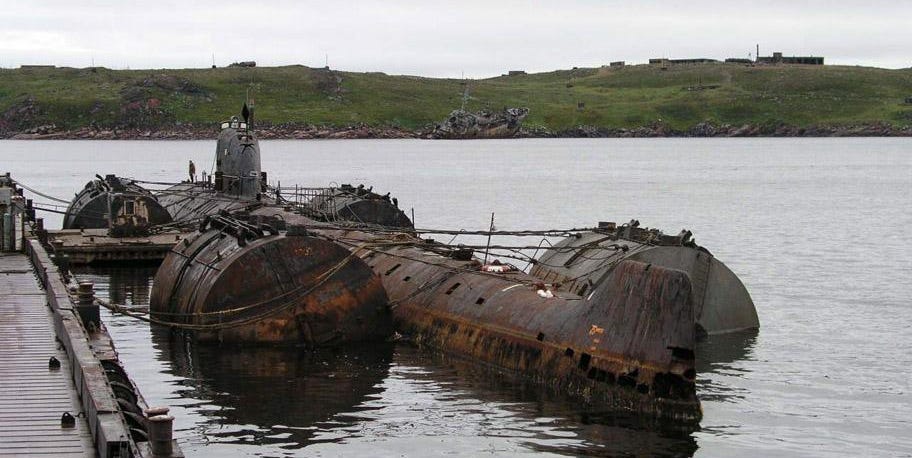
Decades later, several Soviet and Russian nuclear submarine wrecks still rest beneath the Kara, Barents, and Norwegian seas. Some contain spent nuclear fuel. Others carried nuclear weapons when they sank. Their steel hulls are steadily corroding, while scientists attempt to determine whether radioactive material is escaping and what might happen as protective barriers continue to deteriorate.
This is not evidence that an underwater nuclear apocalypse is about to begin. Current monitoring generally shows either no measurable contamination or highly localized releases that dilute rapidly. However, the wrecks create a long-term environmental problem that cannot be dismissed simply because it is inconveniently located beneath several hundred feetor more than a mileof cold seawater. The International Atomic Energy Agency previously estimated that radioactive waste dumped in Arctic seas included six submarine reactors containing spent fuel, along with other fueled and unfueled reactors and large volumes of lower-level waste.
A Cold War Nuclear Legacy on the Seafloor
Nuclear submarines are designed to operate for months without surfacing. Their reactors are compact, powerful, and heavily shielded, but they were never designed to become permanent artificial reefs. Once a submarine sinks, seawater begins attacking cables, pipes, welds, fuel cladding, pressure vessels, and the outer hull. Cold temperatures may slow some corrosion processes, but they do not stop them.
The resulting danger depends on the wreck. A submarine that was defueled before sinking presents a different problem from one whose reactor still contains irradiated uranium. A wreck lying in deep, fast-moving water may disperse contaminants differently from one resting in a shallow Arctic bay. Sediment, currents, water chemistry, hull damage, and the physical condition of the fuel all affect how radionuclides could move through the environment.
Three submarines attract particular attention: K-27, K-159, and K-278 Komsomolets. Each reached the seafloor under different circumstances, and each illustrates a different version of the same uncomfortable question: How long can the ocean safely contain a neglected nuclear machine?
K-27: The Experimental Submarine That Was Deliberately Sunk
A reactor design with a troubled history
K-27 was an experimental Soviet attack submarine powered by two liquid-metal-cooled reactors. Instead of ordinary water, its reactor system used a lead-bismuth coolant. The design offered potential performance advantages, but it also brought serious engineering complications.
In 1968, K-27 suffered a reactor accident that exposed crew members to intense radiation. Nine sailors reportedly received fatal doses. The submarine was eventually decommissioned because repairing or safely dismantling its damaged reactors was considered exceptionally difficult. Soviet authorities filled parts of the reactor compartment with sealing materials, towed the vessel to Stepovoy Bay near Novaya Zemlya, and deliberately sank it in 1982. It came to rest in only about 108 feet of water, with its nuclear fuel still aboard.
Why K-27 remains a concern
K-27 is often described as one of the most dangerous objects in the Soviet Arctic nuclear legacy. Its shallow location makes it relatively accessible for inspection, but it also places the wreck in a more physically active environment than an extremely deep submarine. Ice, currents, sediment movement, changing temperatures, and human activity can all complicate long-term containment.
Scientists have also examined whether changes inside the reactor could theoretically create a renewed chain reaction, known as criticality. That would not produce an atomic-bomb explosion. A reactor criticality event would instead generate heat, radiation, and possibly additional damage to fuel and containment barriers. The probability depends on the reactor geometry, the condition of neutron-absorbing materials, corrosion, and the movement of seawater into spaces around the fuel.
The submarine was sealed before sinking, but those measures were not designed to remain perfect for centuries. Bitumen, metal, concrete-like fillers, and other materials eventually age. The ocean is patient. It has no meetings, no election cycles, and no problem spending 200 years turning a submarine into extremely complicated rust.
K-159: A Decommissioned Submarine Lost During Towing
An avoidable peacetime disaster
K-159 was a first-generation November-class nuclear attack submarine commissioned in the early 1960s. After it was retired, the deteriorating vessel remained afloat for years with its two reactors still containing spent fuel.
In August 2003, K-159 was being towed from the Gremikha naval base toward a shipyard for dismantling. Improvised pontoons were attached to keep the aging hull afloat. During bad weather, the pontoons failed, and the submarine sank in the Barents Sea. Nine of the 10 people aboard died. The wreck descended to roughly 800 feet and still contains about 800 kilograms, or approximately 1,760 pounds, of spent nuclear fuel.
The fisheries question
K-159 lies in waters associated with commercially important fishing grounds. That does not mean fish are currently dangerous to eat. Surveys have not found significant reactor leakage into the surrounding environment, and earlier sampling near the wreck generally showed radiation levels close to regional background conditions. A joint Norwegian-Russian expedition also reported hull damage without detecting elevated radionuclide levels in nearby seawater and sediment.
The concern is what could happen after further corrosion. Modeling cited by regional experts suggests that a sudden release of K-159’s cesium-137 inventory could temporarily increase radioactive cesium in some Barents Sea cod. Predicted concentrations might remain below international food-safety limits, but the economic consequences could still be significant. Seafood markets are not famous for calmly reading technical footnotes after seeing the words “radioactive submarine.”
That distinction matters. Environmental risk includes more than direct radiation sickness. It can involve fishing restrictions, repeated testing, cleanup costs, damaged consumer confidence, lost exports, and pressure on coastal communities. Even a release that produces a relatively low health risk could become a major economic and political event.
Komsomolets: A Confirmed but Localized Radioactive Leak
A submarine built for extreme depths
K-278 Komsomolets was an advanced titanium-hulled submarine capable of operating at extraordinary depths. In April 1989, a fire broke out while the vessel was submerged in the Norwegian Sea. The submarine surfaced but later sank, killing 42 crew members. It came to rest at a depth of roughly 5,500 feet with its nuclear reactor and two nuclear-armed torpedoes aboard.
Russian and Norwegian teams have monitored the wreck for decades. Engineers also attempted to seal damaged areas during the 1990s. A 2019 remotely operated vehicle mission documented the hull, inspected previous remedial work, and collected samples from seawater, sediment, and marine organisms.
What the latest research found
A peer-reviewed study published in 2026 confirmed that Komsomolets continues to release radionuclides intermittently from its reactor area. Researchers observed visible plumes emerging through a ventilation opening. Samples taken extremely close to the wreck contained strontium-90 and cesium-137 concentrations hundreds of thousands of times higher than typical Norwegian Sea background levels. Evidence from uranium and plutonium measurements also indicated continuing corrosion of reactor fuel.
Those numbers sound terrifying, but concentration and exposure are not the same thing. The strongest readings came from water collected directly beside the release point. The radioactive material diluted rapidly in the enormous surrounding water mass. Researchers found minimal accumulation in nearby sediment and marine organisms, while national monitoring detected no unusual contamination across the wider Norwegian or Barents seas. The nuclear warheads also appeared intact, with no detectable release from them.
Earlier Norwegian sampling reached a similar conclusion: elevated cesium could be detected at the wreck, but investigators did not consider it a danger to people or fish because the contamination was highly localized and quickly diluted.
Komsomolets therefore demonstrates why the issue requires nuance. The reactor is leaking, but the leak has not produced a measurable regional environmental disaster. Both statements can be true at the same time.
How Radioactive Material Could Affect the Marine Environment
Different radionuclides behave differently
Radioactive contamination is not one substance with one predictable behavior. Cesium-137 dissolves readily in seawater and can enter marine organisms. Strontium-90 behaves chemically somewhat like calcium and may be incorporated into bones or shells. Plutonium tends to attach more strongly to particles and sediment, although its behavior changes with water chemistry and particle size.
Whether these substances create meaningful ecological or human exposure depends on the amount released, the speed of release, ocean circulation, biological uptake, and the length of time organisms remain exposed. NOAA monitoring after the Fukushima accident demonstrated that radioactive cesium can be detected in migratory fish across large distances, while also showing that detectable radioactivity does not automatically mean a dangerous dose.
Dilution helps, but it is not a disposal strategy
The ocean’s size can reduce concentrations dramatically, especially around deep wrecks. However, dilution does not erase radioactive atoms. Some disperse through the water column, some attach to particles, and some settle into sediments. A slow leak may create limited concentrations but persist for decades. A sudden release could produce a short-lived contamination pulse that spreads farther before being diluted.
Local ecosystems also matter. Bottom-dwelling organisms may interact with contaminated sediment. Fish can move pollutants through food webs and across national boundaries. Arctic species often grow slowly, and some marine ecosystems recover slowly from disruption. These factors are why experts view spent fuel left in a deteriorating submarine as a transboundary environmental hazard, even when present-day monitoring results are reassuring.
Should Russia Raise the Submarines?
Removing K-27 and K-159 would eliminate the long-term uncertainty of leaving their reactors underwater. It would also allow the fuel and reactor compartments to be dismantled, stabilized, and stored at controlled facilities. Russia and international partners have successfully completed difficult submarine projects before, including raising most of the wrecked Kursk in 2001.
Unfortunately, lifting a nuclear submarine is not comparable to towing a broken fishing boat. Salvage crews must attach cables or lifting structures without rupturing the hull. The wreck may be partially buried, structurally weakened, or filled with contaminated sediment. Raising it changes pressure and mechanical loads. A submarine that has remained stable on the seabed could break apart during movement.
The safest strategy would require extensive mapping, structural analysis, radiation monitoring, emergency containment, specialized lifting equipment, a secure transport route, and a prepared dismantling facility. Every step must account for bad weather, rough seas, worker exposure, and the possibility of an uncontrolled release.
Russia reported that its 2026–2028 budget planning included money for preparation and possible recovery of K-27 and K-159, with preparatory work expected before any lifting operation. However, outside experts have cautioned that a budget announcement is not the same thing as a finished engineering plan. The submarines have appeared in proposed cleanup schedules before, only to remain exactly where they wereproving that even nuclear wrecks can become veterans of government paperwork.
Why International Cooperation Matters
Arctic contamination does not respect political borders. Currents connect Russian waters with Norway and the wider North Atlantic. Fisheries cross national zones, and marine organisms are famously uninterested in customs checkpoints.
For years, Russian and Norwegian specialists cooperated on monitoring nuclear sites and submarine wrecks. International organizations, environmental groups, researchers, and engineering companies contributed expertise and funding. That cooperation became much harder after Russia’s full-scale invasion of Ukraine, as sanctions, security concerns, diplomatic breakdowns, and restrictions on scientific exchange disrupted many joint efforts.
The Arctic has also become more strategically sensitive. Russia’s Northern Fleet is central to its nuclear deterrent, while NATO activity in the region has increased. Environmental researchers now work in an area filled with military installations, surveillance systems, restricted waters, and political suspicion. Nuclear cleanup may be scientifically sensible, but science is being asked to operate inside a geopolitical freezer with the door locked.
What Should Happen Next?
Maintain independent monitoring
Regular sampling of water, sediment, fish, and bottom-dwelling organisms is essential. Monitoring should measure multiple radionuclides rather than relying on a single indicator. Remotely operated vehicles can inspect cracks, vents, reactor compartments, and earlier sealing work without placing divers directly beside the wrecks.
Publish comparable data
Measurements are most useful when scientists can compare them across years. Sampling locations, laboratory methods, detection limits, and uncertainty ranges should be published consistently. Transparency helps distinguish a genuine environmental change from a dramatic headline based on one unusually concentrated sample.
Prepare recovery before an emergency
Even when immediate salvage is judged too risky, governments should develop technical recovery plans. Waiting until a hull collapses is not a plan; it is a surprise party hosted by corrosion. Equipment, facilities, financing, and international notification procedures should be established before monitoring detects a major release.
Conclusion: A Manageable Risk That Cannot Be Ignored
Russia’s sunken nuclear submarines do not currently appear to be causing a broad radiological crisis. Monitoring around K-159 has generally been reassuring, while the confirmed leakage from Komsomolets remains highly localized and rapidly diluted. Yet K-27 and K-159 still contain nuclear fuel inside aging structures, and Komsomolets shows that reactor corrosion and radioactive releases are not merely theoretical.
The sensible response lies between panic and complacency. Claims of an imminent underwater Chernobyl can exaggerate what current evidence shows. Claims that the wrecks are harmless because the ocean is large are equally irresponsible. These submarines are long-lived industrial hazards that require inspection, transparent science, engineering preparation, and eventually safe removal when the risks of salvage become lower than the risks of leaving them in place.
Extended Experience: What Arctic Survey and Salvage Missions Teach Us
Experience from submarine surveys shows that the first challenge is simply reaching the wreck reliably. Deepwater sites require research vessels, sonar, remotely operated vehicles, precise navigation, and technicians capable of repairing equipment far from a convenient hardware store. At Komsomolets, the research vehicle had to approach individual openings in a damaged submarine more than a mile beneath the surface, position sampling equipment inside a small plume, and collect water without disturbing the wreck. That is less like scooping water from a pond and more like performing laboratory work while flying a robot through a dark warehouse during an earthquake.
Teams also learn that a wreck is not a static object. Sonar may show one overall shape, while close-up video reveals torn plating, collapsed compartments, fishing gear, sediment deposits, or openings that were not visible during earlier expeditions. Water samples collected only a few feet apart can produce very different results because a release may occur in pulses. One bottle may show ordinary background conditions; the next may capture a concentrated plume. This is why alarming individual measurements must be interpreted alongside current data, sediment analysis, biological samples, and repeated observations.
Salvage experience adds another lesson: success depends on preparation that is mostly invisible to the public. Long before anything rises from the seabed, engineers must model the wreck’s center of gravity, identify strong attachment points, estimate how much structure is buried, and predict how the hull will behave when lifted. They need backup cables, radiation barriers, weather limits, emergency towing options, and a destination capable of receiving the radioactive vessel. The dramatic moment when a wreck reaches the surface may last hours. Planning it safely can take years.
Survey crews also operate under psychological pressure. The wrecks are graves as well as environmental hazards. K-159 and Komsomolets contain the history of fatal accidents, and every camera pass documents places where sailors died. Work must therefore balance scientific curiosity, worker safety, military sensitivity, and respect for the dead.
Finally, decades of monitoring demonstrate the value of patience. The absence of a regional emergency does not make repeated surveys pointless. It means monitoring is doing its job: establishing a baseline, detecting changes early, and preventing speculation from replacing evidence. Environmental protection is often unglamorous. It involves collecting another sediment core, calibrating another detector, and returning to the same cold coordinates year after year. That persistence may be the difference between managing a slow problem and reacting to a sudden one.
Note: This article reflects publicly available research and reporting through July 2026. Radiological conditions and recovery plans may change as new inspections, measurements, and government decisions are released.

