
Body Care
Our Dog Was Getting A Human Sister, So I Built Her A Room Under The Stairs – It Turned Out Better Than Expected
Jun
Note: This is an original SEO article based on real public information, rewritten naturally with no source links or citation placeholders inside the publishable article body.
When a new baby is on the way, most families start rearranging furniture, comparing bassinets, and arguing gently over paint colors with names like “Cloud Whisper” and “Barely Beige.” But one soon-to-be dad had another family member to think about first: the dog. Their beloved pup, Molly, was about to become a big sister to a tiny human, and instead of letting her feel pushed aside by the arrival of diapers, pacifiers, and suspiciously loud baby toys, he gave her something extraordinarya private dog room under the stairs.
The idea sounds like something from a home renovation show hosted by a golden retriever. A forgotten triangle of space beneath the staircase became a miniature bedroom, complete with walls, flooring, lighting, decor, a cozy bed, and personalized finishing touches. What started as a practical solution for a dog adjusting to a new baby turned into a heartwarming DIY dog room project that looked better than many human guest rooms. Honestly, some college dorms have requested privacy after seeing it.
This story is not just cute internet fluff, though it is aggressively adorable. It also reveals something smart about family transitions: pets need preparation, too. Dogs can struggle when routines change, attention shifts, and strange new sounds take over the house. A designated safe space gives them comfort, independence, and a place to decompress when family life gets busy. In Molly’s case, that safe space just happened to become a stylish under-stairs dog bedroom worthy of its own tiny real estate listing.
Why Build A Dog Room Before The Baby Arrives?
Bringing home a newborn changes everything. The schedule changes. The noise level changes. The smell of the house changes. Suddenly there are bottles, blankets, strollers, visitors, late-night feedings, and parents walking around like under-caffeinated zombies with unconditional love and questionable hair. For a dog who has been the “only child,” the shift can feel confusing.
That is why the best time to prepare a dog for a new baby is before the baby comes home. A dog can learn new routines, new boundaries, and new cues gradually rather than being expected to become a polite roommate overnight. A private dog nook or pet bedroom gives the dog a reliable place to rest while the household adjusts. It is not about banishing the dog. It is about saying, “You still belong here, and this little corner is yours.”
In this case, the under-stairs space was ideal because it was unused, tucked away, and naturally cozy. Dogs often enjoy den-like areas when those spaces are introduced positively. A small room can feel secure, especially when it includes familiar bedding, toys, and smells. Add a soft bed, gentle lighting, and a few personal touches, and suddenly the awkward dead zone under the staircase becomes a tiny canine studio apartment.
The Starting Point: A Mystery Space Under The Stairs
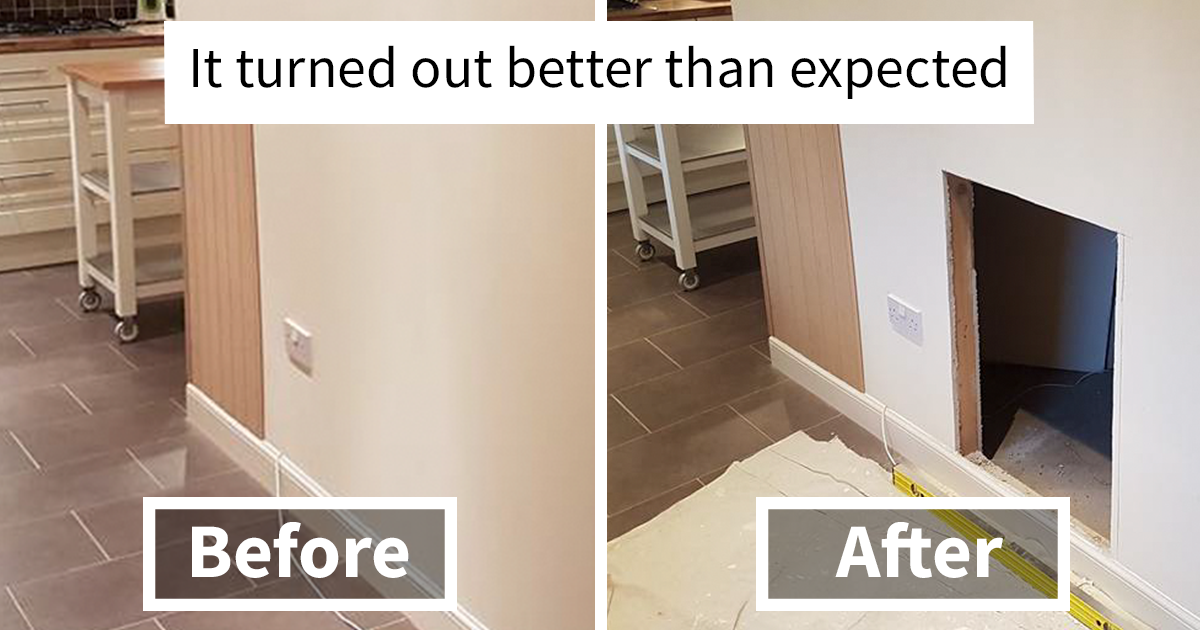
Every great DIY project begins with a dangerous sentence: “I wonder what’s behind that wall.” The builder suspected there might be unused space behind the staircase, so he opened it up carefully to investigate. Once the paneling came away, the hidden area turned out to be larger than expectedroughly four square meters, which is plenty of room for a dog to sleep, stretch, sniff, and judge everyone’s life choices.
There was a catch, of course. The space included wiring for the house alarm system, which had to be moved. This is where the project crossed from “cute weekend idea” into “please know what you are doing.” Under-stair spaces may contain electrical wiring, plumbing, structural supports, or awkward framing that should not be removed casually. If a staircase depends on a section of framing for support, that part stays. No dog room is worth turning the stairs into a slide unless you are building a theme park and have excellent insurance.
Once the usable area was confirmed, the builder framed the opening to match the home’s existing interior joinery. That detail mattered. Instead of looking like a random hole cut into the wall, the entrance started to feel like a real doorway. The project was not just a kennel squeezed into a corner; it was a built-in dog room designed to belong to the house.
Letting Molly Inspect The Construction Site
One of the smartest parts of the build was letting Molly investigate early. Before the room was finished, she was allowed to sniff around and get familiar with the space. This matters because dogs are not impressed by our Pinterest boards. They care about smells, sounds, texture, access, and whether a place feels safe.
If you are creating a dog room under the stairs, do not wait until the final reveal to introduce your pup. Let them explore gradually while the space is safe and supervised. Toss treats inside. Place a familiar blanket near the entrance. Use a simple cue like “go to your room” or “go to your spot,” then reward calm behavior. The goal is to build a positive association so the dog sees the room as a retreat, not punishment.
That distinction is important. A dog room should never feel like solitary confinement with better wallpaper. It should be a voluntary comfort zone. When a dog chooses to go there for a nap, that is a sign the project worked.
From Bare Walls To A Real Dog Bedroom
After the opening was shaped and the structural elements were respected, the room started to look less like a forgotten crawlspace and more like a miniature bedroom. Plasterboard went up, the walls were sealed, and the awkward under-stair angles were handled with custom fitting. Anyone who has worked with slanted walls knows they have the personality of a puzzle designed by a raccoon. Nothing is square, every measurement lies, and at some point you begin negotiating with a piece of trim.
Then came the design details: feature wallpaper, flooring, skirting boards, lighting, and decorative finishes. Color-changing mood lighting made the space feel playful and modern, while the wallpaper gave it a cozy personality. Flooring was a smart addition because dog spaces need to be easy to clean. A washable surface is better than carpet, especially if your dog has wet paws, shedding seasons, or a talent for turning one biscuit into three thousand crumbs.
The final touches made the room feel personal. Molly got a comfortable bed, framed photos, custom signs, and a leash or harness hook. These are the details that turn a pet nook into a true dog bedroom. They also help keep the surrounding house organized. Leashes, collars, toys, and blankets can live in one area instead of migrating mysteriously across the house like furry little nomads.
What Made This Under-Stairs Dog Room Work So Well?
The success of this DIY dog room came from balancing charm with function. It was cute, yes, but it was not only cute. It solved a real household problem: how to make space for a new baby without making the dog feel like an afterthought.
1. It Used Dead Space Wisely
Under-stair areas are often awkward. They become dumping grounds for shoes, vacuum attachments, holiday decorations, or one lonely umbrella nobody trusts. Turning that space into a dog room gives it purpose. It also keeps the main living areas cleaner and calmer.
2. It Gave The Dog A Safe Zone
A good dog room gives the pet a place to retreat when the house is noisy or crowded. With a baby in the home, there will be moments when the dog needs separationnot because the dog is bad, but because supervision and calm routines are essential. A cozy room helps create that boundary in a kind way.
3. It Fit The Home’s Style
The doorway, paneling, trim, and finishes were designed to match the home rather than fight it. That is why the room looked intentional. For anyone planning a similar project, matching existing woodwork, paint tones, and hardware can make a DIY pet space look built-in rather than improvised.
4. It Was Personalized
The signs, photos, bed, and decor made the space feel like Molly’s room, not just a storage closet with a cushion. Personalization adds emotional value, and let’s be honest: if a dog has a room, she deserves tasteful branding.
Safety Tips For Building A Dog Room Under The Stairs
Before you grab a saw and start whispering “HGTV, call me,” take safety seriously. Under-stair spaces can be tricky. Some walls may hide wires, pipes, vents, alarm systems, or structural framing. If you are not sure what you are cutting into, ask a professional. An electrician, carpenter, or contractor can help you avoid expensive surprises and prevent hazards.
Ventilation matters, too. A dog room should not be sealed like a medieval secret chamber. Your dog needs airflow, comfortable temperature, and an easy way to enter and exit. If the space has a door, consider a gate-style front, open slats, mesh, or another design that allows air to circulate. Lighting should be safe, low-heat, and installed securely. Battery-powered or properly wired LED lights are better than anything with dangling cords.
Choose durable materials. Washable flooring, scuff-resistant paint, removable bedding, and easy-clean surfaces will make your life easier. Avoid small decorations that a dog could chew or swallow. If you use hooks for leashes, place them where they will not snag your dog’s collar or harness. Keep food storage sealed, and do not place cleaning supplies, tools, or electrical devices inside the dog’s resting area.
How To Help Your Dog Love The New Room
A beautiful dog room is only successful if the dog actually wants to use it. Start slow. Put the dog’s favorite blanket or toy inside. Toss treats near the entrance, then farther in. Feed a chew or special snack in the room while the door stays open. Praise calm exploration, but do not force the dog to stay inside.
Practice short sessions before the baby arrives. Ask your dog to go to the room, reward them, and let them come back out. Over time, increase the duration. Pair the room with good things: soft bedding, puzzle toys, gentle praise, and peace. The dog should learn that this space means comfort, not exclusion.
Once the baby arrives, maintain the dog’s routine as much as possible. Walks, meals, playtime, and attention should not disappear. The room can help during feedings, naps, visitors, or moments when adults cannot supervise dog-and-baby interactions closely. Still, the dog should remain part of family life. Big sisters need love, tooeven the ones with tails.
Design Ideas To Steal From Molly’s Room
You do not need a huge budget to create a stylish under-stairs dog room. The best ideas are practical first and adorable second, although adorable does tend to sneak in wearing a tiny bandana.
Start with a comfortable bed that fits the space without blocking the entrance. Add washable blankets or a cushion cover that can survive fur, drool, and mystery stains. Use peel-and-stick wallpaper or a painted accent wall for personality. Install a small wall light or LED strip for warmth, but keep all wiring secure and out of reach. Add a hook for leashes, a basket for toys, and framed photos if you enjoy the delightful absurdity of decorating a bedroom for someone who may still bark at the mail carrier.
If the room is small, keep decor minimal. Dogs appreciate comfort more than clutter. A calm color palette, soft textures, and simple storage can make the nook look polished without overwhelming it. For a larger dog, prioritize floor space. For a smaller dog, you can add a raised bed, tiny shelves, or a mini gallery wall. Just remember that every item should be safe, sturdy, and easy to clean.
The Bigger Lesson: Pets Are Family During Life Changes
The reason this story resonated with so many people is not just because the final room looked fantastic. It is because the project showed thoughtfulness. The family did not wait for Molly to feel displaced. They anticipated the change and made room for herliterally.
That is a beautiful mindset for any pet owner. Dogs may not understand pregnancy announcements or nursery themes, but they understand attention, routine, security, and belonging. When a new baby arrives, a dog’s world can shrink if the family is not careful. A dedicated space helps expand it again. It says, “You are still part of this home.”
And in Molly’s case, it also said, “Please enjoy your wallpaper, mood lighting, and luxury bed, madam.”
Extra Experiences: What Building A Dog Room Under The Stairs Teaches You
Anyone who has ever made a special space for a pet knows the project usually starts with logic and ends with emotional attachment. At first, you say, “This will be practical.” Then you find yourself comparing tiny wall art, testing cushion firmness with your elbow, and wondering whether your dog would prefer modern farmhouse or cozy woodland. The dog, meanwhile, is licking a cardboard box and having the time of her life.
The first real experience is that the dog must approve the plan. Humans love clean lines and clever storage, but dogs make decisions based on comfort. A room can look perfect in photos and still fail if it is too hot, too dark, too cramped, or too isolated. The best test is simple: does the dog go in voluntarily? If yes, you are winning. If no, add familiarity. A worn blanket, a favorite chew toy, or even an old T-shirt with your scent can make the room feel less like a showroom and more like home.
The second lesson is that small details matter more than expensive details. A washable floor is more valuable than a fancy rug. Good airflow is more important than dramatic lighting. A safe entrance is better than a decorative door that swings awkwardly or makes noise. Dogs do not care if the trim is designer-approved. They care whether they can nap without being startled every three minutes.
The third experience is that a dog room can improve the whole household. When everything has a placeleashes on hooks, toys in baskets, bedding in one cornerthe home feels calmer. During the newborn stage, that calm is priceless. Parents are already juggling feeding schedules, laundry piles, and the confusing science of folding baby onesies. Having a predictable dog zone reduces chaos. It gives the dog somewhere to settle and gives the adults one less thing to manage.
The fourth lesson is emotional. Building a room for a dog before a baby arrives can help the family mentally prepare, too. It reminds everyone that the dog is not being replaced. The dog is moving into a new role. She may no longer be the only baby in the house, but she is still loved, still important, and now officially promoted to big sister. That matters.
The final experience is the funniest: once the room is finished, the dog may act like she built it herself. She will walk in, circle twice, lie down, and accept compliments with the confidence of a homeowner who just closed escrow. And honestly, fair enough. A good dog room is not just a DIY project. It is a love letter written in plywood, paint, bedding, and snacks.
Conclusion
The under-stairs dog room built for Molly before the arrival of her human sister turned a forgotten space into something meaningful, practical, and ridiculously charming. It solved a real transition challenge while celebrating the family dog’s place in the home. With careful planning, safe construction, gradual training, and a little design flair, a dog room can become much more than a cute renovation. It can become a peaceful retreat, a smart family tool, and a reminder that love makes roomeven under the stairs.

