
Beauty Tools & Accessories
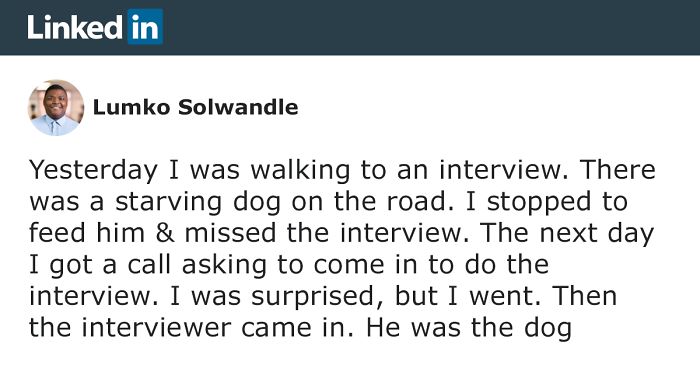
Man Makes A Mocking Post Poking Fun At LinkedIn Influencers
Jun
Note: This original article is written for web publication and synthesizes public discussions about LinkedIn influencer culture, professional networking, workplace social media, satire, and personal branding.
LinkedIn was once the place where people went to upload a résumé, congratulate a former coworker on a promotion, and quietly panic after seeing that someone from high school had become “Head of Global Synergy.” Today, it is still a powerful professional network, but it has also become something else: a stage for motivational monologues, heroic hiring stories, emotional business lessons, and posts that somehow turn buying a sandwich into a masterclass on leadership.
That is why one mocking post aimed at LinkedIn influencers hit the internet’s funny bone so perfectly. The viral joke took the familiar shape of a LinkedIn “success story” and exaggerated it until the whole format collapsed under the weight of its own inspiration. It was not just a joke about one person. It was a joke about a style of posting that millions of users instantly recognized: dramatic line breaks, suspiciously neat life lessons, humblebrags wearing fake mustaches, and a final sentence that sounds like it was printed on a conference tote bag.
The result was simple, sharp, and very funny. A man made a parody post poking fun at LinkedIn influencers, and people cracked up because the joke felt painfully accurate. Somewhere between “I hired the person no one believed in” and “what this taught me about B2B sales,” the internet collectively nodded and said, “Yes. We have seen this movie. It has too many bullet points.”
What Happened: A Satirical Post With a Very Familiar Target
The viral moment centered on a made-up LinkedIn-style success story shared online to mock the kind of overly polished professional storytelling that often fills the platform. The parody followed a formula many users know well: a dramatic situation, a supposedly profound moral lesson, and a business takeaway that feels both inspirational and completely unnecessary.
Reports about the post noted that it spread widely on Twitter, where users recognized the format immediately. It was funny because it did not need much explanation. Anyone who has spent time scrolling LinkedIn has likely seen posts where ordinary workplace events are transformed into cinematic tales of courage, empathy, hiring wisdom, or entrepreneurial enlightenment.
The satire worked because it borrowed the language of LinkedIn influencer content almost too well. It sounded like something that could exist on the platform. That is always the most dangerous kind of parody: the one that makes readers pause and wonder, “Wait, is this fake?”
Why LinkedIn Influencers Became Such an Easy Target
LinkedIn is not just a job board. It is a massive professional network where people build reputations, find opportunities, recruit talent, sell services, and publish expertise. That makes visibility valuable. And when visibility becomes valuable, posting becomes strategic. When posting becomes strategic, people start writing like every coffee refill is a TED Talk waiting to happen.
This is where the LinkedIn influencer enters the chat, usually with a profile photo taken in excellent lighting and a sentence that begins, “I was today years old when I learned…”
To be fair, not every active LinkedIn user deserves to be mocked. Many professionals share genuinely useful insights, hiring advice, industry analysis, career resources, and thoughtful reflections. The problem begins when authenticity becomes a performance. Instead of sharing a real lesson, some posts seem engineered to produce maximum emotional engagement. A small workplace moment becomes a morality play. A routine business decision becomes a life-changing revelation. A normal act of kindness becomes a case study in leadership, culture, and quarterly growth.
The Classic LinkedIn Influencer Formula
The mocking post landed because it captured a recognizable structure. The typical viral LinkedIn story often looks something like this:
First, there is a dramatic opening line. Something like, “I rejected the perfect candidate today.” Naturally, the reader must continue. Why was the perfect candidate rejected? Did they steal the office printer? Did they say “circle back” with too much confidence?
Next comes the twist. The candidate was not rejected because they lacked skill. They were rejected because they lacked kindness, grit, humility, eye contact, or the ability to explain EBITDA to a golden retriever. Then comes the moral lesson. Finally, the author reveals what the experience taught them about leadership, sales, hiring, remote work, resilience, or “building a culture that wins.”
The post ends with a short inspirational line. Usually, it is something like: “Skills can be taught. Character cannot.” Then come 42 comments saying “This!”
Corporate Cringe and the Rise of Professional Performance
The phrase “corporate cringe” has become a popular way to describe content that feels too polished, too self-important, or too emotionally rehearsed for a professional setting. LinkedIn is especially vulnerable to this because users are encouraged to be both human and employable at the same time. That is a tricky balance. Be too formal, and nobody cares. Be too personal, and suddenly your layoff announcement has a three-act structure and a sunrise selfie.
Professional social media creates a strange pressure. People want to seem successful but humble, ambitious but kind, vulnerable but competent, visionary but not annoying at lunch. The result is a writing style that often sounds less like a person speaking and more like a brand manager trapped inside a gratitude journal.
This is exactly what the parody exposed. The joke was not simply “LinkedIn is bad.” The sharper point was that some LinkedIn posts have become so formulaic that a fake one can feel indistinguishable from a real one. That is not a small comedy achievement. That is satire with a fresh haircut and a premium subscription.
Why People Loved the Mocking Post
People laughed because the parody gave them permission to admit something: a lot of professional content online feels exhausting. Users may appreciate career advice, but they can still roll their eyes when a person turns missing a flight into “seven lessons on founder resilience.”
The post also worked because it punched up at a public communication style, not at someone’s private hardship. Good satire usually targets patterns, institutions, and habits. In this case, the target was a recognizable genre of professional storytelling that often rewards exaggeration.
It Made the Invisible Formula Visible
Once you notice the formula, it becomes difficult to unsee. The dramatic one-sentence paragraphs. The overly neat lesson. The emotional climax. The turn toward business wisdom. The call for agreement at the end. “Agree?” “Thoughts?” “What would you have done?”
These posts are built for engagement, and engagement is the oxygen of social media. The more people react, comment, argue, or share, the more visible the post becomes. That does not mean every popular LinkedIn post is fake. It means that platforms often reward content that triggers emotion quickly. Nuance, unfortunately, does not always arrive wearing running shoes.
LinkedIn Is Still Useful, Which Makes the Satire Funnier
The funny thing is that LinkedIn remains genuinely useful. Job seekers use it to find roles. Recruiters use it to identify candidates. Entrepreneurs use it to build credibility. Journalists, analysts, designers, engineers, educators, marketers, and executives use it to follow industry trends. For many people, LinkedIn has created real opportunities that would have been difficult to access otherwise.
That is why the jokes hit harder. People are not laughing because LinkedIn has no value. They are laughing because it has value and still somehow produces posts that sound like, “A barista misspelled my name today. Here is what it taught me about venture capital.”
The platform’s seriousness makes the absurdity more visible. On Instagram, people expect vacation photos and gym mirrors. On TikTok, they expect trends, dances, hot takes, and chaos wearing a ring light. On LinkedIn, users expect professional updates. So when a post turns a normal office interaction into a heroic business fable, the contrast is delicious.
The Personal Branding Problem
Personal branding is not inherently silly. In a competitive job market, people need to communicate who they are, what they do, and why their work matters. A clear professional identity can help someone land interviews, attract clients, build trust, and connect with peers. The issue is not personal branding itself. The issue is when personal branding becomes personal theater.
There is a difference between saying, “Here is a useful lesson from a project I worked on,” and saying, “I once watched a pigeon cross the street, and it changed how I think about enterprise software.” One is helpful. The other may need a glass of water and a group chat intervention.
Authenticity Cannot Be Mass-Produced
The best professional posts tend to be specific. They include real context, practical lessons, and honest reflection. They do not pretend that every inconvenience is destiny. They do not squeeze leadership wisdom out of every elevator ride. They respect the reader’s time.
Performative authenticity does the opposite. It uses vulnerability as a tactic, not a truth. It packages emotion as a growth hack. It sounds open and heartfelt, but the reader can feel the machinery humming underneath. That is why audiences increasingly respond to satire. Humor becomes a defense against being manipulated by content that wants applause more than conversation.
What LinkedIn Creators Can Learn From the Joke
The mocking post is not just a reason to laugh. It is also a useful warning for anyone trying to build a voice online. If your post sounds like it was assembled from motivational refrigerator magnets, people will notice. If every story has the same rhythm, readers will eventually hear the template instead of the message.
Creators can avoid becoming the punchline by writing with more precision and less performance. Share what actually happened. Use details. Admit uncertainty. Offer practical takeaways. Avoid turning every person you meet into a supporting character in your personal growth documentary.
Most importantly, do not confuse drama with depth. A post does not need to be emotionally theatrical to be meaningful. Sometimes the most useful professional update is direct: “We tested this strategy. It failed. Here is what we changed.” That may not sound like a movie trailer, but it respects the reader and teaches something real.
Why Satire Belongs in Professional Culture
Work culture needs humor. Without it, the office becomes a place where phrases like “alignment,” “stakeholders,” and “actionable insights” roam freely without natural predators. Satire helps people name the absurdities they quietly endure. It points at the weird rituals of professional life and says, “We all see this, right?”
The parody of LinkedIn influencers did exactly that. It turned a common frustration into a shared joke. It reminded users that professionalism does not require pretending every moment is profound. Sometimes a meeting is just a meeting. Sometimes a coffee is just a coffee. Sometimes a candidate is not a metaphor for the future of leadership. They are simply late because traffic was bad.
The Fine Line Between Inspiration and Eye-Rolling
Inspirational content can be valuable. People enjoy stories about kindness, perseverance, second chances, and hard-won lessons. The internet is not allergic to sincerity. In fact, sincere stories often travel far because people crave meaning in a noisy world.
The trouble begins when inspiration feels too convenient. If every story ends with the author looking wise, generous, brave, and professionally irresistible, readers become suspicious. If the lesson is always perfectly aligned with the author’s consulting services, skepticism enters wearing sensible shoes.
The mocking post succeeded because it exaggerated this convenience. It showed how some stories appear less concerned with truth than with personal positioning. In doing so, it gave audiences a way to laugh at a content style that had become too common to ignore.
Experiences Related to LinkedIn Influencer Culture
Anyone who has spent enough time on LinkedIn has probably had the same strange experience: you open the app for one practical reason and leave emotionally confused. Maybe you wanted to check a job posting. Ten minutes later, you are reading a post from someone explaining how their toddler’s refusal to eat peas taught them everything they know about product-market fit.
For job seekers, LinkedIn can feel both helpful and intimidating. On one hand, it offers access to recruiters, companies, alumni networks, and career advice. On the other hand, the feed can create the impression that everyone else is constantly winning. People are “humbled” to announce promotions, “thrilled” to join companies, “honored” to speak at conferences, and “excited” to begin vague new chapters. After a while, even good news can start to sound like it was approved by a committee of enthusiastic robots.
For employees, the platform can produce a different kind of pressure. Some people feel they should post more to stay visible. Others worry that posting too much will make them look unserious. A software engineer may want to share a useful technical lesson but hesitate because the platform seems dominated by polished thought leadership. A young marketer may feel tempted to turn every workday into content because visibility can lead to opportunity. The tension is real: people want to be noticed, but they do not want to become cringe-famous.
Managers and founders face the same challenge. A thoughtful post about hiring, leadership, or business failure can genuinely help others. But when every leadership lesson is framed as a dramatic confession, audiences become numb. The most respected voices often sound human, not heroic. They do not need to present themselves as the main character of capitalism. They simply explain what they learned and why it matters.
There is also the experience of reading the comments, which can be its own professional adventure. Under a viral LinkedIn post, you may find sincere agreement, polite disagreement, recycled advice, networking attempts, sales pitches, and at least one person using the moment to promote a webinar. It is like a conference lobby, except nobody can find the coffee.
The best way to survive LinkedIn influencer culture is to use the platform intentionally. Follow people who teach you something. Mute content that makes your soul leave your body. Share posts when you have something useful to say, not because the algorithm looks hungry. Celebrate wins without turning them into mythology. Tell stories, but let them breathe. Be professional, but remain a person.
That is why the mocking post felt so refreshing. It did not destroy LinkedIn. It simply opened a window. It reminded users that professional life is already full of enough performance reviews, quarterly goals, and calendar invites titled “Quick Sync.” We do not need every social media post to become a sermon. Sometimes, the healthiest response to corporate cringe is laughter.
Conclusion: The Joke Worked Because It Was True Enough
The man who made a mocking post poking fun at LinkedIn influencers did more than create a viral joke. He captured a cultural mood. People are tired of content that dresses self-promotion as wisdom. They are tired of emotional storytelling that feels engineered for likes. They are tired of every ordinary workplace moment being stretched into a leadership parable with dramatic spacing.
Still, the lesson is not to abandon LinkedIn or mock everyone who posts there. The better lesson is to communicate with honesty, usefulness, and a little self-awareness. LinkedIn can still be a place for opportunity, learning, hiring, and connection. It just works better when people stop pretending that every dog, barista, intern, missed flight, and rejected candidate is secretly a business guru.
In the end, the parody became popular because it gave users something they rarely get from polished influencer posts: relief. It said the quiet part out loud. It reminded everyone that not every story needs to be optimized, monetized, and converted into thought leadership. Sometimes a funny post is enough. Agree?

