
Body Care
How to Keep Mint Leaves Fresh: 5 Simple Storage Solutions
May
Note: This article is based on real food-storage guidance synthesized from U.S. university extension resources, food-safety recommendations, and practical culinary testing from reputable cooking publications. Source links are intentionally omitted per request.
Fresh mint is the tiny green overachiever of the kitchen. It makes lemonade taste like it came from a spa, turns fruit salad into something you might actually brag about, and saves many a tired dinner from tasting like “Tuesday again.” But mint has one dramatic flaw: it can go from bright and perky to limp and tragic faster than you can say mojito.
If you have ever bought a beautiful bunch of mint, used six leaves, then discovered the rest turning black and mushy two days later, welcome to the club. We have meetings in the refrigerator aisle. The good news is that learning how to keep mint leaves fresh is not complicated. Mint simply needs the right balance of moisture, airflow, temperature, and cleanliness. Too dry, and it wilts. Too wet, and it molds. Too tightly sealed, and it sweats like it is trapped in a gym bag.
This guide breaks down 5 simple storage solutions for fresh mint, from the classic jar-of-water method to freezing mint for long-term use. You will also find specific examples, troubleshooting tips, and real-life kitchen experience at the end so your mint does not end up as expensive compost with a lovely aroma.
Why Mint Leaves Wilt So Quickly
Mint is a tender leafy herb with high moisture content. That is exactly why it tastes so refreshing, but it is also why it bruises, darkens, and spoils quickly when stored poorly. Unlike woody herbs such as rosemary or thyme, mint leaves are delicate. They lose water easily, and once the leaves dry out, they collapse into limp green confetti.
At the same time, mint dislikes being soaked. Excess water clinging to the leaves encourages slime, mold, and dark spots. This is why tossing a wet bunch of mint straight into a plastic produce bag is basically sending it to a tiny swamp vacation. The best storage methods protect the stems from drying out while keeping the leaves lightly humid, not drenched.
Before You Store Mint: Do These 4 Things First
Storage success begins before the mint enters the refrigerator. First, remove any yellow, black, or mushy leaves. One bad leaf can speed up spoilage in the whole bunch. Second, trim the stem ends if you are storing mint upright in water. Freshly cut stems absorb water more easily. Third, dry the leaves gently if they are wet from washing or grocery-store mist. A salad spinner or clean kitchen towel works well. Fourth, avoid crushing the leaves. Mint bruises easily, and bruised leaves lose flavor faster.
Should you wash mint before storing it? It depends. If the mint is visibly dirty, rinse it gently under cool water and dry it thoroughly. If it looks clean and you will use it within a few days, storing it unwashed can help reduce excess moisture. Either way, wash the leaves before eating.
Solution 1: Store Mint Like Flowers in a Jar of Water
The jar method is one of the best ways to keep fresh mint lively, especially when you have whole stems. Think of it as giving your mint a little hotel suite with hydration service. Trim about half an inch from the bottom of the stems, place the bunch in a glass or jar with about one inch of fresh water, then loosely cover the leaves with a plastic bag. Set the jar in the refrigerator.
The water hydrates the stems while the loose bag creates a gentle humidity dome. The key word is loose. Do not tie the bag tightly around the jar as if you are sealing evidence from a crime scene. Mint needs a little airflow to prevent trapped condensation.
Best For
This method works best for mint with intact stems, especially bunches from the farmers market, garden, or grocery store. It is ideal when you plan to use mint for drinks, salads, garnishes, sauces, or fresh recipes throughout the week.
How Long It Lasts
Fresh mint stored in water in the refrigerator often stays crisp for about one week, sometimes longer if the bunch is very fresh and you change the water every day or two. Remove any leaves that touch the water because submerged leaves can break down quickly and make the whole jar smell less like mint and more like regret.
Extra Tip
Keep the jar away from the coldest back wall of the refrigerator. Mint can darken if it gets too cold or touches icy surfaces. The refrigerator door or front shelf is usually a safer place.
Solution 2: Wrap Mint in a Damp Paper Towel
The damp paper towel method is simple, cheap, and excellent for both stems and loose leaves. Lay the mint on a clean paper towel that is slightly damp, not dripping. Roll the towel gently around the mint, place it inside a zip-top bag or storage container, and refrigerate it. Leave the bag slightly open or use a container that does not trap too much condensation.
This method works because the towel provides steady moisture without drowning the leaves. It is like a spa robe for herbs: cozy, not soggy. If the towel becomes wet and heavy, replace it. If it dries out completely, lightly dampen it again.
Best For
Use this method when your mint stems are short, uneven, or too floppy for a jar. It is also great for mint leaves removed from the stem, as long as they are dry before wrapping.
How Long It Lasts
Wrapped mint can last several days to about a week, depending on freshness. It is especially useful when you buy a small supermarket clamshell of mint and want to stretch it beyond one recipe.
Common Mistake
The biggest mistake is using a paper towel that is too wet. If you can squeeze water out of it, it is too wet. Mint wants gentle humidity, not a swimming lesson.
Solution 3: Use an Airtight Container With a Moisture Buffer
If you have loose mint leaves, an airtight container can help, but only when used correctly. Place a dry paper towel at the bottom of the container, add the mint leaves in a loose layer, then place another dry or barely damp paper towel on top. Close the lid and refrigerate.
The paper towel acts as a moisture buffer. It absorbs extra condensation while helping the leaves avoid dehydration. This is especially helpful if you have already plucked leaves for a recipe but did not use them all.
Best For
This solution is best for loose mint leaves, prepped leaves for meal planning, or small amounts you want to use within a few days. It is not the top choice for long-stemmed bunches, which usually do better in water.
How Long It Lasts
Loose mint leaves stored this way usually stay fresh for about three to five days. Because leaves without stems dry out faster, use them sooner than stemmed mint.
Flavor-Saving Tip
Do not chop mint before refrigerating unless you plan to use it very soon. Chopping releases aromatic oils, but those oils fade quickly. Whole leaves keep their flavor longer.
Solution 4: Freeze Mint for Long-Term Storage
When you know you cannot use fresh mint in time, freezing is the hero that arrives wearing a very practical cape. Frozen mint will not look like fresh garnish after thawing, so do not freeze it for recipes where appearance matters. However, it is wonderful for tea, smoothies, sauces, soups, syrups, marinades, and cooked dishes.
There are two easy ways to freeze mint: whole leaves or cubes. For whole leaves, rinse and dry them thoroughly, spread them on a tray in a single layer, freeze until solid, then transfer them to a labeled freezer bag or airtight container. This prevents the leaves from clumping into one frozen mint brick.
For mint cubes, chop the leaves and place them in an ice cube tray. Cover with water, broth, or a small amount of oil, depending on how you plan to use them. Freeze until solid, then transfer the cubes to a freezer bag. Water-based cubes are perfect for tea, lemonade, smoothies, and sauces. Oil-based cubes are better for cooking, but they should go straight from freezer to pan, not sit around at room temperature.
Best For
Freezing is best when you have more mint than you can use in a week. It is especially helpful after harvesting garden mint, which has a charming habit of growing like it has rent to pay.
How Long It Lasts
Frozen mint keeps its best flavor for several months. Label the bag with the date because every freezer eventually becomes a museum of mystery packets.
Food Safety Note
Do not store fresh mint submerged in oil at room temperature. Fresh herbs in oil can create food-safety risks if handled incorrectly. If you make herb oil at home, refrigerate it, use it quickly, or freeze it in small portions.
Solution 5: Dry Mint When Freshness Is No Longer the Goal
Drying does not keep mint “fresh” in the crisp-leaf sense, but it preserves the herb for tea, spice blends, desserts, and pantry use. If your mint is still healthy but you know you will not use it fresh, drying is better than watching it slowly become refrigerator archaeology.
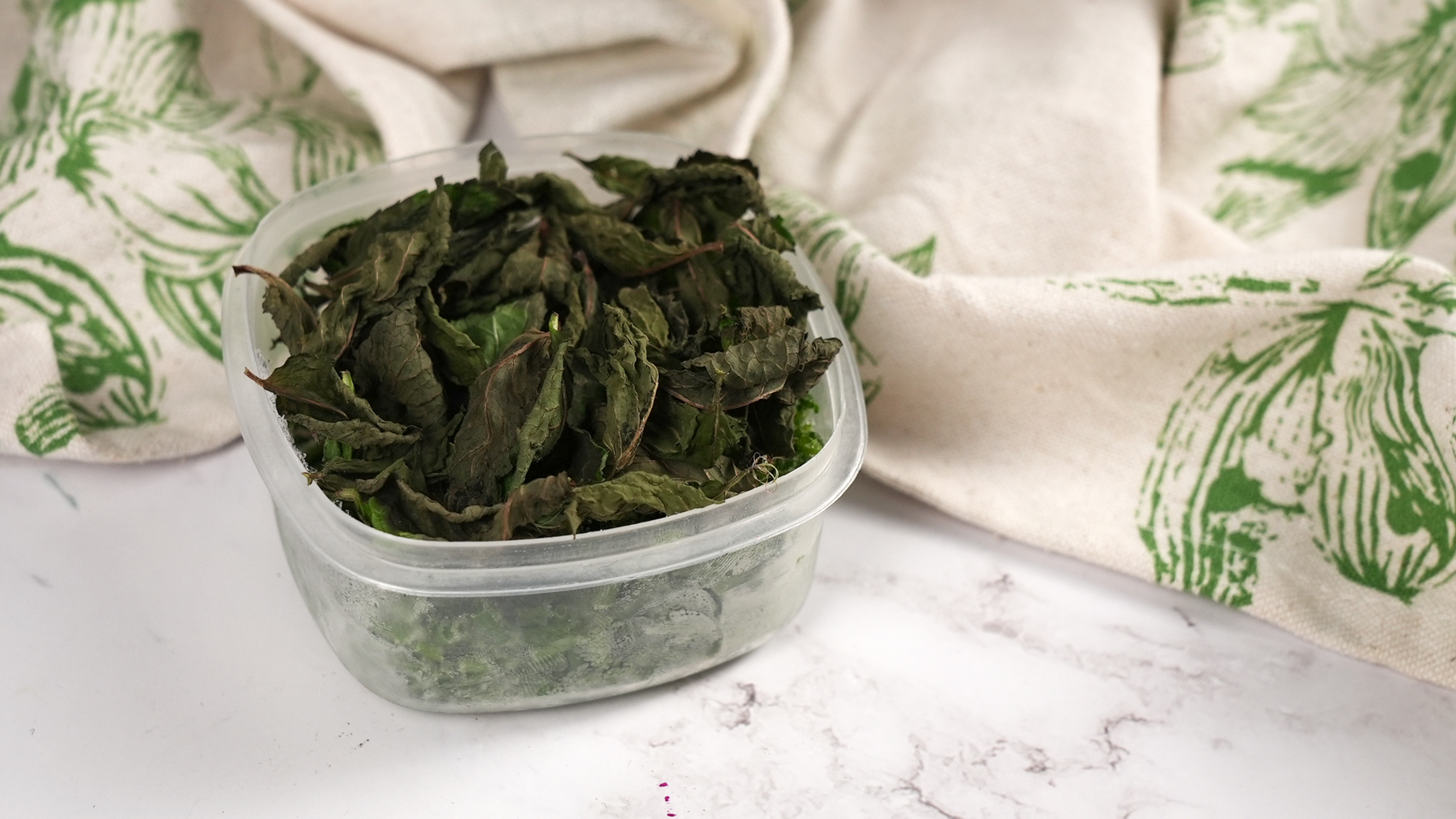
To dry mint, rinse the stems if needed and dry them very well. Tie small bunches and hang them upside down in a warm, dry, well-ventilated area away from direct sunlight. You can also use a food dehydrator on a low setting. Once the leaves are crisp and crumble easily, remove them from the stems and store them whole in an airtight container in a cool, dark place.
Best For
Drying is best for mint tea, seasoning blends, homemade gifts, and long-term pantry storage. It is not ideal if you want the bright flavor and soft texture of fresh mint in salads or drinks.
How Long It Lasts
Dried mint is best within a few months for maximum aroma, although it can last longer when stored well. Keep the leaves whole until use, then crush them between your fingers to release more fragrance.
Drying Mistake to Avoid
Do not dry mint in thick bunches. Crowded leaves trap moisture and may mold before they dry. Small bunches and good airflow are the secret.
Quick Comparison: Which Mint Storage Method Should You Choose?
| Storage Method | Best For | Approximate Freshness | Main Advantage |
|---|---|---|---|
| Jar of water in refrigerator | Whole mint stems | About 1 week or longer | Keeps stems hydrated |
| Damp paper towel wrap | Small bunches or loose leaves | Several days to 1 week | Easy and inexpensive |
| Airtight container with paper towel | Loose leaves | About 3–5 days | Good for prepped mint |
| Freezing | Long-term storage | Several months | Prevents waste |
| Drying | Tea and pantry use | Months | Shelf-stable preservation |
How to Tell If Mint Has Gone Bad
Fresh mint should smell clean, cool, and bright. If it smells sour, musty, or unpleasant, toss it. Also discard mint with slimy leaves, fuzzy mold, or widespread black patches. A few dry or dark leaves can simply be removed, but if the whole bunch feels wet and mushy, it is time to say goodbye with dignity.
Slight wilting does not always mean mint is spoiled. If the leaves are limp but still smell fresh and show no slime or mold, you may be able to revive stemmed mint by trimming the ends and placing it in cold water for 20 to 30 minutes. It may perk up enough for drinks or sauces. Mint is resilient, but it is not magic. Once it turns slimy, no pep talk will help.
Best Ways to Use Mint Before It Spoils
One of the best ways to keep mint from going bad is to use it more often. Add it to iced tea, lemonade, fruit salad, cucumber salad, yogurt sauce, grain bowls, spring rolls, smoothies, peas, roasted carrots, or chocolate desserts. Mint also pairs beautifully with watermelon, strawberries, lime, lemon, feta, cucumber, lamb, chicken, rice, and dark chocolate.
For a quick kitchen win, chop mint with parsley, lemon zest, garlic, olive oil, and a pinch of salt to make a bright herb sauce. Spoon it over grilled vegetables, potatoes, fish, chicken, or beans. Suddenly your leftovers look intentional. That is the power of mint.
Common Questions About Keeping Mint Fresh
Can I store mint on the counter?
You can store mint stems in water on the counter for a short time, especially if your kitchen is cool. However, refrigeration usually keeps mint fresh longer. If your kitchen is warm, the counter method can speed up wilting.
Should mint be stored with other herbs?
Mint can be stored with tender herbs like parsley or cilantro if they are in separate jars or loosely wrapped bundles. Avoid packing herbs tightly together because moisture and bruising can spread spoilage.
Can I revive wilted mint?
Sometimes. Trim the stems, place the bunch in cold water, and refrigerate it for a short time. If the mint is only dehydrated, it may perk up. If it is slimy or moldy, discard it.
Why do mint leaves turn black in the refrigerator?
Mint leaves can darken from excess moisture, bruising, age, or cold damage. Keep leaves dry, avoid crushing them, and do not store mint against the coldest part of the refrigerator.
Real-Kitchen Experience: What Actually Works When Storing Mint
After storing more mint than any reasonable person should probably admit, here is the truth: the best method depends on how the mint looks when it enters your kitchen. A fresh, sturdy bunch with long stems almost always does best in a jar of water in the refrigerator. It behaves like a bouquet, and honestly, it looks fancy enough to make your fridge feel like it has its life together. Trim the stems, add fresh water, cover loosely, and you will usually get several good days of crisp leaves. Changing the water matters. If the water turns cloudy, your mint is not being dramatic; it is asking for housekeeping.
For supermarket mint packed in a plastic clamshell, the paper towel method often works better. Those leaves may already be trimmed short, slightly bruised, or damp from packaging. Taking them out, removing sad leaves, drying them gently, and wrapping them in a barely damp paper towel can buy extra time. The trick is not to overpack the bag. Mint leaves like a little breathing room. Cramming them into a tiny bag is how you get condensation, pressure bruises, and that disappointing “why is this wet?” moment two days later.
Loose leaves are the most demanding. Once mint is removed from the stem, it loses its built-in hydration system. For loose leaves, a shallow container with paper towels is usually the cleanest solution. I like placing one paper towel underneath and one on top, then checking the container the next day. If condensation appears on the lid, I wipe it away or crack the lid slightly. This tiny habit prevents a lot of spoilage.
Freezing is the best rescue plan for mint that is still good but clearly not going to be used in time. The ice cube tray method is especially useful. A few mint cubes can turn plain iced tea into something that tastes planned. Frozen mint is not pretty after thawing, but it still brings flavor. Use it where looks do not matter: smoothies, sauces, soups, syrups, and hot tea. Do not expect frozen mint to sit on top of a dessert like a glossy magazine garnish. It has retired from modeling and moved into flavor consulting.
Drying mint is the method I use when the bunch is abundant and I know I want tea later. Garden mint is famous for producing more leaves than one household can politely consume. Drying turns that abundance into something useful. The most important lesson is patience. Dry mint thoroughly before storing it, because even a little trapped moisture can ruin the batch. Store dried leaves whole, not crushed, for better aroma. When you want tea, crumble them right before brewing.
The biggest experience-based lesson is this: do not ignore mint after storing it. Check it every day or two. Remove bad leaves. Change water. Replace soggy towels. Use the most delicate leaves first. Mint storage is not hard, but it is not a “throw it in the fridge and hope” situation either. Give it 30 seconds of attention, and it will reward you with brighter drinks, better salads, and fewer guilty trips to the trash can.
Conclusion
Learning how to keep mint leaves fresh is mostly about giving mint what it wants: moisture for the stems, dryness for the leaves, gentle airflow, and a cool home in the refrigerator. Use the jar method for whole stems, the damp paper towel method for flexible short-term storage, a container with paper towels for loose leaves, freezing for long-term flavor, and drying when pantry storage makes more sense.
Fresh mint may seem fragile, but with the right storage solution, it can stay useful far longer than the sad little bunch forgotten in the back of the fridge. Treat it well, and it will keep making your drinks cooler, your salads brighter, and your kitchen smell like you know exactly what you are doing.

