
Skincare
How to Cut Laminate Flooring: 6 Steps
Jun
Cutting laminate flooring sounds easy until you are staring at a brand-new plank with a pencil in one hand, a saw in the other, and the quiet fear that one wrong move will turn your “weekend upgrade” into modern art. The good news? Laminate flooring is one of the most DIY-friendly flooring materials around. The slightly annoying news? It still demands accurate measuring, the right blade, and enough patience not to rush through the last plank like a raccoon with a power tool.
This guide explains how to cut laminate flooring in six practical steps, from planning your layout to making clean straight cuts, curved cuts, door-jamb cuts, and final-row cuts. Whether you are using a laminate flooring cutter, miter saw, circular saw, table saw, jigsaw, or handsaw, the goal is the same: smooth edges, tight fits, fewer chips, and no emotional support trip to the hardware store.
Before You Cut: Know What Laminate Flooring Is Made Of
Laminate flooring is typically built in layers: a wear layer on top, a printed decorative layer that gives it the wood or stone look, a dense fiberboard core, and a backing layer for stability. That layered construction is why laminate can look beautiful but chip if you attack it with a dull blade. Think of it like cutting a fancy sandwich: pressure, angle, and sharpness matter.
The decorative surface is thin, so your cutting method should protect that top layer. A fine-tooth blade, steady support, painter’s tape, and accurate marking all help prevent splintering. Most cut edges will eventually hide under baseboards, quarter round, transition strips, or door trim, but you still want clean cuts because rough edges can affect fit and make installation harder.
Tools and Materials You May Need
You do not need every tool on this list, but having the right tool for the cut saves time and prevents mistakes. Straight crosscuts are easiest with a miter saw or laminate cutter. Long rip cuts are better with a circular saw or table saw. Curves and notches call for a jigsaw. Small trim adjustments can sometimes be handled with a handsaw, utility knife, file, or sanding block.
Recommended Tools
- Tape measure
- Pencil or fine-tip marker
- Speed square or carpenter’s square
- Painter’s tape
- Laminate flooring cutter, miter saw, circular saw, table saw, jigsaw, or handsaw
- Fine-tooth blade suitable for laminate
- Clamps
- Workbench or stable cutting surface
- Pull bar and tapping block for installation
- Spacers for expansion gaps
- Safety glasses, dust mask, hearing protection, and gloves
If you are buying one tool just for this project, a manual laminate flooring cutter is quiet, clean, and beginner-friendly for straight cuts. If you already own saws, use a fine-tooth blade and practice on scrap pieces first. Laminate dust is not confetti, even if your garage starts looking festive, so wear protection and cut in a ventilated area.
Step 1: Plan the Layout Before Cutting Anything
The first step in cutting laminate flooring is not cutting. It is planning. Measure the room, check the plank width, and decide how the first and last rows will land. If the final row would be a skinny little strip, adjust the first row so both sides look balanced. A narrow final row is harder to cut, harder to install, and more likely to make the room look slightly “off,” even if nobody can explain why.
Most laminate floors are floating floors, meaning they are not nailed or glued directly to the subfloor. They need an expansion gap around walls, pipes, cabinets, thresholds, and other fixed objects. Always check the flooring manufacturer’s instructions, but many installations use a gap around 1/4 inch to 3/8 inch. This gap lets the floor expand and contract with temperature and humidity changes. Skip it, and your floor may buckle later like it is trying to escape the room.
Layout Tips That Prevent Bad Cuts
- Measure the room in more than one place because walls are not always straight.
- Use spacers to maintain the expansion gap while fitting planks.
- Stagger end joints so seams do not line up from row to row.
- Avoid tiny end pieces when possible because they are harder to lock securely.
- Dry-fit tricky areas before cutting expensive planks.
Planning also helps you decide which tool to use. A room full of simple end cuts may only require a laminate cutter or miter saw. A room with vents, doorways, pipes, closets, and mystery corners invented by a bored builder will require a jigsaw and more patience.
Step 2: Measure and Mark the Laminate Plank
Measure the space where the plank will go, then subtract the required expansion gap. Transfer that measurement to the plank. Use a square to draw a straight cutting line. For cleaner results, apply painter’s tape over the cutting area and mark the line on top of the tape. The tape helps reduce chipping and makes the line easier to see.
Here is a simple example: if the distance from the installed plank to the wall is 14 inches, and your expansion gap is 3/8 inch, mark the plank at 13 5/8 inches. Do not measure wall-to-wall and cut the plank exactly to that size unless you enjoy uninstalling things while muttering.
Marking Straight Cuts
For straight cuts across the width of a plank, hook the tape measure on the end, mark the length, then use a square to draw a crisp line. Make sure you know which side of the line is the waste side. A saw blade removes material, so cutting on the wrong side can make the piece too short. Label the waste side with a quick “X” if needed. It feels silly until it saves a plank.
Marking Rip Cuts
A rip cut runs lengthwise down the plank, often needed for the first or last row. Measure the required width at both ends because walls can wave like they are trying to be interesting. Mark both points, connect them with a straightedge, and cut slowly. For very uneven walls, scribing may be necessary: set the plank in place, use a compass or spacer to trace the wall shape, then cut along that custom line.
Marking Curves, Pipes, and Vents
For pipes, measure from the wall and from the nearest installed plank to locate the pipe center. Drill a hole slightly larger than the pipe to allow expansion, then cut a path from the edge of the plank to the hole if needed. For floor vents, lay the plank over the opening, mark the overlap, and cut a rectangular notch with a jigsaw. Test-fit the vent cover before locking the plank into place.
Step 3: Choose the Right Cutting Tool
Different cuts call for different tools. You can cut laminate flooring with several tools, but the best choice depends on the type of cut, the number of planks, your comfort level, and how clean the visible edge needs to be.
Laminate Flooring Cutter
A laminate flooring cutter works like a heavy-duty paper cutter. It is excellent for fast, straight cuts and angled cuts. It does not create much dust, does not need power, and is quieter than a saw. The tradeoff is that it may not handle curves, notches, or very thick products as well as a powered saw.
Miter Saw
A miter saw is great for crosscuts at the end of planks. It is fast, accurate, and helpful when you need repeated cuts. Use a sharp, fine-tooth blade designed for laminate or finish cuts. Keep the plank firmly against the fence and lower the blade smoothly.
Circular Saw
A circular saw is useful for straight cuts, especially long rip cuts. Clamp the plank to a stable surface, support both sides, and use a guide if possible. A circular saw can chip laminate if the blade is dull or the plank vibrates, so do not freehand it on top of a wobbly cardboard box unless chaos is your brand.
Table Saw
A table saw is ideal for ripping planks lengthwise, especially for the first and last rows. It gives consistent cuts but requires careful setup and safe handling. Use push sticks, keep hands away from the blade, and follow the tool manual.
Jigsaw
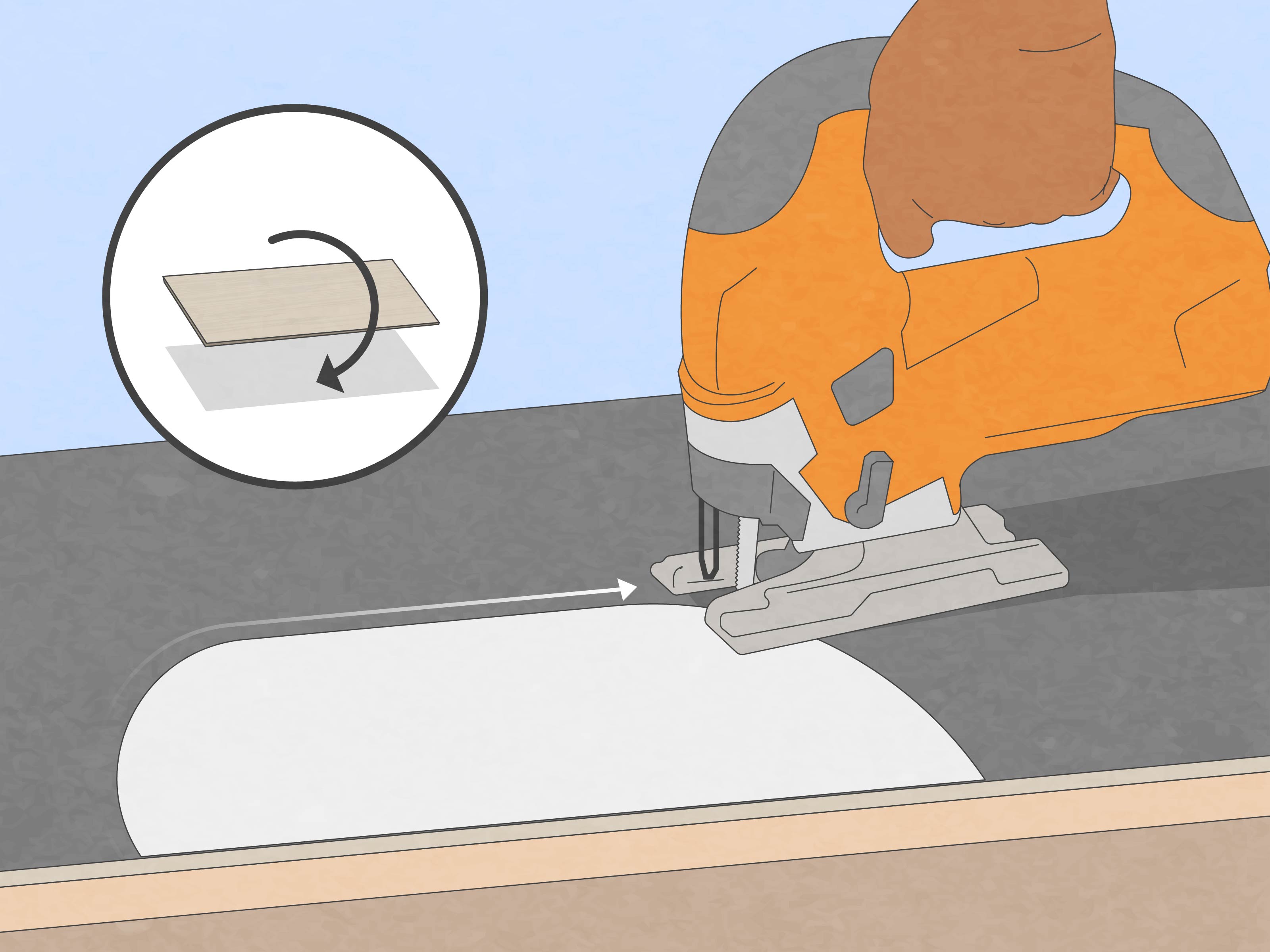
A jigsaw is the best choice for curved cuts, notches, vents, and irregular shapes. Use a fine-tooth blade and move slowly. Let the blade do the work. If you force it, the blade can wander, and your nice round pipe cut may become a potato-shaped tribute to impatience.
Step 4: Set Up the Plank for a Clean Cut
Good setup is half the cut. Place the plank on a stable work surface and clamp it so it cannot shift. Support the offcut so it does not snap before the blade finishes. Keep your cutting line visible. If you are using painter’s tape, press it down firmly before cutting.
Blade direction matters because saw teeth enter and exit the laminate surface differently depending on the tool. With some saws, cutting face up gives the cleanest top edge; with others, face down may reduce chipping. Since blade design and saw type vary, check your tool and flooring instructions, then test on a scrap plank. The scrap test is the DIY version of looking both ways before crossing the street.
Safety Setup Checklist
- Wear safety glasses before cutting.
- Use a dust mask or respirator when sawing laminate.
- Clamp the plank instead of holding it by hand near the blade.
- Keep cords, fingers, sleeves, and loose items away from the cutting path.
- Cut outdoors or in a ventilated workspace when possible.
- Read the saw and flooring manufacturer’s instructions.
Do not rush setup for “just one cut.” That phrase has caused more chipped boards, crooked edges, and regrettable noises than almost anything else in flooring.
Step 5: Cut the Laminate Flooring Slowly and Accurately
Now it is time to cut. Align the blade with the waste side of the line, start the tool, and let it reach full speed before contacting the plank. Move steadily. Do not shove the saw through the laminate. A slow, controlled cut reduces chipping and keeps the blade from overheating.
How to Make a Straight Crosscut
For a crosscut, place the plank squarely against the miter saw fence or clamp it to a workbench for a circular saw. Cut along the marked line, keeping the finished piece supported. After the cut, inspect the edge. If it is slightly rough but will be covered by trim, it is usually fine. If it will sit near a transition or doorway, clean the edge with a sanding block or file.
How to Make a Rip Cut
For a rip cut, use a table saw or circular saw with a straight guide. Measure carefully, mark the full length, and cut with steady pressure. Rip cuts are common for the final row, where you must fit planks between the previous row and the wall while maintaining the expansion gap. The final row may require a pull bar to lock into place because there is not enough room to angle the plank by hand.
How to Cut Around Door Jambs
Door jambs are where laminate flooring projects test your maturity. Instead of cutting the plank into a weird shape around the trim, undercut the door jamb so the plank slides underneath. Place a scrap piece of laminate and underlayment against the jamb as a height guide, then cut the trim with an undercut saw or oscillating multi-tool. This creates a cleaner, more professional look.
How to Cut Curves and Notches
For curved cuts, drill a starter hole if needed, insert the jigsaw blade, and follow the marked line slowly. For inside corners, drill holes at the corners first to reduce stress and help the blade turn cleanly. Do not worry if the hidden part of the notch is not museum-perfect. The visible edge and fit matter most.
Step 6: Test-Fit, Adjust, and Install the Plank
After cutting, test-fit the plank before locking it permanently into the row. Check the expansion gap, the seam alignment, and whether the cut edge will be hidden by trim or transition molding. If the plank is too tight, trim a small amount. If it is too short, it is usually better to cut a new plank rather than trying to disguise the mistake with optimism.
Once the plank fits correctly, install it according to the flooring system. Most laminate uses a click-lock design. Angle the tongue into the groove, lower the plank, and use a tapping block or pull bar where needed. Never hammer directly on the plank edge because the locking profile can crush or deform.
Common Cutting Mistakes to Avoid
- Forgetting the expansion gap.
- Using a dull or rough blade.
- Measuring from the wrong side of the plank.
- Cutting before checking plank direction or pattern.
- Skipping painter’s tape on chip-prone cuts.
- Trying to force a plank into a space that is too tight.
- Failing to test cuts on scrap material first.
Best Practices for Cleaner Laminate Flooring Cuts
Clean cuts come from a combination of sharp tools, stable support, and smart sequencing. Cut with a fine-tooth blade, clamp the plank, and avoid vibration. Use painter’s tape when chipping is likely. Keep a few scrap pieces nearby for testing blade direction and saw settings. Save offcuts from previous rows because they may work as starter pieces for later rows, helping reduce waste.
Also, pay attention to plank pattern. Laminate flooring often repeats wood grain designs. Open several boxes and mix planks as you work so similar patterns do not clump together. This is not technically a cutting issue, but it matters because a perfectly cut floor with three identical knots lined up in a row can look like the floor is staring at you.
How to Cut Laminate Flooring Without Chipping
To reduce chipping, use a fine-tooth laminate or finishing blade, apply painter’s tape over the cut line, and support the plank firmly. Cut at a steady speed and avoid forcing the saw. If your first cut chips badly, stop and test a different blade orientation, a slower feed rate, or a fresh blade. Chipping often comes from vibration, dull teeth, or cutting the decorative surface from the wrong direction for that tool.
If the edge will be covered by baseboard, minor chipping may not matter. For visible areas near transitions, thresholds, or stair nosing, take extra care. In those spots, a clean cut is not just cosmetic; it helps the transition sit flat and reduces tiny gaps that collect dust.
Experience Notes: What Cutting Laminate Flooring Teaches You Fast
One of the first lessons from cutting laminate flooring is that the room is rarely as square as it looked when you were confidently buying materials. Walls bow. Corners wander. Door frames lean with the quiet confidence of old houses. That is why measuring each plank individually matters, especially along the final row. A single “standard” measurement copied across a wall can leave gaps at one end and pressure at the other.
Another experience-based tip: set up a dedicated cutting station. Walking outside for every cut may feel annoying, but it keeps dust away from the installation area and gives you room to work safely. Keep your tape measure, pencil, square, and painter’s tape at the cutting station, not somewhere under a stack of planks. The fewer times you hunt for a pencil, the fewer chances you have to question your life choices.
It also helps to cut in batches only when the measurements are truly identical. For example, if you are trimming starter-row tongues off several planks, batch cutting makes sense. But for wall ends, closets, vents, and doorways, measure one piece at a time. Laminate installation rewards accuracy more than speed. A plank that is 1/8 inch too long can jam the expansion gap. A plank that is 1/8 inch too short can create a visible gap that mocks you every time sunlight hits the floor.
When using a jigsaw, practice curves on scrap first. Jigsaws are wonderfully useful, but they are not magic wands. The blade can flex, especially on thicker laminate. Start slowly, keep the shoe flat against the plank, and turn gradually. If you need a sharp inside corner, drill a relief hole first or cut from both directions. This gives you a cleaner notch and keeps the surface layer from tearing.
Finally, do not throw away offcuts too early. Short pieces can become spacers, test samples, tapping-block protectors, or starter pieces for staggered rows if they meet the minimum length recommended by the manufacturer. Keep a small “useful scraps” pile and a separate “tiny nonsense pieces” pile. The first saves money. The second exists so you can dramatically sweep it into the trash at the end and feel productive.
Conclusion
Learning how to cut laminate flooring is really about learning how to slow down at the right moments. Measure carefully, mark clearly, choose the correct tool, support the plank, cut with a fine-tooth blade, and test-fit before locking anything in place. The six steps are simple, but each one protects you from the classic DIY flooring disasters: chipped edges, tight walls, crooked cuts, and final rows that look like they were negotiated under pressure.
With a good layout plan, the right saw or laminate cutter, and a few practice cuts, you can trim laminate planks cleanly for walls, corners, vents, pipes, and doorways. Your reward is a floor that looks sharp, fits properly, and does not announce every mistake from across the room. And honestly, that is the dream: a beautiful laminate floor and no need to explain anything to visiting relatives.

