
Makeup
Here Are My 30 Best Optical Illusions That Were Made Without Any Editing Software
Jun
There is something wonderfully suspicious about a photograph that looks impossible but has not been touched by Photoshop, AI, filters, cloning tools, or that mysterious “enhance” button every detective show seems to own. Real-world optical illusions are visual magic tricks performed with ordinary objects, careful timing, clever camera angles, and a little patience. Sometimes the brain does the rest of the work for free, which is nice because the brain rarely sends invoices.
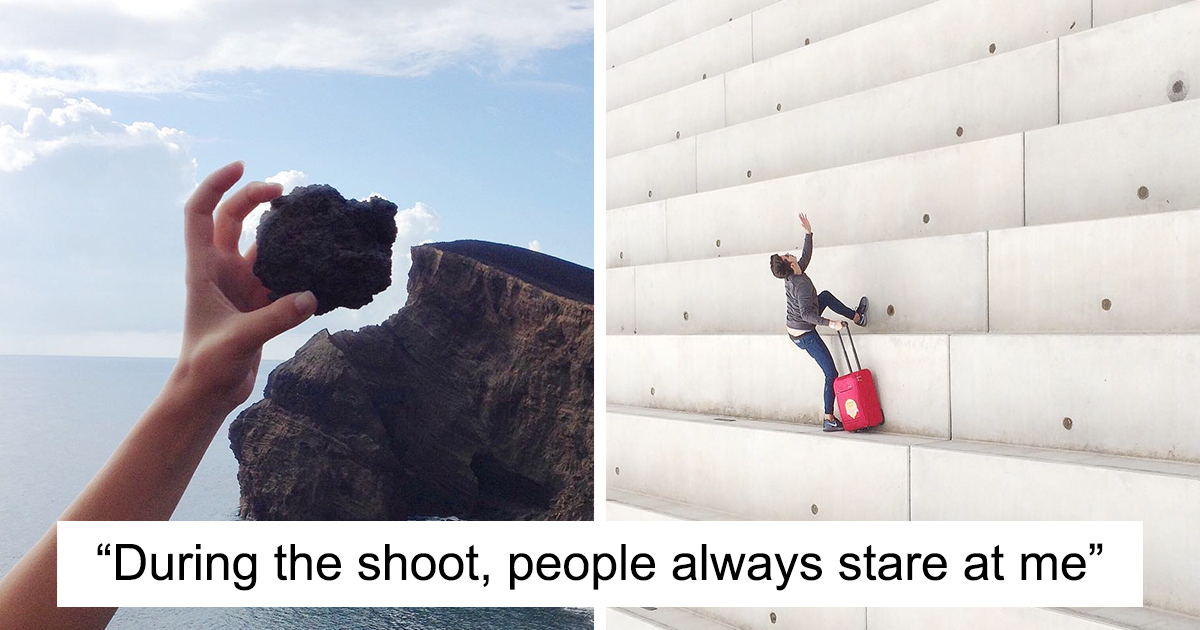
These no-edit optical illusions rely on the same principles that make classic visual puzzles so fascinating: forced perspective, shadow alignment, reflection, scale confusion, pattern recognition, depth perception, contrast, and visual context. Our eyes collect information, but the brain interprets it. That interpretation is fast, practical, and occasionally hilarious. When a tiny person appears to hold the moon, a coffee cup seems to float, or a building looks flatter than a pancake with self-esteem issues, the image works because the viewer’s brain fills in the wrong story.
This article explores 30 of my favorite optical illusions made without editing software, along with the simple visual tricks behind them. Think of it as a behind-the-scenes tour of handmade weirdness: no digital smoke, no pixel wizardry, just light, angles, objects, and a camera placed in exactly the right spot.
Why No-Edit Optical Illusions Still Feel So Magical
In a world where almost every image can be edited, a practical optical illusion has a special kind of charm. It feels more like a puzzle than a picture. You do not just look at it; you try to solve it. The best optical illusions made without editing software invite viewers to ask, “Wait, how did that happen?” That moment of confusion is the reward.
The secret is usually not complicated. A person stands far behind an object but appears tiny. A shadow lands at the perfect angle and becomes a second object. A puddle reflects a building so cleanly that the street seems to open into another dimension. A hand lines up with the sun, and suddenly someone is “holding” a star. None of these tricks require editing software. They require observation, patience, and the willingness to look slightly ridiculous in public while crouching next to a sidewalk puddle.
My 30 Best Optical Illusions Made Without Editing Software
1. The Tiny Person on the Coffee Mug
This illusion uses forced perspective. Place a coffee mug close to the camera and a person several feet behind it. When the camera is low and the subject lines up correctly, the person appears small enough to stand on the rim. The brain assumes both objects share the same depth, so the scale becomes delightfully wrong.
2. Holding the Sun Between Two Fingers
This classic works because the sun is far away and the hand is close. By positioning the fingers around the sun at sunset, the image suggests physical contact. It is simple, dramatic, and safer than actually touching the sun, which is generally frowned upon by dermatologists and common sense.
3. The Floating Backpack
A backpack can appear to hover when its shadow is hidden and a thin support is blocked by another object. The viewer sees the bag but not the practical support. This is a great example of how missing visual information encourages the brain to invent an impossible explanation.
4. The Giant Shoe Crushing a City
Place a shoe close to the lens and line it up with distant buildings. Because the shoe dominates the foreground, it appears enormous. Forced perspective turns an ordinary sneaker into a monster movie villain, minus the expensive visual effects department.
5. A Person Pouring Water Into the Ocean
With the right beach angle, someone holding a bottle can appear to pour water directly into the horizon. The trick depends on alignment, distance, and a clean background. The simpler the composition, the more convincing the illusion.
6. The Mirror Portal
A mirror placed outdoors can reflect grass, sky, or trees so cleanly that it looks like a doorway into another world. The illusion becomes stronger when the mirror frame is hidden or when the reflected scene matches the surrounding environment.
7. The Headless Reader
A book or newspaper held at the right height can hide a person’s face while another object behind them completes the shape. The result is a playful “headless” illusion. It works because the brain expects bodies to have heads and tries to resolve the missing information quickly.
8. The Puddle City
After rain, a puddle can reflect buildings, traffic lights, and clouds. Flip the camera close to the ground, and the reflection appears like a second city below the street. No editing is needed; water becomes the world’s cheapest special effect.
9. The Shadow Animal
Hands, branches, chairs, and even bicycle wheels can cast shadows that resemble animals. A shadow dog, bird, or dragon appears when the light source is low and the background is clean. The fun is in letting the shadow become something the object itself is not.
10. The Person Walking on the Wall
By rotating the camera or photographing someone lying on the ground beside a wall, the final image can look like gravity took a lunch break. The trick is most effective when clothing, hair, and loose objects do not reveal the true direction of gravity.
11. The Endless Staircase Angle
Some staircases become visually confusing when shot from above or below. Repeating lines, shadows, and railings can make the stairs appear to fold into themselves. This type of illusion borrows from architectural geometry and the brain’s love of patterns.
12. The Floating Cup
A clear glass or cup can appear to float if it is supported by a transparent object or held from behind in a way the camera cannot see. Lighting matters here. Harsh reflections can reveal the trick, while soft light keeps the illusion alive.
13. The Human Lamp
Line a person’s head up beneath a lampshade from a distance, and suddenly they appear to be wearing it. This illusion is silly, easy, and oddly satisfying. It works best when the person and lampshade are centered precisely.
14. The Giant Hand Picking Up a Friend
One person stands close to the camera with a pinching gesture, while another person stands far away. The distant person appears small enough to be lifted. This is one of the most reliable forced perspective illusions because the pose tells the brain exactly what story to believe.
15. The Split Body Reflection
A mirror placed vertically beside a person can reflect half the body and create a symmetrical figure that does not really exist. Depending on the pose, the final image may look elegant, strange, or like a yoga instructor from another dimension.
16. The Invisible Chair
If a person sits on a hidden support and their legs are positioned naturally, the chair can disappear from the viewer’s understanding. The illusion works because posture communicates “sitting,” even when the expected object is missing.
17. The Cloud Hat
Clouds make excellent props when they align with people or objects. A fluffy cloud above someone’s head can look like a hat, wig, smoke puff, or cartoon thought bubble. The best results happen when the sky is simple and the subject is clearly outlined.
18. The Road That Touches the Sky
A long road photographed from a low position can seem to rise into the sky. Perspective lines narrow toward the horizon, creating the feeling of a ramp into the clouds. The effect is stronger on empty roads with clean leading lines.
19. The Floating Head in a Bowl
Place a bowl or large container in the foreground and position a person behind it so only their head appears above the rim. The viewer reads the head as being inside the bowl. It is ridiculous, harmless, and guaranteed to make someone say, “That is deeply unnecessary.”
20. The Miniature Car
A real car can look like a toy if photographed from a high angle with a shallow background and surrounding objects removed. Tilt-shift photography often enhances this digitally, but the basic illusion can happen naturally through distance, height, and simplified context.
21. The Shadow That Becomes a Person
Sometimes an object’s shadow can look more human than the object itself. A coat rack, plant, or chair can cast a figure-like shadow when lit from the right direction. This illusion plays with pareidolia, the tendency to recognize familiar shapes in random patterns.
22. The Disappearing Body Behind a Pole
A person standing partly behind a thin pole or tree can appear sliced in half when the hidden side blends into the background. The illusion depends on clothing color, background texture, and the viewer’s assumption that bodies should be continuous.
23. The Giant Ice Cream Cone
Hold an ice cream cone close to the lens and place a friend in the distance with their mouth open. With careful alignment, it looks like they are about to eat the world’s most ambitious dessert. The trick is all scale and timing.
24. The Water Glass Bend
A straw or pencil placed in a glass of water appears bent because light changes direction when passing between air and water. This refraction illusion is not only fun to photograph; it is also a pocket-sized physics lesson pretending to be a party trick.
25. The Building That Looks Flat
Some buildings appear two-dimensional when photographed from a corner or at a compressed angle. Without visible side depth, windows and lines can make the structure look like a theater backdrop. Architecture loves fooling the eye more than it admits.
26. The Person Balancing on a Bottle
A bottle in the foreground and a person in the distance can create the illusion that the person is standing on the cap. The pose must match the imagined balance point. Arms out, knees bent, and a dramatic expression help sell the impossible scene.
27. The Double-Face Reflection
Using glass, windows, or polished metal, a face can overlap with another reflection to create a hybrid portrait. The illusion is strongest when both faces align at the eyes or mouth. It feels eerie, artistic, and completely practical.
28. The Moon Balloon
During moonrise, a person holding a string can appear to be controlling the moon like a balloon. The moon’s size stays constant, but the foreground prop gives it a playful meaning. This illusion is a great example of how context changes interpretation.
29. The Crooked Room
A room photographed from a tilted angle can make furniture and people seem to lean impossibly. If the camera hides normal reference points, the viewer loses orientation. The brain depends on walls, floors, and vertical lines to understand balance.
30. The Perfectly Timed Object Swap
Sometimes an illusion is not about objects being strange but about timing. A bird flying behind a statue, a bus passing behind a person, or a ball crossing the sun can create a surreal moment. The camera captures coincidence, and the viewer’s brain turns it into a story.
How These Illusions Work Without Digital Editing
The best no-edit optical illusions are built from a few reliable ingredients. Forced perspective changes apparent size by placing one object close to the camera and another far away. Reflections create visual doubles or hidden spaces. Shadows transform ordinary objects into unexpected shapes. Refraction bends light through water or glass. Patterns and repeated lines confuse depth and direction. Context makes one object seem connected to another, even when they are separated by many feet.
What makes these images so compelling is that they reveal how perception works. Vision is not a passive recording of reality. The brain uses experience, expectation, memory, contrast, and surrounding clues to create a fast interpretation of the scene. Most of the time, that system works beautifully. But optical illusions sneak into the gaps. They are not failures of vision as much as reminders that seeing is an active process.
Tips for Creating Your Own No-Edit Optical Illusions
Use a Simple Background
A busy background gives away the trick. Clean skies, blank walls, beaches, roads, and open fields help the illusion read quickly. If the viewer has too many details to inspect, the magic weakens.
Lock the Camera Position
Many illusions collapse when the camera moves even slightly. Once the alignment looks right, keep the camera steady. A tripod helps, but a backpack, bench, or patient friend can also serve as advanced photographic technology.
Match the Pose to the Trick
If someone is pretending to hold the moon, their fingers should pinch naturally. If they are “standing” on a bottle cap, their body should look balanced. A believable pose makes an unbelievable image easier to accept.
Watch the Light
Light can create or destroy an illusion. Shadows must fall in the right direction. Reflections need clean surfaces. Harsh light may reveal supports or unwanted details. Golden hour is especially useful because low-angle sunlight creates long shadows and dramatic outlines.
Take More Photos Than You Think You Need
No-edit illusions are often a game of tiny adjustments. Move left. Move right. Lower the camera. Raise the object. Ask your friend to stop laughing for three seconds. The winning shot may be one frame among many.
Why Handmade Optical Illusions Are Perfect for Social Media
Optical illusion photography is naturally shareable because it creates instant curiosity. People pause because the image does not resolve immediately. That pause matters. On social platforms, where users scroll at Olympic speed, a photo that makes someone stop and think has a real advantage.
No-edit illusions also feel authentic. Viewers are used to polished digital effects, but a practical illusion has a different appeal. It says, “This happened in real life, at least from this one very sneaky angle.” That authenticity makes the image more conversational. People want to comment, guess the method, tag a friend, or argue about whether editing was used. Internet debates may not solve world peace, but they do boost engagement.
Experience Notes: What I Learned Making Optical Illusions Without Editing Software
Making optical illusions without editing software taught me that creativity often begins with inconvenience. The first time I tried to make a forced perspective photo, I assumed it would take five minutes. I had a coffee cup, a willing friend, and the confidence of a person who had not yet spent 40 minutes lying on the ground trying to make a mug look like a balcony. The final image worked, but only after we moved the cup, the camera, and my friend so many times that a nearby dog started watching us with concern.
The biggest lesson is that optical illusions are less about expensive equipment and more about noticing relationships. A cloud becomes a hat only when you stand in the right place. A puddle becomes a city only when you stop walking past it and crouch down. A shadow becomes a dragon only when the sun is low enough to stretch an ordinary object into something theatrical. The world is full of these little visual jokes, but they rarely announce themselves. You have to look twice.
I also learned that timing is both your best friend and your most annoying coworker. The moon moves. Clouds drift. People blink. Cars pass too early. Birds refuse to follow direction, which is rude considering how often they appear in art. Some of the best no-edit optical illusions happen for only a second, and the camera has to be ready before the moment becomes a memory. That is why I now take more photos than seems reasonable. Digital storage is cheaper than regret.
Another surprise is how important humor is. The most memorable illusions are not always the most technically perfect. Sometimes the funniest one wins: a person “wearing” a cloud wig, a friend being “picked up” by two fingers, a giant shoe attacking a skyline. These images work because they invite play. They remind viewers that photography does not always have to be serious, polished, or emotionally dressed in a black turtleneck. It can be silly and still be smart.
Finally, no-edit illusion photography changed how I think about truth in images. A photograph can be completely real and still misleading. Nothing was digitally changed, yet the viewer’s interpretation can be wildly wrong. That is the beautiful contradiction at the heart of optical illusions. They are honest tricks. They show us that reality depends not only on what is in front of the lens, but also on where the lens is placed, what the brain expects, and how quickly we decide we understand what we see.
Conclusion
Optical illusions made without editing software prove that imagination does not need a toolbar. With perspective, light, reflection, timing, and a playful eye, ordinary scenes can become impossible-looking images. A puddle can become a portal, a shadow can become a creature, a hand can hold the sun, and a coffee mug can become a stage for a tiny human. The magic is not hidden in software. It is hidden in the way we see.
The best part is that anyone can try it. You do not need a studio, a professional camera, or a subscription plan that charges you forever like a tiny financial ghost. You only need curiosity, patience, and the willingness to experiment. Look for clean backgrounds, strong shapes, interesting reflections, and moments when two unrelated things line up perfectly. Then move your camera until the world starts lying beautifully.
Note: This article is written as original, research-informed web content based on real principles of visual perception, forced perspective, reflection, refraction, shadow play, and optical illusion photography. No source links or unnecessary reference markers are included in the publishable HTML.

