
Beauty Unlocked
Funny Political Posters To Inspire A Rebellion
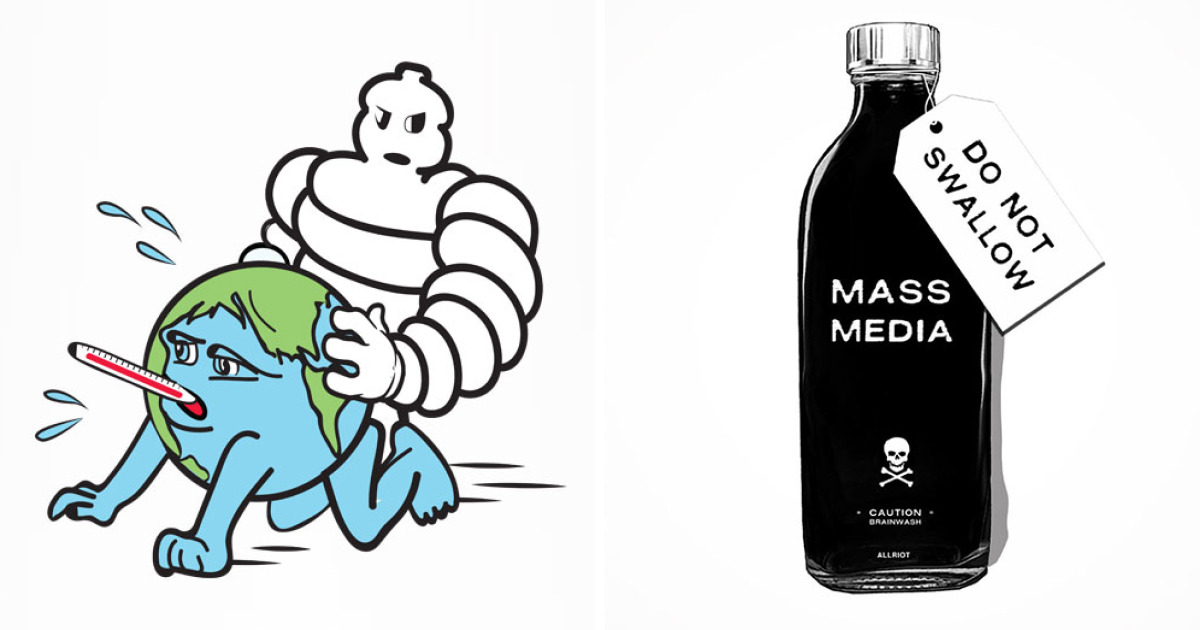
Jun
Political posters have always had a flair for drama. Give them a flat wall, a bold font, and one furious citizen with access to a printer, and suddenly the sidewalk becomes a newsroom, comedy club, and public square all at once. But the best funny political posters do something even sharper: they make people laugh before they realize they have just absorbed a serious argument.
That is the secret power of political satire. A funny protest poster can slip past defensiveness, poke a hole in hypocrisy, and make a complicated issue instantly understandable. It does not need a 900-page policy memo. It needs five words, a visual punchline, and enough courage to say what everyone else has been muttering into their coffee.
From anti-war graphics and feminist art campaigns to handmade protest signs and viral digital posters, humor has helped ordinary people criticize power without sounding like a tax form. This article explores why funny political posters work, what makes them memorable, and how they can inspire a peaceful, clever, rebellious spirit without turning the message into noise.
Why Funny Political Posters Work So Well
A political poster has only a few seconds to win attention. People are walking, scrolling, commuting, chanting, dodging pigeons, or pretending they did not see their neighbor from the homeowners association. Humor gives the poster a shortcut. A joke creates surprise, and surprise creates memory.
Serious political messaging often tells people what to think. Funny political posters invite people to connect the dots themselves. That tiny moment of recognition“Oh, I get it”makes the viewer feel involved. The joke becomes a shared secret between the artist and the audience. Suddenly, the message is not a lecture. It is a wink with a backbone.
Humor also makes rebellion feel human. Anger may start a movement, but laughter helps people stay in it. A clever poster can soften fear, build group identity, and turn frustration into action. That action may be voting, organizing, calling representatives, joining a peaceful protest, or simply refusing to accept nonsense as normal.
A Brief History of Posters That Fought Back
Posters have been used for political persuasion for more than a century because they are affordable, portable, and public. During wartime, governments used posters to encourage enlistment, conservation, morale, and national unity. In social movements, activists used the same basic toolsimage, slogan, contrast, repetitionto challenge government policy, racism, sexism, war, censorship, and corporate power.
One famous anti-war example is Seymour Chwast’s End Bad Breath, a biting Vietnam-era poster that turned Uncle Sam into a grotesque figure whose open mouth contained bombing imagery. The joke borrowed the language of toothpaste advertising, but the target was military violence. That is political poster comedy at its sharpest: familiar enough to understand instantly, uncomfortable enough to remember later.
The Guerrilla Girls also mastered the funny political poster. Their famous question, “Do women have to be naked to get into the Met. Museum?” used absurdity, statistics, and a gorilla-masked persona to expose gender inequality in art institutions. It was funny because it sounded ridiculous. It was powerful because the numbers made the ridiculousness painfully real.
Other iconic political posters, such as the AIDS activism image Silence = Death or Shepard Fairey’s Obama Hope poster, were not primarily comedic, but they show the broader lesson: posters work when they compress emotion, identity, and urgency into one unforgettable visual. Add humor to that formula, and the result can feel less like propaganda and more like a perfectly timed comeback.
What Makes a Political Poster Funny?
Funny political posters are not just “LOL, government bad.” The best ones use structure. They have a setup, a twist, and a target. The setup may be a familiar phrase, campaign slogan, corporate ad style, patriotic symbol, or public cliché. The twist flips it. The target is the system, policy, contradiction, or powerful figure being criticized.
1. A Familiar Image With a Wicked Twist
Take a recognizable symbolUncle Sam, a ballot box, a flag, a crown, a podium, a surveillance cameraand bend it into satire. Maybe the crown is made of unpaid bills. Maybe the podium has a trapdoor labeled “accountability.” Maybe the ballot box is wearing a tiny superhero cape. The joke works because people understand the original symbol before the poster mutates it.
2. A Short Slogan That Lands Like a Gavel
Political posters do not have room for a graduate thesis. A slogan should be short enough to read from across the street and sharp enough to repeat later. Think in punchlines, not paragraphs. “Make billionaires cry more” is easier to remember than “A Proposal for Progressive Revenue Reform Under Conditions of Democratic Decline.” One belongs on a poster. The other belongs in a meeting with bad coffee.
3. Contrast Between Serious Issues and Silly Delivery
Humor becomes powerful when the tone and topic clash in a useful way. A poster about surveillance might show a cartoon toaster nervously asking, “Are you recording this?” A poster about bureaucratic failure might show a snail wearing a government ID badge. The silly surface makes the serious critique more approachable.
4. A Clear Villain, But Not a Confusing One
A poster needs a target. That target could be corruption, censorship, voter suppression, inequality, authoritarian behavior, climate inaction, or political hypocrisy. The audience should not need a decoder ring. If viewers spend thirty seconds wondering who is being roasted, the poster has already lost the sidewalk.
Funny Political Poster Ideas That Could Inspire a Rebellion
Below are examples of poster concepts that use humor to criticize power while keeping the rebellion civic, creative, and nonviolent. Think of them as sparks for designers, activists, students, and anyone with a marker, a printer, and a suspiciously strong opinion about democracy.
“My Other Car Is a Functioning Democracy”
This slogan works because it borrows from bumper-sticker culture. The joke suggests democracy is now a luxury vehiclerare, expensive, and possibly in the shop. Visually, the poster could show a battered little car with a bumper sticker, surrounded by traffic cones labeled “corruption,” “apathy,” and “bad laws.”
“Sorry for the Inconvenience, We’re Rebuilding the Future”
This poster uses the language of construction notices. It is optimistic, funny, and practical. The design could feature caution tape, hard hats, and a public square under renovation. It tells people that change is messy, but so is every kitchen remodel, and somehow society survives those.
“This Meeting Could Have Been a Revolution”
Perfect for posters about endless bureaucracy, this line plays on workplace humor. It targets institutions that talk about change but avoid doing it. The visual could show a conference table full of empty chairs, stale donuts, and one tiny raised fist next to a nameplate reading “Public Interest.”
“Keep Calm and Question Everything”
A parody of the famous “Keep Calm” format, this poster turns passive reassurance into active citizenship. It is simple, adaptable, and useful for issues involving media literacy, government transparency, or public accountability.
“No Kings, No Clowns, No Subscription Fees”
This slogan blends anti-authoritarian energy with modern consumer frustration. The joke is that even rebellion now sounds like a streaming service cancellation. The visual could show a royal crown, a circus nose, and a checkout screen that says, “Democracy: Still Free If You Defend It.”
“I Read the Fine Print. It Was a Coup.”
This one works for posters about legal loopholes, anti-democratic maneuvers, or hidden policy changes. It uses the familiar annoyance of fine print to reveal a larger concern. The design could show a magnifying glass over a document, with tiny text running into absurdity.
Design Lessons From Great Political Posters
Whether a poster is funny, furious, or both, the design has to carry the message fast. Political posters are visual sprints. They need hierarchy, contrast, rhythm, and restraint. A poster with twelve fonts is not a revolution. It is a hostage situation.
Use One Big Idea
Do not try to solve every crisis on one sheet of paper. Pick one message. Make it impossible to miss. If the poster is about censorship, focus on the gagged microphone, the crossed-out book, or the speech bubble full of red tape. Save your full manifesto for the website, the handout, or the group chat where everyone types in all caps after midnight.
Make the Text Readable From a Distance
Big letters matter. High contrast matters. White space matters. A funny slogan loses its magic if people need binoculars to read it. Use bold type, simple shapes, and a clear visual path. The viewer should see the image first, read the line second, and understand the point thirdall before the walk signal changes.
Let the Image and Words Share the Joke
A strong political poster does not make the image repeat the words. It makes the image complete the joke. If the text says, “The emperor has no budget,” the image might show a royal figure wearing a barrel made from tax receipts. Words and visuals should behave like a comedy duo, not two people shouting the same punchline at a family reunion.
Choose Humor That Punches Up
Effective political satire usually punches up at power, not down at vulnerable people. The goal is to expose hypocrisy, not bully the powerless. Funny political posters should criticize systems, leaders, policies, and institutions. Cruelty may get attention, but it rarely builds the kind of trust a movement needs.
The Psychology of Laughing at Power
Humor shrinks the powerful. That is why authoritarians, corrupt officials, and self-serious institutions often dislike satire. A joke can puncture the illusion that power is untouchable. It reminds people that leaders are not mythological beings. They are employees with offices, slogans, donors, and sometimes truly alarming hair decisions.
When people laugh together at a political poster, they experience agreement without needing a formal meeting. That shared laugh says, “You see it too.” This matters because isolation is one of power’s favorite tools. People are easier to discourage when they think they are alone. A funny poster on a wall can say the opposite: “Nope. We are out here, and we brought markers.”
Humor also helps people process fear. In difficult political moments, jokes are not always escapism. Sometimes they are emotional first aid. A witty poster can turn helplessness into momentum. It does not fix the problem by itself, but it can help people take the next step.
From Street Posters to Digital Rebellion
Today’s funny political posters do not live only on brick walls or telephone poles. They spread through Instagram slides, printable PDFs, protest toolkits, memes, stickers, and group chats. The internet has changed the speed of poster culture. A clever design can move from one laptop to thousands of screens before anyone has found the tape dispenser.
Still, the basic rules remain the same. The message must be clear. The image must be strong. The joke must be understandable without a lecture. Digital posters also need shareability. Square formats work well for social feeds. Vertical layouts suit stories and mobile screens. Printable versions should avoid tiny text and overly ink-hungry backgrounds unless the movement is secretly funded by Big Printer Cartridge.
Digital tools also allow rapid remixing. A slogan can be adapted for different cities, causes, and languages. That flexibility can strengthen a movement, but it also demands care. Designers should avoid misinformation, misleading images, and jokes that make serious claims without evidence. Funny does not mean careless. Satire may wear sneakers, but it still needs a spine.
How to Create Your Own Funny Political Poster
Start with the issue. What are you criticizing? Be specific. “Bad politics” is too vague. “Politicians blocking voting access” is clearer. “Corporations pretending pollution is a spa treatment for rivers” is even better.
Next, find the absurdity. Every political problem has a contradiction hiding inside it. A government says it values freedom while banning books. A company calls itself green while treating the atmosphere like a dumpster with clouds. A leader praises hard work while making life harder for workers. Satire lives in that gap between public language and actual behavior.
Then write ten rough slogans. Most will be terrible. This is normal. Terrible drafts are the compost from which good jokes grow. Cut every extra word. Replace abstract nouns with concrete images. Test the line on a friend. If they laugh and then say, “Unfortunately, yes,” you may have something.
Finally, design for impact. Use one dominant image, one main slogan, and one supporting detail if needed. Make sure the poster can be understood quickly. If it requires a footnote, a preface, and a minor in constitutional law, simplify it.
Examples of Poster Styles That Make Rebellion Look Good
Retro Propaganda Parody
This style borrows the visual language of old government posters: heroic poses, sunburst backgrounds, bold type, and dramatic shadows. The joke comes from using that grand style for a modern complaint. Imagine a heroic citizen holding a reusable coffee cup under the slogan, “Defeat the Tyranny of Meetings That Should Have Been Emails.” Silly? Yes. Strangely motivating? Also yes.
Minimalist Deadpan
Minimalist posters use plain type, lots of space, and dry humor. A blank poster reading “This Space Intentionally Left Democratic” could say more than a crowded collage. Deadpan works because the restraint makes the joke feel sharper.
Cartoon Chaos
Cartoons are excellent for political satire because they exaggerate instantly. A bloated law book, a nervous ballot box, a politician shaped like a weather balloonthese images communicate fast. Cartoon style also makes difficult subjects feel less intimidating without making them less important.
Mock Advertisement
Political posters often parody consumer ads because advertising has trained everyone to recognize exaggerated promises. A fake product called “Instant Accountability: Now With 30% More Consequences” could criticize corruption better than a long essay. Mock ads work because they expose how politics is often packaged like a product and sold with suspiciously shiny language.
What Funny Political Posters Should Avoid
Funny political posters can be bold without becoming reckless. Avoid threats, violent imagery aimed at real people, dehumanizing language, and claims that cannot be supported. A poster should inspire civic courage, not encourage harm. Rebellion, in this context, means challenging injustice through speech, art, voting, organizing, peaceful protest, and public pressure.
Also avoid jokes that only insiders understand. A poster can be smart without being smug. If the joke requires knowing the third footnote of a committee report from 2014, it may delight six people and confuse everyone else. The best satire welcomes the viewer in, then hands them a tiny intellectual firecracker.
Why Rebellion Needs Better Jokes
Movements need facts, strategy, and persistence. But they also need culture. They need songs, signs, stories, symbols, and jokes. Without those, politics becomes paperwork wearing a frown. Funny political posters help people feel that change is not only necessary but possible, shareable, and maybe even a little fun.
A good poster does not replace organizing. It points toward it. It gives people a phrase to repeat, a visual to rally around, and a feeling that the official story is not the only story. Sometimes a poster is the first crack in the wall. Sometimes it is the laugh that gets someone to stay for the meeting, join the march, register to vote, or ask, “Wait, why are we accepting this?”
Experiences Related to Funny Political Posters To Inspire A Rebellion
Anyone who has ever made a protest poster knows the process begins with noble democratic purpose and quickly descends into a battle with markers. The red one dries out. The black one squeaks like a haunted door. Someone insists glitter is necessary for justice. Someone else, usually the practical friend, points out that glitter is forever and so, apparently, is poor public policy.
The most memorable funny political posters often come from these imperfect, very human moments. In community workshops, campus events, neighborhood meetings, and kitchen-table sign-making sessions, people usually start stiffly. They ask, “Can we say that?” or “Is this too much?” Then someone writes a ridiculous slogan that makes the whole room laugh, and suddenly everyone relaxes. Humor gives permission. It opens the door.
One common experience is watching a simple joke outperform a complicated argument. A person may spend twenty minutes designing a beautiful poster filled with statistics, arrows, and civic grief. Then someone else writes “I Can’t Believe I Still Have to Protest This” in giant letters, and that becomes the sign everyone photographs. This is not because facts do not matter. It is because attention is the gatekeeper. Humor gets people to stop long enough for the facts to enter.
Funny political posters also create instant community. At a march or rally, strangers read each other’s signs like a moving gallery. A clever poster can make people cheer, laugh, nod, or ask for a photo. In that small exchange, the poster becomes more than cardboard. It becomes social glue. People who arrived feeling anxious or alone discover that others share their frustration and their sense of humor.
There is also an art to balancing comedy and seriousness. The best poster makers learn that the joke should sharpen the message, not bury it under clown shoes. A funny poster about climate inaction, voting rights, censorship, or economic inequality should leave the viewer amused but not distracted from the issue. The laugh is the invitation; the point is the destination.
Another experience many poster makers recognize is the strange pride of low-budget creativity. Not every rebellion has a design department. Sometimes the poster is made with recycled cardboard, tape, a borrowed printer, and a font choice that would make a professional typographer gently lie down. But that roughness can be part of the charm. Handmade posters show that real people are behind the message. They carry fingerprints, crossed-out words, uneven spacing, and the emotional authenticity of someone who cared enough to show up.
Digital poster-making brings its own adventures. A slogan can be tested in a group chat, remixed into three formats, and posted before lunch. But digital speed also creates responsibility. A funny political poster should not spread false claims just because the joke is good. The strongest satire is accurate enough to sting. It should make the target uncomfortable because it is true, not because it is reckless.
Perhaps the most powerful experience is seeing a poster travel farther than expected. A phrase invented at a dining room table appears on a stranger’s social feed. A drawing made for one local issue gets adapted in another city. A joke becomes a chant. A chant becomes a headline. A headline becomes pressure. That is the quiet magic of political design: it turns private frustration into public language.
Funny political posters remind us that rebellion does not always begin with thunder. Sometimes it begins with a Sharpie, a joke, and the realization that the emperor’s new clothes would look much better with a return receipt.
Conclusion
Funny political posters inspire rebellion because they make courage contagious. They laugh at power, expose contradictions, and turn civic frustration into something people can carry, share, and remember. The best ones are not just decorative outrage. They are compact arguments with punchlines. They can mock hypocrisy, rally communities, and remind people that democracy is not a spectator sport.
Whether printed on glossy paper or scribbled on cardboard five minutes before a march, a funny political poster has one job: make people look, laugh, think, and act. In a noisy political world, that is no small achievement. It is rebellion with better typography.

