
Beauty Tools & Accessories
FDA Warns Popular Hair-Loss Product Finasteride May Cause Side Effects
Jun
Hair loss has a special talent for turning a normal morning into a detective drama. One day you are brushing your hair; the next, you are inspecting the sink like it is a crime scene. That is why finasteride has become such a widely discussed hair-loss treatment. For many men with male pattern hair loss, it can slow shedding and help preserve hair. But the U.S. Food and Drug Administration has warned that certain popular finasteride products, especially compounded topical versions sold for hair loss, may carry risks that deserve more attention than a tiny disclaimer at the bottom of a checkout page.
The key point is not that finasteride is suddenly “bad” or that everyone should panic and throw their bottle into the nearest volcano. The issue is more specific: oral finasteride is FDA-approved for certain uses, while topical compounded finasteride products are not FDA-approved. The FDA has received reports of adverse events from compounded topical finasteride, including sexual side effects, mood-related symptoms, fatigue, sleep problems, brain fog, skin irritation, and other concerns. In plain English: a medication that seems simple because it is marketed for hair can still affect the whole body.
What Is Finasteride?
Finasteride is a prescription medication that belongs to a class of drugs called 5-alpha-reductase inhibitors. Its job is to block an enzyme that converts testosterone into dihydrotestosterone, better known as DHT. DHT is one of the main hormones involved in androgenetic alopecia, the medical name for male pattern hair loss. Lowering DHT can help reduce follicle miniaturization, which is the slow shrinking of hair follicles that makes hair thinner over time.
In the United States, finasteride is FDA-approved in oral form. The 1 mg version is approved for male pattern hair loss, while the 5 mg version is approved for benign prostatic hyperplasia, or enlarged prostate. The hair-loss version is often associated with the brand name Propecia, while the prostate version is associated with Proscar. Generic versions are widely available.
For hair loss, finasteride is not an overnight miracle. Most people need to take it consistently for at least three months before they can tell whether it is helping. Even then, the goal is usually maintenance first and regrowth second. In other words, finasteride is less like planting a brand-new lawn and more like convincing the current lawn not to quit.
Why Did the FDA Issue a Warning?
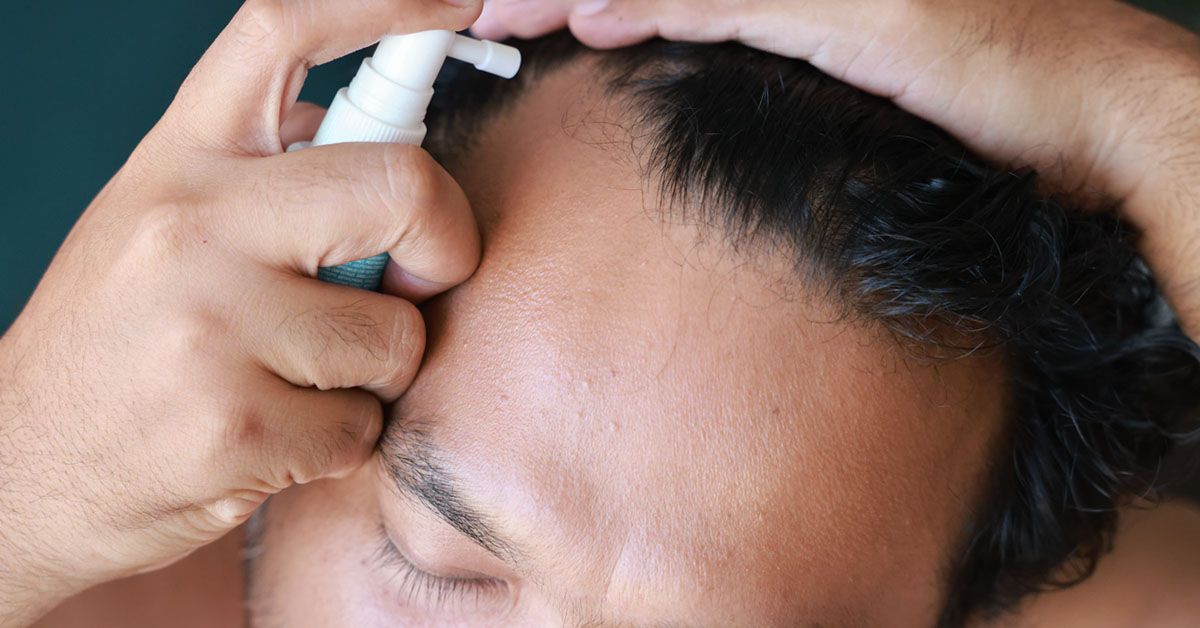
The FDA warning focused on compounded topical finasteride products. These are usually sprays, drops, gels, or solutions applied directly to the scalp. They may contain finasteride alone or combine it with other ingredients, such as minoxidil. Many of these products have become popular through telehealth platforms and online hair-loss clinics because they sound convenient, modern, and less intimidating than taking a pill.
However, the FDA emphasized an important fact: there is currently no FDA-approved topical finasteride product. Compounded drugs are not reviewed by the FDA for safety, effectiveness, or quality before they are marketed. That does not automatically mean every compounded product is unsafe, but it does mean the product has not gone through the same approval process as an FDA-approved medication.
The FDA also noted that finasteride can be absorbed through the skin into the bloodstream. This matters because some people assume that a topical product stays only where it is applied. Unfortunately, the body is not a locked filing cabinet. The skin can absorb medications, and a “local” product can still have systemic effects.
Topical Finasteride vs. Oral Finasteride
Oral finasteride has official FDA-approved labeling that explains its uses, dosing, warnings, and known adverse reactions. Topical compounded finasteride does not have FDA-approved labeling. That creates a communication gap. A patient may receive a scalp spray without fully understanding that the active ingredient can still enter the bloodstream and may cause side effects similar to oral finasteride.
Another concern is consistency. FDA-approved drugs must meet manufacturing standards for strength, purity, quality, and labeling. Compounded products can vary depending on the pharmacy, formulation, concentration, vehicle, and instructions. One topical product may not be exactly like another, even when both are marketed as “finasteride for hair loss.” That is a big deal when you are putting medication on your scalp every day and expecting predictable results.
Common and Reported Side Effects of Finasteride
Like all medications, finasteride can cause side effects. Not everyone experiences them, and many people tolerate the drug well. Still, the possible risks should be discussed before treatment begins, not after someone is already worried and Googling at 1:17 a.m.
Sexual Side Effects
Finasteride labeling and medical references describe sexual side effects such as decreased libido, difficulty getting or maintaining an erection, and ejaculation changes. Some reports have described symptoms that continued after stopping the medication, although postmarketing reports cannot always prove cause and effect because they are voluntarily submitted and come from populations of unknown size.
That uncertainty is exactly why patients should be informed. A side effect does not need to happen to everyone to matter. If it happens to you, it becomes very relevant very quickly.
Mood, Energy, and Cognitive Symptoms
The FDA’s discussion of compounded topical finasteride included reports of anxiety, depression, fatigue, insomnia, and brain fog. FDA-approved oral finasteride labeling also includes serious mood-related adverse reactions in postmarketing experience. Patients who notice new or worsening mood symptoms, unusual fatigue, sleep disruption, or mental cloudiness should contact a health care professional promptly.
Hair is important, but mental well-being is not a trade-in item. If a treatment seems to be affecting mood or daily functioning, that is not something to “tough out” in silence.
Breast Changes
Finasteride has also been associated with breast tenderness, breast enlargement, and, rarely, more serious breast-related findings. Men should promptly report breast lumps, pain, nipple discharge, or noticeable changes to a clinician. Yes, it may feel awkward to bring up. No, your doctor will not faint. Medical professionals discuss bodies for a living.
Allergic Reactions
Possible allergic reactions include rash, itching, hives, and swelling of the face, lips, tongue, throat, or related areas. Any sign of a serious allergic reaction requires urgent medical attention. This is one of those times when “wait and see” is not the star of the show.
Local Skin Reactions With Topical Products
Topical finasteride products may also cause scalp irritation, redness, dryness, scaling, stinging, or burning. Some people may assume irritation means the product is “working.” That is not a safe assumption. Irritated skin can be a sign that the formula, concentration, or added ingredients are not a good fit.
Who Should Be Especially Careful?
Finasteride is not approved for pediatric patients. It is also not indicated for women in the FDA-approved male pattern hair-loss labeling. People who are pregnant or may become pregnant should avoid exposure to finasteride because of potential risk to a male fetus. FDA-approved tablets are coated to reduce contact during normal handling, but crushed or broken tablets should not be handled by someone who is pregnant or may become pregnant.
Topical products raise an additional concern: transfer. A medication applied to the scalp can potentially get on hands, pillows, hats, towels, or another person through close contact. That is one reason the FDA specifically highlighted risk of inadvertent exposure to others. A scalp spray may look harmless sitting next to shampoo, but it is still medication.
What Patients Should Ask Before Using Finasteride
Before starting finasteride, patients should ask direct questions. Is this product FDA-approved? Is it oral or compounded topical? What concentration is being prescribed? What side effects should be watched for? What should happen if side effects appear? How long should it be used before judging results? Are there other causes of hair loss that need to be ruled out first?
That last question is especially important. Not all hair loss is male pattern hair loss. Shedding can be related to stress, illness, nutritional deficiencies, thyroid problems, certain medications, autoimmune conditions, tight hairstyles, scalp disorders, or normal aging. Treating every hair-loss case with finasteride is like using a snow shovel for every weather event. Sometimes it fits. Sometimes you are just standing in the rain holding the wrong tool.
Alternatives and Complementary Hair-Loss Options
Finasteride is not the only hair-loss treatment. Topical minoxidil is FDA-approved and widely used for pattern hair loss. Low-level laser devices, platelet-rich plasma, hair transplantation, and medical treatment of underlying scalp or health conditions may also be considered depending on the diagnosis. Some patients combine therapies under a dermatologist’s guidance.
The best option depends on the type of hair loss, age, health history, goals, tolerance for risk, budget, and patience level. And yes, patience is part of the prescription. Hair grows slowly. A follicle is not a microwave burrito; it will not be ready in 90 seconds.
Why Online Hair-Loss Treatment Feels So Tempting
Online hair-loss treatment is popular because it removes friction. You can upload photos, answer questions, and receive a prescription without sitting under fluorescent clinic lights while pretending not to stare at the anatomy poster on the wall. For busy adults, telehealth can be useful and legitimate.
The problem comes when convenience replaces counseling. A patient should understand the benefits and risks of a medication before starting it. That includes knowing that topical compounded finasteride is not FDA-approved, that systemic absorption can occur, and that side effects are possible. A sleek subscription box does not cancel the need for informed consent.
How to Use the FDA Warning Wisely
The FDA warning should be read as a call for better awareness, not as a reason to panic. Patients already using finasteride should not abruptly stop prescribed treatment without talking to a clinician, unless a clinician has advised them to do so or they are experiencing symptoms that need urgent evaluation. Instead, the warning should encourage a careful review: What exact product are you using? Who prescribed it? What pharmacy made it? What side effects were discussed? What monitoring plan exists?
If the answer to those questions is “I have no idea, but the website had nice branding,” it may be time to slow down and talk to a dermatologist or other qualified health care professional.
Real-World Experiences: What Finasteride Users Often Learn the Hard Way
Experience with finasteride varies widely. Some users describe it as boring in the best possible way: they take a small pill or apply a product, notice less shedding after a few months, and carry on with life. Their hairline stops retreating like it has seen a ghost, and they are satisfied. For these people, the medication can feel like a quiet win.
Others have a more complicated experience. A common story begins with urgency. Someone notices thinning at the temples, sees more scalp in photos, or realizes the bathroom drain has become a tiny hair museum. They search online, find finasteride, and feel relief because there is finally a real treatment instead of another bottle of “miracle botanical thunder serum.” The first mistake is often starting too fast. They may not ask whether their hair loss is truly androgenetic alopecia. They may not review their health history. They may not understand the difference between FDA-approved oral finasteride and compounded topical finasteride.
Another experience involves expectations. Some users think finasteride will regrow a teenage hairline in a few weeks. When that does not happen, they increase anxiety, switch formulas, add products, or assume treatment failed. In reality, hair-loss treatment usually requires months of consistency. Early shedding can also occur with some hair-growth regimens, which can be alarming if nobody warned the patient ahead of time. Clear counseling can turn panic into patience.
Side effects are where experiences become most personal. A user may notice decreased sexual interest, erection changes, lower energy, sleep disruption, breast tenderness, or mood changes. Some people stop treatment and improve. Others report symptoms that take longer to resolve. Because individual reports cannot always prove what caused what, these stories are sometimes debated online with the intensity of a courtroom drama. But from a patient-care perspective, the practical lesson is simple: track symptoms, report changes early, and do not let embarrassment delay a medical conversation.
Topical compounded finasteride adds another layer. Some users choose it because they believe “topical” means “side-effect free.” The FDA warning challenges that assumption. A scalp product can still be absorbed. It can also irritate the skin or transfer to another person. Users may learn they need to wash hands carefully, follow application instructions, avoid casual sharing of products, and keep medications away from anyone who should not be exposed.
The best experiences usually involve three things: an accurate diagnosis, realistic expectations, and honest follow-up. A dermatologist can check whether the pattern fits male pattern hair loss, discuss family history, review medications, consider lab testing when appropriate, and explain options. The patient can then decide whether preserving hair is worth the possible risks. That decision is personal. Hair can affect confidence, identity, dating, career comfort, and how someone feels when a camera flips to selfie mode without warning. But confidence should not come at the cost of ignoring symptoms.
Finasteride can be helpful, but it deserves respect. It is not shampoo with a medical degree. It is a prescription drug that changes hormone pathways. For some users, that is exactly why it works. For others, that is exactly why side effects matter.
Conclusion
The FDA warning about compounded topical finasteride is a reminder that hair-loss treatment should be medical, not merely cosmetic. Oral finasteride has FDA-approved uses and official labeling, but topical compounded finasteride products are not FDA-approved and may still be absorbed into the bloodstream. Reported side effects include sexual dysfunction, mood-related symptoms, fatigue, sleep problems, brain fog, breast changes, allergic reactions, and scalp irritation.
Patients considering finasteride should talk with a qualified health care professional, understand the exact product being prescribed, ask about risks, and report side effects promptly. Hair matters. So does the rest of you.

