
Skincare
Dacha: The Soviet Country Cottage
Aug
To call a dacha a “country cottage” is accurate in the same way that calling a Thanksgiving dinner “a meal” is accurate: technically correct, but wildly incomplete. The Russian dacha has been a summer escape, a vegetable factory, a family archive, a political reward, a creative hideout, and occasionally a place where history arrived uninvited and refused to wipe its boots.
Although the dacha existed long before the Soviet Union, Soviet life transformed it into one of the most recognizable institutions of everyday culture. For city residents crowded into apartments, a small plot beyond the urban edge offered air, privacy, work, food, and the thrilling possibility of owning three different jars labeled “currants.” In a society built around collective ideals, the dacha became a deeply personal space.
What Is a Dacha?
A dacha is generally a seasonal country home or garden cottage used by urban families, especially during the warmer months. The English definition sounds simple, but the Russian word carries a longer history. It comes from an older term for land that was “given” or allotted by a ruler. The earliest dachas were therefore not humble cabins assembled from leftover boards; they were grants associated with service, status, and favor.
Over time, the word shifted from the granted land itself to the residence built on it. By the nineteenth century, the dacha had become part of the summer culture of aristocrats, professionals, artists, merchants, and the growing urban middle class. Families rented or owned country houses near Moscow, St. Petersburg, and other cities, escaping heat, dust, noise, and social obligationsthough they often brought enough guests to recreate all four.
From Imperial Gift to Russian Summer Tradition
The dacha’s pre-Soviet development matters because the Bolsheviks did not invent the desire to leave town on Friday afternoon. Imperial-era dacha settlements grew alongside railroads, making seasonal travel easier. These communities occupied a middle ground between city and countryside: close enough for work and correspondence, yet rural enough for gardens, walks, amateur theatricals, long conversations, and romantic complications of the sort Russian literature handles with alarming efficiency.
Dachas also developed a distinctive cultural identity. They were less formal than noble estates and more temporary than village homes. Verandas blurred indoor and outdoor life. Light wooden construction, decorative trim, unusual additions, and accumulated furnishings gave many houses a relaxed personality. The dacha was not necessarily luxurious. Its value came from distancephysical distance from the city and emotional distance from routine.
How the Soviet Union Remade the Dacha
Nationalization, privilege, and political rewards
After the 1917 Revolution, many private country properties were nationalized. Some became institutional rest homes, while desirable residences were assigned to party officials, military leaders, scientists, artists, and writers. The arrangement created a classic Soviet contradiction: private property was ideologically suspect, yet access to a state-owned dacha could serve as a very personal reward.
For elite occupants, the dacha might include staff, security, multiple rooms, and space for official meetings. Joseph Stalin used several dachas, including his heavily guarded residence at Kuntsevo. Photographs and archival materials show senior officials relaxing at such retreats, but “relaxing” around Stalin was probably a competitive sport with no clearly posted rules. Government dachas became extensions of political life, places where dinners, negotiations, alliances, and anxieties continued beyond Kremlin walls.
The ordinary citizen’s six-sotka kingdom
The more widely remembered Soviet dacha was much smaller. Especially from the postwar decades into the 1960s, workplaces, unions, and gardening associations helped distribute plots to ordinary citizens. A standard allotment was often six sotkasabout 600 square meters, or roughly 0.15 acre. It was not a ranch. It was barely enough territory for a cottage, fruit trees, berry bushes, potatoes, cucumbers, and one neighbor who believed your fence had migrated during the night.
These plots were expected to be productive. Families cultivated vegetables, herbs, and fruit for summer meals and winter storage. Cucumbers became pickles; berries became jam; tomatoes went into jars; potatoes went everywhere. In a system frequently troubled by shortages and uneven food distribution, the dacha garden supplied fresh produce that state stores could not always provide reliably.
What Did a Soviet Dacha Look Like?
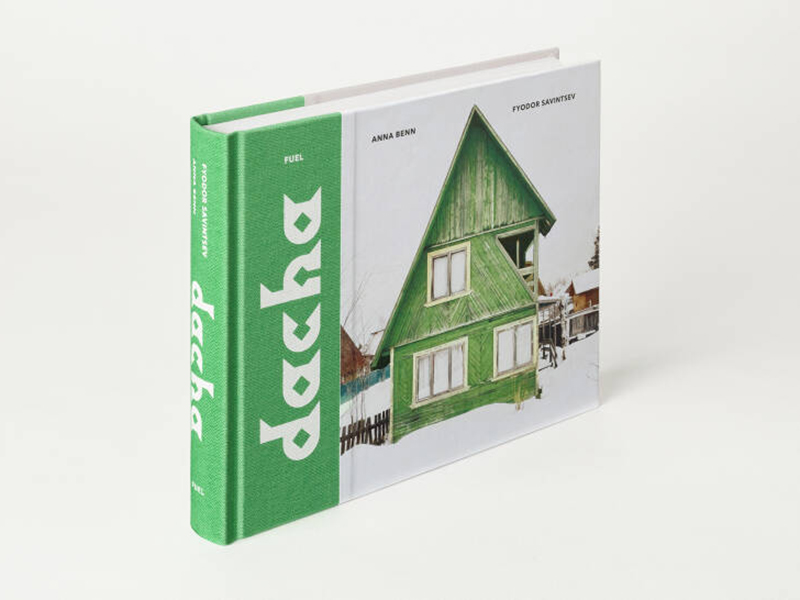
There was no single Soviet dacha design. Some were handsome older wooden houses with carved details and generous verandas. Others were tiny cabins, improvised sheds, or structures built gradually from whatever materials could be obtained. Rules often limited the scale and permanence of ordinary second homes, encouraging ingenious solutions such as enclosed porches, steep roofs, attic spaces, and additions that appeared to have been negotiated separately with gravity.
Inside, the classic dacha was practical, personal, and gloriously mismatched. Furniture retired from a city apartment received a second career. Chipped cups, faded curtains, old calendars, repaired tools, woven rugs, and books gathered over decades. Running water, indoor plumbing, insulation, and reliable electricity were never guaranteed. A washstand, outdoor toilet, well, stove, and buckets might do the work of an entire utility department.
This lack of polish was not always considered a failure. The dacha’s appeal lay partly in its informality. Nobody expected the chairs to match. When a table leaned, someone placed a folded newspaper under one leg and declared the matter solved for the next twenty-seven years.
Gardening, Gathering, and the Dacha Work Ethic
Western visitors sometimes imagine the dacha as a place of uninterrupted leisure. That fantasy usually survives until the first bucket of potatoes arrives. Traditional dacha life involved digging, planting, watering, weeding, repairing, chopping, carrying, preserving, and discussing the weather as though it were an unreliable employee.
Yet the work could be deeply satisfying. Families passed gardening knowledge between generations. Children learned which berries were ready, how to pull carrots without snapping them, and why stepping on a carefully prepared bed was treated as a constitutional crisis. Forest trips added mushrooms and wild berries to the seasonal menu. Meals featured garden cucumbers, dill, green onions, potatoes, tomatoes, preserves, tea, and whatever a guest had brought from the city.
The dacha also offered a social rhythm. Neighbors exchanged seedlings, tools, advice, gossip, and produce. Hospitality often moved outdoors, where a table beneath the trees could host tea, grilled food, homemade drinks, political arguments, songs, and stories that improved slightly with every retelling.
A Private World Inside a Collective Society
The Soviet dacha mattered because privacy was scarce. Urban housing could be crowded, and communal apartments required unrelated households to share kitchens, corridors, and bathrooms. Even after the mass construction of separate apartments during the Khrushchev era, living space remained limited. The dacha provided room to breathe, build, garden, think, and organize family life with fewer official or neighborly eyes nearby.
That relative freedom should not be romanticized into total independence. Land use was regulated, associations had rules, and access often depended on employment or institutional connections. Still, compared with an apartment block, the garden plot felt flexible and personal. A family could shape it over many years. A tree planted by a grandfather, a porch repaired by an aunt, or a currant bush transplanted from a friend became part of an unofficial family history.
Dachas of Writers, Leaders, and Turning Points
Some dachas became famous because of their residents. The writers’ settlement at Peredelkino outside Moscow is associated with major literary figures, including Boris Pasternak, who worked on Doctor Zhivago there. Such settlements offered creative space, but state patronage came with political pressure. A beautiful house among the pines did not cancel censorship, surveillance, or the danger of falling from favor.
Political dachas could also become stages for national events. On August 18, 1991, hard-line officials isolated Soviet president Mikhail Gorbachev at his Crimean dacha in Foros during their attempted coup. The episode showed how a retreat designed for seclusion could become a prisonand how the dacha, supposedly outside ordinary politics, could sit directly inside history.
The Dacha as a Food-Security System
The productive dacha plot was more than a hobby garden. During periods of shortage, it functioned as a household safety net. Produce grown in summer could be canned, pickled, dried, stored in cellars, or carried back to the city. This informal food economy helped families supplement wages and unreliable retail supplies.
The importance became especially visible during the economic turmoil surrounding the Soviet collapse and the 1990s. Inflation, unemployment, unpaid salaries, and weakened distribution systems made homegrown potatoes and preserved vegetables financially meaningful. The dacha could look quaint in a photograph while operating like a small survival machine in real life.
From Soviet Cabin to Post-Soviet Cottage
After the Soviet Union ended, private land ownership and market development reshaped dacha culture. Some families maintained small inherited plots much as before. Others renovated modest houses into year-round residences. Around major cities, wealthy buyers built large “cottages” with walls, garages, landscaped grounds, and architecture that occasionally suggested a medieval fortress had married a casino.
The contrast between humble garden dachas and luxury compounds mirrors broader economic changes. Still, the older model has not vanished. Many people continue to value the dacha as a place for family meals, gardening, mushroom hunting, repairs, summer sleep, and temporary escape from screens and traffic. The buildings change, but the desire behind them remains remarkably durable.
Why the Soviet Dacha Still Matters
The Soviet dacha reveals how ordinary people adapted to the gaps between ideology and daily life. The state promoted collective systems, yet families relied on tiny individual plots. Official culture celebrated industrial modernity, yet urban residents spent weekends digging soil by hand. A dacha could signal privilege, but it could also represent frugality, hard labor, and practical self-reliance.
Most importantly, it gave families continuity. Regimes changed, apartments changed, prices changed, and shelves filled or emptied. The dacha accumulated seasons. Its value lived in routines: opening the house in spring, airing blankets, planting onions, repairing the roof, watching berries ripen, preserving the harvest, and closing the shutters before winter.
A Weekend at a Soviet-Era Dacha: A Research-Based Composite Experience
The trip begins before the cottage appears. On a Friday afternoon, bags are packed with bread, tea, spare clothes, newspapers, tools, and at least one item someone insists cannot be purchased outside Moscow. The family joins the flow toward the suburbs by car, bus, or crowded elektrichka train. Everyone seems to be carrying seedlings, jars, buckets, or mysterious parcels tied with string. The city slowly thins into apartment blocks, warehouses, birch trees, and garden settlements.
At the gate, the dacha looks smaller than memory and more important than architecture. The boards have weathered. One shutter needs attention. The path is half-covered with weeds. Before anyone can sit down, windows are opened, bedding is shaken, water is collected, and an inspection begins. The roof survived. The mice have been ambitious. A relative announces that the fence leans because of snow; another says it has always leaned and should not be encouraged with discussion.
Morning arrives early through thin curtains. There is tea, dark bread, jam, and a list of tasks disguised as casual conversation. Someone waters cucumbers. Someone ties tomatoes. Someone attacks the weeds with the moral certainty of a prosecutor. The youngest child is sent to pick dill and returns with grass, two leaves, and a beetle. This is accepted as training.
By midday, work gives way to food. Cucumbers are sliced, potatoes boiled, and green onions placed on the table. Neighbors stop by with berries or advice. The advice is always more abundant. One recommends ashes for the soil; another objects; a third remembers a method used by an uncle in 1974. No conclusion is reached, but tea is poured.
Later comes a walk toward the forest or river. Mushroom hunting is quiet, competitive, and full of false alarms. Every brown leaf briefly becomes dinner. Back at the house, the harvest is sorted while stories circulate: who built the porch, who planted the apple tree, who once missed the train and slept on the veranda. The dacha begins to feel less like a structure than a container for remembered summers.
Evening cools the garden. Smoke rises from a grill or stove. Mosquitoes conduct unrestricted operations. Adults talk longer than planned, moving from family news to politics, repairs, prices, literature, and the suspicious behavior of a neighbor’s raspberry canes. The darkness is deeper than in the city. Without traffic and apartment walls, small sounds become clear: leaves, dishes, distant laughter, a train, water in a bucket.
On Sunday, departure creates a familiar contradiction. Everyone is tired from “resting.” Bags are now heavier with cucumbers, herbs, berries, jars, and potatoes. The house is swept, tools are put away, and the door is locked after three separate checks. On the return trip, the family carries part of the dacha back into the citynot only food, but the reassuring knowledge that beyond the concrete blocks there is a patch of ground shaped by their own hands.
Conclusion
The dacha was never merely the Soviet version of a vacation home. It was a social institution built from older Russian traditions and remade by revolution, scarcity, bureaucracy, family labor, and seasonal pleasure. It could be a perk for powerful officials or a six-sotka garden for ordinary workers. It could host literature, political intrigue, pickling, or all three before lunch.
Its enduring appeal comes from that flexibility. The dacha offers escape without complete withdrawal, ownership without necessarily being grand, and nature without pretending nature will weed the onions by itself. In the story of Soviet everyday life, few places reveal so much through such a small gate.
Research note: This article synthesizes historical, archival, academic, architectural, and cultural material from Merriam-Webster, the Library of Congress, Smithsonian Institution, National Geographic, Harvard University, the University of Chicago, Portland State University, Cornell University Press materials hosted by JSTOR, the University of California academic community, Foreign Policy, The Washington Post, The New Yorker, Russian Life, and related American educational resources.

