
Hair Care
Austin PD Brags About Dozens Of Support Letters They Got, People Call Them Out For Lying (Updated)
Jun
Note: This article is based on public reporting and official materials from reputable U.S. sources including Gizmodo, Bored Panda, KUT, ABC News, The Texas Tribune, KERA, Axios, Truthout, Austin Monitor, Austin Police Oversight, the Travis County District Attorney’s Office, and City of Austin records. It summarizes the controversy, the public response, and the later context without claiming that any allegation was legally proven.
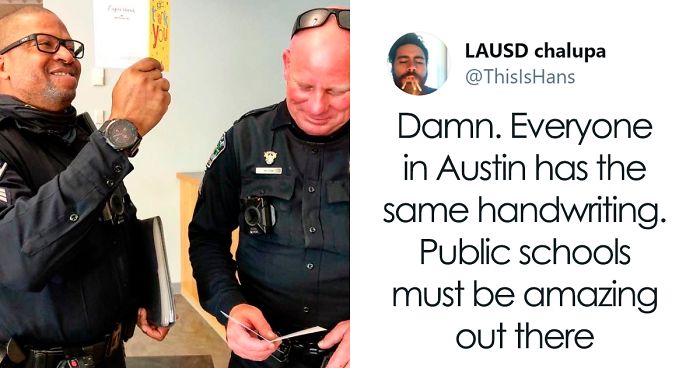
In June 2020, the Austin Police Department tried to share a wholesome social media moment: officers smiling over a pile of thank-you cards and support letters from the community. The idea was simple enough. During a tense period of protests, long shifts, and national criticism of policing, APD appeared to be saying, “Look, Austin still appreciates us.” Unfortunately for the department, the internet looked at the photos for approximately twelve seconds and said, “Hold on. Why do all these cards look like they were written by the same person?”
That was the beginning of the Austin PD support letters controversy, a strange little public relations firework that exploded because of timing, visual details, and the public’s already thin patience. People noticed that many envelopes seemed to share similar handwriting. Others pointed out that the envelopes appeared to lack postage or addresses. In another era, maybe the post would have been ignored. But in the middle of nationwide Black Lives Matter protests after the killing of George Floyd, and after Austin officers had been criticized for using “less-lethal” ammunition during demonstrations, a cheerful collage of police appreciation cards landed about as gracefully as a marching band in a library.
What Did Austin PD Post?
The department’s social media post showed officers reading cards and thanked residents who had taken the time to brighten officers’ day. The cards reportedly included short messages like “Thank you,” “We are thankful for all you do,” and “U R appreciated.” On its face, this was ordinary community-relations content. Police departments often post photos of children’s drawings, food donations, holiday cards, and neighborhood appreciation notes. These posts are designed to humanize officers and show community support.
But the Austin PD tweet appeared during an extraordinary moment. Across the United States, protesters were calling for police accountability, racial justice, and reforms to use-of-force policies. In Austin specifically, police were under intense scrutiny after demonstrators were injured by beanbag rounds during protests outside APD headquarters and near Interstate 35. The public conversation was not exactly craving a “look how loved we are” post. It wanted transparency, explanations, and accountability.
Why People Accused Austin PD Of Lying
The backlash centered on three things: the handwriting, the envelopes, and the timing. The handwriting became the internet’s favorite detective exhibit. Many envelopes appeared to have the same style of lettering, especially the repeated “Thank You” written on the front. Social media users joked that either Austin had the most synchronized handwriting curriculum in America or the cards had been prepared by only a few people.
The second issue was the lack of visible postage and addresses. Critics asked why supposed mailed letters looked more like hand-delivered props than real mail. To be fair, hand delivery is not suspicious by itself. A church group, neighborhood association, school group, or family could absolutely drop off a stack of cards in person. But when a public agency is already facing a credibility crisis, tiny details become big details. A missing stamp can suddenly carry the dramatic weight of a courtroom exhibit.
The third issue was timing. The post appeared shortly after high-profile injuries at Austin protests. Justin Howell, then a 20-year-old Texas State University student, suffered a fractured skull and brain injury after being struck by a beanbag round. Brad Levi Ayala, 16 at the time, also suffered brain trauma after being hit during the protests. The City of Austin later approved multimillion-dollar settlements connected to protest injuries, including settlements for Howell, Anthony Evans, and Ayala. Against that backdrop, many critics saw the thank-you card post as tone-deaf, defensive, or worse, an attempt to manufacture public support.
The Update: Austin PD’s Explanation
After the post drew attention, Austin PD gave an explanation to Gizmodo. According to the department, the cards came from several community members, including families and young children. APD said two people organized the delivery and wrote “Thank You” on the envelopes so officers would know to open them for encouragement. That, according to the department, was why the outside of many envelopes appeared to have similar handwriting.
The explanation answered one question but created others. If two organizers labeled the envelopes, then similar handwriting on the outside was not necessarily proof the messages inside were fake. However, critics still questioned why the department could not provide clearer information about the group, the school, or the specific source of the cards. The mention of “kindergartners” also drew skepticism because Texas schools had been closed for the remainder of the academic year during the early COVID-19 pandemic. APD later clarified that “kindergarten-aged” children may have been a more accurate description.
That update matters. It means the most responsible conclusion is not “Austin PD definitely wrote fake letters to itself.” The more accurate conclusion is: Austin PD posted a public relations message that many people found suspicious, APD gave an explanation, and the explanation did not fully satisfy critics because the department’s credibility was already under pressure.
The Bigger Context: Austin Protests And Police Trust
The controversy cannot be separated from the events surrounding it. In April 2020, Michael Ramos, an unarmed Black and Latino man, was shot and killed by an Austin police officer. His death became one of the local rallying points during protests that followed the murder of George Floyd in Minneapolis. When demonstrators gathered in Austin, APD’s use of beanbag rounds and other crowd-control tactics drew major criticism.
Reports later described serious injuries among protesters. The Travis County District Attorney’s Office and the City of Austin requested a review of APD’s 2020 protest response, and a grand jury returned felony indictments against more than 20 officers in connection with use-of-force incidents. Some indictments were later dismissed, while several cases continued in different forms. The legal picture became complicated, but the public relations picture was painfully simple: trust had been damaged.
That is why the card post became more than a meme. It became a symbol of institutional communication gone wrong. A police department facing public concern over force should not rely on soft-focus appreciation content without also addressing the harder questions. People can support officers and still demand accountability. Those two ideas are not enemies. In fact, a department that wants real trust should welcome both support and scrutiny.
Why The Internet Reacted So Fast
The internet loves a mystery, especially when the clues are sitting in a photo collage. Users zoomed in, compared letters, circled repeated shapes, and turned the comments section into a handwriting seminar with jokes. It was part comedy, part crowdsourced skepticism, and part public audit. In the old days, a department could send a press release and expect local media to frame the story. In 2020, anyone with a phone could become a fact-checker, critic, comedian, and amateur forensic document examiner before lunch.
That does not mean every online accusation is fair. Social media often moves faster than evidence. But it does mean institutions cannot assume audiences will accept visual storytelling at face value. If a photo is posted to prove community support, viewers will inspect it. If the details look staged, people will say so. If the explanation is vague, the joke machine will start printing.
What Austin PD Could Have Done Differently
A stronger post would have included basic context from the start. APD could have written that the cards were hand-delivered by two community organizers, that the organizers labeled the envelopes, and that the department was grateful for the encouragement while also recognizing the pain and anger in the community. That would not have solved every criticism, but it would have reduced the mystery.
Even better, the department could have paired appreciation with accountability. Imagine a message that said: “We are thankful for residents who sent encouragement. We also know many Austinites are hurting and demanding answers about recent protest injuries. We are committed to transparency and will continue providing updates.” That would have sounded less like a victory lap and more like an institution aware of the room it was standing in.
Public relations is not just about saying positive things. It is about saying the right thing at the right time in the right tone. When the community is angry, a cheerful post can feel dismissive. When people are injured, a thank-you collage can look like deflection. When trust is low, every unexplained detail becomes suspicious. In other words, the problem was not simply the handwriting. The problem was the gap between the message APD wanted to send and the moment the public was living through.
Thank-You Cards Are Powerful, But Only When They Feel Real
Handwritten gratitude can be meaningful. Research from the University of Texas at Austin has shown that letters of gratitude can make both writers and recipients feel better than expected. Anyone who has received a sincere note knows the effect. A handwritten card can feel warmer than an email and more personal than a quick text. It says someone paused, found a pen, and made an effort. In a world where most of us communicate with thumbs and typos, that matters.
But sincerity is the secret ingredient. A thank-you note that feels staged loses its charm quickly. If the recipient is a public agency under scrutiny, authenticity matters even more. People do not want institutions to perform gratitude; they want them to earn trust. A card can brighten a day, but it cannot erase a fractured skull, a legal settlement, or unanswered policy questions.
How This Became A Lesson In Police Social Media
Police departments use social media for many legitimate reasons: emergency updates, missing-person alerts, road closures, public safety tips, recruitment, crime prevention, and community engagement. A well-run account can be useful. During emergencies, it can save time and reduce confusion. During normal weeks, it can help residents understand what officers are doing.
However, police social media becomes risky when it turns into image management instead of public communication. A department cannot meme its way out of a trust crisis. It cannot post enough smiling officers to replace transparent investigations. It cannot use appreciation letters as a shield against legitimate questions. The audience will notice. And if the post feels too polished or too convenient, the backlash can become louder than the original message.
The Austin PD thank-you card controversy shows how quickly community-relations content can backfire. It also shows that the public now expects receipts, context, and humility. A post that says “people support us” is weaker than a post that explains who, what, when, why, and how. Clarity is not boring. Clarity is armor.
Why The Word “Lying” Stuck
The title of the controversy says people called Austin PD out for lying, and that is exactly how many critics framed it online. But there is an important difference between an accusation and a confirmed fact. The available public information does not conclusively prove that APD fabricated the cards. The department said the similar handwriting came from two organizers who wrote on the envelopes. Critics argued the explanation was incomplete and suspicious.
Still, the word “lying” stuck because public trust was already fragile. When people believe an institution has been evasive about serious matters, they are less likely to give it the benefit of the doubt on smaller ones. That is the brutal math of credibility: once trust is low, even a plausible explanation has to climb a mountain wearing flip-flops.
What Readers Should Take Away
The Austin PD support letters story is funny on the surface because, yes, the internet turning envelopes into forensic evidence is objectively a little absurd. But beneath the jokes is a serious point about trust, power, and public messaging. When an agency with authority over people’s safety speaks publicly, it has to be careful, specific, and honest. Vague positivity is not enough when the public is asking hard questions.
It is also a reminder that citizens are no longer passive audiences. They compare screenshots, archive posts, read official statements, and challenge narratives in real time. Sometimes they overreach. Sometimes they catch details that institutions hoped no one would notice. Either way, public agencies must communicate as if every word and every photo will be examined closely, because they will be.
Experiences And Reflections Related To The Austin PD Letter Controversy
Anyone who has worked in communications, customer service, education, local government, or community organizing has probably seen a smaller version of this same problem. An organization wants to share good news at a bad time. Maybe a company posts about employee appreciation right after layoffs. Maybe a school celebrates test scores while parents are complaining about safety. Maybe a city department shares a smiling team photo while residents are waiting for answers about a failure. The content may be technically true, but emotionally wrong. And online, emotionally wrong often becomes publicly disastrous.
The Austin PD situation feels familiar because people have become skilled at detecting polished messaging. Audiences can smell a “please clap” post from three blocks away. They know when a brand, agency, or institution is trying to change the subject. That does not mean positive stories should disappear. Communities need good news, and public workers deserve appreciation when they serve people well. But good news cannot be used like wallpaper over a cracked foundation. If the wall is damaged, people will still see the crack.
One practical experience from this kind of controversy is that transparency should come before celebration. If you are managing a public page during a crisis, the first question should not be, “How can we make ourselves look better?” It should be, “What does the community need from us right now?” Sometimes the answer is information. Sometimes it is an apology. Sometimes it is silence until facts are verified. And sometimes it is a simple acknowledgment that people are angry for reasons that deserve respect.
Another lesson is that details matter more than communicators think. A missing timestamp, a repeated phrase, a cropped image, or identical handwriting can become the center of the story. In everyday life, nobody cares if ten envelopes say “Thank You” in the same handwriting because Aunt Linda labeled them all at the kitchen table. But when a police department posts those envelopes as evidence of broad public support during a historic protest movement, Aunt Linda’s handwriting becomes a public issue. Context changes everything.
There is also a human lesson here. Officers may genuinely have been exhausted. Some residents may genuinely have wanted to encourage them. Protesters may genuinely have been afraid, injured, furious, and grieving. All of those realities can exist together. The failure was trying to spotlight one reality while appearing to ignore the others. Good communication leaves room for complexity. Bad communication chooses the most flattering angle and hopes nobody asks what is outside the frame.
For readers, the experience is a useful reminder to be skeptical without becoming careless. It is fair to question public messaging. It is fair to ask for evidence. It is fair to laugh when an institution posts something that looks suspiciously staged. But it is also wise to separate what is proven from what is suspected. The strongest criticism does not need exaggeration. In this case, the proven facts are enough: APD posted appreciation cards during a tense moment, the cards raised obvious questions, the department’s explanation did not satisfy many observers, and the controversy became a case study in how not to manage public trust online.
Conclusion
The Austin PD thank-you card controversy was not just about envelopes. It was about credibility. The department wanted to show community support, but the public saw a post that felt strangely convenient, visually questionable, and poorly timed. APD offered an explanation, saying two organizers labeled the envelopes, but the damage had already been done. The internet had turned the post into a symbol of tone-deaf police public relations.
The deeper lesson is simple: trust cannot be staged. It must be built through accountability, transparency, consistency, and humility. A stack of cards may make a nice photo, but when a community is demanding answers about force, injuries, and justice, the most powerful message is not “Look who thanked us.” It is “We hear you, we will answer you, and we will do better.”

