
Hair Care
Samsung Releases Minimum Viable Galaxy Upcycling
Jun
Every home has one: an old smartphone sleeping in a drawer like a tiny glass fossil. It still has a camera, microphone, Wi-Fi, battery, processor, sensors, and more computing power than many office computers from not that long ago. Yet there it sits, next to mystery cables, expired SIM cards, and that one charger nobody dares throw away because “it might be useful someday.”
Samsung’s Galaxy Upcycling at Home program was supposed to answer that drawer problem. Instead of letting older Galaxy phones become electronic waste, Samsung introduced a way to repurpose them into smart home tools through the SmartThings app. In theory, this was a clever, eco-friendly idea: give an old phone a second life as a sound sensor, light sensor, childcare monitor, pet monitor, or basic Internet of Things device. In practice, the release felt more like a “minimum viable product” than the bold upcycling revolution many repair advocates and tech enthusiasts hoped for.
The result is both promising and frustrating. Samsung deserves credit for admitting that old phones still have value. But the company’s first public version of Galaxy Upcycling at Home also shows how limited corporate sustainability programs can become when they are trapped inside closed ecosystems, narrow device support, and cautious product planning. It is a green idea wearing training wheels.
What Is Samsung Galaxy Upcycling at Home?
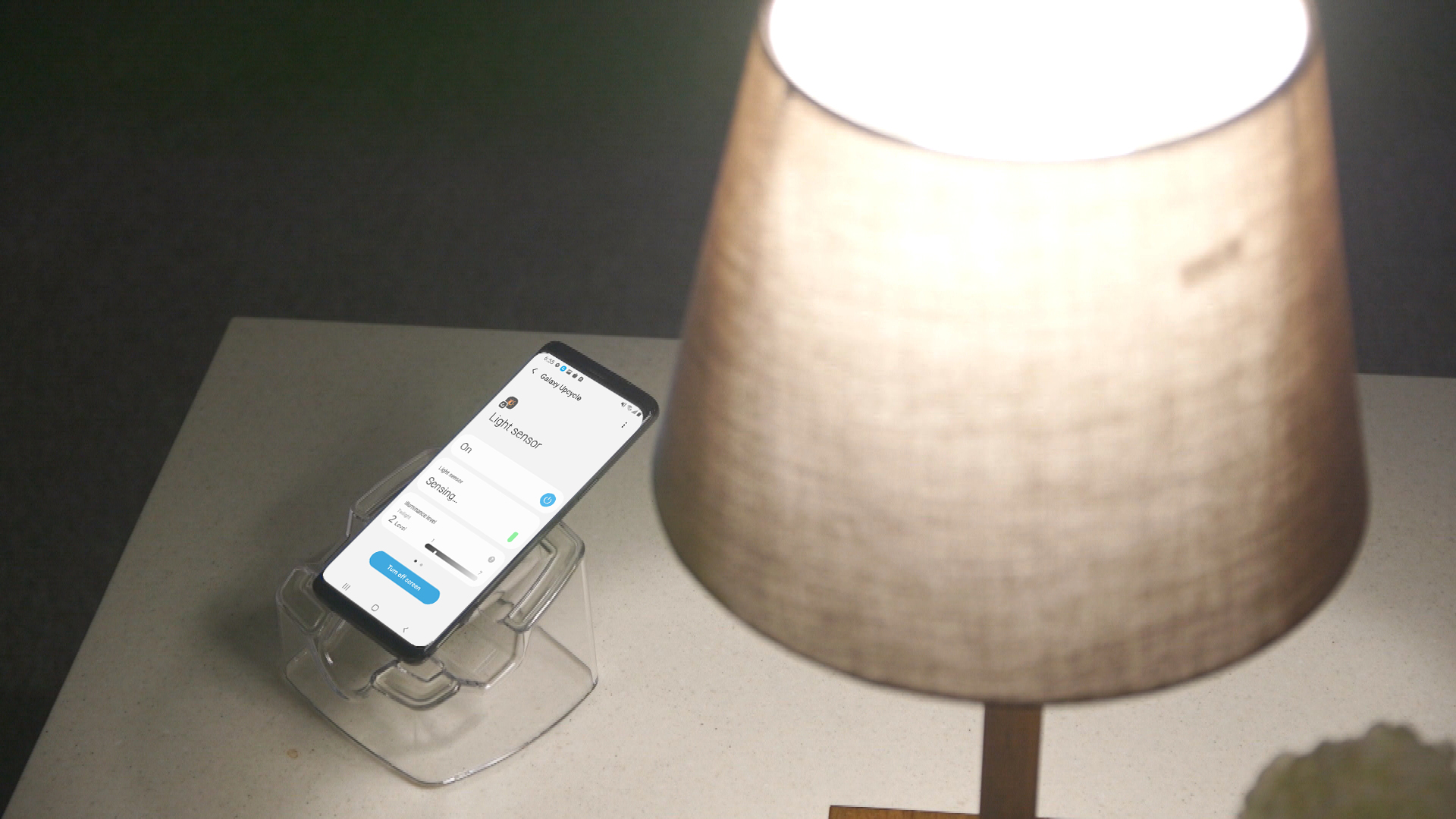
Samsung Galaxy Upcycling at Home is a software-based program that lets certain older Galaxy smartphones work as smart home sensors. Instead of buying a separate light sensor, sound detector, or baby monitor-style device, users can convert a compatible old Galaxy phone through SmartThings Labs inside the SmartThings app.
The program launched as a beta in the United States, the United Kingdom, and Korea. Its core idea was simple: a phone that is no longer your daily driver can still listen for sounds, detect light levels, and trigger smart home actions. For example, it can detect a dog barking, a baby crying, a cat meowing, or a knock at the door, then send an alert to your current phone. It can also use its light sensor to detect when a room gets dark and automatically turn on connected lights through SmartThings.
That is practical. It is also refreshingly easy to understand. Nobody needs a 47-page manual titled “Advanced Circular Electronics Deployment Framework” to grasp the appeal of using an old phone as a sensor. You plug it in, set it up, place it where needed, and let it work quietly in the background. The phone gets a new job. The drawer loses one resident. Everyone claps politely.
Why the Idea Matters
Electronic waste is not a small problem. Phones, tablets, laptops, chargers, batteries, and smart gadgets add up quickly. A smartphone may look small enough to be harmless, but it contains metals, plastics, glass, rare materials, batteries, and components that took energy and resources to produce. When millions of devices are replaced every year, “just one old phone” becomes a mountain with a charging port.
Upcycling is different from recycling. Recycling breaks a product down to recover materials. Upcycling keeps the product useful for longer by giving it a new purpose. In many cases, extending a device’s useful life is better than immediately recycling it, because the most environmentally expensive part of a phone’s life often happens before it reaches the customer: mining, manufacturing, assembly, shipping, and packaging.
That is why Samsung’s upcycling concept attracted attention. A retired phone is already a compact computer with sensors, a display, speakers, wireless radios, and a battery backup. Throwing that away is like buying a Swiss Army knife, using only the toothpick, and then declaring the whole thing obsolete because a newer toothpick came out with AI.
The “Minimum Viable” Problem
The phrase “minimum viable” fits because Samsung’s release was useful but narrow. The program did not unlock the full creative potential of old Galaxy hardware. It did not turn unused phones into open-ended maker devices. It did not allow broad firmware-level experimentation for hobbyists, schools, repair communities, or small businesses. Instead, it offered a limited set of SmartThings-connected functions: mainly sound detection and light detection.
That is not bad. A sound sensor and light sensor can be helpful. But when the original dream of Galaxy Upcycling was much bigger, the final product felt like ordering a full buffet and receiving one polite cucumber slice.
Earlier descriptions of Galaxy Upcycling suggested a more flexible future where old Galaxy phones could become IoT hubs, CCTV systems, game consoles, desktop PCs, environmental monitors, or other creative devices. Repair advocates and open-hardware fans imagined phones becoming playgrounds for reuse. The actual Galaxy Upcycling at Home beta was more controlled, more corporate, and much less adventurous.
What Samsung Got Right
1. It Made Reuse Simple
The biggest strength of Galaxy Upcycling at Home is accessibility. Most people are not going to flash custom firmware, unlock bootloaders, solder components, or configure a Raspberry Pi at midnight while whispering, “This is relaxing.” They want a feature that works inside an app they already know.
By putting Galaxy Upcycling inside SmartThings Labs, Samsung reduced friction. A casual user could take an eligible old phone and give it a second life without needing to become a part-time systems engineer. That matters. Sustainability programs only make a real-world difference when normal people can actually use them.
2. It Used Hardware Already Inside the Phone
Samsung’s approach also made sense because it reused existing sensors. Smartphones already have microphones, ambient light sensors, cameras, accelerometers, Wi-Fi, Bluetooth, and processing power. Even an older Galaxy device can perform simple smart home tasks without breaking a sweat. Using that hardware instead of manufacturing a separate sensor is the kind of practical circular thinking tech companies should explore more often.
3. It Connected to a Real Smart Home Ecosystem
SmartThings integration gave the program immediate usefulness. A light sensor is more valuable when it can trigger connected lamps, TVs, routines, and other smart devices. A sound detector is more useful when it can send alerts to the phone you actually carry. Samsung did not just say, “Here is an old phone; good luck, brave citizen.” It gave the upcycled device a role inside a larger connected home.
Where Galaxy Upcycling Fell Short
1. Device Support Was Too Limited
One of the biggest criticisms was compatibility. Galaxy Upcycling at Home supported certain Galaxy S, Note, and Z series devices from 2018 onward. That left out many older phonesthe exact devices most likely to be sitting unused in drawers. If a phone is new enough to qualify, many users might still be using it, selling it, trading it in, or giving it to a family member. The forgotten phones most in need of a second life are often older than the supported list.
This creates a strange situation: the upcycling program helps old phones, but not too old. It is like opening a senior center and admitting only people who can still win a 5K.
2. The Feature Set Was Small
Sound and light sensing are useful, but they barely scratch the surface of what an old smartphone can do. A Galaxy phone could become a security camera, local media controller, dashboard display, offline learning device, smart remote, network monitor, home automation panel, portable server, or environmental sensor hub with external accessories.
Samsung’s official version focused on safe, simple use cases. That is understandable from a product support perspective, but disappointing from an innovation perspective. The hardware was capable of more. The community wanted more. The program delivered less.
3. It Stayed Inside Samsung’s Walled Garden
Galaxy Upcycling at Home was tied closely to SmartThings. That makes setup easier for Samsung users, but it also limits flexibility. The most exciting upcycling projects usually happen when users can connect devices to multiple platforms, open-source tools, local automation systems, and custom workflows.
A truly ambitious Galaxy Upcycling program would let users choose: SmartThings for convenience, open tools for experimentation, and advanced options for makers. Instead, Samsung’s beta felt like a smart home accessory feature rather than a broad sustainability platform.
The Bigger Question: Can Closed Tech Be Truly Sustainable?
Samsung’s program raises a larger issue in consumer electronics: how sustainable can a device be if users do not fully control it? Upcycling depends on access. Repair depends on access. Long-term usefulness depends on software support, parts availability, battery replacement, security updates, and the ability to repurpose hardware after official support fades.
If a phone is locked down, difficult to repair, expensive to fix, and limited by short software lifecycles, then upcycling becomes harder. The device may still be powerful, but the owner cannot easily redirect that power. It is like owning a sports car that only drives to approved grocery stores.
This is why repair advocates have pushed for right-to-repair policies, available parts, repair manuals, unlockable software, and longer support timelines. A phone’s environmental impact is not only about recycled packaging or a green-themed press release. It is about whether the product can keep serving people after the first owner upgrades.
Real-World Uses for an Upcycled Galaxy Phone
Even with Samsung’s limited release, the concept is useful. An old Galaxy phone can still perform everyday tasks around the home. A parent could use it as a sound monitor in a nursery. A pet owner could place it near a dog crate or cat area to receive alerts. A homeowner could use it to trigger lights in a hallway, basement, garage, or entryway. A caregiver could use it as a basic alert device for household sounds.
Outside Samsung’s official feature set, creative users have long found other ways to reuse old Android phones. They can become dedicated music players, smart remotes, security cameras, digital clocks, recipe screens, desk dashboards, video call stations, e-book readers, backup phones, GPS units, or home automation control panels. The best upcycling idea is often the one that solves a small annoyance in your own life.
For example, an old phone mounted in the kitchen can show recipes without risking your main phone near flour, oil, and the mysterious sticky substance that appears whenever anyone makes pancakes. An old phone near the front door can display weather, calendar reminders, and commute information. A retired phone in a workshop can run timers, manuals, or music without exposing your expensive daily phone to dust and dropped screws.
Samsung’s Sustainability Story: Good Direction, Incomplete Execution
Samsung has positioned Galaxy Upcycling at Home as part of its broader sustainability goals, especially responsible consumption and production. The company’s message is clear: older devices should not automatically become waste. That is the right message.
But the execution matters. A sustainability program becomes more convincing when it is broad, durable, transparent, and useful across many devices. If only a limited number of phones qualify and only a few functions are available, the program risks becoming more symbolic than transformative.
Still, symbols can matter when they point in the right direction. Galaxy Upcycling at Home showed that a major manufacturer could use software to extend device life after the normal upgrade cycle. That alone is important. The question is whether Samsung and other companies will expand the idea into something more powerfulor leave it as a neat feature buried in a lab menu.
What a Better Galaxy Upcycling Program Could Look Like
A stronger version of Galaxy Upcycling would support more devices, especially older models. It would include more use cases, such as camera monitoring, local dashboards, smart remotes, environmental sensing, media control, offline education, and community-developed projects. It would offer clear security guidance so users know when an upcycled phone is safe to keep online and when it should be isolated from sensitive accounts.
Samsung could also provide an “upcycling mode” that strips a phone down to essential functions, improves battery management, disables unnecessary background services, and offers privacy-first controls. Users should be able to wipe personal data, install the upcycling environment, and run the device as a dedicated appliance.
For advanced users, Samsung could offer bootloader-friendly options after a device reaches the end of official support. That would be a major shift, but it would unlock enormous value. Schools, makerspaces, nonprofits, and repair communities could turn old phones into learning tools, sensors, mini servers, accessibility devices, or low-cost computing stations.
Experience: Living With the Idea of Galaxy Upcycling
The most interesting thing about Samsung Releases Minimum Viable Galaxy Upcycling is not just the product itself. It is the way the idea changes how you look at an old phone. Once you stop seeing a retired Galaxy as “obsolete,” you start noticing all the jobs it can still do. That shift is surprisingly powerful.
Imagine opening a drawer and finding a Galaxy phone you stopped using years ago. The battery is not what it used to be. The camera is no longer impressive compared with today’s models. The screen has a tiny scratch that only appears when the light hits it at exactly the wrong angle, because of course it does. But the device still turns on. It still connects to Wi-Fi. It still has a microphone, speaker, screen, sensors, and enough processing power to handle simple tasks all day.
Using that phone as a smart home sensor feels oddly satisfying. It is not glamorous. Nobody throws a launch party because an old phone now detects when the hallway is dark. But there is a quiet pleasure in making something useful again. It feels like fixing a wobbly chair instead of buying a new one. The object returns to service, and you get to feel slightly smarter than the drawer.
The experience also reveals the limits of corporate upcycling. When setup is easy, it feels magical. When compatibility blocks you, it feels ridiculous. Many users will discover that their truly old Galaxy device is not supported, while the newer one that does qualify is still valuable enough to sell or keep as a backup. That mismatch can make the program feel less like a universal sustainability solution and more like a controlled demo.
There is also the question of trust. A phone used as a sensor may need to stay plugged in and connected. Users will naturally wonder about battery safety, privacy, software updates, microphone access, and long-term reliability. Samsung’s battery optimization helps, but a better experience would include extremely clear guidance: where to place the device, how to protect privacy, how to manage charging, how to wipe old data, and how long the setup is expected to remain secure.
In daily use, the best upcycling experiences are the ones that disappear into the background. A phone that turns on lights when a room gets dark should not require babysitting. A sound monitor should not spam alerts every time a chair squeaks. A pet monitor should know the difference between a bark and the neighbor’s motorcycle auditioning for a disaster movie. The smarter and calmer the system becomes, the more useful it feels.
What Samsung released was a starting point. For some households, it may be enough. For tech enthusiasts, it is clearly not enough. The hardware can do more, and the imagination of users is far bigger than a couple of preset sensor modes. That is why the phrase “minimum viable” sticks. Galaxy Upcycling at Home is not a failure, but it is not the full victory either. It is a door cracked open, with a very polite sign saying, “Please do not wander too far.”
The lesson is simple: people want products that last, adapt, and remain useful. They do not want every upgrade to turn yesterday’s flagship into tomorrow’s clutter. Samsung saw the problem and offered a partial answer. Now the challenge is to make the answer bigger, bolder, and less afraid of its own users.
Conclusion
Samsung Releases Minimum Viable Galaxy Upcycling is a story about potential. Samsung’s Galaxy Upcycling at Home program proves that old phones can become useful smart home devices instead of gathering dust or becoming e-waste. The ability to turn a compatible Galaxy phone into a sound or light sensor is practical, simple, and genuinely helpful for some users.
But the program also shows how far the tech industry still has to go. A truly meaningful upcycling movement needs broader device support, deeper user control, better repairability, longer software support, and more open-ended creative possibilities. Samsung’s release was a step in the right direction, but it was a cautious stepa small shuffle, not a moonwalk.
The good news is that the idea is strong. Old smartphones are not useless. They are compact computers waiting for new assignments. If Samsung and other manufacturers take upcycling seriously, the next generation of sustainability features could do more than reduce drawer clutter. It could change how we think about ownership, repair, reuse, and the real lifespan of the devices we already paid for.

