
Body Care
ESP32 Plugs In To Real-Time Crypto Prices
Jun
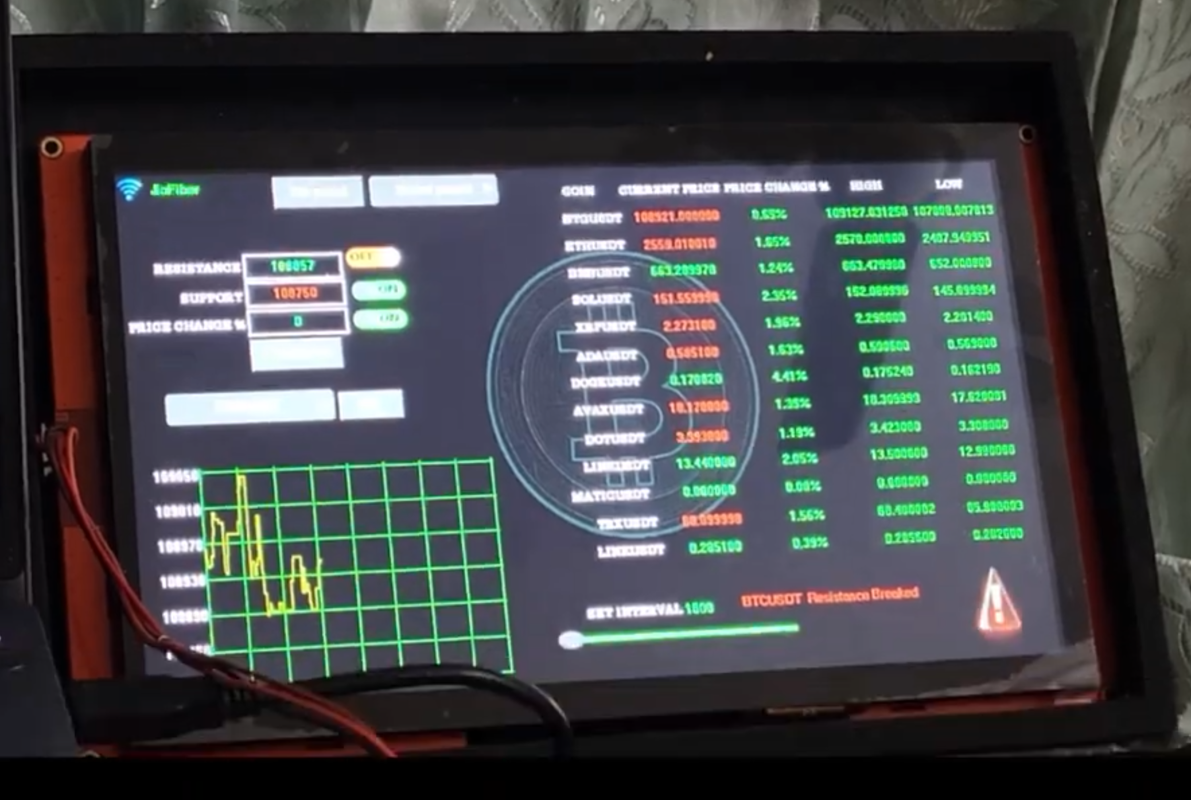
There are two kinds of people in the world: people who check crypto prices calmly, and people who refresh a chart every nine seconds like the fate of civilization depends on a green candle. The project behind “ESP32 Plugs In To Real-Time Crypto Prices” sits somewhere in the middle. It takes the restless energy of live cryptocurrency markets and gives it a physical home: an ESP32-powered display that pulls real-time crypto price data from online exchanges and shows it on a compact screen.
At first glance, that may sound like a tiny financial billboard. Look closer, and it becomes a great example of modern DIY electronics. A low-cost microcontroller connects to Wi-Fi, requests live market data, parses JSON, and refreshes a visual dashboard with prices, percentage changes, highs, lows, and other useful market details. It is the kind of project that makes the ESP32 feel less like a chip and more like a small, caffeinated intern who never sleeps.
The appeal is obvious. Cryptocurrency markets run 24/7, prices move constantly, and most people do not want to unlock a phone every time Bitcoin sneezes. A dedicated ESP32 crypto price tracker can sit on a desk, workbench, shelf, trading station, or home office and quietly display live market information without turning the user’s main screen into a carnival of candlesticks.
What Is an ESP32 Crypto Price Tracker?
An ESP32 crypto price tracker is a small Internet-connected device that fetches cryptocurrency prices from an API and displays them on a screen. The hardware usually includes an ESP32 development board, a TFT, OLED, or touchscreen display, a power source, and sometimes buttons or touch controls. The software handles Wi-Fi connection, API requests, JSON parsing, error recovery, and screen updates.
The project highlighted by the title uses an ESP32 paired with a larger touchscreen display to gather live data from Binance and present a custom set of coins. Instead of showing only a single Bitcoin price, the dashboard can show multiple assets and market metrics, such as percentage changes over selected time windows and high-low price ranges. That turns the device from a novelty into a miniature market terminal.
For makers, the real fun is not simply seeing “BTC: $…” on a screen. The fun is building the pipeline. The ESP32 connects to Wi-Fi, talks to a crypto exchange or market data provider, receives JSON data, filters what matters, and redraws the interface. In one project, you get networking, embedded programming, UI design, API handling, and a tiny lesson in financial data infrastructure. Not bad for a board that often costs less than a fast-food lunch.
Why the ESP32 Is a Natural Fit for Real-Time Price Data
The ESP32 is popular because it combines Wi-Fi, Bluetooth, flexible GPIO, low power consumption, and strong community support in a very affordable package. For a real-time crypto display, built-in Wi-Fi is the star of the show. Without it, the device would need extra networking hardware, which would add cost, wiring, and opportunities for the project to develop what engineers politely call “personality.”
Many ESP32 boards can be programmed through the Arduino IDE, PlatformIO, MicroPython, or Espressif’s ESP-IDF framework. This gives beginners a friendly starting point while still allowing advanced developers to fine-tune performance. A simple version of the project can be built with Arduino-style code. A more polished version can use tasks, timers, buffering, and advanced graphics libraries to create a smooth dashboard.
The ESP32 also has enough processing power to handle the typical workload of a crypto price ticker. It does not need to mine cryptocurrency, run a full blockchain node, or predict tomorrow’s market mood by reading moon phases. It only needs to request data, parse text, update numbers, and draw charts or widgets. That is exactly the kind of focused, connected task the ESP32 performs well.
How the Real-Time Crypto Price Pipeline Works
A live crypto tracker has a simple concept but a surprisingly elegant workflow. The device starts by joining a Wi-Fi network. Once online, it sends a request to a data source such as Binance, Coinbase, Kraken, CoinGecko, or another crypto market API. The server responds with market data, usually in JSON format. The ESP32 then parses the response, extracts fields such as price, symbol, volume, and percentage change, and updates the display.
REST APIs: Simple and Reliable
The easiest method is polling a REST API. In plain English, the ESP32 asks, “Hey, what is the current price of BTCUSDT?” The API answers with a structured response. The ESP32 waits a few seconds, then asks again. This approach is beginner-friendly and works well for dashboards that refresh every 10, 30, or 60 seconds.
CoinGecko’s simple price endpoint is a common example because it allows developers to request prices for one or more coins by ID, symbol, or name. Coinbase and Kraken also provide public market data endpoints that can return ticker information without requiring the user to place trades. Binance offers market data endpoints as well, including ticker statistics and price streams.
REST polling is not perfect. If the device refreshes too often, it may run into rate limits or waste bandwidth. If it refreshes too slowly, the display feels stale. The sweet spot depends on the project. A desk display does not need to update every millisecond. Nobody is executing institutional arbitrage from a plastic enclosure next to a coffee mug. For most hobby projects, a 15- to 60-second update interval is practical.
WebSockets: When “Live” Really Means Live
For faster updates, WebSockets are the more advanced option. Instead of asking the server for data repeatedly, the ESP32 opens a persistent connection and receives updates as new data arrives. Binance’s market streams, for example, support real-time ticker-style updates over WebSockets. This is closer to how live trading dashboards behave.
WebSockets can make the project feel dramatically more responsive, especially when tracking active pairs such as BTCUSDT, ETHUSDT, SOLUSDT, or BNBUSDT. The trade-off is complexity. The code must maintain a connection, respond to pings, reconnect after interruptions, and handle incoming messages efficiently. For a small microcontroller, that requires thoughtful memory management and clean error handling.
A smart project may combine both approaches. REST can be used at startup to fetch a clean snapshot, while WebSockets can provide live updates afterward. If the stream disconnects, the device can fall back to REST until the connection is restored. In market terms, this is called diversification. In embedded systems terms, it is called “not letting your screen freeze forever because the router blinked.”
Choosing the Right Display
The display defines the personality of the build. A tiny OLED can show one or two prices with crisp text. A small TFT can display several coins, icons, arrows, and colors. A larger touchscreen can become a full dashboard with pages, menus, charts, and user-selectable watchlists.
For simple builds, an SSD1306 OLED is affordable, easy to wire, and widely supported. It is great for showing Bitcoin, Ethereum, and maybe one or two extra assets. The downside is limited screen space. Once you add price, percentage change, and 24-hour high-low data, the screen starts to feel like a crowded subway car.
For richer projects, TFT screens driven by libraries such as TFT_eSPI are a strong choice. TFT_eSPI is popular in the ESP32 world because it is optimized for 32-bit microcontrollers and supports many common display controllers. Add a graphics library or custom drawing routines, and the screen can show tables, charts, colored indicators, and animated refreshes.
For more advanced interfaces, LVGL provides a full embedded UI toolkit with widgets, styles, layouts, and touch support. A touchscreen project can use LVGL or a display system such as Nextion to create a dashboard that feels more like a dedicated product than a weekend prototype. That does increase the learning curve, but it also opens the door to buttons, tabs, scrolling lists, and configuration screens.
What Data Should the Dashboard Show?
A good real-time crypto price display does not need to show everything. In fact, showing everything is how dashboards become digital spaghetti. The best version focuses on useful, readable information.
Essential Metrics
The core data usually includes the asset symbol, current price, 24-hour percentage change, and update time. For example, a dashboard might show BTC, ETH, SOL, XRP, and DOGE with current USD prices and green or red indicators for movement. This gives the user a quick sense of market direction without needing to interpret a full trading chart.
Helpful Extras
More advanced builds can show 24-hour high and low prices, trading volume, market cap, or rolling percentage changes. If using Binance data, the project can show exchange-specific pair information such as BTCUSDT or ETHUSDT. If using an aggregator such as CoinGecko, it can show broader market prices across many exchanges.
Charts and Trend Lines
Charts make the project more visually appealing, but they also require more data and more screen space. A simple sparkline is often better than a complicated candlestick chart. The ESP32 can draw lightweight trend lines from recent price samples stored in memory. The result is easy to read and does not require turning the device into a miniature Bloomberg Terminal with the eyesight requirements of a hawk.
Software Architecture: Keep It Simple, Then Make It Smarter
The cleanest ESP32 crypto tracker software usually has separate sections for Wi-Fi setup, data fetching, JSON parsing, display rendering, and error handling. Keeping these parts separate makes the code easier to debug and upgrade.
ArduinoJson is commonly used for parsing JSON in embedded C++ projects because it is designed for memory-constrained environments. That matters because crypto APIs can return large responses if the request is too broad. A beginner mistake is asking for every market, every coin, and every field, then wondering why the ESP32 looks emotionally overwhelmed. The better approach is to request only the assets and fields needed for the screen.
A practical architecture might work like this: connect to Wi-Fi, fetch a list of selected coins, parse only the price and percentage change fields, store the results in a small struct or object, then update the display. If the request fails, the device shows a friendly error message and tries again after a delay. If Wi-Fi drops, it reconnects. If the API changes or returns unexpected data, the project fails gracefully instead of displaying nonsense.
Security and Privacy Considerations
A price display should usually use public market data only. There is no need to store exchange login credentials or trading keys on the ESP32 unless the project has a very specific and carefully secured purpose. For a desk ticker, API keys should be avoided whenever possible.
If a provider requires an API key, the key should be restricted to read-only market data, never withdrawals or trading. Hardcoding sensitive keys into firmware is risky, especially if the code will be shared online. A safer approach is to use public endpoints, a local proxy, or a configuration method that keeps private credentials out of published code.
It is also worth remembering that a crypto price tracker is not financial advice. A tiny display showing a green arrow is not a licensed analyst. It is a gadget. A very charming gadget, yes, but still a gadget. It can inform, entertain, and teach embedded development. It should not become the sole reason anyone buys, sells, panics, celebrates, or explains Thanksgiving dinner decisions to confused relatives.
Practical Build Example: A Desk-Friendly Crypto Dashboard
Imagine a compact ESP32 build with a 2.8-inch TFT display. The screen shows five coins: Bitcoin, Ethereum, Solana, XRP, and Dogecoin. Each row includes the symbol, current USD price, 24-hour percentage change, and a small arrow. The header shows the data source and the last update time. A button cycles between “watchlist,” “top movers,” and “market summary.”
The device polls a public API every 30 seconds. It stores the last price for each asset, compares it with the newest price, and briefly flashes the row when a value changes. If the price rises, the arrow points up. If it falls, the arrow points down. If the API fails, the header shows “reconnecting” while the old prices remain visible but clearly marked as stale.
This kind of project is achievable without building a custom PCB. A beginner can start on a breadboard with jumper wires. A more advanced maker can design an enclosure, add a USB-C power input, include a rotary encoder, and create a configuration page. The project scales nicely: simple enough for learning, flexible enough for obsession. That is the ESP32 magic trick.
Common Problems and How to Avoid Them
Problem 1: API Responses Are Too Large
Requesting too much data can fill memory quickly. Ask for only the coins and fields needed. If the API supports filtering by symbol or ID, use it. The ESP32 is capable, but it is not a cloud server wearing a tiny hat.
Problem 2: The Display Flickers
Full-screen redraws can cause flicker, especially on slower displays. Update only the changed regions when possible. Use buffering if the library supports it. Keep fonts and graphics efficient.
Problem 3: Wi-Fi Drops
Wi-Fi interruptions are normal. The code should detect disconnection, retry automatically, and avoid locking up. A small status icon can show whether the device is online, reconnecting, or using cached data.
Problem 4: Prices Do Not Match Another App
Different exchanges and aggregators can show slightly different prices. Binance, Coinbase, Kraken, and CoinGecko may not always match exactly because they use different markets, liquidity sources, pairs, and update methods. The dashboard should clearly indicate its data source.
Why This Project Is More Than a Crypto Gimmick
The phrase “ESP32 Plugs In To Real-Time Crypto Prices” may sound like a niche maker headline, but the underlying skills apply far beyond cryptocurrency. Once a developer understands how to fetch live data, parse JSON, and display useful information, the same pattern can power weather stations, transit boards, home energy monitors, stock tickers, server status panels, greenhouse dashboards, and smart home controllers.
The crypto angle is compelling because the data changes constantly. That makes the project feel alive. A weather display might update every few minutes. A crypto dashboard can twitch every second if the developer lets it. The market’s volatility becomes a testing environment for real-time UI design, network resilience, and data handling.
It is also a satisfying bridge between software and hardware. Web developers are used to APIs and JSON, but they may not often think about screen refresh rates, SPI buses, power stability, or memory limits. Electronics hobbyists may be comfortable wiring displays, but less familiar with HTTP requests and WebSockets. This project brings both worlds together in one compact device.
Experience Notes: Building and Living With an ESP32 Real-Time Crypto Display
The first experience most makers have with an ESP32 crypto tracker is a mix of excitement and mild betrayal. The board connects to Wi-Fi, the serial monitor prints a valid response, and everything feels heroic. Then the display shows a blank screen because one pin is wrong, the JSON document is too small, or the API returned a field name that does not match the code. This is normal. Embedded projects do not fail dramatically; they quietly stare at you until you apologize.
A good lesson is to build the project in layers. First, confirm that the ESP32 connects to Wi-Fi. Next, print the raw API response to the serial monitor. Then parse one field, such as the Bitcoin price. After that, display the value on the screen. Only when those pieces work should you add multiple coins, colors, charts, touch controls, and fancy transitions. The temptation to build the final dashboard immediately is strong, but incremental testing saves time and sanity.
Another practical lesson is that readability matters more than decoration. A crypto display can quickly become cluttered with symbols, arrows, decimals, labels, timestamps, and tiny charts. On a small screen, fewer elements often look more professional. Rounding prices intelligently helps. Bitcoin may not need six decimal places. A small altcoin might. Percentage changes should be easy to scan. The user should be able to glance at the display and understand the market mood in two seconds.
Power stability also matters. Some larger TFT or touchscreen displays draw more current than a tiny OLED. If the screen flickers, resets, or behaves strangely, the issue may not be the code. It may be the power supply. A reliable USB adapter, short cables, and proper grounding can solve problems that look like software bugs. The ancient maker proverb applies: before rewriting the firmware, check the wire that looks “probably fine.”
API behavior is another real-world lesson. Public endpoints can change, rate limits can apply, and network requests can fail. A polished dashboard should handle failure gracefully. Instead of freezing, it can show “Last updated: 10:42 AM” and “Retrying…” so the user knows what happened. Cached values are useful as long as the interface clearly marks them as old. Nothing destroys trust faster than a screen confidently displaying stale prices like a fortune cookie with Wi-Fi.
Once the basics work, the project becomes surprisingly personal. Some users want only Bitcoin and Ethereum. Others want a rotating watchlist. Some prefer a clean monochrome terminal style. Others want a colorful touchscreen with charts and market heat. That customization is part of the charm. The ESP32 is not just showing real-time crypto prices; it is letting the builder decide what “useful information” looks like.
The best experience, though, is educational. By the end of the build, the maker understands APIs, embedded networking, JSON parsing, display rendering, update timing, and basic UI design. The final device may sit quietly on a desk, but it represents a complete data pipeline from global exchange servers to a few square inches of glass. That is a small project with a big lesson: live data becomes more meaningful when you build the thing that displays it.
Conclusion
An ESP32 real-time crypto price tracker is a clever, practical, and surprisingly educational project. It combines the always-on nature of cryptocurrency markets with the flexibility of a Wi-Fi-enabled microcontroller. Whether it uses Binance WebSockets, CoinGecko REST endpoints, Coinbase ticker data, Kraken public market data, or another provider, the core idea remains the same: fetch live data, process it efficiently, and make it readable on a dedicated display.
The project is not just about watching Bitcoin bounce around like a caffeinated tennis ball. It is about learning how connected devices work. It teaches API design, embedded programming, display optimization, error handling, and user experience. For hobbyists, it is a fun desk gadget. For developers, it is a compact real-world systems project. For anyone who has ever refreshed a price chart too many times, it is also a gentle intervention with a screen.
Build it simple, make it reliable, and resist the urge to cram every market metric into one tiny interface. A great ESP32 crypto dashboard should be fast, readable, resilient, and honest about its data source. Do that, and the result is more than a ticker. It is a miniature real-time information appliance powered by one of the most beloved microcontrollers in the maker world.

