
Body Care
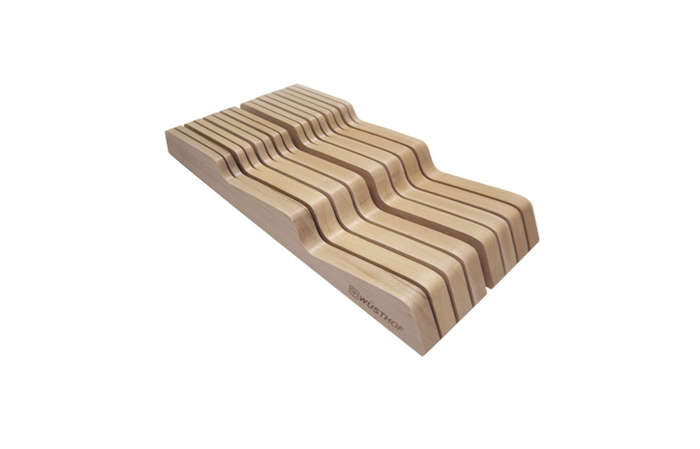
Wusthof 14-Slot In-Drawer Knife Organizer Tray
Jul
Your kitchen drawer is either a well-run library… or a chaotic dodgeball court where spatulas, measuring spoons,
and sharp objects audition for an action movie. If your knives currently live “loose in the drawer” (a phrase that
should come with a warning label), the Wusthof 14-slot in-drawer knife organizer tray is the kind
of simple upgrade that makes your kitchen feel instantly more adultwithout requiring a renovation, a new counter,
or a lifestyle change involving linen aprons.
This guide breaks down what the tray is, how it’s designed, what it fits (and what it doesn’t), how to measure your
drawer correctly, and whether it’s worth the space it takes. We’ll also compare it to other popular storage methods
like countertop blocks, magnetic strips, and blade guardsbecause choosing knife storage is basically choosing how
you want to feel at 7:12 p.m. when dinner is happening and you’re hungry.
What the Wusthof 14-Slot In-Drawer Tray Actually Does
The promise is straightforward: store up to 14 knives safely inside a drawer while keeping edges
protected and handles easy to grab. Instead of blades banging into other utensils (hello, chips and dull spots),
each knife slides into its own slot so the cutting edge stays covered and your fingers stay attached to your hands.
Many listings describe a layout with eight shorter slots for paring/steak knives and
six longer slots for chef’s knives, bread knives, slicers, or even a honing steel. Some versions
use a “wave” pattern (alternating handle heights) so you can grip handles without playing knife Jenga.
Key Specs at a Glance
Wusthof sells (and retailers list) a couple of closely related in-drawer products under the “14-slot” umbrella.
The easiest way to avoid ordering the wrong one is to focus on drawer fit first, then capacity.
| Feature | What to Expect |
|---|---|
| Capacity | Up to 14 knives; many versions also allow a honing/sharpening steel in a long slot |
| Slot mix | Common layout: 8 short + 6 long (often up to ~5" blades short; up to ~10" blades long) |
| Materials | Frequently described as beechwood or other dense hardwood (retailer descriptions can vary) |
| Footing / base | Some versions include felt backing to reduce drawer scratching and sliding |
| Common size listings | Approx. 17" L x 9" W (height varies by version), or a slimmer “wide” tray around 16.75" x 7.5" x 1.5" |
The Design Details That Matter (More Than You’d Think)
1) Covered blades = safer hands and happier edges
A knife edge is microscopic. It doesn’t need much to get dingedjust a couple of drawer slams, a spoon ricochet,
and suddenly your “sharp chef’s knife” is basically a butter knife with an attitude. Experts regularly warn that
loose drawer storage is a fast track to dulling and accidents. A slotted tray solves both problems by separating
blades and shielding edges.
2) The handle-forward layout speeds up cooking
If you cook often, you know the difference between “I’ll just grab my chef’s knife” and “Where is my chef’s knife,
and why is it under the whisk?” With a 14-slot tray, handles stay visible and you build muscle memory quickly.
(Yes, your kitchen can have UX. And yes, you deserve it.)
3) The “wave” pattern is secretly brilliant
Several product descriptions highlight a wave-like arrangement where longer knives sit between shorter ones. The
point isn’t aestheticsthough it does look satisfyingly organized. It’s about grip access. When
handles sit at slightly different heights, your fingers can wrap around them without bumping into neighboring
handles like it’s rush hour on a subway platform.
4) Wood choice: why beechwood (or similar hardwood) shows up again and again
Beechwood and other dense hardwoods are common in knife storage because they’re sturdy, dimensionally stable,
and gentle on blades. They also look “kitchen premium” in a way plastic rarely does. Some versions are described
as unfinished wood, which has a natural feel but benefits from basic care (more on that later).
5) Felt backing: small feature, big vibe improvement
Many 14-slot tray listings include a felt-backed base. Practically, it helps prevent scratches and reduces
sliding. Emotionally? It stops that irritating “wood-on-drawer-bottom” scrape sound that makes your kitchen feel
like a middle-school band room.
Will It Fit Your Drawer? A No-Drama Measuring Checklist
Before you buy any in-drawer knife organizer tray, do a quick measurement. It takes 60 seconds and saves you from
the classic “Why doesn’t this fit?” kitchen tragedy.
-
Measure drawer interior length (front-to-back): many 14-slot trays need roughly 16.75"–17" of
usable depth. If your drawer is shorter, the tray may force the drawer to stay slightly open (the worst). -
Measure interior width (side-to-side): common listings are around 7.5" wide for slimmer versions or
about 9" wide for larger trays. Make sure you still have room for your other utensils if this drawer is shared. -
Check interior height: some versions sit low (around 1.5" tall) while others are taller (around 3").
If the tray is too tall, the drawer may drag or refuse to close. -
Account for drawer hardware: rails, dividers, or interior lips can steal usable space. Measure
the tightest part, not the most optimistic part.
Pro tip: If you’re between two sizes, choose the one that fits your drawer comfortably. Knife storage should
reduce stress, not add a new drawer-based puzzle to your life.
What Knives Fit Best (With Real Examples)
The tray is ideal for the everyday lineup most home cooks actually use. Here’s how it typically breaks down:
-
Short slots: paring knives, utility knives, steak knives, tomato knives, small santokus.
Example: an 8-piece steak knife set plus two paring knives can live here comfortably. -
Long slots: chef’s knife (8"), bread knife, carving/slicing knife, larger santoku, granton slicer,
and often a honing steel.
What doesn’t fit as nicely? Extra-tall cleavers, very wide blades, knives with unusually bulky guards, or novelty
knives shaped like a medieval weapon (fun at parties, awkward in storage).
Why In-Drawer Storage Can Be a Smart Choice
It clears counter space without turning your wall into a knife gallery
Countertop blocks take up space and collect dust. Magnetic strips are excellent for many kitchens, but not everyone
wants exposed bladesespecially with kids, curious roommates, or a household cat who believes gravity is optional.
Drawer storage keeps knives out of sight, out of reach, and out of your cooking workspace.
It supports better knife care habits
Good knife care is mostly boring (which is exactly why it works): hand-wash, dry immediately, store properly. Many
experts warn against the dishwasher because heat, harsh detergents, moisture, and jostling can damage blades and
handles. The tray makes “store properly” the easiest step in the entire routine.
How to Use the Tray Safely (Yes, Even This Has Best Practices)
-
Start with clean, dry knives. Moisture + wood + closed drawer = the kind of environment your
knife definitely didn’t ask for. -
Insert knives gently. Slide the blade into the slot without forcing it. If it feels tight,
switch slots rather than wedging it in like you’re installing flooring. -
Keep similar knives grouped. Put your daily drivers (chef’s knife, paring knife, serrated knife)
in the easiest-to-reach positions. Your future self will thank you on a busy weeknight. -
Don’t overload your drawer. If the tray fits perfectly but the drawer is stuffed with heavy tools,
everything will still bang around. Give knives their own calm, stable zone.
Cleaning & Care: Keep the Tray Looking Good (and Staying Flat)
- Wipe with a damp cloth and dry thoroughly. Avoid soaking.
- Clean crumbs out of slots occasionally (a soft brush works well).
-
Condition the wood if it looks dry: a light wipe with food-safe mineral oil can help maintain
appearance, especially for unfinished wood. -
Check the felt backing (if your version has it). If it starts peeling, replace with adhesive
felt sheets to keep the tray stable and scratch-free.
Pros and Cons (The Honest Part)
Pros
- Safer storage than loose-in-drawer knives
- Protects edges by separating blades and reducing contact
- Frees counter space compared to a traditional knife block
- Quick access with visible handles and organized slots
- Good capacity for most home kitchens (including steak knives + cooking knives)
Cons
- Not adjustable: if your drawer is small, the tray won’t magically become smaller out of kindness
- Takes a whole drawer section: you’ll need dedicated space
- Slot limitations: very wide/tall blades may not fit
- Wood maintenance: minimal, but not zero
How It Compares to Other Knife Storage Options
Versus a countertop knife block
A block is convenient, but it eats counter space and can be inflexible if your knife collection doesn’t match the
slot sizes. It also tends to be a “dumping ground” for miscellaneous tools. The in-drawer tray wins on counter
space and often on organizationespecially if you like a cleaner-looking kitchen.
Versus a magnetic strip
Magnetic strips are popular for good reason: they keep knives accessible and reduce the in-and-out friction of
blocks. Many experts recommend them as a top storage choice when installed correctly and used carefully. If you
love the “grab and go” vibe and have wall space, a strip is great. If you prefer hidden storage, rent and can’t
drill, or have kid/pet concerns, the drawer tray is the calmer option.
Versus blade guards in a drawer
Blade guards (edge protectors) are excellent if you have an odd assortment of knives, limited drawer space, or need
portability. Editorial reviews often praise felt-lined guards for protecting edges and reducing drawer chaos. The
tradeoff is convenience: guards add an extra step, while a tray is faster day-to-day.
Versus cork-lined or flexible in-drawer systems
Cork-lined in-drawer boxes and flexible dividers offer more customization and can accommodate unusual knife shapes.
They’re a strong choice if you’re building a varied knife collection over time. The Wusthof 14-slot tray is best
when you want a structured, consistent home for a fairly standard set of knives.
Who Should Buy the Wusthof 14-Slot In-Drawer Knife Organizer Tray?
This tray is a great fit if you:
- Want to clear counter space without mounting anything on the wall
- Have a mix of cooking knives and steak knives you actually use
- Want safer storage than loose-in-drawer (for you, guests, and future you)
- Have a drawer deep enough to accommodate the tray comfortably
You might skip it if you:
- Have very shallow drawers or limited drawer real estate
- Own lots of oversized blades (cleavers, extra-long slicers, specialty knives)
- Prefer a fully customizable layout that changes with your collection
FAQ
Does a drawer knife organizer actually keep knives sharper?
It can helpmainly by preventing blades from knocking into other utensils and each other. Dulling often happens from
contact and micro-chipping, not just cutting. Separate slots reduce those impacts and protect edges.
Is wood better than plastic for a knife drawer tray?
Dense wood is sturdy and gentle on blades, and it tends to stay put. Plastic is easier to wash aggressively, but it
can slide around or flex depending on quality. Wood trays are popular because they feel stable and “quiet” in daily use.
Can I store a honing steel in it?
Many 14-slot layouts allow a honing steel in a long slot (often as an alternative to one long knife). Check the slot
length and your steel length before committing.
Should knives go in the dishwasher before storage?
Most knife experts recommend avoiding the dishwasher. Hand-washing and drying immediately is the safer long-term
habit for blades and handles. Then store the knife dry in the tray.
Real-World Experiences: Living With a Wusthof 14-Slot In-Drawer Knife Organizer Tray (500+ Words)
Let’s talk about what it’s like once the novelty wears offbecause the true test of any kitchen organizer is whether
you still like it on a random Tuesday when you’re hungry, tired, and one burnt garlic clove away from ordering takeout.
Day 1: The satisfying reset. The first experience most people have is the “drawer purge.”
You pull everything out, discover three vegetable peelers (none of which you remember buying), and finally face the
reality that loose knives are basically tiny saboteurs. Dropping the tray into the drawer feels like installing a
new operating system. The knives suddenly have assigned seats. The drawer closes without a metallic clatter. You
might even open it again just to admire how calm it looks. No judgmentthat’s normal.
Week 1: The muscle memory kicks in. After a few cooking sessions, you stop “searching” for knives.
Your hand goes straight to the chef’s knife handle. You notice that the handles are easy to grab because they’re not
stacked flat like dominoes. If your version uses a wave layout, the alternating heights help even moreyour fingers
slip around the handle instead of pinching between two neighboring knives like you’re trying to extract a parking ticket.
Week 2: Safety becomes passive, not a chore. This is the underrated win. When knives are stored in
individual slots, you’re not hovering your hand above a drawer like it’s a box of angry cats. Guests can find a
paring knife without you narrating a safety briefing. And if you have kids around, you can place the tray in a higher
drawer and keep blades fully containedout of sight, out of reach, and out of the “I wonder what this does” zone.
Week 3: You notice what doesn’t fitand you adjust. Real kitchens aren’t curated showrooms.
Maybe your extra-wide cleaver doesn’t love the slot. Maybe your favorite slicer is slightly too long, or the handle is
chunky enough to rub the drawer above. This is where the tray nudges you into better organization: the oversized
outliers either move to a different storage solution (blade guard, separate tray, or magnetic strip), or you reserve
the long slots for the knives that truly earn them.
Week 4: Maintenance becomes tiny and occasional. You’ll probably wipe crumbs out of the slots a few
times a month, especially if the drawer shares space with other tools. If the wood looks dry, a quick conditioning
wipe helps it stay handsome. And if your tray includes felt backing, you’ll appreciate how it keeps the organizer from
skating around the drawer bottomparticularly on the days you open the drawer with the urgency of someone who just
realized pasta water is boiling over.
The long-term vibe: The tray turns knife storage into a “quiet habit.” You don’t think about it much
once it’s set upand that’s the point. A good organizer disappears into your routine while making everything feel
smoother. Your knives stay protected, your drawer stays calmer, and your kitchen stops feeling like a place where
sharp objects roam free. That’s not just organization. That’s peace.

