
Skincare
Top 10 People Rumored To Be Alive After Death
Jul
Note: This article explores famous survival rumors as history, folklore, and pop-culture myth, not as verified fact. In other words, we are visiting the museum of “wait… what if?” without moving into it.
Some people leave behind a legacy. Others leave behind a legacy, a mystery, and at least three grainy “sightings” from someone’s cousin’s barber’s road trip in 1987. The idea that a famous person might have survived their own death is one of history’s most stubborn storytelling habits. Sometimes the rumor grows because the death was sudden. Sometimes it grows because the body was never clearly identified. Sometimes it grows because the person in question already felt larger than life, and the public simply refused to accept that the final curtain had actually dropped.
That is exactly why stories about celebrities, outlaws, royals, and fugitives being “still alive” never seem to die. They feed on grief, confusion, fame, distrust, and that very human urge to believe the story is not over yet. Below are 10 of the most famous figures people have insisted were alive after death, along with the reasons those rumors stuck around like glitter after a school craft project.
1. Elvis Presley
Elvis Presley may be the undisputed heavyweight champion of posthumous “nope, he’s still out there” theories. Officially, the King died in 1977 at Graceland. Unofficially, half the internet has spent decades acting like he merely changed sunglasses, grabbed a sandwich, and relocated to somewhere with fewer tourists.
Why the rumor stuck
Elvis rumors thrived because his fame was enormous, his death shocked fans, and alleged sightings began almost immediately. Add in wild claims about mob trouble, witness protection, a suspicious airport passenger, and a thousand “my uncle saw him at a diner” stories, and you get a conspiracy stew that never really stopped simmering. Elvis also had the kind of mythology that made ordinary explanations feel too small. When someone becomes a symbol as much as a person, people do not just mourn them. They negotiate with reality on their behalf.
2. Anastasia Romanov
Anastasia’s survival legend is proof that history does not need social media to go viral. After the Romanov family was executed during the Russian Revolution, stories spread that one daughter, often said to be Anastasia, had escaped. The tale was tragic, dramatic, royal, and tailor-made for rumor.
Why the rumor stuck
The confusion around the remains gave the story oxygen for decades. Several women later claimed to be the lost duchess, and the most famous, Anna Anderson, kept the mystery alive in courtrooms and headlines. The idea of a lone royal survivor hiding in plain sight was simply irresistible. Eventually, DNA evidence seriously undercut the survival claims, but by then the legend had already marched into pop culture, books, films, stage musicals, and enough speculative conversations to fill a palace ballroom.
3. Tupac Shakur
If modern America had to nominate a patron saint of “maybe he faked it,” Tupac would be near the top of the ballot. He died in 1996 after being shot in Las Vegas, yet rumors of his survival have outlived trends, platforms, and several generations of terrible forum design.
Why the rumor stuck
Tupac’s case had all the ingredients conspiracy culture loves: a violent public death, an unsolved murder for years, lyrics that fans read like prophecy, and recurring “sightings” from Cuba to college campuses to random corners of the internet where skepticism goes to take a nap. His artistic persona also helped. Tupac was theatrical, symbolic, political, and intensely self-mythologizing. Fans did not just listen to him; they decoded him. That made it easy for people to treat every coincidence as a clue and every rumor as a secret message rather than what it probably was: rumor doing rumor things.
4. Andy Kaufman
Andy Kaufman might be the one person on this list whose own style practically invited the speculation. The comedian and performance artist built a career on blurring reality, trolling audiences before trolling had a name, and turning confusion into an art form. So when he died in 1984, many fans responded with a collective, “Nice try, Andy.”
Why the rumor stuck
Kaufman’s reputation for elaborate bits made the fake-death theory feel weirdly on-brand. Friends and collaborators later said he had talked about staging something enormous one day, which only poured more gasoline on the rumor bonfire. Unlike many survival myths, this one endured not because the facts were especially murky, but because Kaufman had already trained the audience to distrust the obvious. If your public image is “human question mark,” people are going to keep checking whether the answer key is missing.
5. Billy the Kid
Billy the Kid’s death sounds settled in broad strokes: Sheriff Pat Garrett shot him in 1881. But the finer details have always been just fuzzy enough to keep frontier folklore fully caffeinated. And once a Western legend gets a little wiggle room, the myth machine gallops in.
Why the rumor stuck
Several later men claimed to be Billy, most famously Brushy Bill Roberts. Their stories fed a long-running suspicion that Garrett either shot the wrong man or covered up what really happened. Since Billy was already a myth before he became a corpse, the jump to “he survived” was not very far. Also, let’s be honest: the Old West runs on aliases, bad records, vague witnesses, and dramatic facial hair. That is not exactly a hostile environment for survival theories.
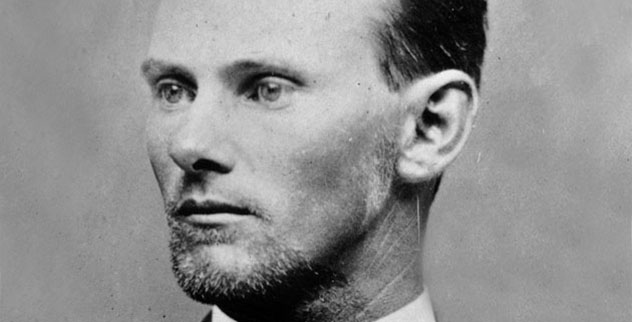
6. Jesse James
Jesse James was reported killed in 1882 by Bob Ford, who shot him for a reward. That should have been the end of it. Instead, it became the beginning of one of America’s favorite outlaw afterlives, complete with lookalikes, claimants, and a deep national inability to let a famous bandit just stay dead.
Why the rumor stuck
Part of the problem was celebrity. Jesse James was notorious enough that people were eager to believe he could outsmart the whole system one last time. Over time, various men surfaced claiming to be the real James, and their stories kept the legend on the road. Later DNA testing strongly supported that the buried remains were indeed Jesse’s, but that has not entirely stopped believers. Legends do not retire when evidence arrives. They just change hats and keep talking.
7. Butch Cassidy
Butch Cassidy’s supposed death in Bolivia in 1908 came with enough uncertainty to keep historians and hobby detectives happily occupied for generations. Reports said he died in a shootout alongside the Sundance Kid, but confirmation was never as clean as storytellers would have liked.
Why the rumor stuck
No crystal-clear identification, no tidy photographic proof, and plenty of family insistence that Cassidy came home alive? That is basically the conspiracy starter pack. Relatives claimed he returned to the United States under an alias, while later researchers dug through archives, graves, and DNA comparisons trying to settle the matter. The twist was delicious: even when some exhumed remains failed to provide a match, the result did not end the myth. It only made the mystery look more mysterious, which is catnip for anyone who owns a corkboard and red string.
8. Louis XVII of France
Louis XVII never truly ruled, but he became a giant figure in one of Europe’s most haunting survival legends. After the French Revolution claimed his parents, Louis XVI and Marie Antoinette, the young dauphin reportedly died in prison in 1795. That should have ended his story. Instead, it launched a long parade of pretenders.
Why the rumor stuck
The emotional appeal was powerful: a child royal escaping a brutal revolution is the kind of story people want to be true even when history refuses to cooperate. Dozens of claimants emerged over time, each feeding the hope that the boy king had been smuggled out and hidden away. Modern genetic analysis of a preserved heart tied to the child long believed to be Louis XVII gave historians strong evidence that he did die in captivity. But before science got the microphone, romance had already been singing for two centuries.
9. Alexander I of Russia
Not every survival rumor belongs to a pop icon or outlaw. Some belong to emperors who seem to have wandered straight out of a fever dream and into a monastery. Alexander I of Russia reportedly died in 1825, but whispers soon followed that he had secretly abandoned power and reinvented himself as the holy wanderer Fyodor Kuzmich.
Why the rumor stuck
This theory had everything it needed: a sudden death, a closed coffin, a ruler said to be spiritually weary, and a mysterious hermit appearing later with suspiciously imperial vibes. The story survives because it scratches a very old human itch: what if a ruler walked away from power and chose repentance instead? It is less “celebrity sighting at the supermarket” and more “history as spiritual thriller.” Even people who do not believe it often admit that it is one of the most poetic fake-death rumors ever invented.
10. D.B. Cooper
D.B. Cooper is the technical wild card on this list, because he was not publicly mourned in the same way as the others. Still, he belongs here because a huge part of the legend revolves around whether he survived what looked very much like a fatal leap into darkness after hijacking a plane in 1971.
Why the rumor stuck
Cooper vanished so completely that people turned the absence itself into evidence. No body, no neat ending, and no final “case closed” moment meant the story never stopped breathing. The FBI investigated for decades, and every new suspect or deathbed confession added another layer to the myth. Some think he lived quietly under another name. Others think he died that night. Either way, D.B. Cooper became the rare American folk ghost who might have landed, walked away, and ordered coffee somewhere under an assumed name while the country argued about him for the next half century.
The Experience of These Rumors: Why People Keep Feeling the Story Is Not Over
What makes these stories so sticky is not just the evidence, or lack of it. It is the experience of hearing them. Almost everyone encounters at least one of these rumors the same way: in a half-whispered conversation, a late-night documentary, a magazine headline, a weird forum thread, or a video that sounds incredibly certain while proving approximately nothing. And yet it works. For a moment, the story opens up again.
That is the emotional engine behind survival myths. They recreate suspense after grief. They offer a second doorway after the official ending. If a beloved singer, a rebel outlaw, or a doomed royal might still be alive, then history becomes less final and more negotiable. The rumor gives people permission to keep imagining. It says, maybe the sad ending was not the ending. Maybe the hero escaped. Maybe the villain slipped away. Maybe the trickster pulled off one last trick.
There is also a communal experience to these stories. People do not usually enjoy them alone. They share them. They argue over them. One person says, “The timeline makes no sense,” and another says, “Exactly.” Someone points to DNA evidence, and someone else points to a blurry photograph taken at a gas station. Logic enters the room, but drama has already rented the penthouse. That back-and-forth is part of the entertainment. These rumors turn ordinary people into amateur historians, detectives, skeptics, and storytellers all at once.
Fame amplifies the feeling. When a globally recognized figure dies, it can feel unreal in a way that everyday loss does not. The person still appears on television, in songs, in memes, in T-shirts, in movies, in impersonations, in playlists, in documentaries, and in algorithm-fed clips that keep resurfacing years later. Their image never stops moving. So the mind starts asking a mischievous question: if they are still everywhere, are they really gone? Rationally, of course, yes. Emotionally, people are not always so tidy.
And then there is mistrust. Many of the most persistent survival rumors grow in moments when institutions seem unreliable, information arrives in fragments, and official stories feel incomplete. That does not mean the conspiracy is true. It means the environment is perfect for one. Uncertainty is fertile soil. A missing record, a delayed report, an unsolved crime, a closed coffin, a misidentified body, or a witness with a dramatic anecdote can keep speculation alive for decades.
In that sense, these stories are not really about cheating death. They are about how people handle uncertainty, celebrity, trauma, and the need for meaning. Some want justice. Some want resurrection. Some just want the mystery to stay mysterious because a solved puzzle loses a little sparkle. The experience of following these rumors is part detective work, part campfire storytelling, and part emotional refusal to let the world be as final as it usually is.
That is why the rumors endure even after science, archives, and common sense have had their say. Facts can settle a case, but they do not always satisfy the imagination. And the imagination, unlike a coroner’s report, never really clocks out.
Final Thoughts
The strangest thing about these famous “alive after death” rumors is that they tell us as much about the living as they do about the dead. We keep reviving these stories because they let us poke at the edges of certainty. They let us revisit grief as mystery, history as drama, and fame as something almost supernatural. In some cases, modern evidence has strongly debunked the legend. In others, the uncertainty itself is the reason the story still breathes.
So no, Elvis probably is not shopping for peanut butter in disguise, and Anastasia is not about to stroll back into imperial court. But the fact that people keep wondering says something timeless: humans love a closed case far less than they love a great story.

