
Hair Care
Tim Heidecker and Kumail Nanjiani Break Down How Anti-Woke Comedians Are All Exactly The Same
May
There was a time when stand-up comedy felt like a crowded diner at 2 a.m.: loud, weird, unpredictable, and full of people saying things you had never heard before. Then came the era of the “anti-woke comedian,” a strangely uniform species of performer who insists he is too dangerous for polite society while somehow repeating the same three talking points as every other guy with a podcast microphone, a black T-shirt, and an emergency supply of grievance.
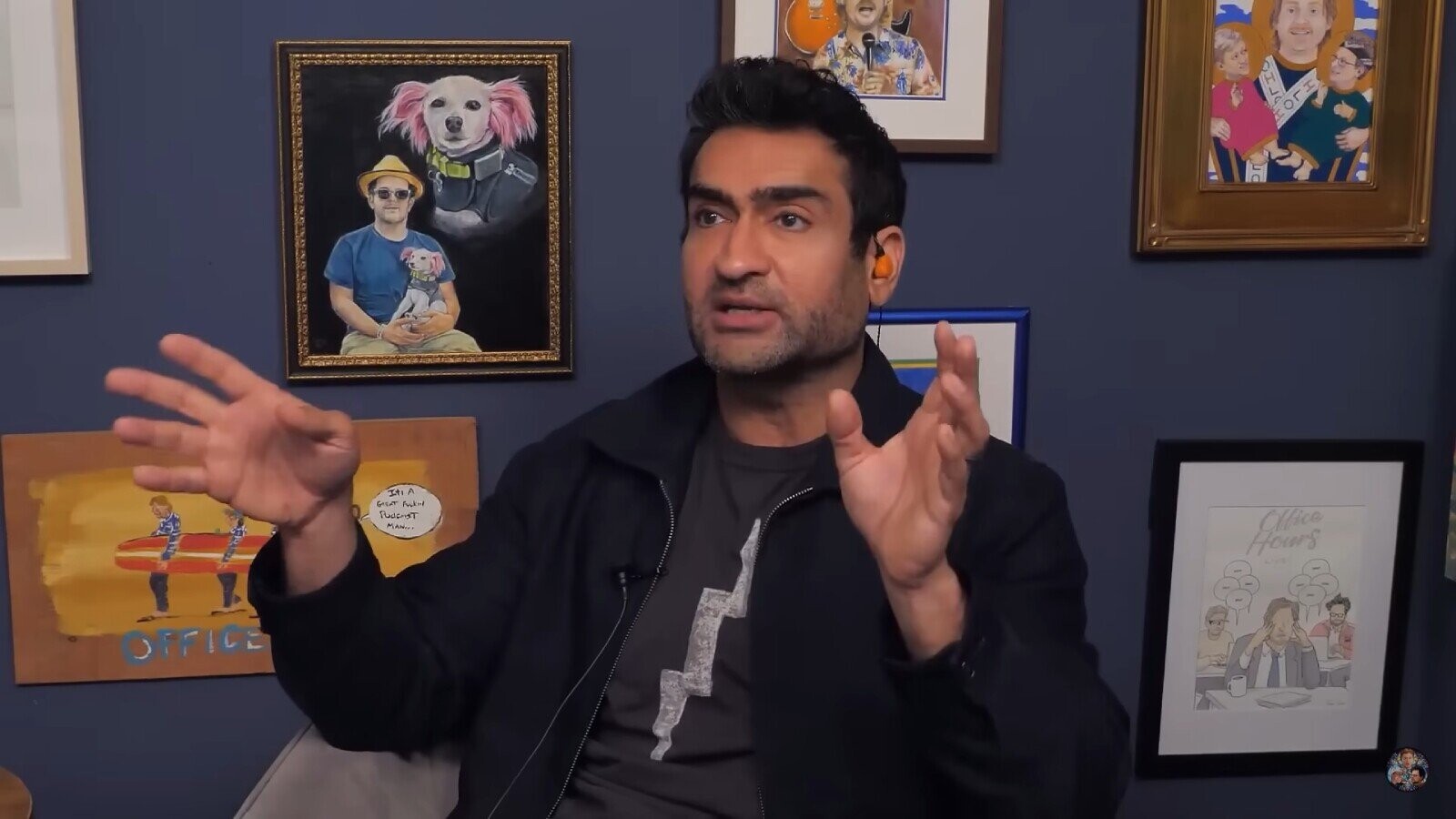
That is the comic contradiction Tim Heidecker and Kumail Nanjiani zeroed in on during a conversation on Office Hours Live with Tim Heidecker. Their point was not simply that anti-woke comedy exists. Of course it exists. So do airport nachos. The problem is that so much of it has become predictable, repetitive, and weirdly self-serious. The comedians who claim to be rebels often sound like they were assembled from the same culture-war instruction manual: complain about cancel culture, make lazy jokes about marginalized groups, declare comedy under attack, then retreat behind “it’s just a joke” when anyone asks what the joke actually is.
What made the Heidecker-Nanjiani exchange interesting is that both performers understand stand-up from the inside. Nanjiani came up through open mics and alt-comedy spaces before breaking out with Silicon Valley, The Big Sick, and his return to stand-up with Night Thoughts. Heidecker, meanwhile, has spent decades turning fake confidence, bad performance, and delusional masculinity into art, from Tim and Eric to On Cinema to his parody special An Evening with Tim Heidecker. In other words, these are not outsiders clutching pearls at comedy. They are comedians looking at the state of the room and asking, “Why does every brave truth-teller sound like he bought the same joke starter kit?”
The Big Problem With “Anti-Woke Comedy”
The phrase “anti-woke comedy” usually presents itself as a defense of free speech. On paper, that sounds noble. Comedy should be allowed to test boundaries, challenge power, and say uncomfortable things. But in practice, the anti-woke lane often becomes something much smaller: a brand identity built around resentment. The comic is not just telling jokes; he is selling the feeling that he, and by extension his audience, is being unfairly silenced by humorless scolds.
That is where the sameness creeps in. Instead of offering fresh observations, many anti-woke comics circle the same subjects: cancel culture, pronouns, “you can’t say anything anymore,” college students, Hollywood liberals, and the alleged death of comedy. The setup changes a little. The stool and water bottle remain in place. But the engine is identical: “People are too sensitive now, and I am brave for noticing.”
The irony is thicker than a comedy club chicken tender. If a comedian spends an hour on a major streaming platform explaining that nobody is allowed to say anything anymore, the central claim begins to wobble. If a podcast with millions of listeners repeatedly warns that its host has been silenced, the silence seems suspiciously loud. Heidecker and Nanjiani’s criticism lands because it exposes this contradiction: the anti-woke comic wants to be both persecuted and powerful, both philosopher and prankster, both cultural warrior and innocent goofball.
Why Tim Heidecker Is the Perfect Person to Spot the Pattern
Tim Heidecker has built a career by studying the performance of ego. His comedy often revolves around characters who believe they are brilliant, misunderstood, masculine, patriotic, talented, or profound, while the audience slowly realizes they are watching insecurity wearing a fake mustache. That is exactly why his take on anti-woke comedy feels so sharp. He knows the rhythm of empty confidence. He has been parodying it for years.
In An Evening with Tim Heidecker, he plays a hacky stand-up comic who leans into bad instincts: stale crowd work, pointless aggression, lazy observational bits, and misplaced self-importance. It is funny because it is painfully recognizable. We have all seen some version of that performer: a man convinced he is destroying the room when, in reality, the room is politely waiting for the check.
That background makes Heidecker’s reaction to anti-woke comedy more than a political complaint. He is identifying a performance style. The anti-woke comic often moves with the same exaggerated posture: part rebel, part motivational speaker, part guy who just discovered YouTube comments. He treats every joke as a forbidden truth, even when the joke itself is recycled. Heidecker’s career has been dedicated to puncturing that kind of false authority.
Kumail Nanjiani’s Stand-Up Perspective Matters
Kumail Nanjiani brings a different but equally valuable angle. Before he became widely known as an actor and screenwriter, he was a working stand-up comedian shaped by the Chicago comedy scene. His early career depended on originality. The goal was not to sound like everyone else. The goal was to discover the one angle only you could bring to the microphone.
That is why Nanjiani’s frustration makes sense. When a comedy scene rewards repetition, it punishes risk. A performer trying to tell specific, personal, strange, or emotionally honest jokes may find himself following someone who got easy applause by tapping into a culture-war reflex. The crowd has been trained to respond before the punchline arrives. It is not laughter as surprise; it is laughter as team identification.
Nanjiani’s own return to stand-up with Night Thoughts shows the opposite approach. Instead of hiding behind a generic grievance machine, he leans into anxiety, fame, identity, health fears, immigration, Hollywood pressure, and personal change. The humor comes from specificity. It is not “everyone is too sensitive.” It is “here is the strange, embarrassing, human thing that happened inside my own brain.” That kind of comedy requires more vulnerability than simply pointing at a scapegoat and waiting for applause.
The “Just a Joke” Escape Hatch
One of the strongest points in the Heidecker-Nanjiani breakdown is the way anti-woke comics switch between importance and innocence. When praised, they frame themselves as truth-tellers, philosophers, and defenders of Western civilization. When criticized, they suddenly become harmless clowns. “Relax,” they say. “It was just a joke.”
That move is convenient, but it is also intellectually slippery. Comedy can absolutely be unserious. It can be silly, rude, chaotic, and gloriously dumb. But if a comedian spends the entire set insisting that his jokes reveal deep truths about society, he cannot instantly pretend those same jokes mean nothing when challenged. You can be a clown or a prophet. Trying to be both at the exact moment it benefits you is not bravery; it is a customer-service policy.
The best comedians understand responsibility without becoming boring. They know that jokes can be jokes and still carry meaning. They do not need every punchline to come with a legal disclaimer. But they also do not panic when someone asks, “What are you actually saying here?” Great comedy can survive that question. Lazy comedy usually calls it censorship.
Why “Comedy Is Under Attack” Became Such a Popular Bit
The claim that comedy is dying is one of comedy’s most durable genres. Every generation has performers who insist the audience used to be tougher, smarter, freer, and somehow better at sitting through jokes about airline food. The current anti-woke version of that complaint has extra fuel because social media turns every controversy into a slot machine. Outrage gets clicks. Clips get shared. Angry fans become loyal fans. A comedian can convert criticism into ticket sales faster than most people can find their parking validation.
This creates a strange incentive. The joke no longer has to be the main product. The reaction becomes the product. A comedian says something provocative, waits for backlash, then markets the backlash as proof of courage. Suddenly, the promotional cycle writes itself: “They tried to cancel me.” Who are “they”? Sometimes a critic. Sometimes a few angry accounts. Sometimes nobody in particular. But “they” must exist, because the brand depends on an enemy.
Heidecker and Nanjiani’s point is not that comedians should avoid controversial subjects. It is that controversy alone is not comedy. A smoke alarm is loud too, but nobody buys tickets to watch one yell at a ceiling.
Anti-Woke Comedy and the Podcast Pipeline
The rise of comedy podcasts has changed the economics and identity of stand-up. A comic no longer needs only a tight hour. He needs clips, takes, guests, controversies, parasocial loyalty, and a studio that looks like a whiskey ad moved into a basement. Podcasting has given comedians freedom, but it has also encouraged some of them to become full-time opinion machines.
That shift matters. Stand-up traditionally rewards compression: setup, tension, punchline, release. Podcast culture rewards duration: keep talking, keep reacting, keep feeding the algorithm. When comedy merges with political commentary, the comedian may drift away from jokes and toward a kind of loose punditry. The result can be entertaining, but it can also flatten into the same endless loop of complaints.
In that environment, anti-woke comedy becomes easy content. It does not require a carefully built joke. It requires a familiar enemy and a tone of exhausted disbelief. The comic says society has gone crazy. The audience nods. A clip gets posted. The comments fight. The machine eats another coin.
The Difference Between Punching Up and Punching Down
Comedy does not have to be gentle. Some of the funniest work ever made is rude, confrontational, and merciless. But direction matters. A joke aimed at powerful institutions, hypocrisy, celebrity vanity, political manipulation, or the comedian’s own flaws often feels different from a joke aimed at people with less social power who already spend enough time being turned into national debate props.
Anti-woke comedians often reject this distinction as soft or moralistic. But audiences understand it instinctively. A roast can be hilarious when everyone has armor. It feels different when the target is already being used as a punching bag by politicians, media personalities, and anonymous accounts with eagle avatars. At that point, the joke may still get a reaction, but the reaction is not necessarily evidence of comic genius. Sometimes it is just the sound of a crowd recognizing a familiar target.
Heidecker’s own work shows how vicious comedy can be without becoming cheap. His characters can be awful, arrogant, cruel, and delusional, but the joke is usually on the character’s rotten worldview. Nanjiani’s best work similarly uses personal detail and social observation rather than defaulting to easy targets. Both approaches prove that comedy can be sharp without being lazy.
Why the “Exactly the Same” Criticism Hits So Hard
The funniest part of the anti-woke brand is that it sells itself as independent thought while producing remarkable uniformity. The costumes vary. The vocabulary shifts. One comic is a libertarian philosopher. Another is a cigar-room truth bomber. Another is a chaotic podcaster who seems to be recording from inside a sponsored energy drink. But the structure is often the same.
First, identify a cultural change. Second, exaggerate it into civilizational collapse. Third, blame young people, women, LGBTQ communities, diversity programs, or “the media.” Fourth, insist that comedy is the last defense against tyranny. Fifth, when challenged, announce that everyone is too sensitive. Sixth, repeat on a podcast with neon lighting.
This is why Heidecker and Nanjiani’s observation feels less like a hot take and more like someone finally labeling the drawer correctly. The issue is not merely politics. The issue is hackery. A joke about “wokeness” can be funny if it is specific, surprising, and well-written. But a joke that simply signals resentment is not automatically brave. It may just be the comedy equivalent of a bumper sticker.
What Better Comedy Looks Like
Better comedy does not mean polite comedy. It means more curious comedy. It means jokes that do not stop at the first obvious angle. It means comedians asking, “What is the unexpected truth here?” instead of “Which audience button can I press?”
Great stand-up often makes people laugh and think at the same time, but the laugh comes first. The audience should not feel as if it has accidentally wandered into a panel discussion hosted by a man who just discovered the word “civilization.” When a comedian becomes too attached to being right, the jokes get stiff. They start wearing dress shoes. Nobody wants that.
Heidecker and Nanjiani are not arguing for comedy without teeth. They are arguing for comedy with actual teeth, not plastic vampire fangs from a party store. Real comic danger comes from honesty, surprise, self-exposure, and precision. It comes from saying the thing nobody else found yet, not the thing everyone in your algorithm has been saying since Tuesday.
Experiences and Reflections: Watching the Anti-Woke Comedy Loop in Real Life
Anyone who has spent time watching modern stand-up clips online has probably experienced the anti-woke comedy loop. At first, it can seem fresh because the delivery is confident and the crowd is loud. The comedian leans into the microphone, lowers his voice, and acts as if he is about to reveal a secret hidden by the global council of HR managers. Then the actual point arrives, and it is often something you have heard a dozen times before.
The experience is strange because the packaging says “dangerous,” but the contents say “standard shipping.” The crowd laughs partly because the rhythm is familiar. The topic has already been pre-approved by the internet tribe. Nobody has to work very hard. The comedian does not have to build a surprising idea, and the audience does not have to reconsider anything. Everyone simply confirms that they are on the same side of an argument they have already had in comment sections.
Compare that with the feeling of seeing a comedian take a personal risk. The room changes. You can sense the audience leaning in because nobody knows where the joke is going. Maybe the comic is talking about family, embarrassment, failure, race, money, fear, marriage, aging, or some tiny private humiliation that somehow opens into a universal truth. That kind of comedy feels alive. It has stakes because the performer is not just tossing meat to the loudest section of the crowd.
That is why the Heidecker and Nanjiani conversation resonates beyond one podcast moment. It describes a wider fatigue. Many comedy fans are not offended by anti-woke comedy as much as they are bored by it. They are tired of comedians confusing annoyance with insight. They are tired of hearing wealthy, platformed performers describe themselves as silenced while speaking into three cameras and a premium microphone. They are tired of the same joke wearing different sneakers.
In real audience terms, the best nights at a comedy club usually include variety. One comic is surreal. One is confessional. One is political but nimble. One tells stories. One is pure joke machine. One bombs so badly that the silence becomes a supporting character. That unpredictability is the fun. But when every performer starts chasing the same culture-war applause, the lineup becomes monotonous. It is like going to a buffet and discovering every tray contains lukewarm mashed potatoes labeled “forbidden truth.”
The lesson for writers, comics, and audiences is simple: originality still matters. A comic can talk about social change, politics, language, identity, or audience sensitivity, but the angle has to be earned. The joke needs craft. The target needs thought. The performer should be willing to examine his own assumptions instead of treating them as holy scripture with a two-drink minimum.
Heidecker and Nanjiani’s critique also reminds us that comedy is healthiest when it stays suspicious of power, including the power of its own performers. The comedian should not become a guru. The microphone is not a throne. Laughter is not automatic proof of moral clarity. Sometimes people laugh because a joke is brilliant. Sometimes they laugh because a room is tense. Sometimes they laugh because a familiar prejudice has been dressed up as common sense. A smart comedian knows the difference, or at least worries about it.
Ultimately, the anti-woke sameness problem is not unsolvable. The cure is not censorship, scolding, or turning comedy clubs into graduate seminars with mozzarella sticks. The cure is better jokes. Stranger jokes. Braver jokes. More personal jokes. Jokes that do not arrive pre-chewed by the discourse machine. That is the kind of comedy Heidecker and Nanjiani are defending: not safe comedy, but living comedy. Comedy that can still surprise the room instead of merely sorting it into teams.
Conclusion
Tim Heidecker and Kumail Nanjiani’s breakdown of anti-woke comedians works because it cuts past the marketing. The issue is not that comedy has become too free, too dangerous, or too offensive. The issue is that a supposedly rebellious lane has become formulaic. Too many performers are selling the same complaint as courage, the same targets as truth, and the same escape hatch whenever criticism appears.
Heidecker, with his lifelong eye for fraudulent confidence, and Nanjiani, with his renewed commitment to personal, crafted stand-up, offer a better standard. Comedy should be allowed to provoke. But it should also be funny, original, and honest enough to stand behind what it says. Otherwise, the anti-woke rebel starts looking less like a fearless outlaw and more like a guy reading from the group chat.

