
Beauty Unlocked
This 4-Year-Old Girl Has Undergone Multiple Surgeries To Get A Dangerous Birthmark Removed From Her Face
Jun
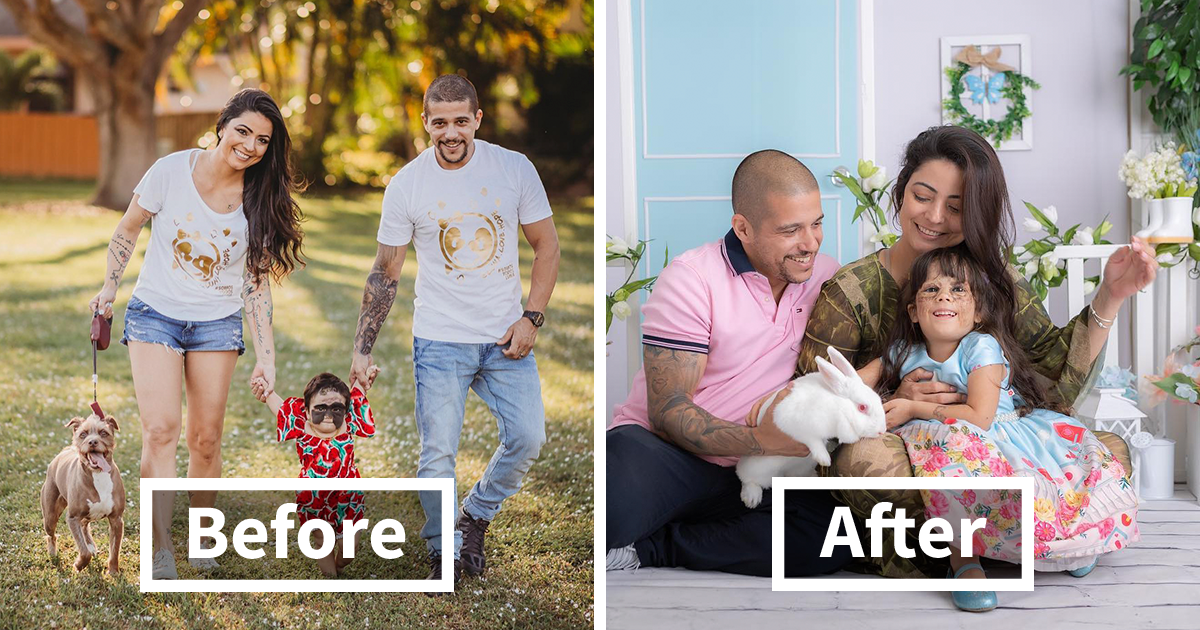
Most parents expect a newborn’s first photo to come with the usual comments: “She has your eyes,” “She has his chin,” or the classic, deeply scientific, “Look at those cheeks!” But when Luna Tavares-Fenner was born, her family faced something far more serious than ordinary baby-picture analysis. Luna arrived with a large, dark birthmark covering much of her face, a rare condition known as congenital melanocytic nevus.
Online, many people described it as a “Batman mask” birthmark because of its shape. That nickname may sound cute, like a tiny superhero ready to fight bedtime, but the medical reality was much more complicated. For Luna’s parents, Carolina and Thiago, the mark was not just about appearance. Doctors explained that large congenital melanocytic nevi can carry health risks, including a higher chance of melanoma, the most serious form of skin cancer. Suddenly, a family’s first chapter with their daughter became a global medical journey filled with consultations, travel, difficult decisions, and multiple surgeries.
By the time Luna was only a few years old, she had already undergone several procedures to remove and reduce the dangerous birthmark from her face. Her story has moved people around the world not because it is simply dramatic, but because it combines everything humans understand deeply: parental love, medical uncertainty, childhood resilience, public curiosity, and the awkward truth that society still has much to learn about visible differences.
Who Is Luna Tavares-Fenner?
Luna Tavares-Fenner was born in Florida in March 2019. From the beginning, her parents knew her condition would require more than casual observation. The birthmark on her face was large, noticeable, and medically unusual. While many birthmarks are harmless and fade with time, Luna’s was different. It was diagnosed as congenital melanocytic nevus, often shortened to CMN.
CMN is a pigmented mole or birthmark that is present at birth or appears shortly afterward. It forms when pigment-producing skin cells, called melanocytes, grow in clusters. Small congenital moles are fairly common and often only need routine monitoring. Large or giant CMN, however, are rare and can be medically complex. They may grow as the child grows, change texture, develop hair, become irritated, or require careful long-term follow-up.
Luna’s condition attracted public attention because of its location and size. A facial birthmark is not something a family can quietly tuck under a sleeve or hide beneath a sock. It meets the world first. Unfortunately, the world is not always polite at introductions. Luna’s mother has spoken publicly about strangers staring, asking uncomfortable questions, and making hurtful comments. The family’s mission became twofold: protect Luna’s health and protect her confidence.
What Is A Congenital Melanocytic Nevus?
A congenital melanocytic nevus is a type of mole that a person is born with. It can range from a small spot to a very large patch covering a significant area of skin. The color may be light brown, dark brown, gray, blue-black, or nearly black. The surface may be smooth, raised, bumpy, or textured. Some congenital nevi also grow hair.
Medical experts usually classify CMN by projected adult size. Small and medium nevi often carry a low risk and may only require monitoring. Large and giant nevi need more careful attention because the larger the nevus, the greater the possible risk of complications. One major concern is melanoma. Another possible concern in some large cases is neurocutaneous melanosis, a rare condition in which melanocytes are also present in the brain or spinal cord tissue.
This does not mean every child with a congenital nevus is in immediate danger. It means families need expert evaluation, regular monitoring, and a treatment plan tailored to the child. In other words, this is not a “just Google it and panic” situation. It is a “find the right pediatric dermatologist and breathe” situation.
Why Was Luna’s Birthmark Considered Dangerous?
The word “dangerous” can sound alarming, especially when talking about a child. In Luna’s case, the concern came from the type, size, depth, and medical behavior of the nevus. Large congenital melanocytic nevi are associated with an increased risk of melanoma. Doctors also pay attention to changes in color, texture, growth rate, irritation, pain, bleeding, or the development of unusual bumps.
Luna’s parents sought opinions from multiple medical teams. Like many families dealing with rare conditions, they found that answers were not always simple or identical. Some doctors recommended aggressive approaches. Others offered staged treatment plans. Some options were expensive, lengthy, or difficult to access. That kind of uncertainty can make parents feel as if they have been handed a 1,000-piece puzzle with no picture on the box and a toddler chewing on three corner pieces.
Eventually, the family pursued treatment outside the United States, traveling to Russia for procedures designed to remove or reduce the nevus. Reports described the treatment as a series of operations planned over time, with breaks for healing. By age two, Luna had reportedly undergone multiple surgeries, and her journey continued as doctors worked toward both medical safety and facial reconstruction.
The Family’s Search For Treatment
Before traveling abroad, Luna’s parents explored medical options in the United States, including consultations in several major cities. For a rare facial birthmark, families may meet with pediatric dermatologists, plastic surgeons, oncologists, ophthalmologists, neurologists, and other specialists depending on the case. The goal is not only to remove visible pigment but also to reduce health risks, preserve function, and support the child’s future quality of life.
Facial surgery in a small child requires careful planning. Surgeons must consider skin growth, scarring, symmetry, eyelid movement, healing time, and emotional impact. A treatment plan may involve serial excision, skin grafts, tissue expansion, laser-based approaches, or a combination of methods. In many cases, there is no one-size-fits-all answer. Medicine loves a neat checklist, but rare conditions often walk in wearing roller skates.
For Luna’s family, the decision to travel abroad was not casual. It meant fundraising, public attention, long-distance medical coordination, and the emotional weight of placing a very young child through repeated procedures. Yet Carolina and Thiago continued because they believed early treatment gave Luna the best chance at a safer and more comfortable future.
Multiple Surgeries, One Brave Little Girl
Reports about Luna’s treatment describe a carefully staged process. Instead of one single operation, her doctors planned multiple surgeries with recovery periods between them. This is common in complex reconstructive care. The skin needs time to heal, swelling needs time to settle, and doctors need to evaluate how the tissue responds before moving to the next step.
For adults, surgery is intimidating enough. For a child, the experience is filtered through hospital lights, unfamiliar rooms, bandages, appointments, and the emotional weather of the adults nearby. Children are remarkably perceptive. They may not understand every medical term, but they understand tone, routine, comfort, and fear. That is why family support matters so much.
Luna’s parents shared parts of her journey publicly, helping supporters follow her progress. The images and updates showed not only medical changes but also everyday childhood: birthdays, toys, smiles, playtime, and small moments of joy. That balance is important. A child with a rare condition is not a diagnosis wearing sneakers. She is a person first.
How Doctors Decide Whether To Remove A Birthmark
Not every birthmark needs treatment. Many are harmless. Some fade. Others remain for life but never cause medical problems. A congenital melanocytic nevus, however, may need closer evaluation, especially if it is large, changing, located in a functionally sensitive area, or causing physical or psychological concerns.
Size And Location Matter
A small mole on the arm is very different from a large facial nevus near the eye, nose, or mouth. Location affects not only appearance but also function. If a birthmark interferes with eyelid movement, vision, feeding, breathing, or normal skin care, doctors may recommend treatment sooner.
Changes Over Time Matter
Dermatologists often monitor moles for changes in color, border, size, texture, or symptoms. In children, some growth is normal because the child is growing. What concerns doctors is rapid or unusual change that does not match normal development.
Family Goals Matter Too
Medical decisions are not made in a vacuum. Parents may worry about cancer risk, repeated surgeries, scarring, anesthesia, cost, school life, social stigma, and their child’s self-esteem. Good care teams explain options clearly and help families make decisions without pressure or shame.
The Emotional Side Of A Visible Difference
Luna’s story also highlights something medicine cannot solve with a scalpel: how society treats people who look different. A visible facial birthmark can attract questions, stares, and sometimes cruelty. Children may notice those reactions long before they can fully explain them.
Parents often become instant educators. They answer strangers in grocery stores. They correct myths. They comfort their child after rude comments. They learn when to explain, when to ignore, and when to deliver the parental look that says, “Choose your next words wisely, my friend.”
For children, confidence grows when adults treat them as whole people. That means not making the birthmark the center of every conversation. It also means preparing them with simple, age-appropriate language. A child might learn to say, “It is my birthmark. I was born with it.” Short. Clear. No courtroom testimony required.
What Parents Can Learn From Luna’s Journey
Luna’s journey is not a universal medical roadmap, but it does offer useful lessons. First, unusual birthmarks deserve professional evaluation. A pediatrician can begin the conversation, but a pediatric dermatologist is often the specialist best suited to diagnose and monitor complex birthmarks.
Second, families should not be afraid to seek more than one medical opinion, especially for rare conditions. Different specialists may have different experience levels, and treatment recommendations may vary. A second opinion is not an insult to the first doctor. It is simply good navigation.
Third, emotional care matters. A child undergoing surgeries may need reassurance, routine, play, and honest explanations. Parents may need support too. Caregiving can be exhausting, especially when appointments, finances, travel, and public attention pile up like laundry with ambition.
Finally, kindness is part of treatment. Not the kind that fits neatly in a prescription bottle, but the kind that changes how a child experiences the world. A supportive community can help families feel less alone and remind a child that she is not defined by a diagnosis.
Common Types Of Birthmarks: Not All Are The Same
The word “birthmark” covers many different skin findings. Some are vascular, meaning they involve blood vessels. Others are pigmented, meaning they involve skin pigment cells. Understanding the difference helps parents avoid unnecessary fear.
Vascular Birthmarks
Vascular birthmarks include hemangiomas, salmon patches, and port-wine stains. Hemangiomas often appear shortly after birth and may grow during infancy before slowly shrinking. Some require treatment if they affect vision, breathing, feeding, or other functions.
Pigmented Birthmarks
Pigmented birthmarks include café-au-lait spots, slate gray nevi, and congenital melanocytic nevi. Many are harmless, but multiple café-au-lait spots or large congenital nevi may need specialist evaluation.
When To Call A Doctor
Parents should contact a healthcare professional if a birthmark changes quickly, bleeds, becomes painful, develops irregular colors, interferes with function, or causes concern. Parents do not need to become dermatologists overnight. They only need to notice changes and ask for help.
Medical Progress And The Future Of CMN Care
Treatment for congenital melanocytic nevi continues to evolve. Pediatric specialists now focus on individualized care rather than automatic removal in every case. Some children need surgery. Others need monitoring. Some need imaging or multidisciplinary evaluation. The best plan depends on size, location, symptoms, melanoma risk, neurological concerns, and family priorities.
Research into genetic changes associated with CMN, including mutations in pathways involving pigment-cell growth, may eventually improve treatment options. For now, the cornerstone remains expert diagnosis, regular follow-up, careful surgery when needed, and emotional support.
Luna’s case drew attention because it was visually striking and emotionally powerful. But behind the headlines is a broader truth: rare pediatric conditions require better access to specialized care, clearer insurance support, and more public understanding. Families should not have to become medical project managers, fundraising coordinators, travel agents, and public-relations teams all at once. One hat is enough. Four hats is a circus.
Experience Section: Lessons From Families Facing A Dangerous Facial Birthmark
Families who face a diagnosis like congenital melanocytic nevus often describe the experience as a long road made of small decisions. The first decision may be simple: schedule the specialist appointment. The next ones become harder: should we monitor or remove it, should we travel, should we choose staged surgery, how do we explain this to relatives, how do we protect our child from comments, and how do we stay calm when everyone else has an opinion?
One of the most important experiences parents share is the need to document everything. Taking clear photos in consistent lighting can help doctors track changes over time. Keeping a folder with medical notes, pathology reports, imaging results, insurance letters, and specialist recommendations can make future consultations smoother. It is not glamorous, but neither is searching for a biopsy report under a pile of snack wrappers five minutes before an appointment.
Another common lesson is to prepare children gently for medical visits. A young child does not need a complicated explanation of melanoma risk or reconstructive planning. Simple language works better: “The doctor is helping your skin stay healthy,” or “This visit helps us take care of your birthmark.” Children often cope better when they know what will happen next, even if the explanation is brief.
Parents also learn to manage public reactions. Some families create short answers for strangers: “It is a birthmark, and she is doing great.” Others teach siblings how to respond at school or playgrounds. The goal is not to make the child responsible for everyone else’s curiosity. The goal is to give the family tools so uncomfortable moments do not become emotional earthquakes.
Support networks can make a major difference. Online communities, rare-disease organizations, hospital social workers, child-life specialists, and other parents can offer practical advice. They can help families understand what questions to ask before surgery, how to plan recovery days, and how to talk about scars in a positive way. A scar can be described as a healing line, a brave mark, or simply part of the child’s story.
The most powerful experience, however, is learning to see the child beyond the condition. Luna’s story reminds readers that a child may have surgeries, appointments, and a public medical journey, but she also has birthdays, favorite toys, silly faces, and ordinary childhood magic. The medical goal may be to remove dangerous tissue, but the human goal is bigger: helping a child grow up feeling safe, loved, and wonderfully herself.
Conclusion
Luna Tavares-Fenner’s story is more than a viral headline about a 4-year-old girl undergoing multiple surgeries to remove a dangerous birthmark from her face. It is a reminder that rare medical conditions affect entire families, not just medical charts. Her journey shows the importance of early evaluation, expert care, patient-centered treatment, and emotional support.
Congenital melanocytic nevus can range from harmless to medically serious, depending on size, location, and behavior. For Luna, the concern was significant enough that her parents pursued multiple surgeries and international care. Their choices were guided by love, caution, and hope for a healthier future.
For readers, the takeaway is simple: birthmarks are common, but unusual or changing birthmarks deserve attention. A dermatologist can help determine whether a mark is harmless, needs monitoring, or requires treatment. And for everyone else, the social prescription is even simpler: be kind. A child’s visible difference is not an invitation for cruelty, jokes, or staring. It is an opportunity to practice being a decent human being, which thankfully requires no insurance approval.

