
Skincare
The Most Fascinating Days in History
Jun
History is full of long, slow changes. Empires rise over centuries. Ideas spread one conversation, one invention, and one argument at a time. But every so often, history decides to stop strolling and start sprinting. A single day arrives and suddenly the world looks different by dinner.
Those are the dates people remember. The days that end up in textbooks, documentaries, museum exhibits, and family debates that begin with, “Okay, but if you could time-travel to just one moment…” Some days are fascinating because they launched revolutions. Others changed how humans move, vote, fight, communicate, or imagine the future. A few are unforgettable because they revealed both the best and the worst of humanity in a matter of hours.
This is not a list of the “only” important days in history. That would be impossible, and frankly, history would file a complaint. Instead, these are some of the most fascinating days in history because they combine drama, consequence, symbolism, and lasting influence. They did not just make headlines for their own time. They kept making headlines for generations.
What Makes a Day Historically Fascinating?
A fascinating day in history usually does at least one of three things. First, it marks a turning point. Second, it changes what people believe is possible. Third, it becomes a symbol that outgrows the event itself. That is why a military invasion can mean liberation, a speech can become a moral landmark, and a small step onto dusty lunar ground can feel like a giant leap in every sense.
With that in mind, here are ten days that still spark curiosity, debate, admiration, and the occasional goosebump.
10 of the Most Fascinating Days in History
1. March 15, 44 BCE The Ides of March
If any date in history deserves its own ominous catchphrase, it is the Ides of March. On this day, Julius Caesar was assassinated by Roman senators who feared his growing power and believed they were saving the Roman Republic. Instead, they helped push Rome deeper into chaos.
That is what makes the day so fascinating: it is a perfect example of history’s talent for irony. The conspirators wanted to stop monarchy-like rule. Their act triggered power struggles that ultimately cleared the way for Augustus and the Roman Empire. In other words, they tried to hit the brakes and accidentally floored the gas.
The assassination has survived for more than two thousand years not just because Caesar was famous, but because the event contains every ingredient historians and playwrights love: ambition, betrayal, political theater, and consequences nobody fully saw coming. Shakespeare gave it immortality in literature, but history had already done the hard part.
2. July 14, 1789 The Storming of the Bastille
The Bastille was not the biggest fortress in the world, and it did not hold a huge number of prisoners when Parisian revolutionaries stormed it. Yet July 14, 1789 became one of the most powerful symbolic days in world history because the Bastille represented royal authority and arbitrary power.
When ordinary people attacked it, the message was louder than cannon fire: the old order was no longer untouchable. The French Revolution would become messy, violent, and deeply complicated, but this day has remained unforgettable because it marked the moment when public anger turned into visible revolution.
It also reminds us that history often hinges on symbols as much as structures. Taking the Bastille was not just a tactical act. It was political theater with world-changing results. Later revolutions would borrow from its energy, its imagery, and its confidence that crowds could shake a throne.
3. July 4, 1776 The Declaration of Independence
Some historic days explode. Others are written into existence. July 4, 1776 belongs to the second category. On that day, the Second Continental Congress adopted the Declaration of Independence, formally announcing that the American colonies were separating from British rule.
What makes this date fascinating is the power of language. The Declaration was not just a breakup letter to a king. It framed political rebellion in universal terms, arguing that people possess inherent rights and that governments derive power from the consent of the governed. Those ideas have inspired democratic movements far beyond the United States, even when the country itself has struggled to live up to them.
That tension is part of the date’s importance. July 4 is not fascinating because it solved everything. It is fascinating because it launched an argument about liberty that never really ended. Every generation since has tried, challenged, stretched, and redefined what those words are supposed to mean.
4. December 17, 1903 The Wright Brothers Take Flight
For most of human history, flying was filed under “birds,” “myths,” and “please do not jump off that roof.” Then came December 17, 1903. On a windy stretch near Kitty Hawk, North Carolina, Orville and Wilbur Wright achieved the first controlled, sustained flight of a powered, heavier-than-air machine.
The first flight was short. By modern standards, it was barely enough time to unlock your phone and get distracted by notifications. But its significance was enormous. It proved that powered flight was possible, practical, and improvable. After that, aviation was no longer fantasy. It was an engineering problem.
That single day changed transportation, warfare, commerce, tourism, and the shape of the modern world. It eventually shrank oceans, linked continents, and made same-day travel across vast distances seem normal. One of history’s most astonishing patterns is how often world-changing breakthroughs look modest in the moment. A bumpy 12-second flight is a great example.
5. December 7, 1941 Pearl Harbor
Some days become dividing lines. Americans often talk about life before and after Pearl Harbor, and for good reason. On December 7, 1941, Japanese forces attacked the U.S. naval base at Pearl Harbor in Hawaii, killing 2,403 people and injuring 1,178 more. The shock was immediate and profound.
The attack pushed the United States into World War II, transforming the conflict into a truly global struggle involving the nation’s full military and industrial power. It also changed American foreign policy for generations. Isolation suddenly looked less like caution and more like vulnerability.
Pearl Harbor remains fascinating not only because of its military significance, but because of how quickly public opinion and national policy shifted. One day altered the trajectory of the war and the role the United States would play in the world for the rest of the twentieth century. It was tragedy, strategy, and geopolitics compressed into a single morning.
6. June 6, 1944 D-Day
History sometimes arrives in waves, literally. On June 6, 1944, Allied forces landed in Normandy in the opening stage of Operation Overlord. D-Day was one of the largest amphibious invasions in military history, and its success helped open the Western Front in Europe.
Why is it so fascinating? Because it combined staggering logistical complexity with enormous human courage. Plans, maps, weather forecasts, code words, air support, naval bombardment, and raw nerve all had to work together. And even then, success was far from guaranteed.
D-Day is remembered as a military triumph, but also as a day that represented something larger: the beginning of the liberation of Nazi-occupied Western Europe. It is one of those dates where the scale is almost hard to grasp. The strategy was vast, the risk was extreme, and the stakes were civilization-sized.
7. August 28, 1963 “I Have a Dream” at the March on Washington
Not all world-shaping days involve armies or collapsing regimes. Some hinge on moral clarity and a microphone. On August 28, 1963, Martin Luther King Jr. delivered his “I Have a Dream” speech during the March on Washington for Jobs and Freedom.
The speech did not create the Civil Rights Movement, which had already been built through years of organizing, sacrifice, courtroom battles, boycotts, marches, and brutal resistance. But the day gave the movement one of its defining public moments. It helped focus national attention on segregation, racial injustice, and the unfinished promises of American democracy.
What makes the date so fascinating is the way language changed the atmosphere of politics. King’s speech was poetic, but it was also strategic. It placed civil rights within the country’s founding ideals and made it harder for the nation to ignore the gap between its principles and its reality. Few days show more clearly that words can move institutions when they are backed by courage, discipline, and collective action.
8. July 20, 1969 Humans Walk on the Moon
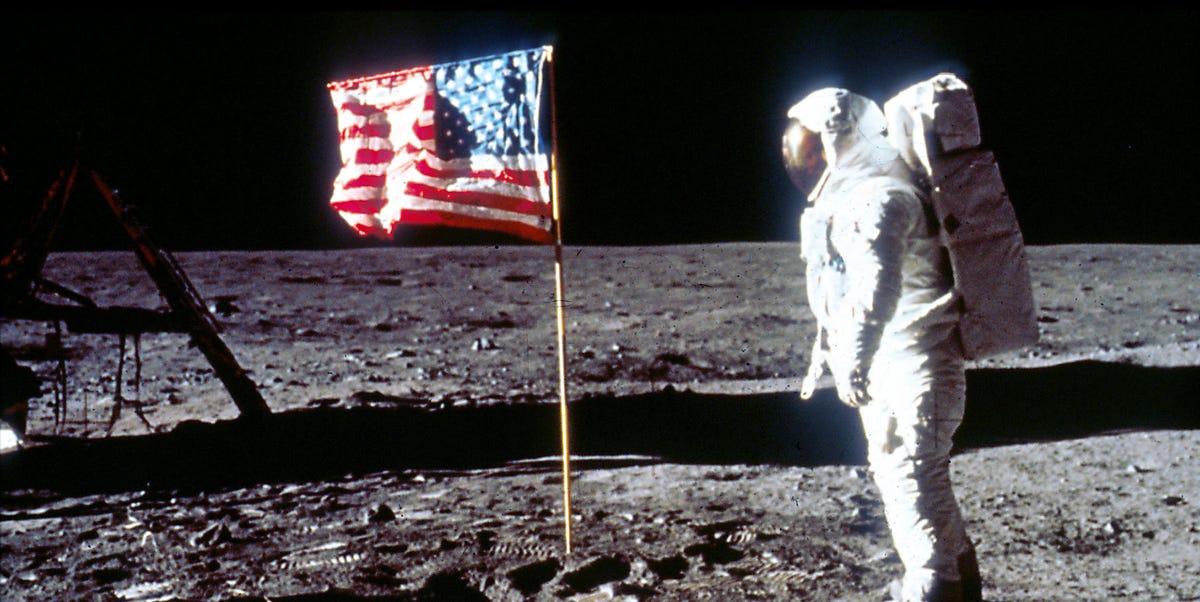
There are fascinating days, and then there are days that make humanity stare upward and whisper, “Well, that escalated beautifully.” July 20, 1969 was the day Apollo 11 put human beings on the Moon. Neil Armstrong and Buzz Aldrin walked on the lunar surface while Michael Collins orbited above.
This date matters because it was both a scientific triumph and a symbolic one. It emerged from Cold War competition, but its emotional impact reached far beyond national rivalry. For millions of people watching around the world, the Moon landing felt like proof that the species could aim absurdly high and actually get there.
The moment still feels almost unreal. Grainy television images. Strange, careful steps. A landscape that had once belonged only to myth, poetry, and distant light suddenly showed boot prints and equipment. July 20, 1969 remains one of history’s most fascinating days because it turned the impossible into archived footage.
9. November 9, 1989 The Berlin Wall Falls
The Berlin Wall had stood for nearly three decades as one of the clearest symbols of the Cold War. It physically divided families, ideologies, and daily life. Then, on November 9, 1989, the wall opened, and crowds of jubilant Germans poured through checkpoints and onto the barrier itself.
Few moments in modern history feel so instantly cinematic. People climbed the wall, embraced strangers, and chipped away at concrete that had once seemed permanent. The fall of the wall did not solve every problem in Europe overnight, but it became a powerful symbol of collapsing authoritarian control and the broader unraveling of communist rule in Eastern Europe.
That is why the day still resonates. November 9 is fascinating because it reminds us that systems that look immovable can suddenly crack. What had embodied division came to embody hope. History loves a dramatic reversal, and the Berlin Wall delivered one for the ages.
10. September 11, 2001 A Day That Reshaped the 21st Century
On September 11, 2001, nineteen terrorists hijacked four commercial airplanes in coordinated attacks against the United States. Nearly 3,000 people were killed. The shock, grief, and disbelief were immediate, but the historical consequences did not stop there.
This day reshaped national security policy, foreign policy, air travel, surveillance debates, military strategy, and public consciousness across the world. Entire generations grew up in the shadow of decisions made in the aftermath of 9/11. It became one of those rare dates that functions as a full historical era marker, much like 1945 or 1989.
September 11 is one of the most fascinating days in history not because it is inspiring in the usual sense, but because it reveals how a single day of violence can redirect global politics for decades. It also remains deeply human in memory, tied not just to headlines and policy shifts, but to individual stories of loss, bravery, confusion, and endurance.
Why These Days Still Matter
The most fascinating days in history are not merely dramatic episodes trapped in the past. They continue to influence how nations remember, how citizens argue, how technology develops, and how ordinary people imagine their place in the world. Some of these dates expanded freedom. Some exposed fragility. Some did both at once.
Together, they show that history is not only a record of what happened. It is also a record of what changed in a heartbeat. A republic trembled. A prison fell. A declaration was adopted. A machine lifted off. A harbor burned. A beachhead held. A speech echoed. A footprint appeared on the Moon. A wall cracked. A century changed course.
And maybe that is why these days remain so fascinating. They remind us that the future can arrive all at once, often wearing work boots, carrying a document, stepping to a podium, or standing in a place where nobody expected the world to change that morning.
Experiences That Make History Feel Alive
Reading about the most fascinating days in history is one thing. Experiencing their afterlife is something else entirely. History stops feeling like a stack of dates when you stand where an event happened, hear the voices connected to it, or see the physical evidence left behind. That is when the past becomes less like a chapter and more like a room you just walked into.
Take the experience of visiting a memorial or museum tied to one of these days. At Pearl Harbor, the story is not just military strategy. It is silence, water, names, and the realization that a date on a calendar can still feel heavy decades later. At the National Mall in Washington, the place where Martin Luther King Jr. gave his speech turns abstract ideals into something grounded and human. It is much harder to treat history like a trivia contest when you are standing in the shadow of memory.
The same is true with archives and artifacts. Seeing a reproduction of the Declaration of Independence, an old newspaper from September 12, 2001, or photographs from D-Day changes the rhythm of understanding. You notice the details. The paper texture. The giant typeface. The urgency in the language. The ordinary objects that suddenly became historical witnesses. It is a little humbling to realize that world-changing moments are often preserved through things that look surprisingly fragile.
Travel can also sharpen historical imagination. Even if someone never visits Normandy, Berlin, or Kitty Hawk, learning how those places look, sound, and feel adds emotional dimension to the story. A beach is no longer just a beach. A wall is no longer just concrete. A windy patch of sand becomes the launchpad for modern aviation. A public plaza becomes the stage for democratic pressure. Context turns scenery into meaning.
There is also a more personal kind of historical experience: talking with people who remember. A grandparent describing where they were during the Moon landing or on September 11 can do more than a dozen documentaries. Memory brings scale back to human size. It reminds us that history is not only made by famous leaders and dramatic photographs. It is also lived by ordinary people making coffee, going to work, listening to radios, watching televisions, or simply looking up and realizing the world changed while they were in the middle of a normal day.
That may be the strangest and most fascinating part of all. The biggest days in history rarely announce themselves with a warning label. Most begin like any other Tuesday, Friday, or Sunday. Then something happens, and afterward, nobody can speak of that date casually again. Experiencing history, whether through travel, museums, archives, family stories, or thoughtful reading, helps us understand that enormous change is often made of very human moments. That insight is what keeps these days alive long after the headlines fade.
Conclusion
The most fascinating days in history are not memorable only because they were dramatic. They endure because they changed institutions, beliefs, borders, technologies, and lives. They remind us that a single day can redirect centuries, inspire movements, and alter what people think is possible. History may be long, but sometimes it turns on a moment so powerful that the calendar itself becomes unforgettable.

