
Beauty Unlocked
The Internet Cannot Get Enough Of This Dad Who Filled Yard With Pride Flags To Annoy Homophobic Neighbor
Jul
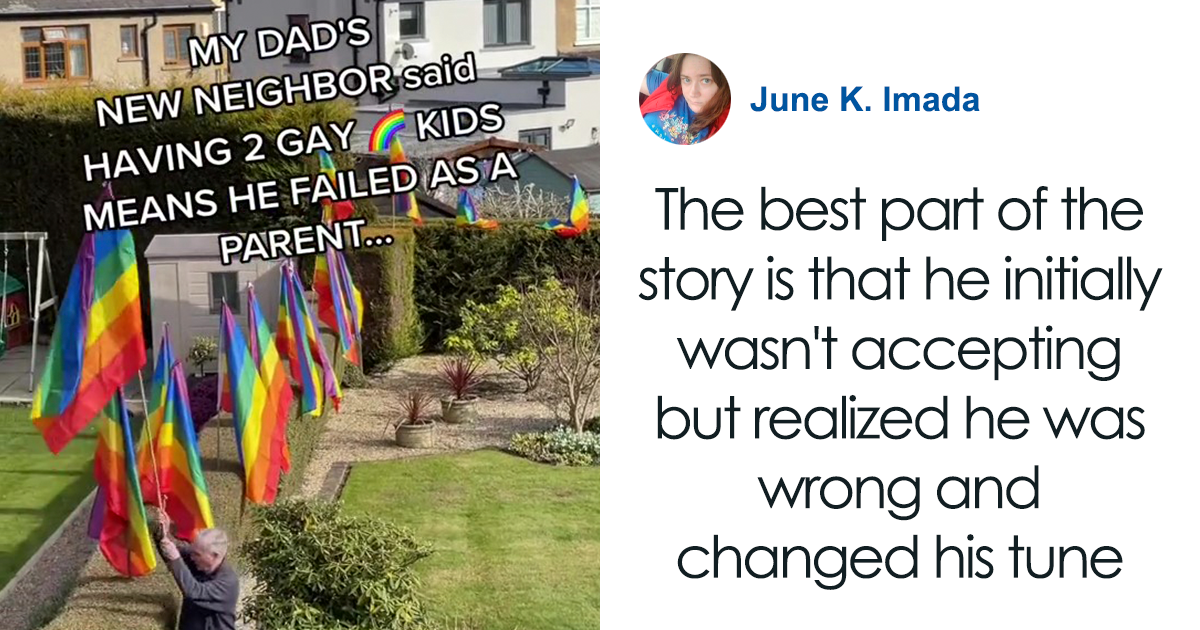
A friendly introduction to a new neighbor usually involves a wave, a plate of cookies, or a cautious discussion about which day the garbage truck arrives. According to a viral TikTok shared by Xander, however, his father’s new neighbor skipped the small talk and went directly to criticizing his parenting.
The alleged offense? The father has two LGBTQ+ children. The neighbor reportedly told him that raising two gay children meant he had “failed as a parent.” Instead of beginning a shouting match or launching a neighborhood feud worthy of reality television, the dad paused, gathered several enormous Pride flags, and transformed his yard into a rainbow-covered declaration of support.
The resulting video delighted millions of viewers. It was colorful, funny, unapologetically supportive, and just petty enough to satisfy the internet’s appetite for consequences served with excellent visual presentation.
Story details synthesized from Out, Bored Panda, Indy100, Upworthy, and Comic Sands.
A Neighbor’s Insult Meets a Wall of Rainbows
In the video posted by TikTok creator @fitxander, the father can be seen arranging large rainbow flags along the hedges surrounding the yard. Some stand upright. Others stretch across the greenery like banners at a particularly enthusiastic Pride parade. Together, they create what can only be described as a cheerful diplomatic border.
The response contained no personal attack, threatening gesture, or furious lecture. It simply made the family’s position impossible to misunderstand: these children were loved, their identities were not considered parental failures, and the neighbor’s disapproval would not dictate what happened insideor outsidethe home.
By April 2022, one report counted approximately 28.6 million views and more than 3 million likes on the TikTok. Other articles published earlier recorded lower totals, showing how rapidly the clip spread. Xander captioned it as some impressive “shade” from his father, and social media users enthusiastically agreed.
Viral engagement figures and video description.
Why the Pride Flag Response Went So Viral
The internet encounters arguments every minute. Most disappear into the digital basement beside forgotten memes and abandoned sourdough starters. This story endured because the dad’s response communicated several ideas instantly, without requiring a speech, a debate moderator, or a 47-part social media thread.
It Reversed the Meaning of “Failure”
The neighbor reportedly framed LGBTQ+ children as evidence of bad parenting. The father’s actions rejected that premise completely. His response suggested that parenting should be measured by whether children feel safe, respected, and lovednot by whether they grow into copies of their parents’ expectations.
That reversal gave the story its emotional punch. The flags did not merely say, “My children are gay.” They said, “I am proud of them, and your attempt to shame us has only made my support more visible.”
It Turned Allyship Into an Action
Calling yourself supportive is easy. Publicly standing beside someone when another person criticizes or mistreats them requires more courage. The father did not leave his children to absorb the insult alone. He turned his home into a visible statement of solidarity.
Research summarized by The Trevor Project has found that supportive parental behaviors are associated with better outcomes for LGBTQ+ young people. Respectful conversations, welcoming a child’s LGBTQ+ friends or partner, learning about LGBTQ+ issues, and standing up when a child is mistreated are all meaningful forms of support. In the organization’s analysis, several such behaviors were associated with substantially lower odds of a past-year suicide attempt.
Family acceptance and supportive-parent research.
It Was Made for the Visual Internet
A carefully reasoned response might have been admirable, but enormous flags rippling above a hedge are easier to understand in three seconds. The video had a clear setup, a satisfying payoff, bright colors, and a dad performing outdoor decorating with the determination of a man who had just discovered both Pride Month and wholesale flag pricing.
The spectacle was funny, but the message beneath it was serious. Visibility matters precisely because prejudice often relies on silence. When supportive people become visible, LGBTQ+ neighbors, relatives, and young people receive a simple signal: hostility is not the only opinion in the roomor on the block.
The Father’s Personal Transformation Makes the Story Deeper
The viral clip would have been heartwarming even if the father had always been an enthusiastic LGBTQ+ ally. According to Xander’s earlier videos and subsequent media coverage, however, the family’s history was more complicated.
Xander said his father had once been politically conservative, supportive of Donald Trump, and ashamed that his children were gay. After the death of his wife in 2019, the father reportedly reconsidered the distance his beliefs had created between him and people he loved. Xander described him as becoming increasingly supportive of the LGBTQ+ community and determined not to lose more time with his family because of prejudice.
That history does not magically erase earlier hurt, and personal growth should not be treated as a coupon that cancels every past mistake. Still, change matters. The father appears to have moved beyond quietly revising his opinions. He began celebrating his children, defending LGBTQ+ people, and making his support public.
The father’s earlier views and later transformation were described by Xander in public videos and reported by multiple outlets.
The Pride Flag Is More Than Colorful Fabric
The dad’s response worked because the rainbow flag already carries decades of cultural meaning. The original eight-color Pride flag was created for San Francisco’s 1978 Gay Freedom Day celebration through the work of artist and activist Gilbert Baker and other collaborators. It offered an affirmative symbol centered on life, healing, sunlight, nature, art, serenity, and spirit.
Manufacturing and design changes eventually produced the familiar six-color version. Later designs, including the Philadelphia Pride Flag and Progress Pride Flag, added visual recognition for LGBTQ+ people of color, transgender people, and communities affected by the HIV/AIDS crisis.
Although Pride flags now appear on storefronts, social media profiles, clothing, and coffee mugs, their meaning remains personal. On a house, porch, school, or yard, a flag can announce that LGBTQ+ people are welcome. For someone who feels isolated, that small signal may carry far more emotional weight than the person displaying it realizes.
Pride flag history and symbolism.
What Supportive Parenting Actually Looks Like
Not every parent needs to order parade-sized flags and convert the garden into Rainbow Headquarters. The most important forms of LGBTQ+ family support are often quieter and more consistent.
Listen Before Trying to Manage the Situation
When a child shares information about sexual orientation or gender identity, the first response can shape future trust. Parents do not need perfect terminology or a complete library of LGBTQ+ knowledge. They do need to listen without treating the conversation like an emergency meeting.
Defend the Child When Prejudice Appears
Support becomes especially meaningful when it costs something socially. Correcting a relative, confronting bullying, or refusing to tolerate an insulting neighbor tells a child that acceptance is not limited to private conversations.
Keep Learning
A supportive parent can still make mistakes. Names, pronouns, identity terms, and personal boundaries may require practice. The goal is not instant perfection. It is showing enough humility to learn, apologize, and improve without making the LGBTQ+ family member responsible for managing everyone else’s emotions.
Broader youth-health research also emphasizes the protective value of connection with parents, schools, and trusted adults. CDC findings have repeatedly associated parental engagement and school connectedness with better mental-health and safety outcomes among adolescents, including LGBTQ+ students.
Youth connectedness and parental engagement research.
How to Handle a Hostile Neighbor Without Making Things Worse
The rainbow-yard response was peaceful, but real neighborhood disputes can escalate. Anyone facing harassment should consider safety before attempting a viral comeback. Document repeated incidents, save written messages, use security cameras where lawful, and communicate through property managers or homeowners associations when appropriate.
Local rules governing signs, flags, fences, and exterior displays can differ. Residents should review lease terms, community regulations, and local ordinances before assuming either that every display is protected or that a neighborhood committee can prohibit it. Rules should also be applied consistently rather than selectively targeting LGBTQ+ expression.
When conduct becomes threatening, destructive, or discriminatory, the situation has moved beyond an argument about taste. Local law enforcement, fair-housing organizations, civil-rights groups, or legal counsel may be appropriate depending on the circumstances. The ACLU identifies freedom of expression and protection from discrimination as central concerns in its LGBTQ+ rights work, but the precise legal options depend on the location and facts.
General civil-rights context.
Why This Dad’s Pride Flag Yard Still Matters
The most satisfying part of the story is not that a rude neighbor was annoyed. It is that an attempted insult inspired a stronger display of family support. The father could not control what another person believed, but he could control what his children saw when they looked into the yard.
They saw their father choosing them.
That is why millions of strangers celebrated the video. The flags were humorous, photogenic, and delightfully excessive, but they also represented something many LGBTQ+ people have wanted from their families: not reluctant tolerance, not silence, and not acceptance that disappears whenever company arrives. They represented pride without an asterisk.
The father’s journey also leaves room for a hopeful idea. People can change. They can examine the harm caused by old beliefs, accept responsibility, and become active supporters of the people they once misunderstood. The process may be uncomfortable, but discomfort is a small price to pay for recovering love that prejudice nearly pushed away.
Related Experiences: When Pride Displays Become Messages of Belonging
A Flag for a Neighbor Who Came Out in His Seventies
Before the dispute that produced the famous rainbow hedge, Xander had shared another story involving his father and a neighbor. A 73-year-old man had reportedly come out as gay but did not receive support from his family. Xander’s father began placing Pride flags around the garden to show the neighbor that he was not alone.
A follow-up video reportedly showed the father continuing the gesture each day. When complaints and hostility followed, the displays became larger. The experience demonstrates that Pride symbols are not meaningful only to teenagers or young adults. LGBTQ+ people may come out at any age, and some spend decades waiting for a moment when honesty feels possible. A flag next door cannot replace family acceptance, but it can make an isolating experience feel less lonely.
The 73-year-old neighbor story.
An Oklahoma Father Raised an Ally Flag With His Son
Another widely shared story featured Oklahoma father John Wyatt and his teenage son, Caden. The pair raised a Pride ally flag outside their home after Caden came out publicly. Coverage emphasized that the family lived in a conservative community and understood that the display might attract criticism.
Its emotional effect came from the father standing beside his son rather than asking him to carry the moment alone. The gesture was less theatrical than a yard filled with giant flags, but the message was similar: home would remain a place of support, even if the surrounding community was less welcoming.
These stories remind parents that support does not have to be complicated. Showing up at an event, displaying a flag, welcoming a partner, or calmly correcting a cruel comment can become a memory a child carries for years.
Oklahoma father-and-son coverage.
Rainbow Lights and an Entire Equality House
Colorful resistance to anti-LGBTQ+ prejudice has appeared in other forms. In Washington state, Lexi Magnusson decorated her home with thousands of rainbow Christmas lights after hearing anti-gay comments from a neighbor. The display was humorous and festive, but it also communicated solidarity to LGBTQ+ people in the community.
On a much larger scale, the nonprofit Planting Peace painted a house directly across from the Westboro Baptist Church in Topeka, Kansas, in rainbow colors. Opened as the Equality House, it became a highly visible counter-message to the church’s anti-LGBTQ+ activism. Instead of trying to make hateful speech disappear, the project placed an unmistakable symbol of equality across the street from it.
Rainbow-light protest and Equality House reporting.
What These Experiences Have in Common
None of these displays ended homophobia. One flag cannot repair every family, and even an entire rainbow house cannot settle a national civil-rights debate. Their value lies in changing the immediate environment.
A hostile remark says, “You should feel ashamed.” A Pride display answers, “You belong here.” When a parent, friend, or neighbor makes that second message louder, the emotional balance of a space begins to change.
The best lesson is not that everyone should provoke a neighborhood decorating war. It is that silence is also a message. When prejudice appears and supportive people say nothing, the person being targeted may reasonably wonder whether anyone is willing to stand beside them. Visible allyship removes that uncertainty.
Sometimes it looks like a careful conversation. Sometimes it looks like reporting harassment, attending a school meeting, or defending a relative at dinner. And sometimes it looks like a dad marching into the yard with enough rainbow fabric to confuse the local weather radar.
Note: This article summarizes publicly reported social-media posts and press coverage. The neighbor’s alleged remark and details of the family’s private interactions were presented by Xander and have not been independently verified. Engagement totals reflect figures reported during the video’s original viral circulation in 2022.

