
Skincare
The Butterfly Effect Rankings And Opinions
Jul
Some movies arrive, get reviewed, collect their box-office receipts, and politely sit on the shelf. The Butterfly Effect did not choose that calm little timeline. Released in 2004 and starring Ashton Kutcher as Evan Treborn, the film became one of those psychological thrillers that splits the room faster than someone saying, “Actually, the director’s cut is the only version that matters.”
The title comes from chaos theory: the idea that small changes in a complex system can lead to massive, unpredictable consequences. In real science, the butterfly effect is closely associated with meteorologist Edward Lorenz, whose work showed that tiny differences in starting conditions could dramatically alter weather-model outcomes. In movie form, that concept becomes a nightmare with journals, trauma, time travel, alternate lives, and enough emotional whiplash to make a seat belt feel like a reasonable viewing accessory.
This article ranks the most important parts of The Butterfly Effect, explores why opinions remain so divided, and looks at why the movie still has a surprisingly strong grip on viewers who first watched it years ago and then spent the next decade side-eyeing every “small decision” they ever made.
What Is The Butterfly Effect Really About?
At its core, The Butterfly Effect follows Evan Treborn, a college student who discovers that he can travel back into moments from his childhood by reading old journals. These are not cute childhood memories involving birthday cake and awkward school photos. Evan’s past is loaded with blackouts, abuse, violence, guilt, and moments he desperately wants to repair.
The problem is that every “fix” creates a new disaster. Evan tries to save Kayleigh, protect his friends, undo trauma, and create a better life. Instead, each change leads to a different timeline where someone else suffers. The movie’s central question is simple but brutal: if you could change the past, would you improve the futureor just break it in a more creative way?
The Butterfly Effect Rankings: Best And Worst Elements
1. Best Concept: Small Choices, Huge Consequences
The strongest part of The Butterfly Effect is its premise. The idea that one tiny action can reshape an entire life is instantly understandable. You do not need a Ph.D. in chaos theory to feel the emotional punch. Everyone has a “what if” moment: what if I had answered that call, taken that job, said yes, said no, left five minutes earlier, or not eaten gas-station sushi before a three-hour meeting?
The movie turns that universal anxiety into a sci-fi thriller. Evan’s changes are extreme, but the emotional engine is familiar. He wants to save people he loves. He wants his pain to mean something. He believes that enough effort, enough guilt, and enough time-travel gymnastics can produce the perfect timeline. The tragedy is that life refuses to behave like a spreadsheet.
2. Best Emotional Hook: The Movie Takes Pain Seriously
Many time-travel movies treat the past like a puzzle box. The Butterfly Effect treats it like a haunted house. The story is messy, dark, and sometimes aggressively grim, but it understands that trauma does not stay politely in one room. It leaks into relationships, memory, identity, and decision-making.
This is one reason audiences often rate the film more warmly than critics. Viewers who connect with the emotional stakes tend to forgive the clunky dialogue, blunt symbolism, and occasional “wait, how does that timeline rule work again?” moments. The movie may not always be graceful, but it swings hard. Sometimes it swings like a trained boxer. Sometimes it swings like a ceiling fan with a loose screw. Either way, you notice.
3. Most Divisive Element: Ashton Kutcher’s Performance
Ashton Kutcher was widely known for comedy and television when The Butterfly Effect arrived, so his turn as a tortured sci-fi thriller lead became a major talking point. Some critics felt he was miscast. Many audience members, however, found his performance more effective than expected, especially because Evan often looks like someone whose brain has become a haunted filing cabinet.
The fairest opinion sits somewhere in the middle. Kutcher is not flawless in the role. Some scenes ask for a level of emotional precision that the film itself does not always support. But he commits. He does not wink at the material, and that matters. In a movie this intense, half-commitment would have turned the whole thing into accidental comedy. Instead, his seriousness helps keep the story watchable even when the plot starts juggling chainsaws.
4. Best Supporting Performance: Amy Smart As Kayleigh
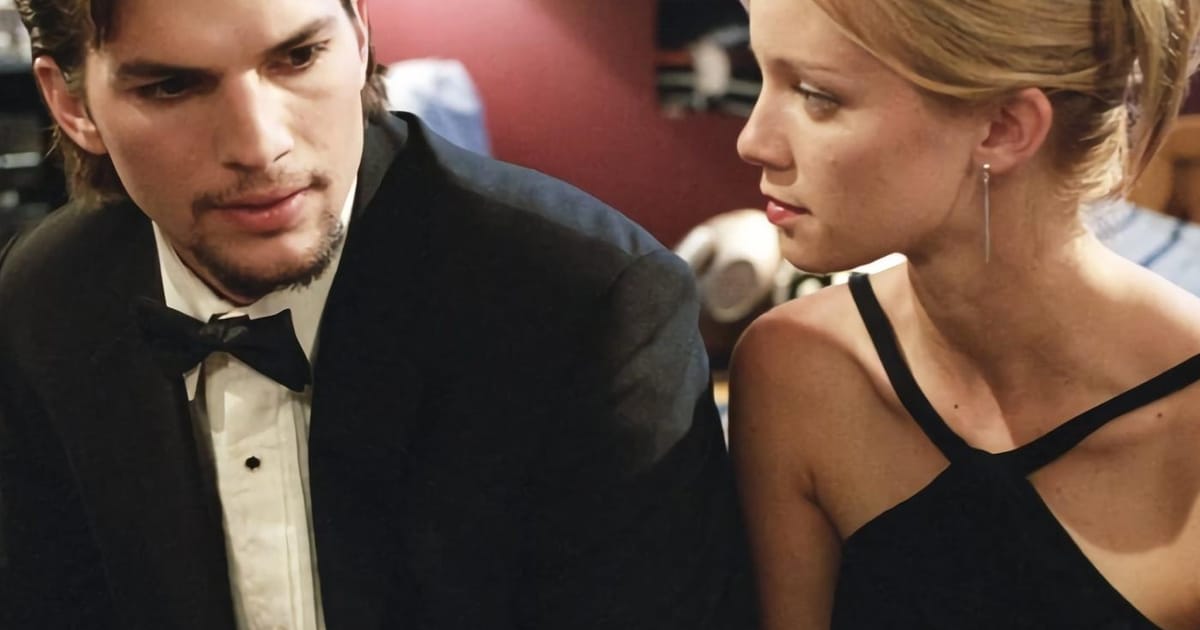
Amy Smart gives the film much of its emotional weight. Kayleigh is not just “the girl Evan wants to save.” Across different timelines, she becomes a measure of how much damage one altered choice can cause. Sometimes she appears hopeful. Sometimes she is deeply wounded. Sometimes her life is completely redirected by decisions she did not control.
That makes Kayleigh one of the movie’s most important characters. The film’s biggest moral tension comes from Evan’s belief that he can choose the best outcome for everyone. Kayleigh’s shifting fate reminds viewers that good intentions can still become control when one person keeps rewriting reality without consent from the people living inside it.
5. Best Ending: The Theatrical Ending
The theatrical ending, where Evan and Kayleigh pass each other years later and keep walking, remains the most balanced version. It is bittersweet without being hopeless. Evan chooses not to re-enter her life because he understands that his presence may be the spark that restarts the damage. It is not romantic in the usual Hollywood sense, but it is emotionally mature. For a movie that spends nearly two hours throwing tragedy like confetti at a very depressing parade, restraint is refreshing.
6. Darkest Ending: The Director’s Cut
The director’s cut ending is infamous because it takes the movie’s logic to its bleakest possible conclusion. Instead of simply removing himself from Kayleigh’s life, Evan prevents his own birth. Some viewers see this as the most consistent ending: if Evan is the common factor in every damaged timeline, removing himself ends the cycle. Others find it too punishing, as if the movie looked at a sad ending and said, “Nice start, but can we make everyone stare silently at the wall afterward?”
The director’s cut has power, but it also changes the flavor of the film. The theatrical ending argues that sacrifice can mean letting go. The director’s cut argues that sacrifice can mean self-erasure. Both are memorable. One is easier to recommend to a friend without also handing them a blanket and a cup of tea.
7. Weakest Element: The Time-Travel Rules
The movie’s weakest area is internal logic. Evan’s ability depends on journals, blackouts, memory gaps, and physical consequences that sometimes feel consistent and sometimes feel like the screenplay is sprinting across a bridge while removing planks behind itself.
To be fair, The Butterfly Effect is less interested in scientific accuracy than emotional consequence. But because the title borrows from a real scientific idea, the film invites viewers to judge its cause-and-effect mechanics. Some changes create enormous outcomes; others remain oddly contained. That inconsistency gives critics plenty to poke at, and they brought very sharp sticks.
Why Critics And Audiences Disagree So Much
One of the most interesting parts of The Butterfly Effect is the gap between critical opinion and audience affection. Professional reviews often criticized the film for being overwrought, tasteless, heavy-handed, or dramatically excessive. Audience reactions have often been more generous, especially among viewers who discovered it young, watched it late at night, or found the story’s “what if?” structure genuinely haunting.
That split makes sense. Critics often evaluate structure, tone, originality, performance, and craft under pressure. Audiences frequently remember impact. Did the movie keep them watching? Did it stick in their head? Did the ending spark a debate in the living room? Did someone pause the DVD menu and say, “There are alternate endings?” These things matter.
The Butterfly Effect is not a subtle film. It is a movie that kicks down the door, drops a journal on the floor, screams about destiny, and asks whether love can survive causality. Subtle? No. Boring? Also no.
Ranking The Main Opinions About The Butterfly Effect
Opinion 1: “It Is Underrated”
This is the most common fan defense. Supporters argue that the film’s ambition, emotional stakes, and twisty structure deserve more credit than critics gave it. They see it as a bold psychological thriller that takes real risks and refuses to offer easy comfort.
Opinion 2: “It Is Too Dark For Its Own Good”
This opinion is also fair. The film stacks trauma so heavily that some viewers feel manipulated rather than moved. A darker story is not automatically deeper. Sometimes darkness adds weight; sometimes it feels like the screenplay is pressing every elevator button marked “misery.”
Opinion 3: “The Director’s Cut Is Better”
Fans of the director’s cut often prefer its commitment to the bleakest version of the story. They argue that the ending completes the movie’s logic. If every timeline is poisoned by Evan’s interference, then the final solution must be radical. This version is unforgettable, even for viewers who do not actually enjoy being emotionally folded into a paper crane.
Opinion 4: “The Theatrical Cut Is Better”
The theatrical ending has its own strong supporters because it gives Evan growth without turning the entire story into pure despair. He does not get the girl, but he gives her peace. That choice makes the ending sad, humane, and oddly beautiful.
Opinion 5: “The Movie Is Flawed But Fascinating”
This may be the most accurate ranking. The Butterfly Effect is uneven, sometimes clumsy, and not always logical. Yet it is also memorable, emotionally direct, and unusually fearless for a mainstream thriller. Plenty of technically better movies vanish from memory. This one lingers.
How The Real Butterfly Effect Shapes The Movie’s Meaning
In science, the butterfly effect does not mean every tiny action magically creates a dramatic outcome. It refers to sensitive dependence on initial conditions in complex systems. A small change can matter enormously, but the result is not easily predictable. That distinction is important.
The movie uses the popular version of the idea: change one detail, change everything. While that is simplified, it works dramatically because Evan cannot predict the outcomes of his interventions. He treats the past like a machine with broken parts. In reality, it behaves more like a living network. Pull one thread and the sweater does not become perfect; sometimes it becomes a scarf, sometimes a net, and sometimes just a pile of yarn judging you from the couch.
Specific Examples That Make The Film Memorable
One memorable example is Evan’s attempt to save Kayleigh from her abusive childhood. His intention is noble, but the timeline does not reward him with a clean victory. Instead, the consequences move pain into new locations. The film repeatedly shows that harm is not easily deleted; it is often redistributed.
Another example is Evan’s physical and social transformations across timelines. He becomes different versions of himself depending on what he changes: successful, imprisoned, injured, isolated, or emotionally devastated. These shifts turn identity into one of the movie’s biggest questions. Are we who we are because of our choices, our memories, our relationships, or the accidents that shaped us before we understood what choice even meant?
Viewing Experiences Related To The Butterfly Effect Rankings And Opinions
The experience of watching The Butterfly Effect often depends on when a viewer encounters it. For someone watching as a teenager or young adult, the movie can feel like a thunderstorm in movie form: loud, emotional, a little chaotic, and impossible to ignore. Its ideas about regret, memory, and lost love land hard because young viewers are often just beginning to understand how one decision can redirect a friendship, a relationship, or a future plan.
Watching it later in life can create a different reaction. Adults may notice the rough edges more quickly: the dialogue that occasionally stomps instead of walks, the timeline rules that wobble, and the intense scenes that sometimes push past drama into melodrama. But older viewers may also appreciate the central fear more deeply. Life really does branch. Careers change because of one conversation. Relationships begin because someone took the long way home. Families carry consequences from choices made decades earlier. The film exaggerates this truth, but exaggeration is part of its strange charm.
A common viewing experience is the post-movie debate. Someone will argue that Evan should have stopped changing the past sooner. Someone else will say he had a moral duty to keep trying. A third person will bring up the director’s cut, and suddenly everyone is discussing whether the darkest ending is brave, cruel, or both. This is where the movie shines. It may not win every technical argument, but it creates conversation. For SEO purposes, that is gold; for living-room harmony, results may vary.
Another experience is emotional surprise. Many people go into the movie expecting a gimmicky Ashton Kutcher thriller and discover something much heavier. That surprise can work in the film’s favor. Expectations are low, impact is high, and the viewer walks away thinking, “Well, I was not emotionally prepared for that.” It is the cinematic equivalent of opening a snack drawer and finding a handwritten letter about generational trauma.
Rewatching the film also changes opinions. The first viewing is usually about plot: what changed, who suffered, how the timelines connect. The second viewing is more about theme: whether love is always worth pursuing, whether guilt can become selfish, and whether fixing the past is different from refusing to accept it. The movie becomes less of a puzzle and more of a warning. Some doors should not be reopened just because you found the key.
In that sense, The Butterfly Effect remains effective because it attaches a wild sci-fi idea to a very human feeling. Everyone has imagined rewriting one scene from life. The movie asks what happens if the rewrite costs more than the mistake. That question is why the film’s rankings and opinions remain active years later. It is not perfect cinema, but it is sticky cinemaand sometimes sticky beats spotless.
Final Verdict: Is The Butterfly Effect Worth Watching?
Yes, with expectations properly calibrated. The Butterfly Effect is not a flawless masterpiece, and it is not a scientifically precise lesson in chaos theory. It is a dark, emotional, high-concept thriller that uses time travel to explore guilt, trauma, sacrifice, and the danger of believing one person can control every outcome.
Its rankings are easy to summarize: excellent premise, strong emotional impact, divisive acting, inconsistent logic, memorable endings, and huge rewatch-discussion value. Its opinions are even easier to understand. Some viewers see a messy cult favorite. Some see an overwrought thriller. Many see both at once, which may be the most honest response.
The real butterfly effect reminds us that complex systems are unpredictable. The movie version reminds us that people are complex systems too. Change one memory, one relationship, one wound, one apology, or one goodbye, and the whole life can tilt. That is why The Butterfly Effect still flaps around in movie debates years after release, occasionally knocking over a few critical flowerpots along the way.

