
Body Care
The 12 Best Irish Horror Movies Of All Time
Jul
Irish horror movies have a special talent for making a quiet country lane feel like the worst possible place to lose cell service. While Hollywood often goes big with haunted mansions, masked killers, and enough jump scares to power a small lighthouse, Irish horror tends to creep in through older doors: folklore, family secrets, grief, isolation, religious guilt, damp forests, and the unnerving feeling that the past is still standing in the room, politely waiting to ruin your evening.
The best Irish horror films are not all the same kind of scary. Some are folk horror nightmares rooted in ancient beliefs. Some are psychological thrillers about fractured homes and unreliable memories. Others are creature features, zombie allegories, vampire comedies, or occult chamber pieces where the real monster may be trauma wearing a dramatic cloak. Together, they show why Ireland has become one of the most exciting homes for modern horror cinema.
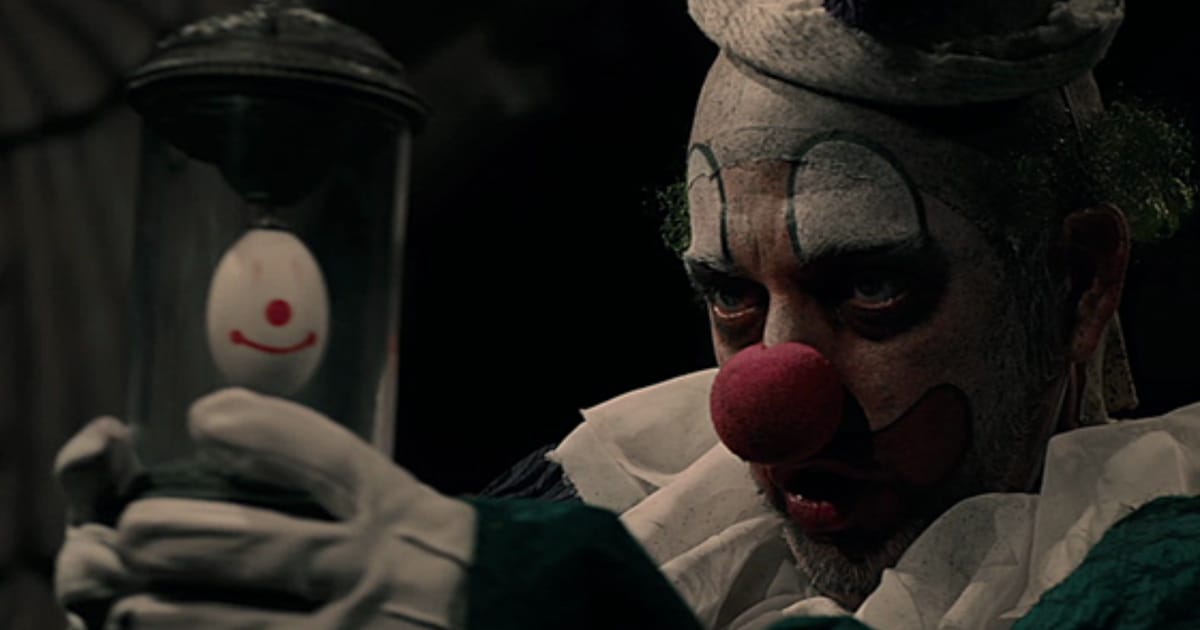
This ranking focuses on Irish horror movies, Irish-led productions, and horror films strongly tied to Ireland through setting, filmmaking, mythology, or cultural identity. So, lock the door, keep an eye on that weird hole in the ground, and absolutely do not trust the creepy wooden mannequin. Here are the 12 best Irish horror movies of all time.
Why Irish Horror Movies Hit Differently
Irish horror works because it understands atmosphere. A foggy field, a lonely farmhouse, a crumbling housing estate, or a half-renovated country house can become terrifying without needing a marching band of demons. Many of these films use the landscape as a character. The woods are not just woods. The bog is not just mud. The old house is not just real estate with “potential.” It is a memory trap with plumbing.
Another reason Irish horror feels so distinct is its relationship with folklore. Fairies, changelings, spirits, curses, rituals, and forbidden songs are not treated like cute tourist souvenirs. They are old, sharp, and inconveniently alive. Add themes like grief, class anxiety, family silence, and historical trauma, and you get horror that lingers long after the credits roll.
The 12 Best Irish Horror Movies Of All Time
-
1. A Dark Song (2016)
Director: Liam Gavin
A Dark Song is one of the finest occult horror movies of the 21st century, Irish or otherwise. The setup is deceptively simple: a grieving woman hires a bitter occultist to help her perform an elaborate ritual inside a remote house. The goal is not party magic. She wants contact with her murdered child, and the ritual demands isolation, obedience, pain, and a level of commitment that would make most people quit around the “eat weird mushrooms and draw circles in blood” stage.
What makes the film extraordinary is its patience. Instead of cheap shocks, it builds dread through repetition, silence, and emotional exhaustion. The house becomes a spiritual pressure cooker. Catherine Walker and Steve Oram give raw, prickly performances, making the central relationship feel volatile and painfully human. By the time the supernatural arrives in full force, it feels earned rather than decorated on top. This is Irish horror at its most solemn, strange, and transcendent.
-
2. Oddity (2024)
Director: Damian McCarthy
Oddity proves that sometimes all a horror movie needs is a remote house, a murder mystery, a psychic antiques dealer, and a wooden mannequin that looks like it was carved by someone who hates sleep. Damian McCarthy’s supernatural thriller follows Darcy, a blind clairvoyant woman investigating the murder of her twin sister. Her method of inquiry is not exactly standard detective work. It involves cursed objects, uncomfortable conversations, and one of the most memorable horror props in recent cinema.
The film blends ghost story, whodunit, psychological horror, and gothic revenge tale. It is tightly controlled, stylish, and deliciously mean when it wants to be. Carolyn Bracken’s dual performance gives the movie both emotional weight and eerie precision. Oddity is the kind of horror film that understands the power of stillness. It lets the viewer stare at something motionless for too long, then asks, “Are you sure it stayed still?” Rude, but effective.
-
3. The Hole in the Ground (2019)
Director: Lee Cronin
Before Lee Cronin brought fresh blood to the Evil Dead franchise, he directed this chilly Irish horror film about motherhood, fear, and one extremely suspicious sinkhole. The Hole in the Ground follows Sarah, a young mother who moves to the Irish countryside with her son, Chris. After Chris disappears near a massive hole in the forest, he returns changed. Maybe he is traumatized. Maybe Sarah is unraveling. Or maybe the child at the breakfast table is not her child at all.
The film draws from changeling folklore while keeping one foot planted in psychological horror. Seána Kerslake carries the story with a performance full of exhaustion, panic, and protective instinct. The rural setting feels damp, hostile, and quietly watchful. The result is a polished slow-burn horror movie that turns parental anxiety into a monster you can almost hear breathing in the next room.
-
4. You Are Not My Mother (2021)
Director: Kate Dolan
You Are Not My Mother is a modern Irish folk horror film set not in some misty medieval village, but in a North Dublin housing estate. That choice matters. Kate Dolan’s debut feature makes ancient fear feel uncomfortably present, placing folklore inside a cramped home where depression, secrecy, and generational trauma already haunt the walls.
The story follows Char, a teenage girl whose mother Angela disappears and then returns acting strangely. At first, the change could be read as a mental health crisis, a family mystery, or a daughter’s fear of losing the person she knows. Slowly, the film opens the door to older explanations involving changelings and ritual fire. Hazel Doupe gives a quietly powerful performance as Char, while Carolyn Bracken makes Angela’s transformation both sad and frightening. This is not loud horror. It is intimate, bruised, and deeply unsettling.
-
5. Caveat (2020)
Director: Damian McCarthy
If Oddity made Damian McCarthy a major name among horror fans, Caveat showed that he already had a gift for nightmare logic. The premise sounds like something no sensible person would accept: an amnesiac drifter agrees to look after a disturbed woman in an isolated house, but he must wear a leather harness chained to the basement. This is why horror movies need better employment agencies.
Caveat thrives on restriction. Its low budget becomes a strength, forcing every hallway, object, and shadow to matter. The infamous toy rabbit with a drum is one of those simple horror images that feels instantly cursed. The film is claustrophobic, puzzling, and grimly funny in the way bad decisions often are. It may not answer every question neatly, but its atmosphere is so strong that neatness would almost ruin the spell.
-
6. The Canal (2014)
Director: Ivan Kavanagh
The Canal is an elegant Irish ghost story about cinema, madness, and the horror of discovering that your home has a worse history than the inspection report suggested. Rupert Evans plays David, a film archivist who learns through old footage that his house was the scene of a brutal murder in the early 1900s. Soon after, his marriage collapses, his wife disappears, and reality begins leaking at the edges.
Ivan Kavanagh’s film is especially effective because it uses film itself as a haunted object. Old images do not simply reveal the past; they infect the present. The canal, the house, and the archive become part of the same nightmare. This is a moody, ambiguous horror movie that asks whether David is uncovering a supernatural pattern or surrendering to obsession. Either way, buying a cheerful lamp is not going to fix this house.
-
7. The Hallow (2015)
Director: Corin Hardy
The Hallow is a muscular Irish folk horror creature feature with roots in fairy mythology and eco-horror. A conservationist moves with his family to a remote mill house in Ireland, despite locals warning him that the surrounding woods are not exactly available for casual hiking. Naturally, he ignores the warnings, because horror characters often treat ancient local knowledge like spam email.
The film combines home-invasion structure with monster movie energy. Its creatures feel earthy, fungal, and connected to the forest rather than simply dropped in from a generic demon warehouse. While some viewers may want deeper folklore, The Hallow succeeds as a tense survival horror film with strong visuals, practical creature work, and enough gloomy woodland dread to make you reconsider that charming rural fixer-upper.
-
8. Grabbers (2012)
Director: Jon Wright
Not every great Irish horror movie has to stare into the abyss with a candle and a guilty conscience. Sometimes the abyss has tentacles, and the best defense is getting the entire village drunk. Grabbers is a monster horror comedy set on a small Irish island invaded by bloodsucking alien creatures. The locals discover that alcohol is toxic to the monsters, turning the classic creature-feature survival plan into the most Irish pub lock-in imaginable.
Funny, fast, and surprisingly well-crafted, Grabbers works because it loves its characters as much as its slimy invaders. The film has the cozy community feel of a small-town comedy and the creature chaos of a midnight movie. It is one of the best Irish horror comedies because it understands that jokes do not cancel fear. They just make the screaming more social.
-
9. Boys from County Hell (2020)
Director: Chris Baugh
Boys from County Hell gives vampire horror a welcome Irish twist by digging into the legend of Abhartach, a blood-drinking figure from Irish folklore sometimes discussed as a possible influence on vampire mythology. The film follows a group of road workers who disturb an ancient cairn near a village known for its vampire tourism. As career moves go, awakening an undead local legend is hard to recommend.
The movie is rowdy, bloody, and full of black humor. It plays with familiar vampire rules while refusing to become a standard cape-and-fangs story. The rural setting, banter, and father-son tensions give it a flavor that feels specific rather than imported. It may be rough around the edges, but that roughness suits its muddy boots and pub-talk personality.
-
10. The Cured (2017)
Director: David Freyne
The Cured asks a brilliant question: what happens after a zombie outbreak if some of the infected are cured and remember everything they did? The answer, unsurprisingly, is not “group therapy and biscuits.” Set in Ireland after a devastating virus, the film follows former infected people trying to rejoin society while facing guilt, prejudice, political unrest, and memories of violence.
Starring Elliot Page, Sam Keeley, and Tom Vaughan-Lawlor, The Cured is less interested in zombie attacks than in aftermath. It uses horror as social allegory, exploring fear of reintegration, collective trauma, and the dangerous politics of resentment. The result is a thoughtful Irish zombie drama that proves the scariest part of the apocalypse may be what society does once the monsters start looking human again.
-
11. Isolation (2005)
Director: Billy O’Brien
Isolation is Irish rural body horror with mud under its fingernails. Set on a struggling cattle farm, the film involves genetic experimentation, infected livestock, and biological terror that feels sticky, grim, and deeply unpleasant in the best possible horror-movie sense. It is not glamorous. It is not cozy. It is the cinematic equivalent of stepping into a dark barn and hearing something wet move behind you.
The film taps into anxieties about food production, science, disease, and the fragility of rural life. Its creature elements are grounded in a setting that feels economically desperate and physically real. Isolation deserves more attention because it shows how Irish horror can blend science fiction with earthy realism. Also, it may permanently reduce your interest in visiting a farm at night, which seems fair.
-
12. Citadel (2012)
Director: Ciarán Foy
Citadel is urban horror built from grief, agoraphobia, and social decay. The story follows Tommy, a young father traumatized after a brutal attack on his pregnant wife. Left to care for his child while consumed by fear, he becomes convinced that hooded, feral figures are stalking him and his baby through a bleak housing estate.
Director Ciarán Foy turns personal anxiety into oppressive atmosphere. The film’s horror is not just in the attackers, but in the sense of abandonment surrounding Tommy. The environment feels broken, hostile, and impossible to escape. Citadel is a grim watch, but it earns its place among the best Irish horror movies because it treats fear as both psychological and physical. It is the kind of movie where the buildings look like they are having nightmares too.
Honorable Mentions for Irish Horror Fans
If this list leaves you hungry for more, add Wake Wood, Extra Ordinary, Stitches, Let Us Prey, Without Name, All You Need Is Death, and Sea Fever to your watchlist. Each brings a different shade of Irish horror, from resurrection folklore and occult comedy to cosmic infection and forest paranoia. Irish horror is not a tiny corner of the genre anymore. It is a full, fog-covered neighborhood, and several of the houses are definitely whispering.
A Horror Fan’s Experience Watching the Best Irish Horror Movies
Watching Irish horror movies as a mini-marathon is a very different experience from watching mainstream studio horror. The pace changes first. Many of these films do not sprint toward the scare. They circle it. They let you hear the wind. They let a room sit in silence long enough for your brain to start redecorating the shadows. At first, that can feel slow if you are used to horror that bangs cymbals every twelve minutes. Then the rhythm settles in, and you realize the quiet is the trap.
The best way to experience these movies is to group them by mood. For a serious, soul-bruising night, start with A Dark Song, then move to You Are Not My Mother, and finish with The Hole in the Ground. That lineup is not exactly “fun,” unless your idea of fun is emotional devastation with excellent lighting, but it shows how Irish horror turns grief and family fear into supernatural uncertainty. These films work beautifully when watched late, with the lights low and your phone in another room. Yes, that sounds dramatic. No, you will not want the phone when the house starts making noises.
For a more energetic evening, pair Grabbers with Boys from County Hell. This is the Irish horror-comedy double feature: monsters, booze, banter, and blood. These movies are ideal for viewers who like creature features but do not want the mood to become so bleak that even the snacks feel guilty. Grabbers is the easier crowd-pleaser, while Boys from County Hell adds a messier, folk-vampire flavor.
For pure unease, Caveat, Oddity, and The Canal make an excellent “objects you should never bring into your house” trilogy. These films understand that horror props are not just props. A reel of old film, a toy rabbit, a wooden mannequin, a locked room, or a strange gift can become a threat because it carries history. The fear comes from the suspicion that objects remember more than people do.
What stands out most after watching these films is how often Irish horror treats the past as active. The past is not a backstory. It is an intruder. It shows up as folklore, family trauma, political allegory, old violence, rural poverty, or a local warning that an outsider ignores at great personal cost. In American horror, characters often run from a killer. In Irish horror, they often run from something older than the road they are standing on.
Another pleasure is the variety. Irish horror is not only fairies and fog, though it does both extremely well. It can be occult, comic, urban, biological, gothic, political, or cosmic. The genre has room for a grieving mother performing a dangerous ritual, a psychic woman investigating murder, villagers fighting aliens through strategic drinking, and a cattle farm becoming a nightmare laboratory. That range keeps the marathon fresh.
By the end, the viewer comes away with a useful rule: in Irish horror, listen to locals, avoid suspicious forests, do not disturb ancient stones, never accept a job involving chains, and if someone returns home acting “better than ever” after vanishing mysteriously, maybe sleep elsewhere.
Conclusion: Why These Are the Best Irish Horror Movies
The 12 best Irish horror movies of all time prove that Ireland has become a powerhouse for smart, atmospheric, and deeply unsettling genre filmmaking. These films do not rely on one formula. They draw from folklore, grief, religious dread, social anxiety, rural isolation, urban decay, and dark humor. Some whisper. Some shriek. Some bring tentacles. Some bring trauma. A few bring both, because apparently Irish horror believes in multitasking.
Whether you are new to Irish horror or already know better than to trust a lonely road at night, this list offers a strong path into the genre. Start with A Dark Song for occult intensity, Oddity for modern supernatural suspense, The Hole in the Ground for changeling dread, and Grabbers when you need a laugh with your monsters. Together, these movies show that Irish horror is not just alive and well. It is standing behind you, very quietly, holding an antique object you definitely did not buy.
SEO Tags

