
Makeup
Soft White Demi-Dipped Small Serving Plate
Jul
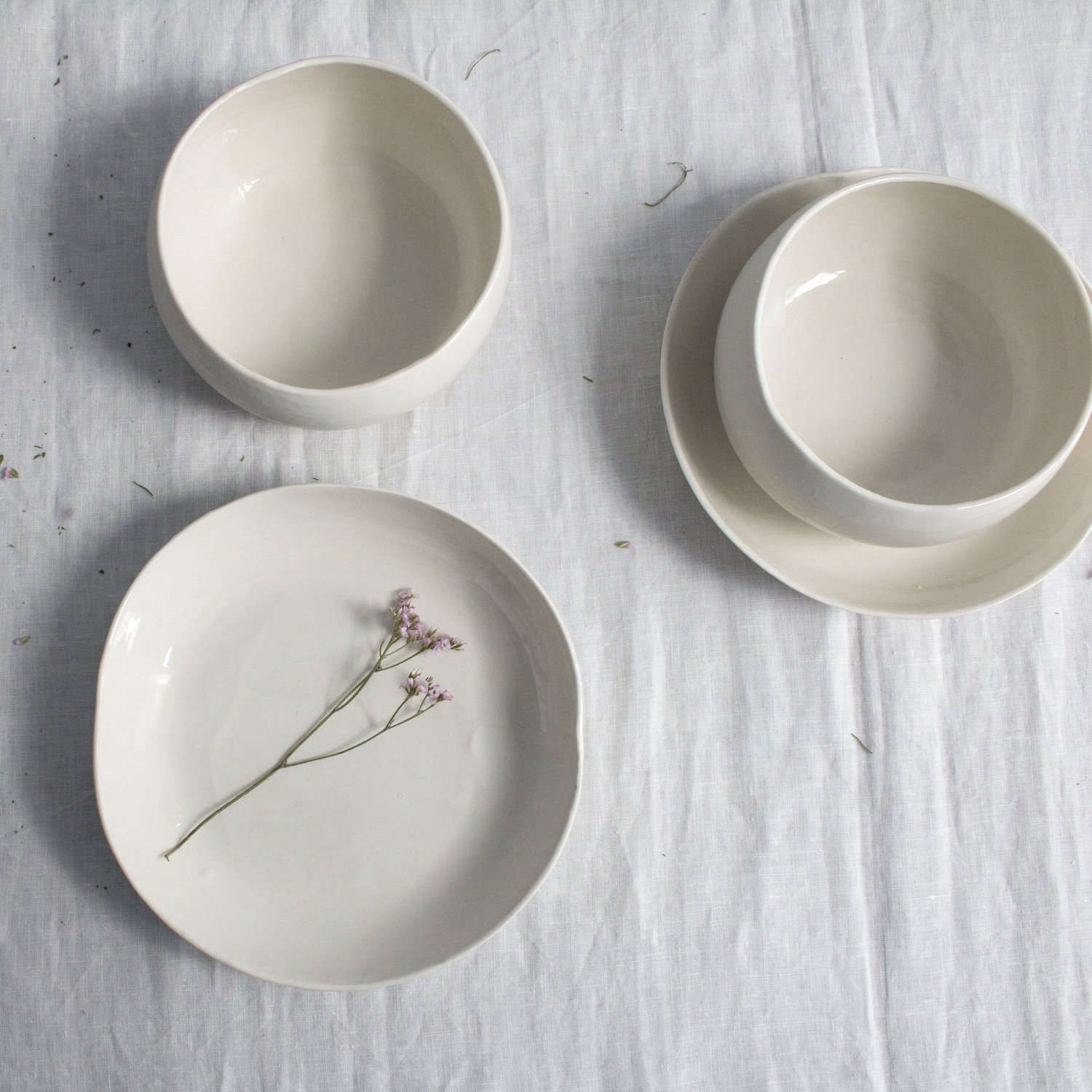
Some serving pieces enter the dining room like a marching band. They arrive covered in color, pattern, gold trim, and enough decorative confidence to compete with the food. The Soft White Demi-Dipped Small Serving Plate takes the opposite route. It is quiet, tactile, slightly imperfect, and interesting enough to make a handful of olives look as though they have hired a food stylist.
This handcrafted porcelain plate combines two finishes on one simple form. Part of the surface is covered in a glossy oxidized glaze, while the remaining portion preserves a more natural, kiln-finished texture. The original product description also identifies an organic shape inspired by an oval balloon and notes that the piece was handcrafted in Cascais, Portugal.
That contrast is the entire point. Rather than relying on painted decoration, the plate uses light, touch, shape, and surface variation to create personality. It is useful tableware, but it also behaves like a small piece of ceramic artwithout demanding its own velvet rope.
A Small Plate With a Split Personality
The phrase demi-dipped describes a plate that has been only partially dipped into glaze. In this case, the treatment creates a deliberate divide between a reflective glazed section and a quieter, more tactile area. The boundary may look crisp in one place and slightly irregular in another, depending on how the glaze moved and settled during application and firing.
Dipping is a familiar ceramic technique because it can cover a surface efficiently while still preserving evidence of the maker’s process. Ceramic artists use appropriately shaped containers, timing, positioning, and gravity to control how much glaze reaches the clay. Even so, the kiln always gets a vote. Small variations in glaze depth, edge definition, shine, and color intensity are normal parts of handmade production.
On the Soft White Demi-Dipped Small Serving Plate, those variations make each piece feel individual. One plate may have a slightly broader glossy area. Another may reveal a softer transition line or a more pronounced organic curve. Anyone who expects machine-perfect clones may find this alarming. Anyone who likes evidence that a human being was involved will probably call it character.
Why the Soft White Color Works So Well
White dinnerware remains popular for a practical reason: it gives food room to speak. Tomatoes appear brighter, herbs look greener, pastries seem more golden, and dark chocolate becomes almost suspiciously dramatic. Soft white is especially useful because it avoids the clinical appearance of a brilliant blue-white surface.
The warmer tone also pairs comfortably with natural table materials. Set the plate on linen, oak, walnut, marble, terrazzo, slate, or a woven placemat, and it settles into the scene rather than fighting for attention. That makes it easy to combine with existing dishes, even when the rest of the collection comes from several brands, three relatives, and one mysterious thrift store.
The two finishes prevent the neutral palette from becoming dull. Light bounces off the glazed half, while the less reflective section adds visual depth. Under candles or warm pendant lighting, the difference becomes more noticeable. In daylight, it looks clean and architectural. In dim evening light, it becomes softer and more atmospheric.
Why an Organic Shape Matters
The plate’s form is not rigidly geometric. Its gently irregular outline introduces movement and gives the object a handmade presence. The archived description explains that the collection’s curves were formed from the smooth shape of an oval balloon, creating natural variations in shape and color intensity.
Organic serveware can make a table feel less formal without making it look careless. A perfectly round plate communicates order. An intentionally asymmetrical plate communicates ease. It says, “Dinner is ready,” not, “Please remain seated while the silverware alignment is inspected.”
The shape also works well when several pieces share a table. Different curves can overlap visually without creating a stiff grid. Place the small serving plate beside a round bowl, a rectangular wooden board, and a folded napkin, and the collection immediately feels layered rather than matched by committee.
What Can You Serve on a Small Porcelain Plate?
The word small may sound limiting, but compact serveware is often more useful than an enormous platter. Large platters are excellent for roasts, whole fish, and the annual watermelon situation. They are less convenient when you need a landing place for six cookies or a respectable amount of feta.
Small serving pieces are particularly useful for snacks, dips, fruit, vegetables, cheese cubes, sauces, and buffet-style foods. Their compact footprint makes them easier to position on crowded tables and kitchen counters.
Appetizers and Cocktail Snacks
Use the plate for marinated olives, toasted almonds, stuffed dates, crostini, sliced cured meat, cheese, crackers, or roasted peppers. Its soft white background lets colorful ingredients supply the decoration. A small pile of green olives with lemon peel and rosemary is enough to create a polished appetizerno tweezers or culinary degree required.
Breakfast and Afternoon Treats
The plate is a natural home for croissants, sliced banana bread, scones, toast, muffins, or a pair of pastries. It also works as a shared plate for butter, jam, and honey when breakfast deserves more ceremony than eating over the sink.
Desserts
Cookies, truffles, macarons, chocolate bark, miniature tarts, and sliced fruit all benefit from the uncluttered presentation. Because the plate has texture as well as color contrast, even pale desserts such as shortbread or coconut macaroons remain visually distinct.
Condiments and Finishing Ingredients
At dinner, use it for lemon wedges, grated cheese, fresh herbs, flaky salt, sliced chiles, or warm bread. A small plate placed in the center of the table encourages guests to help themselves without passing a giant bowl over three glasses and somebody’s sleeve.
The Difference Between Serveware and Tabletop Sculpture
Functional ceramics occupy an interesting middle ground. They are designed to hold food, but their surfaces, proportions, and weight also affect the mood of a meal. The Smithsonian American Art Museum has described dining as a multisensory interaction in which shared vessels can shape attention, relationships, and the experience of gathering.
The Soft White Demi-Dipped Small Serving Plate demonstrates that idea on a modest scale. Picking it up reveals a change in texture. Rotating it changes the way the glossy section catches light. Placing food across the glaze boundary creates a composition that looks different from every angle.
None of this makes the plate difficult to use. It simply makes using it more noticeable. That is one of the pleasures of handmade tableware: an ordinary snack becomes a small ritual rather than a pit stop between emails.
How It Compares With Other Serving Plates
Versus Standard White Porcelain
Conventional white porcelain is predictable, uniform, and easy to coordinate. The demi-dipped plate offers the same neutral versatility but adds surface contrast and handmade variation. It is more expressive, although it may not stack or align as precisely as factory-made dinnerware.
Versus Rustic Stoneware
Rustic stoneware often has a heavier body, darker clay, speckles, or thick reactive glaze. The Soft White Demi-Dipped Small Serving Plate feels lighter visually. It can suit farmhouse interiors, but it also looks at home in minimalist, coastal, Scandinavian, Japanese-inspired, and contemporary rooms.
Versus Patterned Serveware
Patterned plates can create immediate energy, but they may compete with detailed foods or clash with other dishes. The demi-dipped design provides interest without introducing another color palette. It is therefore easier to use throughout the year instead of spending eleven months in a cabinet waiting for a themed holiday.
How to Style the Plate
For a relaxed Mediterranean table, pair the plate with linen napkins, clear glassware, olive wood utensils, citrus, and small bowls of oil or sea salt. Add blue or terracotta accents for warmth.
For a contemporary setting, combine it with matte black flatware, pale wood, smoky glass, and simple taper candles. Keep the arrangement spacious so the contrast between glossy glaze and natural texture remains visible.
For an earthy, collected look, mix it with speckled ceramics, vintage silver, woven trivets, and hand-thrown cups. Matching every piece is unnecessary. Repeating one or two elementssuch as soft white, curved shapes, or natural materialswill keep the table coherent.
The plate also photographs well because it provides a neutral background without appearing completely flat. Position the glaze boundary diagonally through the frame, place food slightly off-center, and allow a few crumbs or herb leaves to remain. Perfection is optional; appetite is not.
Care and Maintenance
The archived maker description identifies the plate as dishwasher safe. Even so, gentle hand-washing can help preserve the contrast between glossy and natural-feeling surfaces, especially when the plate is used frequently.
Use mild dish soap, warm water, and a soft sponge. Avoid steel wool, harsh scouring pads, and aggressive abrasive cleaners. Glazed ceramic surfaces can gradually lose their luster when repeatedly scratched, while less-glazed or unglazed areas may respond differently to moisture and staining.
Do not assume that dishwasher-safe also means oven-safe, broiler-safe, freezer-safe, or microwave-safe. Those are separate performance claims and should be verified through the manufacturer. General ceramic guides likewise recommend checking the maker’s instructions before exposing any stoneware or porcelain piece to direct heat or abrupt temperature changes.
Store the plate with a felt separator, soft cloth, or paper towel between stacked pieces if its organic edges touch neighboring dishes. It is not precious enough to require museum gloves, but dropping it into a crowded cabinet like a poker chip is an ambitious durability test.
Confirm That Handmade Ceramics Are Food-Safe
When buying any decorative or imported ceramic serving piece, confirm that it is specifically intended for food use. The FDA requires warning labels on ornamental ceramicware containing lead and advises consumers not to use pottery marked as decorative or “not for food use” for cooking, serving, or storing food.
This consideration is not unique to Portuguese ceramics or to demi-dipped designs. It is a sensible rule for vintage pottery, flea-market discoveries, decorative souvenirs, and handmade pieces from unknown sources.
Who Will Appreciate This Plate Most?
The Soft White Demi-Dipped Small Serving Plate is especially appealing to people who value subtle design. It suits home cooks who enjoy plating small dishes, apartment dwellers who need versatile pieces, hosts who prefer relaxed gatherings, and collectors who want functional ceramics rather than objects that spend their lives gathering dust.
It is also a thoughtful gift for a housewarming, wedding, birthday, or host. Unlike a highly specific kitchen gadget, a small serving plate does not demand cupboard renovations or a 40-page instruction manual. It can be used immediately for snacks, desserts, keys, or the emergency cookie someone wisely saved for later.
Buyers who demand identical shapes, perfectly even glaze lines, or complete sets may prefer mass-produced porcelain. Handmade variation is central to this plate’s appeal, not a manufacturing error waiting for a sternly worded email.
Experience Notes: Living With a Demi-Dipped Serving Plate
The most useful way to understand this plate is not to imagine it alone on a white showroom shelf. Picture it moving through ordinary meals, small celebrations, rushed mornings, and evenings when dinner is mostly cheese but everyone has agreed to call it a tasting menu.
Experience 1: The Quiet Breakfast Upgrade
At breakfast, the plate can hold two croissants, several slices of toast, or a small collection of fruit. The food does not need elaborate arranging. Place the pastries where the glossy and natural finishes meet, and the surface change creates enough visual structure on its own. The experience feels more intentional than serving directly from a paper bag, yet it adds almost no work. That balance is important. Good tableware should improve breakfast without turning it into an unpaid internship at a boutique hotel.
Experience 2: The Five-Minute Cocktail Hour
When guests arrive unexpectedly, a compact serving plate becomes surprisingly valuable. Add olives, almonds, cheese, or crackers, then place it beside drinks. The organic shape makes a casual handful of food look arranged rather than abandoned. Because the color is neutral, there is no need to coordinate the snack with the plate. Green olives, orange apricots, red grapes, and pale cheeses all look comfortable against soft white porcelain. The host appears prepared, even if the preparation involved opening two packages while whispering, “Please look expensive.”
Experience 3: A More Flexible Dinner Table
During dinner, the plate works best as supporting serveware rather than the main platter. It can carry lemon wedges for fish, bread beside soup, sliced herbs for pasta, or extra toppings for tacos. Its small footprint allows it to fit between dinner plates and glasses without forcing a complete table redesign. Guests can reach it easily, and leftovers are less likely to look stranded on an oversized dish. The plate makes shared ingredients feel generous while keeping portions realistic.
Experience 4: Texture Becomes Part of the Ritual
The tactile contrast is most noticeable during handling and washing. Fingers move from a smooth, light-reflective surface to a quieter area that feels closer to fired clay. That shift reminds the user that the object passed through several stages of making rather than emerging fully formed from an anonymous machine. Over time, the irregular outline and glaze boundary become familiar landmarks. This is how functional ceramics develop emotional value: not through grand symbolism, but through hundreds of small interactions involving toast, fruit, soap, and the occasional runaway blueberry.
Experience 5: The Plate That Does Not Need a Special Occasion
Perhaps the most satisfying experience is realizing that the plate does not need to be reserved for guests. It can hold an afternoon cookie, sliced apples, a sandwich, or a late-night piece of cake. Frequent use allows its design to earn its place in the cabinet. A serving piece that appears only twice a year is décor with a part-time job. A plate that moves from breakfast to cocktails to dessert becomes part of the household’s rhythm.
The Soft White Demi-Dipped Small Serving Plate therefore succeeds not because it performs an exotic function, but because it makes familiar functions more enjoyable. It introduces craft without fuss, personality without loud decoration, and beauty without requiring the food to behave formally.
Conclusion
The Soft White Demi-Dipped Small Serving Plate is a study in useful contrast. Its glossy and natural-feeling surfaces bring depth to a restrained white palette, while its organic shape gives snacks, appetizers, pastries, condiments, and desserts a relaxed presentation.
Its appeal lies in versatility. It can join modern dinnerware, rustic pottery, vintage pieces, or minimalist table settings without looking misplaced. Handmade variations make each plate distinctive, and the compact format encourages regular use rather than ceremonial storage.
For anyone who believes everyday objects should feel good, work hard, and possess at least a little personality, this demi-dipped porcelain plate offers an elegant answer. It will not cook dinner, refill the glasses, or persuade guests to leave at a reasonable hour. It will, however, make the olives look excellent.
Note: Because product listings and availability can change, confirm current dimensions, inventory, food-safety certification, and approved appliance use with the seller before purchasing.

