
Body Care
“RIP Iceman”: Legendary Hollywood Actor Val Kilmer Passes Away at 65
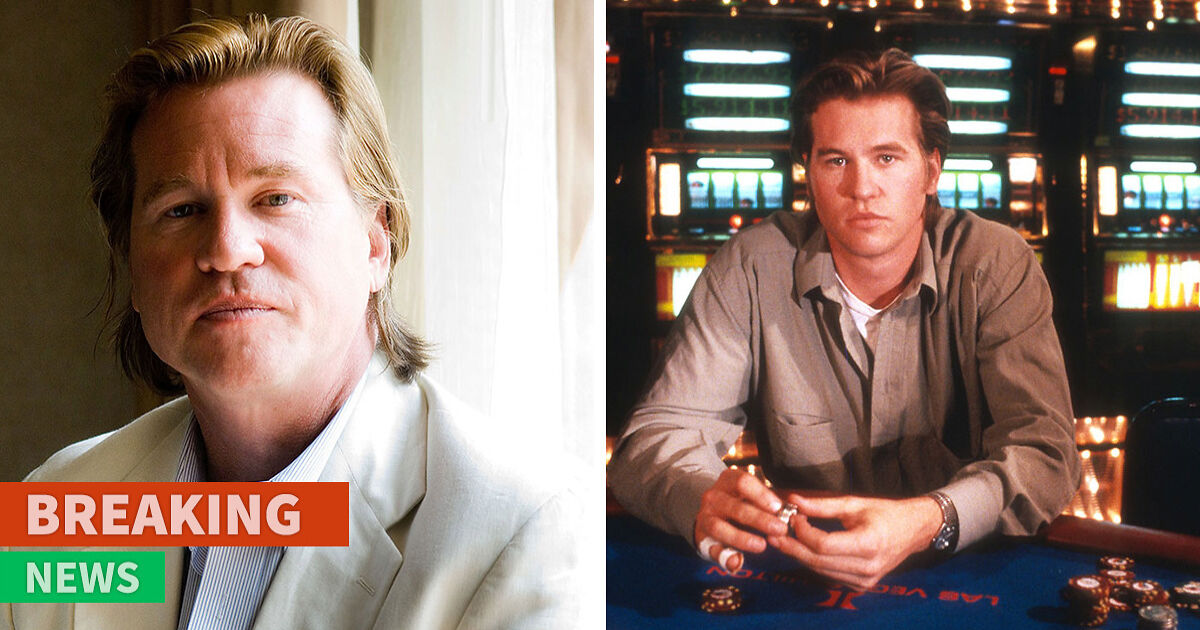
Aug
Val Ked fighter-pilot arrogance, rock-star danger, Western wit, and comic-book cool into unforgettable movie moments, died in Los Angeles on April 1, 2025. He was 65. His daughter, Mercedes Kilmer, said the cause was pneumonia. The news closed a remarkable Hollywood story, but it did not dim the screen presence that made “Iceman” feel permanently frozen into popular culture.
Val Kilmer’s Death and the Health Battle Behind His Final Years
Kilmer died surrounded by family and friends after years of serious health challenges. He had been diagnosed with throat cancer in 2014 and underwent treatment that included chemotherapy, radiation, and two tracheotomies. Although he later said he was cancer-free, the procedures profoundly changed his speaking voice and altered daily life for an actor once celebrated for remarkable vocal transformations.
Pneumonia was reported as the immediate cause of death. His death certificate later identified additional respiratory conditions and squamous cell carcinoma of the base of the tongue. Those details provide a fuller medical record without inviting speculation about exactly how each condition interacted. Kilmer’s final years were not simply an illness narrative; they were also years of writing, visual art, documentary work, family collaboration, and one last major screen appearance.
For fans, the loss carried unusual emotional weight. Audiences had already encountered Kilmer’s changing health through his memoir, the documentary Val, and his moving return in Top Gun: Maverick. They watched a performer adapt when his natural voice was no longer fully available. It was not a conventional comeback with a miraculous reset button. It was something more honest: an artist discovering new ways to communicate.
From Juilliard Student to Hollywood’s Most Interesting Leading Man
Born Val Edward Kilmer in Los Angeles on December 31, 1959, he pursued acting with unusual seriousness from a young age. Kilmer entered Juilliard’s drama program at 17 and developed his craft onstage before becoming a movie star. Early in his career, he appeared on Broadway in The Slab Boys alongside Kevin Bacon and Sean Penn. That classical foundation remained visible even when he was wearing aviator sunglasses, a cape, or enough leather to alarm a fire marshal.
Comedy Came First
His feature breakthrough arrived with the 1984 spy spoof Top Secret!, where he played American rock singer Nick Rivers. The film showed that Kilmer was not merely handsome; he had excellent timing and understood how to play absurdity with a perfectly straight face. He followed it with Real Genius in 1985, another comedy that gave him room to be playful, charming, and slightly unhinged.
Those early performances matter because Kilmer’s later intensity sometimes overshadowed his comic talent. He could look like a marble statue contemplating destiny, then deliver a joke with the relaxed precision of someone tossing a paper airplane into a wastebasket from across the room.
Iceman in Top Gun: The Role That Never Melted Away
In 1986, Kilmer became a global star as Lt. Tom “Iceman” Kazansky in Top Gun. Opposite Tom Cruise’s impulsive Pete “Maverick” Mitchell, Iceman was disciplined, controlled, and irritatingly correct. The character was positioned as a rival, but Kilmer gave him enough authority and charisma to avoid becoming a cardboard villain.
Ironically, Kilmer later revealed that he initially did not want the role. He was not excited by the project and had to be persuaded to join. Hollywood history is full of near misses, but this one is especially amusing: one of the most recognizable characters of the 1980s almost disappeared because the actor thought the movie was not interesting enough.
What made Iceman endure was restraint. Kilmer did not chase the audience’s affection. He let posture, stillness, and clipped confidence do the work. Even viewers rooting for Maverick understood that Iceman had a point: reckless flying is considerably less charming when everyone else must share the sky.
Jim Morrison, Doc Holliday, Batman, and a Career Built on Transformation
Becoming Jim Morrison in The Doors
Kilmer’s performance as Jim Morrison in Oliver Stone’s 1991 film The Doors demonstrated his appetite for total transformation. He studied Morrison’s movements, voice, and stage behavior with intense commitment. The performance established Kilmer as more than a movie idol; he was an actor willing to vanish into a role, even when the role arrived wearing leather pants and carrying enough existential dread for an entire poetry department.
Doc Holliday in Tombstone
For many admirers, Kilmer’s defining performance came as Doc Holliday in the 1993 Western Tombstone. Pale, sickly, elegant, and lethal, his Holliday could turn a polite phrase into a warning. The famous “I’m your huckleberry” line became inseparable from Kilmer’s delivery, but the performance was larger than one quotation. He balanced humor, loyalty, physical decline, and danger without letting any single element swallow the character.
The role still attracts new fans because it feels both theatrical and intimate. Kilmer’s Holliday seems to know death is nearby, so he treats every conversation as a final opportunity to be clever. It is a performance that can make a mustache feel Oscar-worthy.
Batman and the Blockbuster Peak
Kilmer stepped into the Batsuit for 1995’s Batman Forever, following Michael Keaton as Bruce Wayne. Kilmer brought a haunted quality to Bruce, although he later described the restrictive costume as isolating and difficult to perform in. The role made him one of Hollywood’s most visible stars, but he played Batman only once.
That same year, he appeared in Michael Mann’s Heat as Chris Shiherlis, a member of Robert De Niro’s robbery crew. In a cast that also included Al Pacino and Tom Sizemore, Kilmer still created a distinct presence. His work was quieter than his turns as Morrison or Holliday, proving that he could communicate panic, calculation, and loyalty without theatrical fireworks.
A Complicated Reputationand Why the Work Survived It
Kilmer’s career cannot be honestly summarized without addressing his reputation for being difficult on sets. Several directors criticized his behavior, particularly during the 1990s. Kilmer later acknowledged that his intensity, perfectionism, and determination to challenge creative decisions could alienate people. The documentary Val includes candid reflection on both bravery and poor behavior.
Other collaborators defended him as a deeply committed actor who asked difficult questions because he cared about the work. That tension is central to his legacy. Kilmer was not a polished corporate product moving obediently from trailer to mark. He could be demanding, eccentric, generous, funny, frustrating, and inspiredoccasionally before lunch.
The fairest assessment neither excuses bad conduct nor flattens him into a cautionary tale. Complicated artists can produce extraordinary work while remaining accountable for their behavior. Kilmer’s filmography endures because the performances stand on their own, not because every chapter of his professional life was comfortable.
Illness, Silence, and the Courage to Be Seen
Kilmer initially kept his cancer diagnosis private and publicly disputed reports about his condition before later discussing it. Treatment damaged his natural speaking voice. For an actor known for vocal transformationfrom Morrison’s baritone to Holliday’s aristocratic drawlthe change was especially profound.
Instead of disappearing, he found other ways to tell his story. His 2020 memoir, I’m Your Huckleberry, mixed career memories, spiritual reflection, romance, regret, and humor. The 2021 documentary Val, assembled from decades of personal video footage, offered an intimate view of his life, with his son Jack narrating much of the film from his father’s words.
The documentary was not a glossy victory lap. It showed physical vulnerability, family relationships, artistic ambition, and the strange cost of being famous for versions of yourself that remain forever young onscreen. Kilmer had recorded his life long before everyone carried a camera in a pocket. That archive became one of his most meaningful creative acts.
The Emotional Return of Iceman in Top Gun: Maverick
Kilmer’s appearance in 2022’s Top Gun: Maverick became the emotional center of the film. His Iceman, now an admiral, communicates largely through typed words before speaking briefly with Maverick. The scene incorporated Kilmer’s real-life condition without turning it into spectacle, allowing two fictional rivalsand two actors with decades of shared historyto meet again with tenderness.
Director Joseph Kosinski described the moment as authentic, and Cruise repeatedly expressed admiration for Kilmer’s work. After Kilmer’s death, Cruise honored him at CinemaCon with a moment of silence and thanked him for what he had given audiences through his performances.
The reunion works because it avoids a noisy nostalgia parade. There is no attempt to pretend time did not pass. The scene accepts age, illness, friendship, and mortality. Kilmer’s stillness becomes the performance. Iceman, once defined by cool control, returns with something warmer: grace.
Hollywood Tributes to Val Kilmer
After news of Val Kilmer’s death, actors, directors, and friends emphasized his range and originality. Ron Howard celebrated the versatility he brought to Willow and other projects. Jim Carrey remembered his Batman Forever costar. Josh Brolin described Kilmer as smart, challenging, brave, and full of fire. Cher offered an affectionate remembrance, while Saturday Night Live, which Kilmer hosted in 2000, displayed his image in tribute.
The range of those reactions mirrored the range of his career. Kilmer worked in broad comedy, fantasy, Westerns, crime dramas, superhero films, thrillers, animation, theater, poetry, painting, and documentary. He was too restless for a tidy brand. In an industry that loves putting performers into labeled boxes, Kilmer kept showing up with a box cutter.
The Experience of Revisiting Val Kilmer’s Movies After His Death
Rewatching a Val Kilmer film after his death changes the temperature of the experience. Iceman’s grin in Top Gun no longer feels merely smug; it becomes the first chapter in a story that audiences now know reached a tender conclusion decades later. The reunion in Top Gun: Maverick feels less like a cameo and more like a farewell written in advance.
A rewarding way to revisit Kilmer’s work is not chronologically but emotionally. Start with Top Secret! or Real Genius to remember how funny and physically loose he could be. Then watch The Doors for transformation, followed by Tombstone, where nearly every pause and sideways glance feels sharpened. Move to Heat for control and precision, then Kiss Kiss Bang Bang for proof that his comic timing never left.
The experience reveals how often Kilmer played men hiding fragility behind performance. Iceman hides concern behind discipline. Morrison hides fear behind spectacle. Doc Holliday hides dying lungs behind jokes. Bruce Wayne hides grief behind wealth, armor, and an aggressively complicated car. Even when the movies vary wildly in quality, Kilmer’s characters often suggest that identity is something assembled for survival.
That theme makes Val essential viewing. The documentary removes much of the protective machinery. Instead of a star arriving with perfect lighting and a polished anecdote, viewers meet a man looking back at his footage, choices, family, body, and voice. It is funny, uncomfortable, and deeply human. The film reminds audiences that an actor’s face may remain unchanged onscreen while the person carrying it continues to age and reconsider everything.
Fans may also feel gratitude. Kilmer’s career contains the kind of performances people quote at parties, imitate badly in mirrors, and rediscover during late-night streaming sessions. Popular movies become informal family heirlooms: a parent shows a teenager Top Gun; a friend insists another friend finally watch Tombstone; someone discovers Real Genius and wonders why nobody warned them that Iceman was hilarious.
There is a lesson in the way Kilmer adapted after losing much of his voice. He did not receive a neat Hollywood ending in which every obstacle vanished. He worked within changed circumstances, using writing, archived video, family collaboration, voice technology, and a carefully designed final performance. Creativity, in his case, was not the denial of limitation. It was the decision to keep communicating through it.
That may be the most lasting experience of returning to his work: the realization that Kilmer’s career was never only about coolness. Beneath the aviators, leather, capes, guns, and one-liners was an actor determined to transform, experiment, and be understood. He did not always make that easy. Easy, however, was never his most interesting setting.
Why Val Kilmer’s Legacy Will Last
Val Kilmer leaves behind more than a collection of famous roles. His career traveled through comedy, blockbuster fame, extraordinary character work, professional conflict, illness, reinvention, and an unexpectedly moving final chapter.
He was Iceman, but he was never emotionally cold as an actor. His best performances burned with curiosity. Whether playing a doomed gunslinger, a rock icon, a criminal, a superhero, or a rival pilot who became a loyal friend, Kilmer made familiar archetypes feel slightly dangerous and newly alive.
“RIP Iceman” is an understandable farewell, but it captures only one altitude of his career. Val Kilmer was also Madmartigan, Jim Morrison, Doc Holliday, Batman, Chris Shiherlis, Perry van Shrike, and dozens of stranger creations. More importantly, he was an artist who kept reaching for expression even when speaking became difficult. The voice changed. The presence did not.

