
Hair Care
Rats Get Even Better At Playing DOOM
Jun
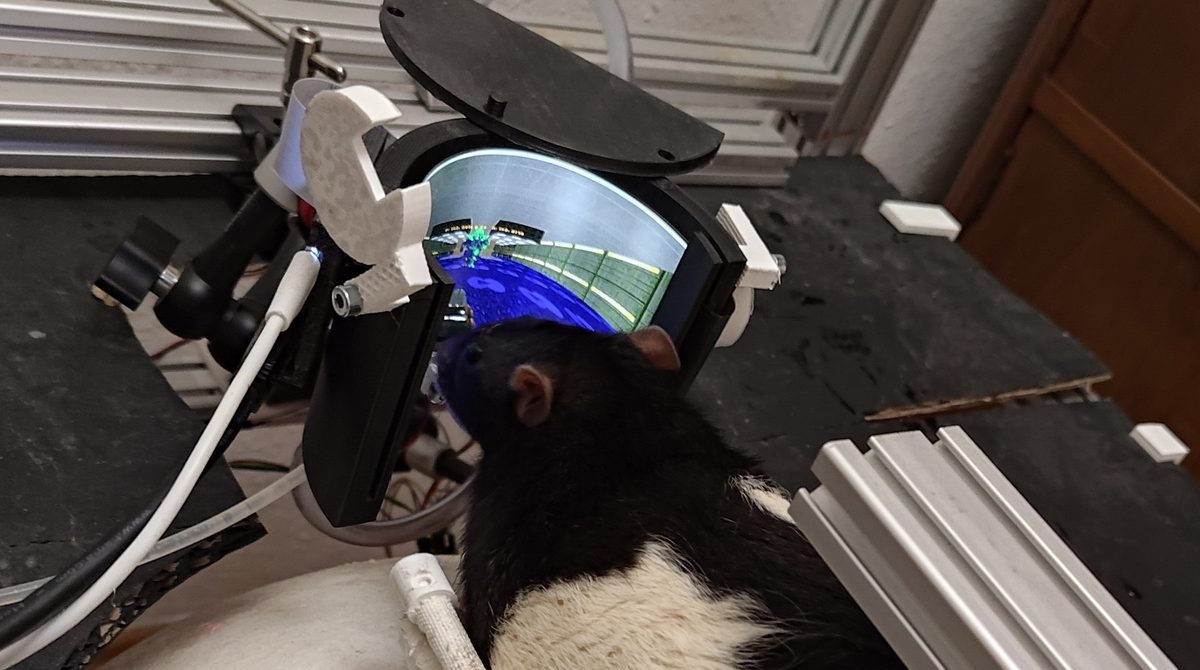
Somewhere between serious neuroscience and “the internet has finally achieved its true purpose,” rats are getting better at playing DOOM. Yes, that DOOM: the legendary first-person shooter that has run on calculators, pregnancy tests, ATMs, printers, smartwatches, and probably one day a toaster that judges your aim. The latest twist is not simply that rats can move through a DOOM-like environment. The newer setup lets them navigate, receive feedback, and even activate a physical trigger that maps to in-game shooting. In other words, the rodents have upgraded from “confused treadmill interns” to “tiny experimental gamers with snack-based motivation.”
Behind the joke is a surprisingly thoughtful project. The rat DOOM experiment is not about proving that rodents understand level design, enemy placement, or the cultural importance of id Software. It is about building a low-cost, open-source, repeatable virtual reality system for studying learning, movement, perception, and reward-based behavior in animals. That sounds less meme-worthy than “rats play DOOM,” but it is the reason this story matters beyond the obvious comedy of imagining a rat rage-quitting after bumping into a virtual wall.
What Actually Happened?
The project grew from earlier work by neuroengineer Viktor Tóth, who built a custom virtual reality setup that allowed rats to move through a simplified DOOM II corridor. The first version used a clever but limited approach: a rat stood on a freely rotating ball, its movement was tracked by sensors, and that motion translated into movement inside the game environment. When the rat performed the desired behavior, it received a small sweetened-water reward. Simple? Not exactly. Charming? Absolutely.
The new version, often described as Rat VR 2.0, takes the idea much further. Instead of a basic screen and minimal inputs, the updated system includes a motion-tracked treadmill ball, a panoramic visual display, an input trigger, a reward circuit, and open-source documentation. The project’s hardware and software are designed so others can study, replicate, improve, or adapt the system for behavioral experiments. It is less “mad scientist basement” and more “open-source neuroengineering, but with whiskers.”
How the Rat VR Setup Works
A Ball Becomes the Controller
The core of the setup is a spherical treadmill. The rat stands on top of a ball that can rotate as the animal moves. Sensors track the ball’s motion and translate it into in-game movement. If the rat walks forward, the character moves forward. If the rat turns, the virtual movement changes direction. It is basically a giant trackball mouse, except the mouse is being operated by an actual rat, which is either poetic or deeply confusing.
A Panoramic Display Creates the World
One of the biggest upgrades is the visual system. The newer rig uses a wraparound display that gives the animal a more consistent field of view. The goal is not to create a Hollywood-style VR headset for rodents, but to give them enough visual context to associate their physical movement with changes in a virtual environment. For a rat, that connection is the whole game: move, see the scene change, learn what action leads to reward.
Air Puffs Add Gentle Feedback
The system also uses targeted air puffs as non-invasive feedback when the rat collides with virtual walls. This is important because a screen alone may not clearly communicate “you just walked into something.” The air puff gives an immediate physical cue. No drama, no tiny helmet bonk, no stern lecture from a lab assistant. Just a little sensory message: wrong way, whiskered warrior.
The Trigger Makes It More Like a Game
The most attention-grabbing improvement is the physical trigger. The rats can interact with a paw-operated mechanism that maps to the fire input in DOOM. The trigger uses mechanical components and sensors to detect the action, turning a real movement into a virtual command. This matters because earlier versions mostly demonstrated navigation. The new version adds another layer of behavior: the animal can perform more than one type of meaningful action inside the virtual world.
Are the Rats Really “Playing” DOOM?
This is where the headline needs a small lab coat and a raised eyebrow. Are the rats playing DOOM the way a human player does? No. They are not planning routes, admiring 1990s level design, complaining about ammo balance, or debating whether the shotgun is the greatest video game weapon of all time. Their behavior is based on training, sensory feedback, motor action, and reward.
But that does not make the experiment fake. In a practical sense, the rats are learning that their movements produce changes in a virtual environment and that certain actions lead to rewards. That is a real behavioral achievement. The question is not whether a rat can become a competitive FPS player. The question is whether a non-human animal can learn to control a digital environment through physical actions, and whether that system can be useful for studying cognition and motor learning.
So the honest answer is: rats are not “gaming” in the human sense, but they are interacting with a game-like environment in a measurable way. That distinction is important. It keeps the science grounded while still allowing the rest of us to enjoy the phrase “rat DOOM training” with the respect it deserves.
Why Use DOOM in the First Place?
DOOM is famous for running on nearly everything, but its usefulness here is more than a meme. The game engine is lightweight, well understood, highly modifiable, and easy to simplify into controlled environments. Researchers do not need the full chaos of the original game. They can create corridors, goals, rewards, barriers, and repeatable test scenarios.
For behavioral science, that is valuable. A virtual world lets researchers control variables more precisely than a physical maze. Walls can move. Rewards can change. Visual cues can be adjusted. The same task can be repeated many times with tiny variations. A digital test environment gives scientists a flexible playground for studying how animals learn, adapt, and respond to feedback.
Also, let’s be honest: if you are building a virtual training world and one option is “generic gray maze” while the other is “classic DOOM,” the internet has already voted.
Why This Is More Than a Weird Internet Story
The rat DOOM project sits at the intersection of animal cognition, virtual reality, neuroscience, open-source hardware, and robotics. It looks funny because the surface image is funny: a rat on a ball in front of a screen, training like it has an esports scholarship. But the underlying questions are serious.
How do animals connect movement to abstract visual feedback? How quickly can they learn new motor tasks? Can a virtual environment become a standardized way to test behavior? Can researchers build less expensive rigs so smaller labs can run experiments without needing elite equipment? Those are meaningful questions, and the project’s open-source approach makes them more accessible.
Rodent VR systems have existed in neuroscience for years, often using spherical treadmills, visual displays, and reward mechanisms to study navigation, memory, and decision-making. The DOOM setup adds a recognizable game engine and a hacker-friendly spirit. Instead of hiding behind expensive proprietary tools, it invites replication and modification. That is a big deal for a field where cost and complexity can limit experimentation.
Rats Are Smarter Than Their Reputation
Rats have long been unfairly typecast as sewer villains with tails. In reality, they are highly adaptable, social, curious animals capable of learning complex tasks. Researchers have trained rats to drive tiny cars, navigate mazes, make decisions based on sensory cues, and respond to changing reward conditions. Some studies even explore social behaviors that suggest rats can respond to the distress or needs of other rats.
That does not mean rats are secretly tiny philosophers wearing invisible cardigans. It means their brains are flexible enough to connect actions, consequences, spaces, rewards, and social information. This is exactly why rats remain important in behavioral neuroscience. They are complex enough to teach us something, but practical enough for controlled study.
The DOOM project works because rats are not passive little machines. They investigate. They adapt. They learn routines. They notice rewards. Give them a consistent environment and a reason to engage, and they can surprise you. Sometimes that surprise looks like a rat operating a tiny car. Sometimes it looks like a rat navigating a virtual corridor. And sometimes, apparently, it looks like a rat pulling a trigger in DOOM while the internet collectively whispers, “We may have gone too far, but please continue.”
The Ethics Question: Is This Good for the Rats?
Any animal experiment should raise welfare questions. A funny headline should not distract from that. The best version of this kind of work is careful, reward-based, non-invasive, and designed to minimize stress. The newer rat DOOM setup relies on external sensors, motion tracking, visual feedback, and rewards rather than invasive brain implants. The project also emphasizes open documentation, which allows other researchers and observers to evaluate the design more clearly.
Still, “non-invasive” does not automatically mean “no concerns.” Animals must be handled appropriately, trained gradually, monitored for stress, and given humane living conditions. The point of a system like this should not be entertainment at the animal’s expense. It should be structured research that improves how scientists study behavior while respecting the animal subjects involved.
That balance matters. The internet may see a rat gamer. Researchers should see a living animal participating in a controlled learning task. Both perspectives can exist, but the second one has to lead.
What This Could Teach Us About Learning
The most interesting part of the experiment may be how it breaks learning into layers. First, the rat must become comfortable with the apparatus. Then it must learn that walking on the ball changes the visual scene. Then it must connect certain movements with progress. Then it must associate an action, such as using a trigger, with a useful outcome. Finally, it must repeat those behaviors reliably enough for data collection.
That sequence is a miniature model of skill acquisition. Humans do something similar when learning to drive, play an instrument, use a new game controller, or operate a machine. At first, every motion feels separate and awkward. Later, the actions become linked into smoother patterns. The rat does not need to understand DOOM as a game to show how an animal learns action-outcome relationships in a virtual space.
For neuroscience and robotics, that is valuable. If researchers can map how physical movement becomes virtual control, they may gain insight into motor learning, adaptive behavior, and future human-machine interfaces. The path from rat DOOM to practical technology is not a straight hallway with a glowing exit sign, but the ideas overlap with brain-computer interfaces, prosthetics, rehabilitation tools, and embodied AI research.
Why the Internet Loves It
Part of the appeal is obvious: the phrase “rats playing DOOM” sounds like a fake headline generated during a power outage at a meme factory. It has everything: a classic game, a clever engineering hack, animals doing human-coded behavior, and just enough scientific seriousness to make people read beyond the joke.
But the story also taps into a larger cultural pattern. People love seeing old technology repurposed in absurdly creative ways. DOOM has become the unofficial benchmark for “can this thing run software?” If it has a screen, a chip, or a questionable power supply, someone will try to run DOOM on it. Rats playing the game are a strange extension of that tradition. Instead of asking whether the hardware can run DOOM, the project asks whether a living animal can control it.
That is why the story travels so well. It is funny at first glance and genuinely interesting at second glance. The third glance is when you realize someone had to design the ball, track the motion, build the reward system, tune the training process, document the code, and somehow explain to another adult, “The rat needs better immersion.”
Experiences and Reflections: What Rats Playing DOOM Teaches Us
The most relatable part of the rat DOOM story is not the technology. It is the learning curve. Anyone who has tried to master a new skill has, in some small way, been the rat on the ball. You move, something confusing happens, you get feedback, you adjust, and eventually your brain begins connecting the pieces. The first time you use a game controller, drive a car, edit a video, code a website, or learn a new app, you are basically building your own internal reward system. The only difference is that humans usually receive coffee instead of sweetened water.
Watching this project develop is also a reminder that “silly” ideas can be useful. Many serious inventions begin as questions that sound ridiculous. Can we make a game run on a printer? Can a rat drive a tiny car? Can a rodent navigate a virtual world? Can a cheap open-source rig help researchers study learning? Curiosity often arrives wearing a clown nose. The trick is not to dismiss it too early.
For writers, educators, and science communicators, rat DOOM is a perfect example of how to make technical ideas memorable. If you start with “a modular behavioral neuroscience platform for rodent virtual navigation,” most readers suddenly remember they have laundry to fold. If you start with “rats are getting better at playing DOOM,” everyone leans forward. The humor opens the door; the science walks in afterward carrying a clipboard.
There is also a lesson about progress. The first version of the project was impressive but limited. It showed that rats could move through a simplified virtual corridor, but the interaction was not very game-like. The newer version adds better visuals, feedback, modular hardware, documentation, and a trigger. That is how real development often works: not one giant miracle, but a series of upgrades. Better sensors. Better training. Better design. Better questions.
Finally, the story encourages humility. Humans like to imagine a bright line between “our” world of technology and the animal world of instinct. Then a rat learns to operate a virtual environment for a reward, and suddenly the line looks a little blurrier. Rats are not tiny humans, and they are not playing for glory, leaderboards, or bragging rights. But they are learning. They are adapting. They are responding to a digital world built by humans and translated into signals their bodies can understand. That is fascinating, funny, and oddly beautiful.
Conclusion
“Rats Get Even Better At Playing DOOM” sounds like a punchline, but it is also a neat summary of a real engineering and neuroscience milestone. The updated rat VR system shows how open-source tools, classic game engines, reward-based learning, and careful hardware design can turn a viral oddity into a promising research platform. No, the rats are not ready for esports sponsorships. No, they do not understand the lore. And no, they probably will not ask for RGB lighting in their enclosure.
But they can learn to connect movement, feedback, and reward inside a virtual environment. That is enough to make the project scientifically interesting and culturally irresistible. In the grand history of DOOM running on everything, rats may be one of the strangest “controllers” yet. And somehow, that makes perfect sense.

