
Beauty Tools & Accessories
Q&A With Judd Apatow
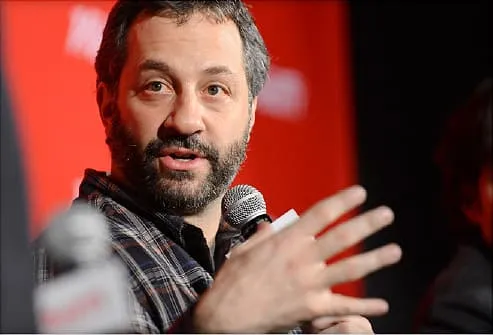
Jul
Note: This article is written as an original, SEO-friendly Q&A-style feature based on real public information about Judd Apatow’s career, creative habits, comedy philosophy, films, television work, documentaries, books, and influence on modern American comedy.
Introduction: Why Judd Apatow Still Matters in Comedy
Ask a room full of comedy fans about Judd Apatow and you may accidentally start a friendly debate that lasts longer than some extended director’s cuts. To some viewers, he is the filmmaker who helped define 2000s comedy with The 40-Year-Old Virgin, Knocked Up, Funny People, and This Is 40. To others, he is the producer who helped launch or amplify a small army of funny people, including Seth Rogen, Lena Dunham, Pete Holmes, Amy Schumer, Paul Feig, and many more. To comedy nerdsthe kind who know the difference between a punchline and a callback before breakfastApatow is also a historian, interviewer, collector, documentarian, and lifelong student of the art form.
So, what makes a “Q&A with Judd Apatow” interesting? It is not only the celebrity name or the Hollywood résumé. It is the way Apatow talks about comedy as something bigger than jokes. In his world, comedy is therapy with better timing. It is awkwardness wearing a slightly wrinkled blazer. It is pain, ego, insecurity, ambition, family chaos, creative panic, and the strange human desire to be loved by strangers sitting in the dark with popcorn.
This feature explores Apatow’s career in a question-and-answer format, offering analysis, examples, and practical takeaways for fans, writers, filmmakers, and anyone who has ever tried to turn embarrassment into a laugh instead of a lifelong personality problem.
Q: Who Is Judd Apatow?
Judd Apatow is an American writer, director, producer, comedian, author, and documentary filmmaker. Born in Syosset, New York, he became fascinated with comedy at a young age. As a teenager, he interviewed established comedians for a high school radio program, which now feels like the origin story of a superhero whose power is asking comedians thoughtful questions until they reveal their entire creative soul.
Before becoming a household name in film comedy, Apatow worked behind the scenes on television. He wrote for The Ben Stiller Show, contributed to The Larry Sanders Show, and later became closely associated with cult-favorite series such as Freaks and Geeks and Undeclared. Those shows did not last long on network television, but their influence has outlived many shows that technically “succeeded.” That is one of the great Hollywood jokes: sometimes cancellation is just delayed canonization.
Q: What Is Judd Apatow Best Known For?
Apatow is best known for blending outrageous comedy with emotional honesty. His films often follow people who are stuck in a state of delayed adulthood. They want love, success, friendship, respect, or a reason to stop making obviously bad decisions. The comedy comes from their flaws, but the stories work because Apatow rarely treats his characters as disposable joke machines.
The 40-Year-Old Virgin became his breakthrough as a feature director. Co-written with Steve Carell, the film turned a simple comic premise into a surprisingly warm story about friendship, vulnerability, and growing up late. Knocked Up continued that formula by mixing messy relationships, reluctant maturity, and conversational humor. Funny People went deeper into the emotional cost of comedy itself, while This Is 40 explored marriage, parenting, and middle age with the energy of a family group chat that has gone off the rails.
Q: What Makes the “Apatow Style” So Recognizable?
The Apatow style is easy to identify, though not always easy to copy. Many have tried. Some have succeeded. Others have produced films that feel like a bunch of friends improvised for two hours and forgot to invite the editor.
1. Comedy Comes From Character
Apatow’s best scenes are not just joke delivery systems. They reveal personality. A character may say something ridiculous, but the audience laughs because the line feels emotionally specific. The joke fits the person.
2. The Dialogue Feels Loose
His movies are famous for conversational rhythm. Characters interrupt, ramble, repeat, exaggerate, and dig themselves into social holes with the confidence of someone using a shovel as a steering wheel. This loose style makes scenes feel spontaneous, even when they are carefully shaped.
3. Immaturity Is Not Just MockedIt Is Studied
Apatow is fascinated by people who are smart enough to know they need to change but not disciplined enough to do it before lunch. His characters are often emotionally under construction. There is scaffolding everywhere. Hard hats recommended.
4. Sentiment Matters
Under the jokes, many Apatow stories are deeply sentimental. Friendship, marriage, parenting, grief, mentorship, and creative survival appear again and again. The humor may be rowdy, but the engine is usually sincerity.
Q: How Did Television Shape Judd Apatow’s Career?
Television gave Apatow a training ground. The Larry Sanders Show taught him how comedy can expose insecurity and power dynamics behind the curtain of show business. Freaks and Geeks, created by Paul Feig and executive produced by Apatow, showed how teenage awkwardness could be funny without becoming cartoonish. The show respected its misfit characters, which is why it still feels alive decades later.
Undeclared took a similar approach to college life. Later, Apatow helped develop or produce series such as Girls, Love, and Crashing. These projects expanded his reputation from “movie comedy guy” to “comedy ecosystem builder.” He did not simply make projects; he helped create spaces where distinct comic voices could grow.
Q: Why Is Mentorship Such a Big Part of the Judd Apatow Story?
Mentorship is one of the central themes of Apatow’s career. He has often spoken about the influence of Garry Shandling, and his documentary The Zen Diaries of Garry Shandling feels like both a tribute and a creative thank-you note. Apatow learned from comedians who treated comedy as a craft, not merely a career move.
In turn, he became a mentor figure for younger performers and writers. Seth Rogen’s early work with Apatow is one famous example. Lena Dunham’s Girls, Amy Schumer’s Trainwreck, and Pete Davidson’s The King of Staten Island also reflect Apatow’s interest in helping performers turn personal material into structured stories.
The Apatow method often seems to ask: “What is the real wound under the joke?” That may sound like something written on a therapist’s mug, but it is a powerful storytelling principle. The deeper the truth, the sharper the comedy can become.
Q: What Did The King of Staten Island Show About Apatow’s Later Work?
The King of Staten Island, co-written with Pete Davidson and Dave Sirus, showed Apatow leaning further into comedy-drama. The film draws from elements of Davidson’s life and explores grief, arrested development, family tension, and the difficulty of becoming an adult when pain has kept you emotionally frozen.
The movie is funny, but it is not built like a joke parade. It lets humor emerge from uncomfortable situations, defensive behavior, and characters who do not always know how to say what they mean. That is a mature version of the Apatow approach: the laugh is still there, but it has more bruises on it.
Q: Why Did Apatow Move Toward Comedy Documentaries?
Apatow’s documentaries reveal his role as a comedy historian. The Zen Diaries of Garry Shandling examined Shandling’s life through interviews, personal materials, journals, and archival footage. George Carlin’s American Dream, directed with Michael Bonfiglio, explored the evolution of George Carlin’s voice and cultural impact.
These documentaries are not casual celebrity profiles. They ask serious questions about artistic identity: How does a comedian find a voice? What does success do to a person? How does public laughter connect to private struggle? Why do some jokes fade while others remain painfully relevant?
For viewers who know Apatow mainly through studio comedies, his documentary work adds depth to the picture. It shows that he is not only interested in making people laugh. He is interested in why laughter exists in the first place, which is either profound or exactly what happens when a comedy nerd is left alone with too many archival tapes.
Q: What Is Comedy Nerd and Why Does It Matter?
Comedy Nerd: A Lifelong Obsession in Stories and Pictures is Apatow’s scrapbook-style memoir, filled with behind-the-scenes materials, photographs, notes, stories, and reflections from his career. It fits perfectly with his public identity as a collector of comedy history. Some people save receipts. Apatow saves the evidence of an entire art form evolving around him.
The book matters because it frames comedy as a living tradition. Apatow’s career has always been connected to the generations before and after him. He grew up studying comedians, worked with major comic voices, helped younger talents find audiences, and later documented legends such as Shandling and Carlin. Comedy Nerd turns that lifelong obsession into a physical record.
Q: What Can Writers Learn From Judd Apatow?
Writers can learn several practical lessons from Apatow’s work. First, character is stronger than premise. A funny idea may get attention, but a character with emotional needs keeps an audience engaged. Second, embarrassment is useful. If a scene makes the writer slightly uncomfortable, it may contain truth. Third, collaboration matters. Apatow’s work often benefits from performers bringing their own rhythms and experiences into the material.
Another lesson is that comedy does not have to avoid emotion. In fact, emotion can make comedy better. A joke attached to nothing disappears quickly. A joke attached to fear, love, insecurity, or longing tends to stay with the audience.
Q: Why Do Some Critics Push Back Against Apatow’s Films?
No major comedic voice escapes criticism, and Apatow is no exception. Some critics argue that his movies can be too long. Others say his improvisational style sometimes allows scenes to wander. Some viewers feel that his early films over-focused on male immaturity. These critiques are part of the larger conversation around his influence.
But even the criticism proves his impact. People debate Apatow because his work helped shape what mainstream American comedy looked and sounded like for years. His style became familiar enough to inspire imitation, affection, fatigue, and reassessment. That is what happens when a filmmaker changes the room: eventually everyone argues about the furniture.
Q: What Is Judd Apatow’s Influence on Modern Comedy?
Apatow’s influence can be seen in the rise of character-driven, R-rated comedy with emotional stakes. He helped popularize films where adult awkwardness, friendship, and personal growth became central engines of humor. He also helped normalize the idea that comedians could build films around their own vulnerabilities rather than simply perform polished personas.
His producing work may be just as important as his directing. Projects associated with Apatow helped bring performers and writers into wider public view. His creative network shaped film and television comedy across the 2000s and 2010s, from cult TV to box office hits to streaming-era experiments.
Q: What Makes a Good Q&A With Judd Apatow?
A good Q&A with Judd Apatow should go beyond “What was it like working with famous person X?” The best questions explore process. How does he decide when a scene is honest? How does he balance improvisation with structure? What does he look for in a young comic voice? How does he know when a joke is helping a story rather than distracting from it?
Apatow is at his most interesting when discussing the emotional architecture of comedy. He understands that jokes can be decorations, but they can also be load-bearing walls. Remove the right joke and the whole scene collapses. Remove the wrong joke and the scene finally breathes.
Experiences Related to “Q&A With Judd Apatow”
Watching, reading, or attending a Q&A with Judd Apatow can feel different from the usual Hollywood conversation. Many celebrity interviews are polished to a mirror shine. Everyone says the cast was “like family,” the script was “amazing,” and the director was “a genius.” Then everybody goes home and the publicist gets a sensible salad. Apatow conversations tend to be more revealing because his entire career is built around process, insecurity, revision, failure, and the weird emotional mechanics of being funny.
For comedy fans, one valuable experience is hearing Apatow connect modern comedy to older traditions. He often speaks like someone who has spent his life building a private museum of jokes, interviews, memories, and creative lessons. That makes his Q&A appearances especially useful for people who want to understand comedy history. He can discuss Garry Shandling, George Carlin, Steve Martin, Albert Brooks, Adam Sandler, and younger performers without treating them as separate planets. In his view, comedy is a long conversation across generations. Some people inherit furniture. Apatow inherited timing.
For writers, the best experience is noticing how often Apatow returns to honesty. He does not talk about comedy as a magic trick where the writer simply hides the punchline behind the couch and yells “surprise.” He talks about finding the truth inside a character. That is useful because many beginner writers try to make scenes funny by adding jokes on top. Apatow’s work suggests the opposite: start with a person who wants something, fears something, or is avoiding something, and let the comedy grow from that pressure.
For filmmakers, a Q&A with Apatow can be a reminder that directing comedy is not passive. The loose feeling of his films can make the process look casual, but effective improvisational comedy requires structure. Actors need room to explore, but the story still needs direction. The editor still has to shape rhythm. The scene still has to land. A funny tangent is only useful if it strengthens the movie. Otherwise, it is just a charming detour with snacks.
For everyday viewers, the most relatable part of Apatow’s perspective may be his focus on flawed people. His characters are rarely sleek heroes. They are anxious, immature, defensive, loving, confused, and occasionally one poor decision away from needing a group apology. That is why his comedy connects. Most people do not experience life as a perfectly structured three-act screenplay. They experience it as a series of awkward conversations, late realizations, and moments where they think of the perfect comeback six hours too late while brushing their teeth.
The broader experience of engaging with “Q&A With Judd Apatow” is realizing that comedy is not the opposite of seriousness. It is often seriousness wearing sneakers. Apatow’s career shows that laughter can be a way to approach grief, family, ambition, failure, and identity without turning the room into a lecture hall. His best work does not ask us to laugh instead of feeling. It asks us to laugh because we recognize the feeling.
Conclusion: The Comedy Nerd Who Helped Change the Conversation
Judd Apatow’s career is not just a list of hit movies and influential television shows. It is a long-running investigation into why people laugh, how artists grow, and what happens when personal pain becomes public comedy. From The 40-Year-Old Virgin to The King of Staten Island, from Freaks and Geeks to Girls, from Garry Shandling to George Carlin, Apatow has spent decades studying comedy as both entertainment and emotional survival.
A “Q&A With Judd Apatow” matters because Apatow is not only a successful filmmaker. He is a witness to comedy’s evolution, a mentor to major talents, and a fan who somehow turned obsession into a career. His work reminds us that behind every great laugh is usually a human being trying very hard not to fall apart in public. And honestly, if that is not comedy, what is?

