
Makeup
Postalco One Year Wall Calendar 2015
May
The Postalco One Year Wall Calendar 2015 is the kind of object that makes you look at time and say, “Ah, there you are.” Instead of hiding the year behind app notifications, pop-up reminders, and little digital boxes that vanish as soon as you swipe, this wall calendar puts all twelve months in front of you at once. It is simple, quiet, and practicalthree words that rarely describe modern productivity tools, which often arrive with 47 settings, a subscription plan, and a suspiciously cheerful onboarding email.
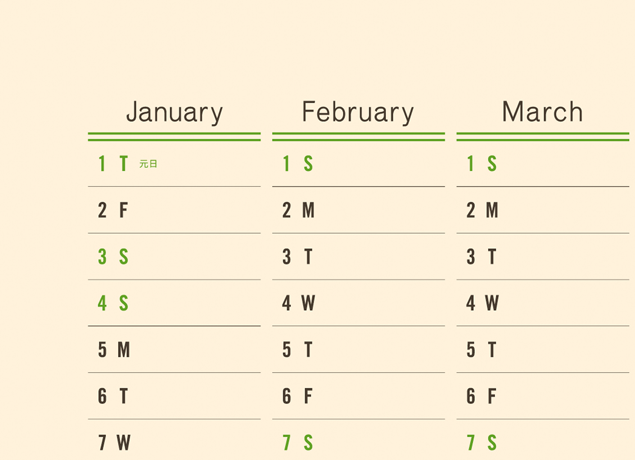
Designed by Postalco, a brand known for thoughtful everyday objects, the 2015 One Year Wall Calendar offered a clean annual view on a single sheet. It was printed in Japan, measured approximately 57 x 46 cm or 22.4 x 18.1 inches, and used chlorine-free paper. The concept was straightforward: show the entire year clearly, provide enough room for brief daily notes, and make planning feel visible rather than abstract. In other words, it did what many expensive productivity systems promise, but with one sheet of paper and zero password resets.
What Is the Postalco One Year Wall Calendar 2015?
The Postalco One Year Wall Calendar 2015 is a minimalist annual wall calendar created for people who want to see time as a whole. Unlike a monthly calendar that forces you to flip pages, or a digital calendar that shows one week while hiding the next eleven months behind a menu, this calendar gives the user a complete year-at-a-glance layout.
Its charm comes from restraint. The design does not shout. It does not decorate every holiday with confetti graphics. It does not try to turn February into a watercolor landscape. Instead, it uses a clean grid, simple typography, and a disciplined layout to make the year easy to scan. Each day has a small writing area, enough for a deadline, birthday, trip note, appointment, or tiny personal victory such as “finally fixed the chair” or “kept plant alive another week.”
For 2015, the calendar included Japanese holidays, reflecting Postalco’s Tokyo-based production and design culture. That detail also gave the calendar a distinctive identity for international buyers: it was not just a generic office supply item, but a carefully made object rooted in Japanese craft, paper culture, and visual clarity.
About Postalco: A Brand Built Around Everyday Use
Postalco was founded in Brooklyn, New York, and later became based in Tokyo. The brand is associated with founders Mike Abelson and Yuri Abelson Shimizu, whose work often focuses on everyday objects such as stationery, bags, wallets, clothing, and tools for daily life. Postalco’s design philosophy is not about making objects louder. It is about observing how people actually use things and then refining those things until they feel natural.
That approach explains why the Postalco One Year Wall Calendar 2015 feels so purposeful. It is not overloaded with features. There are no motivational quotes telling you to “hustle harder” while you are just trying to remember the dentist. The calendar simply gives you a calm, useful structure. It is a tool, not a lecture.
Why Postalco’s Design Feels Different
Many stationery products are designed to be bought quickly and replaced quickly. Postalco’s work has a slower rhythm. The brand’s objects often emphasize long-term use, tactile materials, practical details, and understated beauty. Even when an item is as simple as a calendar, the thinking behind it is clear: the object should fit into daily life without demanding attention every five seconds.
The One Year Wall Calendar follows this logic perfectly. It gives time a physical presence. When a full year is hanging on the wall, deadlines feel more real, vacations feel more possible, and the distance between January optimism and November panic becomes easier to understand.
Key Features of the Postalco One Year Wall Calendar 2015
1. Full-Year Visibility
The main feature is the annual layout. Seeing all twelve months at once changes how you plan. A project due in October no longer feels like a mysterious future creature hiding in the fog. You can see how many weeks are available, where holidays interrupt the flow, and how deadlines stack up across the year.
2. Compact but Practical Size
At about 57 x 46 cm, the calendar is large enough to be useful but not so huge that it turns your wall into corporate headquarters. It fits comfortably in a home office, studio, kitchen, classroom, workshop, or shared workspace. The size supports quick scanning without dominating the room.
3. Space for Brief Daily Notes
Each day includes just enough room for a short note. This is one of the calendar’s smartest limitations. It does not invite long journaling, complex task lists, or emotional essays about printer problems. It asks for the essential detail: “taxes,” “flight,” “launch,” “Mom’s birthday,” “rent due,” or “do not forget the sourdough starter again.”
4. Chlorine-Free Paper
The 2015 calendar was described as being made with chlorine-free paper. For design-conscious buyers, paper quality matters. A calendar that hangs for a full year needs to look good in January and still behave itself in December. Paper choice affects texture, durability, writing feel, and the overall impression of the object.
5. Printed in Japan
Postalco’s connection to Japanese production is a major part of its appeal. The calendar’s clean execution, restrained typography, and practical structure fit naturally within a design tradition that values precision, clarity, and everyday usability.
Why a One-Year Wall Calendar Still Matters
Digital calendars are excellent for reminders, recurring meetings, and sharing schedules. Nobody wants to manually rewrite a weekly Zoom call for twelve months unless they are training for some obscure endurance event. But digital tools also fragment time. They show a day, a week, or a month, then tuck the rest away.
A wall calendar works differently. It gives time a shape. When the whole year is visible, planning becomes spatial. You can see clusters, gaps, seasons, and patterns. The calendar becomes a map, and suddenly your schedule is not just a list of obligationsit is a landscape.
This is where the Postalco One Year Wall Calendar 2015 excels. It is especially useful for people who think visually: designers, writers, teachers, project managers, students, small business owners, parents, and anyone who has ever said, “Wait, how is it already September?”
Best Uses for the Postalco One Year Wall Calendar 2015
Project Planning
For creative teams and freelancers, a full-year wall calendar can reveal whether a timeline is realistic. Suppose a designer is planning a product launch in late August. By marking research, sketches, prototyping, photography, copywriting, production, and launch dates across the calendar, the entire process becomes easier to manage. The wall becomes a planning board without requiring magnets, logins, or a team meeting called “sync alignment.”
Travel Planning
The calendar is also ideal for mapping travel. Because the year is visible in one view, it is easy to see how a spring trip affects summer deadlines, or whether a winter holiday collides with school schedules. The small daily spaces encourage concise labels such as “Tokyo,” “camping,” “conference,” or “airportleave early, seriously.”
Family Organization
In a household, a shared wall calendar can reduce the classic family mystery known as “I told you about this three weeks ago.” Birthdays, school breaks, appointments, bills, sports events, and visits can all live in one visible place. Unlike a phone calendar, it does not belong to one person. Everyone can see it, which makes coordination easier.
Habit Tracking
Although the Postalco calendar is not designed as a habit tracker, it works beautifully as one. You can mark exercise days, reading days, writing sessions, language practice, meditation, or spending-free days. Over time, the marks create a visible record. Progress becomes physical, which is far more satisfying than a hidden data chart you forgot existed.
Editorial and Content Calendars
For bloggers, marketers, and publishers, the 2015 Postalco wall calendar format would have been excellent for editorial planning. Posting schedules, campaign launches, seasonal content, newsletter dates, and product announcements can all be mapped across the year. The result is a bird’s-eye view of content rhythm, which helps prevent the dreaded “we need a holiday article tomorrow” emergency.
Design Analysis: The Beauty of Not Trying Too Hard
The best thing about the Postalco One Year Wall Calendar 2015 is that it understands its job. It does not try to become wall art, although it is good-looking enough to qualify. It does not try to become a planner, notebook, vision board, and life coach. It simply turns the year into something visible.
Minimalist design can fail when it becomes cold or impractical. A calendar that looks beautiful but cannot be read is just a poster with commitment issues. Postalco avoids that trap by balancing restraint with function. The calendar is clean, but not empty. Useful, but not cluttered. Elegant, but not precious. You can write on it without feeling like you have vandalized a museum piece.
Who Would Appreciate This Calendar Most?
The Postalco One Year Wall Calendar 2015 is especially appealing to people who appreciate analog tools, Japanese stationery, minimalist office design, and thoughtful product design. It is also a strong choice for collectors of discontinued design objects. Since the 2015 edition is no longer a current calendar, its value today is more archival, decorative, or collectible than practical for date planning.
That said, old calendars can still be useful in interesting ways. A 2015 calendar can serve as a design reference, a piece of wall decor, a prop for photography, or a nostalgic marker of a particular year. For stationery lovers, a discontinued Postalco calendar is not just paperit is evidence of a design idea executed with care.
How It Compares With Digital Calendars
A digital calendar is best for alerts, recurring events, invitations, and syncing across devices. The Postalco One Year Wall Calendar is best for perspective. It will not buzz your phone ten minutes before a meeting. It will not update itself when plans change. It will not politely ask whether you are still attending an event you created yourself.
But it will do something digital tools often fail to do: keep the whole year present. It creates awareness. It lets you see that three major deadlines in one week may be a bad idea. It reminds you that summer is not an infinite golden meadow but roughly twelve weekends, several of which will be eaten by laundry and mysterious errands.
The ideal system is often hybrid. Use a digital calendar for reminders and shared scheduling. Use a wall calendar for the big picture. The digital tool tells you what is happening today. The Postalco-style annual calendar tells you what kind of year you are building.
Buying and Collecting Notes
Because the Postalco One Year Wall Calendar 2015 was a year-specific product, it is discontinued as a functional current calendar. Buyers looking for one today would likely find it through secondhand markets, design resale listings, archival shops, or collectors of Japanese stationery. Condition matters. Since the object is paper, look for clean edges, minimal fading, no water damage, and no heavy writing unless you want the previous owner’s dentist appointments as bonus historical content.
For those who simply love the format, Postalco has continued producing later One Year Wall Calendar editions. A current-year version will be more practical for planning, while the 2015 edition remains interesting as a design collectible.
Experiences Related to the Postalco One Year Wall Calendar 2015
Using a calendar like the Postalco One Year Wall Calendar 2015 feels different from opening an app. The first experience is visual. You pin it up, step back, and the year appears as one complete field. There is something grounding about that. The calendar does not feel urgent. It feels steady. It says, “Here is the year. Let us be reasonable about it.” That alone can make planning less chaotic.
Imagine placing it above a desk in a small home office. At first, the calendar is mostly blank, which can feel both exciting and slightly suspicious. January has a few notes. February gets a deadline. March collects a birthday, a bill reminder, and a weekend trip. By May, patterns start to emerge. You notice that work tends to pile up near the end of each month. You realize that your so-called “quiet season” has somehow developed muscles. By seeing the year grow in marks and notes, you become more aware of how time actually behaves in your life.
For a creative worker, the experience can be even more useful. A writer might use the calendar to map article drafts, publishing dates, client revisions, and research periods. Instead of keeping all deadlines buried in email threads, the year becomes visible. That visibility encourages better pacing. You can see when too many projects overlap and when there is space for deeper work. It is like having a polite project manager on the wallone that never sends “just checking in” emails.
In a family setting, the calendar becomes a shared reference point. Someone can walk by and add “school concert,” “grandparents visit,” or “renew passport.” Because the calendar is public, it encourages small moments of coordination. People naturally glance at it while making coffee or leaving the house. Over time, it becomes part of the room’s rhythm. Unlike a phone calendar, it does not require opening an app or choosing an account. It is simply there.
There is also an emotional experience to an annual wall calendar. By December, the sheet becomes a record of the year. It shows not only what happened, but how life was distributed: the crowded weeks, the empty stretches, the ambitious plans, the crossed-out ideas, the trips that happened, and the ones that did not. A used calendar becomes a quiet archive. The Postalco 2015 edition, with its refined paper and minimal design, would make that archive feel especially elegant.
One practical lesson from using this kind of calendar is that small writing spaces can be a gift. They force clarity. You cannot write a full meeting agenda in a tiny daily box, and that is wonderful. You write the essential thing. The limitation keeps the calendar readable. It also makes the year less intimidating. Each day holds one or two important notes, not an avalanche of tasks trying to escape from your brain.
The Postalco One Year Wall Calendar 2015 also changes the feel of a workspace. It adds structure without visual noise. Many office tools create clutter while pretending to solve it. This calendar does the opposite. Its minimalist design can make a wall feel more intentional. In a studio, it pairs well with notebooks, drafting tools, corkboards, shelves, or a clean wooden desk. In a kitchen, it can soften the chaos of household planning. In a classroom, it can help students understand time as a sequence rather than a series of isolated due dates.
The most memorable experience, however, is the simple act of looking ahead. With a full-year calendar, you become less likely to treat future months as imaginary storage units for everything you cannot handle now. October is right there. November is waiting. December is already giving you a look. This gentle pressure can be useful. It helps you plan honestly, protect open time, and recognize that rest also deserves a place on the wall.
That is why the Postalco One Year Wall Calendar 2015 remains interesting even years after 2015 ended. Its dates may be historical, but its design lesson is still current: good tools make life easier to see. They do not need to be flashy. They do not need to beep. Sometimes the smartest productivity upgrade is a well-made piece of paper that gives the whole year room to breathe.
Conclusion
The Postalco One Year Wall Calendar 2015 is more than a dated paper calendar. It is a thoughtful example of how analog design can improve planning, awareness, and daily organization. With its full-year layout, compact wall-friendly size, Japanese printing, chlorine-free paper, and minimalist structure, it turns time into something visible and usable.
For collectors, it represents a discontinued Postalco design object with lasting visual appeal. For planners, it demonstrates why year-at-a-glance calendars remain useful in a digital world. For anyone tired of scrolling through calendar apps just to understand the next few months, it offers a refreshingly simple idea: put the year on the wall and let your brain breathe.
Note: This article is written for web publishing in standard American English and focuses on verified product details, design context, practical use cases, and original analysis of the Postalco One Year Wall Calendar 2015.

