
Body Care
Object of Desire: Poetic Takes on the “Paper” Bag by Kazumi Takigawa
Jul
Some designers begin with precious metals, exotic leather, or a material whose name sounds expensive even when whispered. Japanese artist Kazumi Takigawa began with something considerably less glamorous: the ordinary brown paper bag.
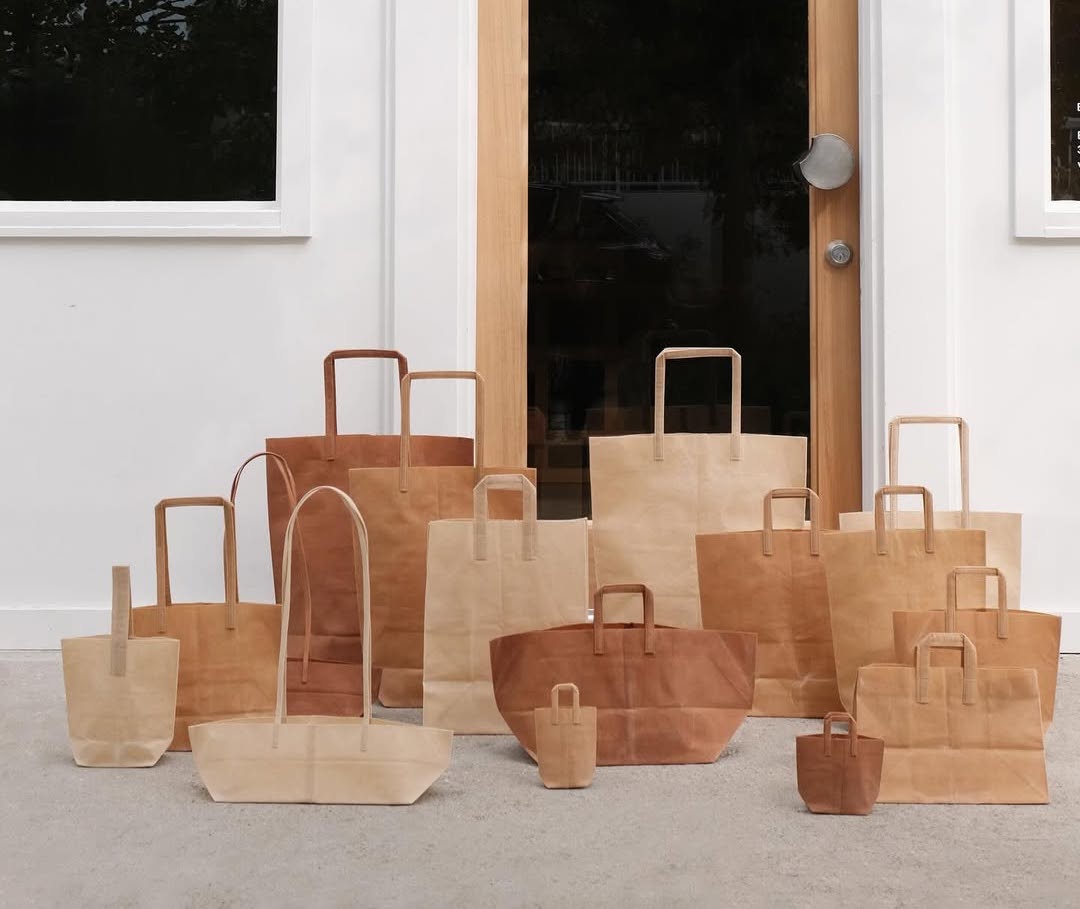
That familiar sackthe one associated with groceries, bakery bread, packed lunches, and the occasional sad desk sandwichbecomes unexpectedly poetic in Takigawa’s hands. Her Funagata bags recreate the proportions, creases, muted colors, and upright stance of kraft-paper packaging using hand-dyed, waxed cotton canvas. The result is neither a practical joke nor a luxury tote wearing a clever disguise. It is a carefully constructed meditation on usefulness, memory, imperfection, and the curious beauty of objects we normally throw away.
How a Disposable Paper Bag Became a Lasting Design Object
Takigawa’s idea works because the paper bag is almost universally recognizable. Its folded base, plain rectangular body, and unceremonious handles require no instruction manual. We understand it before we touch it. That instant familiarity gives the designer room to surprise us.
Instead of reproducing the bag in fragile paper, Takigawa constructs it from durable cotton canvas. She dyes the fabric with ingredients including coffee, tea, iron, aluminum, oolong tea, and plant extracts, creating shades that recall natural kraft paper rather than polished fashion textiles. Each piece is individually sewn and finished with a combination of waxes that gives the material both firmness and flexibility.
The transformation is subtle but radical. Paper becomes cloth. Temporary becomes reusable. Packaging becomes possession. The humble lunch sack suddenly has the posture of sculpture.
The Paper Bag Is Already a Brilliant Piece of Design
Takigawa is not elevating a poorly designed object. She is drawing attention to an object whose cleverness has become invisible through familiarity. The flat-bottom paper bag was itself a major industrial innovation. American inventor Margaret Knight developed machinery capable of cutting, folding, and gluing flat-bottom bags, helping make the practical form available on a mass scale.
The basic design has endured because it works. It can be stored flat, opened quickly, filled generously, carried easily, and recycled after use. There are no decorative buckles trying to justify their existence. No mysterious zipper pocket leads to another mysterious zipper pocket. It is simply a container that understands its assignment.
Takigawa preserves that visual honesty. Her waxed canvas bags do not appear overloaded with logos or hardware. Their appeal comes from proportion, surface, structure, and the emotional recognition of an everyday form.
Kazumi Takigawa’s Sculptural Approach to Bag Design
Although the Funagata collection functions as a line of bags, it makes sense to view the work through the lens of sculpture. Takigawa studied sculpture at Tama Art University and began producing her paper-bag-inspired designs after experimenting with wax and textile materials. One account of the process notes that wax used during her art-school work stiffened her canvas work clothes so dramatically that the fabric could nearly stand by itself. That accident became a useful clue: canvas could be manipulated to behave like paper.
This background explains why the Funagata bag feels different from a conventional tote. It is not merely cut and sewn for capacity. Its volume matters. Its silhouette matters. The way it occupies space when empty matters.
A Bag That Does Not Collapse into Apology
Most fabric totes become limp puddles the moment their contents are removed. Takigawa’s wax treatment allows the Funagata bag to hold a recognizable form. It can sit on a table, shelf, or floor with the quiet authority of an object that has been told it belongs there.
The waxed finish also changes with handling. Fine pale lines may appear where the surface bends or scratches. The canvas gradually softens, and the original stiffness becomes more relaxed. Owners who prefer a crisper shape can lightly warm or iron the material according to the maker’s care guidance, allowing the wax to redistribute before the bag cools.
In other words, the bag can age gracefully or receive a modest reset. It is the textile equivalent of deciding whether to embrace your laugh lines or book a very gentle facial.
The Beauty of Coffee, Tea, Wax, and Imperfect Color
Color is central to Takigawa’s illusion. A generic beige fabric would imitate kraft paper superficially, but natural dyeing introduces irregularity. Coffee and tea produce earthy tones with subtle shifts rather than perfectly standardized industrial color. Iron and other mordants can deepen, cool, or gray those shades.
The designer has explained that coffee and tea are well suited to the project not only because they reproduce paper-like colors, but also because these materials are generated and discarded in large quantities in everyday life.
This choice gives the bag an elegant conceptual loop. Ingredients associated with cafés, kitchens, and daily routines help color an object modeled after the packaging used to transport other everyday goods. Coffee stains are no longer a catastrophe requiring frantic blotting. Here, they are part of the design vocabulary.
Why Natural Variation Makes Each Bag More Convincing
Ordinary paper bags are rarely perfect. Their fibers vary. Their corners soften. Their surfaces crease, darken, and pick up marks from whatever they have carried. A flawless synthetic imitation might resemble a computer rendering of a paper bag, but Takigawa’s naturally varied surfaces resemble the real thing more emotionally.
Small differences in tone and texture also remind the owner that each piece has passed through human hands. The material was dyed, dried, cut, stitched, and waxed through a deliberate process. It may follow an archetype, but it does not feel anonymous.
From Everyday Utility to Quiet Luxury
Calling the Funagata bag “luxury” may sound strange because its silhouette deliberately avoids traditional status symbols. Yet contemporary luxury increasingly includes time, craftsmanship, material intelligence, and limited productionnot merely shiny hardware announcing itself from across the street.
Takigawa’s bag expresses value quietly. The seams are purposeful. The interior is generally uncomplicated. Depending on the model, the design may consist largely of one spacious compartment, preserving the directness of the original paper sack. Current American retailers describe versions made in Japan from 100 percent cotton or waxed cotton, with dimensions ranging from compact handbag proportions to generous carryalls.
There is something refreshing about a designer bag that does not require a diagram to locate your keys. Admittedly, your keys may still sink to the bottom. Minimalism does not perform miracles.
The Appeal of an Object That Refuses to Shout
The Funagata bag fits naturally into interiors and wardrobes built around neutral colors, tactile materials, and uncomplicated shapes. It can complement workwear, linen clothing, denim, oversized tailoring, or a simple black dress. At home, it can function visually like a soft storage vessel, holding magazines, knitting, scarves, or the mail you have been meaning to sort since Tuesday.
Its restraint is precisely what makes it noticeable. The eye expects a paper bag to be temporary and nearly weightless. Seeing that familiar form rendered in substantial waxed canvas creates a small perceptual pause. The object is ordinary, yet clearly not ordinary.
When Fashion, Craft, and Sculpture Share One Handle
Takigawa’s work sits comfortably between categories. It is fashion because it can be carried. It is craft because the material treatment and construction are essential to its identity. It is product design because it solves a practical problem. It is sculpture because its volume and physical presence remain meaningful even when the bag is empty.
Museums and design institutions have long emphasized that seemingly simple objects shape daily life and deserve thoughtful examination. MoMA’s discussion of “everyday marvels,” for example, centers on the idea that the ordinary objects surrounding us were designed and can have enormous effects on how we live.
The Funagata bag makes that argument without giving a lecture. It asks the viewer to reconsider a disposable container by changing its material while preserving its recognizable outline.
A Contemporary Echo of Japanese Folk-Craft Thinking
It would be too simplistic to label every understated Japanese object as an example of wabi-sabi or mingei. Takigawa’s practice is contemporary and distinctly her own. Still, her attention to ordinary forms, handwork, natural variation, and beauty through use resonates with broader Japanese craft traditions that value functional objects and the visible presence of their makers.
Recent American coverage of Japanese folk craft has similarly highlighted the belief that beauty can emerge from useful objects made by hand, rather than existing only in rarified fine art.
Takigawa extends this conversation into an age of global design retail. Her bag can appear in a gallery-like boutique, accompany someone to a farmers market, and then sit beside a kitchen table looking suspiciously like the grocery bag it replaced.
Is the Funagata Bag a Sustainable Choice?
The safest answer is that durability and reuse are meaningful advantages, but no product should receive a glowing environmental halo without a complete life-cycle assessment. Cotton production, dyeing, wax formulation, transportation, and eventual disposal all carry impacts.
What can be said is that the concept directly challenges disposability. Takigawa starts with the visual language of single-use packaging and reconstructs it as an object intended to last, soften, develop a patina, and remain repairable or refreshable through care.
That emphasis aligns with the U.S. Environmental Protection Agency’s waste-management hierarchy, which places source reduction and reuse ahead of recycling because keeping products in service can delay the need for disposal and additional processing.
Longevity Depends on the Owner, Too
A durable bag is only sustainable in practice when it is actually used. Buying an artisanal tote, photographing it beautifully, and then storing it inside three other totes is not exactly the circular economy.
The Funagata design encourages long-term use because its aging process is part of its appearance. Creases and softened wax are not necessarily defects. They document movement. The surface records where the bag has folded against a coat, rested beneath a café table, or carried home a slightly overenthusiastic quantity of root vegetables.
How to Style and Use a Kazumi Takigawa Paper Bag
For Everyday Carrying
A medium Funagata bag can accommodate daily essentials while retaining its sculptural outline. Pair its brown, beige, or charcoal surface with clothing that lets texture do the talking: washed denim, cotton poplin, wool, linen, chore jackets, and leather shoes with a little life in them.
Because the bag is intentionally simple, internal pouches can help organize smaller items. A bright pouch is especially useful unless you enjoy performing a ten-minute archaeological dig every time your phone rings.
As an Interior Object
When not being carried, the bag can serve as visible storage. A larger model may hold rolled textiles, newspapers, reusable shopping bags, children’s art supplies, or guest-room linens. Keep it away from excessive moisture and direct heat, and follow the maker’s instructions rather than improvising a dramatic washing-machine experiment.
As a Gift
The design suits someone who appreciates Japanese craft, minimalist fashion, unusual materials, or useful objects that spark conversation. It is particularly memorable for the person who claims to want “nothing fancy” while possessing extremely precise opinions about beige.
Why the “Paper” Bag Feels Poetic
The poetry lies in contradiction. A paper bag is designed to disappear after completing a small task. Takigawa asks it to remain. Its familiar folds are translated into canvas, its brown color is steeped and stained into existence, and its wrinkles become a record rather than a reason for replacement.
The bag also plays with memory. It recalls school lunches, corner stores, bakeries, markets, and parcels carried home under one arm. Those associations are personal, yet the form is shared widely enough to feel almost archetypal.
By preserving that form in a more enduring material, Takigawa does not make the paper bag grandiose. She makes us notice how good it already was.
Living With the Bag: A 500-Word Experience-Based Perspective
Imagine bringing a Funagata bag home for the first time. On the shelf, it appears almost too composed to use. The waxed canvas is firm, the corners look intentional, and the bag stands upright without leaning against a wall for emotional support. You may briefly consider displaying it untouched like a sculpture.
Then real life arrives.
The bag goes out for coffee. A book slides inside, followed by sunglasses, a notebook, a small pouch, and a receipt that will live at the bottom until the next geological era. The single-compartment interior feels refreshingly direct, although it rewards anyone sensible enough to use an organizer.
At first, the waxed surface may feel crisp and slightly resistant. It makes a soft, papery sound when bent. Over time, the handles become easier in the hand and the body responds more naturally to what it carries. The bag no longer resembles an untouched object in a boutique. It begins to resemble your object.
A pale crease appears near one corner. Another develops where the bag repeatedly folds against your hip. The first mark may cause concern, especially for an owner trained by conventional luxury goods to treat every scratch as a tiny financial emergency. Soon, however, those lines become part of the appeal. They make the canvas look more convincingly like aged paper and reveal how the wax responds to movement.
The bag also changes the experience of ordinary errands. Carrying vegetables in a handcrafted interpretation of a grocery sack adds a quiet layer of humor. The design is sophisticated, yet it refuses to take itself too seriously. Someone may glance at it twice, uncertain whether it came from a market stall or a design gallery. Both answers are spiritually correct.
At home, the Funagata bag does not need to be hidden in a closet. Empty totes usually collapse into an untidy fabric nest, but the waxed structure lets this one remain visible. It might sit beside a desk holding sketchbooks or near an entryway containing scarves and gloves. Its paper-bag silhouette makes storage look casual rather than overplanned.
Maintenance becomes another small ritual. Dirt is addressed with a wrung-out or damp cloth rather than full immersion. If the canvas softens more than desired, careful warming can restore some structure according to the maker’s guidance. The process feels closer to caring for leather or wood than laundering an ordinary cotton tote.
The most rewarding experience may be the gradual loss of perfection. A new Funagata bag shows Takigawa’s process; an older one shows the collaboration between maker and owner. The artist establishes the form, color, wax, and construction. Daily life contributes pressure, warmth, weather, contents, and movement.
That evolution is the real luxury. Instead of demanding that the bag remain frozen in showroom condition, the design allows use to improve its personality. It becomes softer, more familiar, and more specific. Like a favorite jacket, wooden cutting board, or well-used notebook, it gathers evidence of participation.
Living with the bag ultimately sharpens awareness of other overlooked objects. You may notice the fold of a bakery sack, the geometry of a cardboard box, or the color differences between two sheets of kraft paper. Takigawa’s design trains the eye to see invention where daily habit once saw only packaging.
Conclusion: An Ordinary Form Worth Keeping
Kazumi Takigawa’s waxed canvas paper bag succeeds because it does not erase the humility of its inspiration. The Funagata collection retains the directness of disposable packaging while introducing patient handwork, natural color, durable cotton, sculptural structure, and a surface that develops with use.
It is practical enough to carry through a normal day and conceptually rich enough to reward close attention. Most importantly, it reminds us that thoughtful design does not always require inventing a strange new shape. Sometimes it begins by looking carefully at the object already sitting on the kitchen counter.
Note: Dimensions, colors, prices, stock, and care recommendations may vary by model and retailer. Confirm the instructions supplied with the individual bag before applying heat or cleaning its waxed surface.

