
Beauty Unlocked
Laser Eye Surgery: What You Should Know
Jun
If you’ve ever stepped on your glasses, lost a contact in the middle of a blink, or looked at your nightstand and thought,
“Cool, cool, coolwhere did my eyeballs go?” then laser eye surgery has probably crossed your mind.
Laser vision correction can be life-changing for the right person… and a disappointment (or a hassle) for the wrong one.
This guide breaks down what laser eye surgery is, who it’s for, what it can (and cannot) do, and what the experience is usually likewithout the spooky sci-fi vibes.
What “laser eye surgery” actually means
Most people say “laser eye surgery” and mean laser vision correction for common refractive errors:
nearsightedness (myopia), farsightedness (hyperopia), and astigmatism.
In plain English, these happen when your eye’s optics don’t focus light sharply on the retina.
Glasses and contacts bend light from the outside. Laser vision correction changes the shape of your cornea (the clear front window of your eye)
so light focuses more accuratelyno external lenses required.
Important nuance: not every “vision correction surgery” is laser-based. For some prescriptions or eye shapes, surgeons may recommend other options
(like implantable lenses). But the big three laser procedures you’ll hear about are LASIK, PRK, and SMILE.
The three main procedures: LASIK vs. PRK vs. SMILE
LASIK: fast visual recovery (and yes, there’s a flap)
LASIK (laser-assisted in situ keratomileusis) reshapes the cornea after creating a thin flap on the corneal surface.
The flap is lifted, a laser reshapes the underlying tissue, and the flap is placed back down.
For many people, the headline feature is quick recovery: it’s common to see much better within a day or two.
PRK: no flap, slower recovery, often chosen for certain corneas or lifestyles
PRK (photorefractive keratectomy) reshapes the cornea toobut without creating a flap.
Instead, the outermost layer is removed and naturally regrows over several days.
The trade-off is usually more discomfort early on and slower visual recovery than LASIK,
but PRK can be a better fit for some people (for example, if a surgeon is trying to avoid flap-related concerns).
SMILE: a small incision approach (and it’s not for every prescription)
SMILE (small-incision lenticule extraction) uses a laser to create a tiny disc (“lenticule”) inside the cornea,
which is then removed through a small incision. That internal change reshapes the cornea.
Healing is often described as similar to LASIK, though the crisp “wow” vision can take a bit longer for some people.
Also, SMILE is typically used for myopia and astigmatism, not every refractive scenario.
Am I even allowed to get LASIK? (Age, stability, and the “adult eyes only” rule)
Here’s the part many people miss: laser vision correction is generally an adult decisionliterally.
In the U.S., the FDA notes that no lasers are approved for LASIK in people under 18.
Even for adults, most reputable clinics look for stable vision (your prescription hasn’t meaningfully changed for about a year).
Why? Because doing surgery on a moving target is like buying a “forever” couch while your cat is still growing.
A typical candidacy checklist often includes:
- Age: at least 18 (many surgeons prefer early-to-mid 20s when vision is more stable).
- Stable prescription: little to no change for ~12 months.
- Healthy corneas: thickness and shape that allow safe reshaping.
- Healthy eyes overall: no uncontrolled eye disease, active infection, or certain corneal conditions.
- Realistic expectations: “better” is common; “superhuman” is not included.
Who should be cautious (or skip it entirely)?
A good surgeon will try to talk you out of surgery if it’s not right for you. That’s a green flag, not an insult.
Common reasons to pause include:
Unstable vision or very high prescriptions
If your prescription keeps changing, surgery results may not last the way you hope. Very strong prescriptions may also push beyond
what a particular procedure can safely correct. In those cases, surgeons may discuss alternatives.
Pregnancy or breastfeeding (timing matters)
Hormonal shifts can affect eye measurements and dryness. Some medical references recommend postponing elective laser vision correction during pregnancy or breastfeeding.
Dry eye issues
Dry eye is common in modern life (thanks, screens and indoor air). It’s also one of the most common side effects after LASIK.
If you already struggle with dryness, your surgeon may want to treat that first or consider a procedure plan that minimizes risk.
Contact sports or jobs with high eye-impact risk
Because LASIK involves a corneal flap, people in high-impact activities (think combat sports or jobs where blunt trauma is a real possibility)
should have an extra-thorough conversation with a surgeon about procedure choice and timing.
What results can you realistically expect?
The goal is usually to reduce dependence on glasses or contacts for distance vision.
One major medical center reports that more than 99% of people achieve 20/40 vision or better after LASIK
which is often enough for many daily activities without correction. That said:
- Night vision symptoms can happen (glare, halos, starbursts), especially early on.
- You may still need glasses sometimes (for night driving, small print, or specific tasks).
- Reading glasses are still likely later because age-related presbyopia (normal near-vision changes over time) isn’t “fixed” by standard LASIK.
The best candidates go in expecting “less hassle,” not “perfect eyes forever.”
Risks and side effects: the honest list (without the horror-movie soundtrack)
All surgery has risk. For laser vision correction, many side effects are temporary, and serious complications are uncommon,
but it’s important to know what’s on the menu before you order.
Common or expected side effects
- Dry eyes: often temporary, sometimes longer-lasting.
- Glare, halos, starbursts: especially at night or around bright lights, often improving over time.
- Light sensitivity and fluctuating vision: during the healing/stabilization window.
Less common (but possible)
- Under-correction or over-correction: you may still need glasses/contacts, or rarely need a follow-up procedure.
- Reduced contrast sensitivity: even if the letter chart looks great, vision can feel “less crisp” in low contrast situations.
- Persistent night driving problems: a minority of people report longer-lasting symptoms.
Rare but serious complications
- Infection or significant inflammation.
- Corneal scarring or corneal shape problems.
- Vision loss: very uncommon, but important enough to treat as a “read this twice” risk.
- Corneal ectasia: a progressive weakening/bulging of the cornea that can occur after refractive surgery, especially in people with pre-existing risk factors.
Modern screening aims to reduce this risk by identifying vulnerable corneas ahead of time.
If you’re thinking, “Okay, this is a lot,” that’s normal. The point isn’t to scare youit’s to help you make a decision with your eyes open.
(Yes, pun fully intended.)
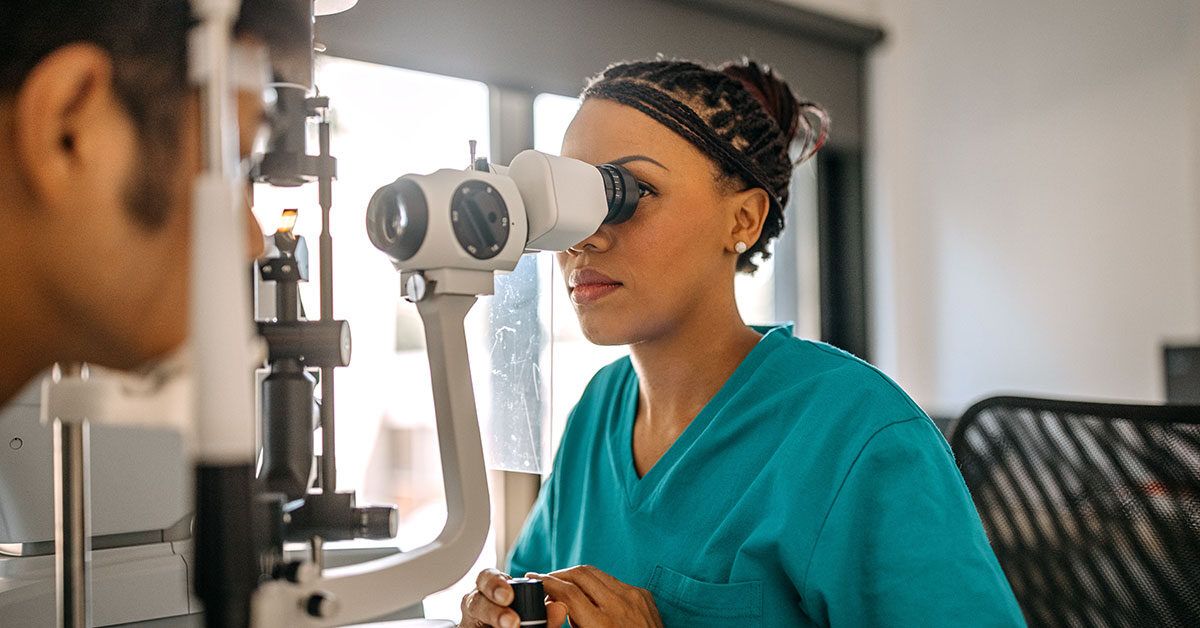
What happens before surgery: the exam that decides everything
A proper pre-op evaluation is not a quick “read the chart, sign here” moment.
It typically includes measurements of corneal shape (topography), corneal thickness, pupil size, and a full health review.
You’ll also discuss your lifestyle: night driving, sports, work environment, and how you feel about wearing glasses.
Why you might be asked to stop contacts beforehand
Contacts can temporarily change corneal shape. The FDA notes that patients may need to stop wearing contact lenses before evaluation so measurements are accurate.
If you show up wearing contacts and your cornea is still “holding a grudge,” your numbers might be offand that matters for safety.
Informed consent should feel like a conversation, not a sales pitch
The FDA encourages patients to take time, ask questions, and not feel pressured into surgery.
If the vibe is “limited-time offer, act now,” you are allowed to back away slowly and dramatically.
The day of surgery (what it’s usually like)
Laser vision correction is typically outpatient. Most people are awake, and the process itself is usually quick.
You’ll need a ride home because vision may be hazy and you may receive medication that affects driving.
Right after surgery, it’s common to feel irritationburning, itching, a “something in my eye” sensationplus tearing and light sensitivity.
This is where your main job is simple: follow the post-op instructions and avoid rubbing your eyes.
Recovery: a realistic timeline (LASIK vs. PRK vs. SMILE)
LASIK recovery
Many people see significantly better within 24–48 hours, with mild discomfort early on.
Vision can still fluctuate for a while, and some night-vision symptoms may take longer to settle.
PRK recovery
Expect a tougher first few days (more discomfort) and a slower return to sharp vision.
Many people improve steadily over days to weeks, and full stabilization can take longer.
SMILE recovery
Healing time is often described as similar to LASIK, but the “super crisp” endpoint may take a bit longer for some patients.
SMILE is frequently discussed as a flapless alternative, but it still requires careful screening and recovery planning.
Will I need an enhancement later?
Some people need an additional procedure if the correction isn’t quite where it should be (or if vision changes over time).
The FDA notes that vision may take up to several months to stabilize, and it advises waiting for consistent measurements before considering re-operation.
Also, “enhancement” can improve distance vision, but it may not resolve symptoms like glare or halos if those are the main complaint.
Questions to ask at your consultation (the “I’m an informed adult” starter pack)
- Which procedure do you recommend for my eyes, and why?
- Am I at higher risk for dry eye, glare/halos, or night driving issues?
- What are my corneal thickness and topography results, and what do they mean?
- How many of these procedures do you perform each year?
- What’s included in the fee (follow-ups, enhancements, medications, etc.)?
- If I don’t do surgery, what’s my best non-surgical option right now?
Cost: what people usually pay (and why quotes vary)
Laser vision correction is often elective, so insurance coverage varies and is frequently limited.
Pricing can depend on technology, surgeon experience, region, and what’s bundled into the package.
As one example, a major academic center lists per-eye pricing in the thousands of dollars (and notes charges are per eye),
but your local quote may be higher or lower.
Common myths (quickly, before your cousin’s friend’s roommate texts you a “fact”)
Myth: “Laser eye surgery guarantees perfect vision forever.”
Reality: It often reduces dependence on glasses/contacts, but nothing is guaranteed. Eyes age, and presbyopia still happens.
Myth: “If I get LASIK, I’ll never need glasses again.”
Reality: Many people still need reading glasses later, and some need glasses for specific tasks like night driving.
Myth: “If I’m not a LASIK candidate, I’m out of options.”
Reality: PRK, SMILE, and non-laser options may be considered depending on your eyes and goals.
Bottom line
Laser eye surgery can be an excellent option when your eyes, prescription, lifestyle, and expectations all line up.
The safest, happiest outcomes usually come from two things: good screening and good expectations.
If you’re under 18, the conversation is mostly “not yet.”
If you’re an adult with stable vision and healthy corneas, a high-quality evaluation can clarify whether LASIK, PRK, SMILEor no surgeryis the best choice.
Real-world experiences: what people commonly report (extra detail)
People often search for laser eye surgery stories because they want the “what does it actually feel like?” versionnot just the clinical brochure.
While everyone’s experience is different, there are some themes that show up again and again in patient reports and clinic guidance.
Think of this as a realistic preview, not a promise.
The consultation: equal parts science and self-reflection
Many people say the first surprise is how much measuring happens. It’s not a single test; it’s a whole data-gathering mission.
You’ll read charts, stare at blinking lights, and probably think, “Wow, my eyes are being perceived.”
If you wear contacts, you may be asked to stop wearing them ahead of time so your cornea returns to its natural shape.
Patients often describe this as the most annoying part of the processbecause the week you stop wearing contacts is, of course,
the week you have three social events and one very important photo.
The day of surgery: fast, strange, and surprisingly not dramatic
Most people report that the procedure itself feels quick. The weirdest part is usually the sensation of pressure and the requirement to focus on a target
while your brain is loudly chanting, “DON’T BLINK.” (You can blink later. Your brain will survive.)
People also commonly say it’s not painful in the horror-story way they fearedmore like “uncomfortable and odd.”
Then comes the immediate post-op phase, which is often described as watery eyes, light sensitivity, and a gritty feelinglike you lost a sandcastle-building contest.
This is where clinics strongly emphasize: don’t rub your eyes, even if your instincts are screaming for you to do it.
The first 24–72 hours: the “my eyes are rebooting” era
After LASIK, many people say the next day is a “wow” moment: they wake up and can see the alarm clock without negotiating with it.
But that doesn’t mean everything is perfect right away. It’s normal for vision to fluctuate, feel hazy, or shift a bit during the early healing window.
After PRK, the first few days are often described as toughermore discomfort and slower improvement.
Patients frequently compare it to a short, intense recovery sprint: not fun, but temporary.
Night driving and “sparkly lights”: common early complaints
One of the most commonly mentioned experiences is night-vision symptomshalos, glare, or starbursts around lights.
Some people notice it a lot at first, then it fades over weeks to months as the eyes heal and the brain adapts.
Others barely notice anything. The key takeaway from patient-facing guidance is that these symptoms are a known possibility,
and you should discuss your personal risk factorsespecially if night driving is a big part of your life.
Dry eye: the side effect nobody brags about on social media
A lot of people report dryness after LASIK, sometimes mild and short-lived, sometimes more persistentespecially if they had dryness before surgery.
Patients often say the most helpful mindset is: “I’m not failing at recovery; my eyes are healing.”
Clinics commonly recommend lubricating drops and specific routines based on your exam and symptoms.
(Translation: follow your clinician’s plan, not your friend’s “miracle hack” from a comment section.)
The longer timeline: stabilization and expectation management
Many people feel “mostly recovered” fairly quickly, but vision can still stabilize over months.
Some patients describe it as having a great new camera lens that occasionally needs a moment to autofocus.
A smaller number of people end up needing glasses for certain situations (like night driving) or consider an enhancement later.
Patients who report the most satisfaction often share the same theme: they went in with clear expectations,
chose a reputable surgeon who took screening seriously, and treated recovery instructions like the world’s most important to-do list.
If you’re considering laser eye surgery, the best “experience upgrade” you can give yourself is preparation:
ask good questions, understand your personal risks, and choose a practice that prioritizes safety over speed.
The goal isn’t just to see better tomorrowit’s to see well and comfortably for the long haul.

