
Makeup
Incredibly Cute Animal Illustrations By Sydney Hanson Will Make You Smile
Jun
Some art asks you to stand back, stroke your chin, and whisper, “What is the artist saying about postmodern existence?” Sydney Hanson’s animal illustrations ask a simpler question: “Would you like to smile at a tiny bee having the emotional depth of a golden retriever?” The answer, naturally, is yes.
Sydney Hanson has built a beloved visual world around soft, expressive animals that feel as if they wandered out of a children’s book, paused for a snack, and politely asked for a hug. Her work is charming without being sugary, detailed without becoming fussy, and cute in a way that feels earned. These are not generic cartoon animals with big eyes pasted on. They have posture, mood, personality, and little stories tucked into their paws.
Known as a children’s book illustrator and production artist, Hanson has worked across traditional illustration, digital media, and animation-related art. Her portfolio includes picture books, whimsical animal scenes, and character-driven illustrations that turn donkeys, guinea pigs, bees, bats, spiders, otters, puppies, and other creatures into miniature ambassadors of joy. In a noisy internet full of doom-scrolling, her art is the visual equivalent of finding a warm muffin in your coat pocket.
Who Is Sydney Hanson?
Sydney Hanson is an American illustrator recognized for her warm, storybook-style animal art. She was raised in Minnesota with pets, brothers, snowdrifts, and the sort of childhood adventures that seem specially designed to create an illustrator: rescuing frogs, exploring outdoors, and drawing whenever possible. That early connection to animals and nature still shows up clearly in her work.
Hanson’s professional background gives her art an unusually polished feel. In addition to picture book illustration, she has experience as a 2D and 3D production artist and has worked with major animation-related companies, including Nickelodeon and Disney Interactive. That blend matters. Her illustrations often have the emotional immediacy of a picture book and the character appeal of animation. In other words, her animals do not just sit there looking cute. They look ready to carry a scene, steal a scene, and possibly demand snacks between takes.
Her book work includes titles such as Why a Daughter Needs a Dad, The Donkey’s Song, Panda Pants, Hugo and the Impossible Thing, Next to You, and the Unicorn Princesses series. Across these projects, one thing stays consistent: Hanson understands how to make illustrated characters feel emotionally available. A tiny animal can look brave, confused, delighted, sleepy, or deeply committed to a flower, and the viewer understands immediately.
Why Sydney Hanson’s Animal Illustrations Feel So Cute
Cuteness is not random. It is design. Hanson’s cute animal illustrations work because they combine several visual choices that our brains happily interpret as friendly, gentle, and safe. Large eyes, rounded shapes, soft fur textures, slightly oversized heads, and small paws all contribute to the “aww” effect. But Hanson does not stop at surface-level sweetness. She gives each animal a tiny emotional script.
A hedgehog tucked among plants is not simply a hedgehog. It becomes a shy garden neighbor. A bee is not merely an insect. It becomes a fuzzy little worker with feelings, possibly union demands, and a strong opinion about flowers. An otter floating in water is not just aquatic cuteness. It becomes a peaceful character enjoying a moment of calm.
Soft Texture Makes the Characters Feel Touchable
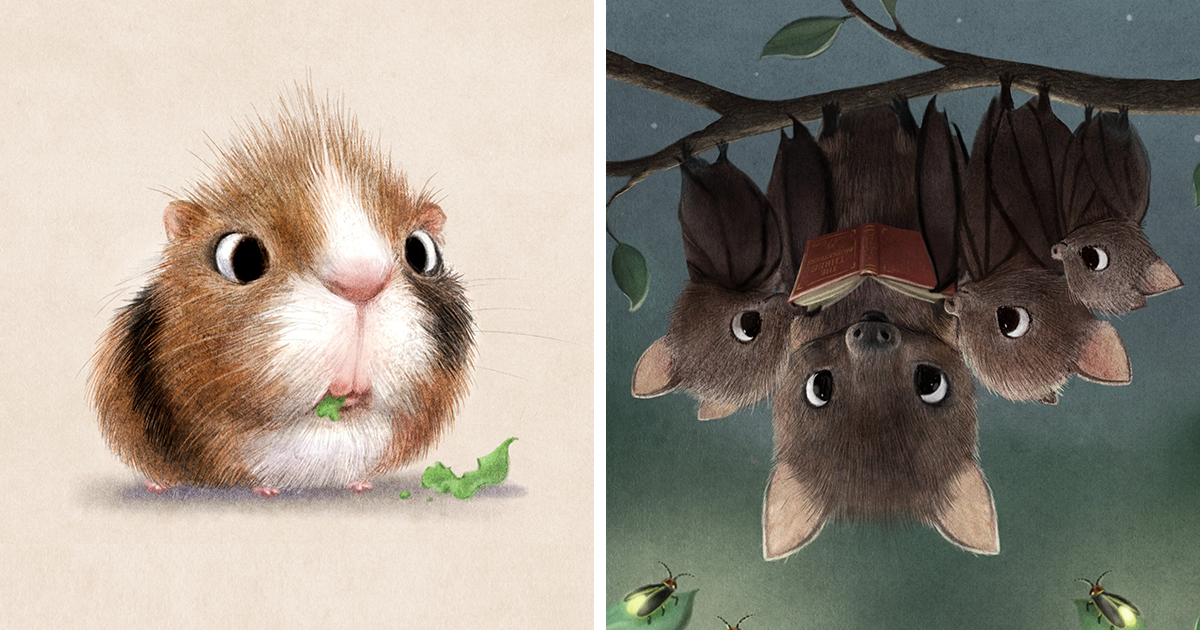
One of Hanson’s most recognizable strengths is texture. Her animals often look fluffy, fuzzy, feathery, or velvety. Fur is built with delicate strokes, shading is gentle, and colors are blended in a way that keeps the image light. The softness invites the viewer in. Even when the subject is an animal that many people might normally avoidlike a bat, bee, or spiderHanson’s treatment makes it approachable.
This is especially important because she has expressed interest in making “underrepresented cute animals” feel lovable. That idea explains much of her appeal. Anyone can make a puppy cute. The puppy is already doing most of the labor. But making a spider look charming without turning it into a joke? That requires empathy, observation, and possibly a tiny beret. Hanson’s work reminds us that cuteness can be discovered, not just assigned.
Big Eyes, Small Stories, Huge Feelings
Hanson’s characters often have wide, dark eyes that communicate emotion quickly. The eyes are not just decorative; they are storytelling tools. A donkey staring at a butterfly cocoon can seem patient and hopeful. A mouse sharing a small picnic with a bumblebee can suggest friendship, cooperation, and the kind of hospitality that makes you wonder whether acorn teapots should be sold in home goods stores.
These little visual stories are why her illustrations resonate with both children and adults. Children enjoy the immediate charm of the characters. Adults notice the tenderness, humor, and quiet emotional beats. Her art does not shout, “Feel something!” It gently places a tiny animal in front of you and lets your heart do the rest.
The Storybook Quality Behind the Smiles
Many artists draw cute animals, but Hanson’s illustrations stand out because they feel narrative. Even a single image seems to belong to a larger world. You can imagine what happened before the scene and what might happen next. A small animal may be holding a flower, waiting for a friend, reading a tiny book, or peeking at something new. The viewer fills in the story almost automatically.
This storybook quality comes from her children’s publishing background. Picture book illustration is not just about making pretty images. It is about pacing, character, readability, and emotional clarity. Every page must guide the reader’s eye and support the story. Hanson brings those same skills to standalone animal illustrations. The result is art that feels complete, even when it is small and simple.
Examples of Her Animal World
Hanson’s animal illustrations often include creatures that are familiar but freshly interpreted. Her donkeys are gentle and thoughtful, with long ears that practically deserve their own fan club. Her guinea pigs and hedgehogs have soft, rounded bodies that make them look like living marshmallows with better posture. Her bees are fuzzy and expressive, less “run away” and more “please invite me to brunch.” Her bats are adorable in a way that may surprise anyone who previously filed bats under “Halloween decorations with wings.”
One of the most delightful things about her work is that small animals are treated with dignity. A bug is not reduced to a punchline. A shy creature is not made silly just for being small. Instead, Hanson gives them presence. They become characters with curiosity, tenderness, and emotional weight. That is why her illustrations can make people smile without feeling overly sentimental.
What Makes Her Style So Appealing for Children’s Books?
Children’s books need art that communicates quickly and warmly. Hanson’s style does both. Her compositions are usually clear, her characters are readable, and her color palettes tend to be gentle rather than overwhelming. This makes her illustrations inviting for young readers while still visually rich enough for adults to enjoy.
In books such as Hugo and the Impossible Thing, the animal characters help carry themes of courage, friendship, and perseverance. That is a natural fit for Hanson’s approach. Her characters look vulnerable enough to need support and brave enough to try anyway. It is a powerful combination in children’s storytelling because it makes big emotional ideas feel safe and understandable.
Emotional Design Without Visual Clutter
Another reason Hanson’s work functions well in publishing is restraint. Her illustrations may be detailed, but they rarely feel crowded. She often uses negative space, soft backgrounds, and carefully placed props to keep attention on the character. A flower, leaf, teacup, cocoon, shell, or book can become a storytelling clue without taking over the image.
This restraint is part of the charm. The viewer does not have to fight through visual noise. The emotion arrives quickly. You see the character, understand the mood, and then notice the delightful details. It is like a tiny visual dessert: sweet at first glance, richer when you slow down.
The Comfort Factor: Why Cute Animal Art Helps Us Feel Better
There is a reason people share adorable animal illustrations online. Cute art provides a small emotional reset. It softens the day. It interrupts stress. It gives the mind a friendly place to land. Hanson’s illustrations are especially effective because they combine innocence with humor and craft. They do not feel mass-produced or cynical. They feel cared for.
Looking at her animals can create the same emotional response as watching a puppy nap or seeing a squirrel hold food with tiny hands. The reaction is immediate and delightfully irrational. You know the illustrated hedgehog cannot hear you, but you may still whisper, “Oh my goodness.” This is normal. Probably.
In a culture where attention is constantly pulled toward urgency, cuteness can be surprisingly restorative. Hanson’s art offers a pause. Her animals seem to say, “Take a breath. Look at this flower. Maybe eat a snack. You are doing fine.” That message may not be written on the page, but it is present in the atmosphere of the work.
How Sydney Hanson Turns “Creepy” Creatures Into Lovable Characters
One of the most interesting aspects of Hanson’s animal illustration is her affection for creatures that are not always considered conventionally cute. Bees, bats, spiders, and other small creatures often carry cultural baggage. People may associate them with stings, dark attics, webs, or frantic shoe-based decision-making. Hanson changes the emotional context.
She does this by emphasizing softness, curiosity, and vulnerability. A bee becomes fuzzy rather than threatening. A bat becomes sleepy and gentle rather than spooky. A spider can become delicate and thoughtful instead of alarming. These choices do not erase what the animals are; they broaden how we see them.
That is one of the quiet strengths of illustration. It can reshape attention. It can help viewers notice beauty in animals they might normally ignore. Hanson’s work gently argues that the natural world has more charm than we give it credit for, especially when we stop screaming and start looking.
Why Adults Love Her Work Too
Although Hanson’s illustrations are perfect for children, adults are a huge part of the audience for cute animal art. Grown-ups often respond to her work because it carries nostalgia without feeling old-fashioned. It recalls the warmth of classic picture books, handmade cards, childhood nature walks, and quiet afternoons spent drawing animals in notebooks.
There is also a collecting impulse. Her illustrations feel like the kind of art people want on greeting cards, nursery walls, stationery, prints, book covers, and cozy reading corners. They are cheerful without being loud and sweet without requiring a dental appointment. That balance makes them highly shareable and highly livable.
A Style Built on Empathy
The real secret behind Hanson’s appeal may be empathy. Her animals are not just cute objects; they seem cared about. The viewer senses that the artist likes these creatures, understands their tiny dramas, and wants us to see them with gentleness too. That emotional sincerity is hard to fake.
When an illustration makes us smile, it is often because it recognizes something small and true. A nervous animal, a hopeful animal, a sleepy animal, a proud little bee doing its bestthese are simple images, but they connect to familiar feelings. Hanson’s animals may be fluffy, but the emotional intelligence behind them is sturdy.
Experience Section: What It Feels Like to Spend Time With Sydney Hanson’s Animal Illustrations
Spending time with Sydney Hanson’s animal illustrations feels a little like opening a window in a stuffy room. At first, you notice the obvious things: the round eyes, the soft fur, the gentle colors, the almost dangerous level of cuteness. Then, after a moment, the images begin to slow you down. You stop scanning and start looking. That is when the magic sneaks in wearing tiny animal slippers.
The experience is especially pleasant because her work rewards both quick attention and careful attention. A fast glance gives you the smile. A longer look gives you the story. You may notice how a character’s paws are tucked inward, how a flower bends toward a little face, or how two animals share space without crowding each other. These details create warmth. They make the scene feel lived in, as if the animals have a schedule, friendships, hobbies, and perhaps a very small mortgage under a mushroom.
For readers who grew up loving picture books, Hanson’s illustrations can feel familiar in the best way. They bring back the comfort of pages turned before bedtime, when animals could talk, forests had secrets, and every tiny creature had a purpose. Her art has that bedtime-story softness, but it also works beautifully in the digital world. A single image can brighten a social feed because it does not demand anything from the viewer. It simply offers a small pocket of kindness.
There is also something refreshing about seeing overlooked animals treated with affection. Many people have no trouble loving puppies, kittens, pandas, or otters. Those animals arrive pre-approved by the Cuteness Committee. But Hanson’s bees, bats, spiders, and other less-celebrated creatures invite a different response. They ask viewers to reconsider what deserves tenderness. That can be surprisingly powerful. A tiny illustrated bug with big eyes may not solve the world’s problems, but it can soften a person’s mood for a minute, and sometimes a minute is exactly what the day needs.
These illustrations are also wonderful for creative inspiration. Writers can look at one of Hanson’s animals and instantly imagine a story. Parents can use the images as conversation starters with children: What is the hedgehog thinking? Where is the donkey going? Why does the bee look so proud? Artists can study the balance of texture, shape, and expression. Even casual viewers can enjoy the simple pleasure of seeing something made with care.
The best part is that Hanson’s work never feels like it is trying too hard to be adorable. It does not shout, sparkle, or overload the page with cuteness confetti. Instead, it trusts small gestures. A tilt of the head. A soft shadow. A flower held carefully. A pair of eyes that seem to contain one tiny question: “Are we friends now?” And honestly, yes. We are.
Conclusion: Tiny Animals, Big Smiles
Sydney Hanson’s incredibly cute animal illustrations make people smile because they combine technical skill, emotional storytelling, and sincere affection for the natural world. Her animals are soft, expressive, and full of personality, but they are also thoughtfully designed. They carry the charm of children’s books, the polish of animation, and the tenderness of someone who genuinely notices small creatures.
Whether she is drawing a brave little dog, a gentle donkey, a fuzzy bee, a cozy hedgehog, or a bat who deserves a bedtime story immediately, Hanson creates art that feels like a friendly pause in the middle of a busy day. Her illustrations remind us that joy does not always need to be loud. Sometimes it has whiskers, wings, paws, or six tiny legsand sometimes it is holding a flower like it just discovered happiness.
Note: This article is based on publicly available information from artist portfolios, publisher biographies, interviews, book listings, and art features about Sydney Hanson’s illustration career and visual style. Source links are not inserted in the article body per the publishing brief.

