
Makeup
How to Selectively Breed Betta Fish
Jun
Note: This article is for educational purposes and is written for hobbyists working with healthy, mature bettas in a fully cycled setup.
Selective breeding betta fish sounds glamorous until you realize it involves equal parts genetics, water testing, patience, and staring at a bubble nest like it owes you money. Still, for dedicated fishkeepers, it is one of the most rewarding projects in the hobby. Done well, selective breeding can help you strengthen color, improve finnage, preserve a body type, or simply produce healthier fish with more predictable traits.
Done badly, though, it can create weak fry, unstable lines, poor body shape, or a whole generation of fish that look like they were designed during a power outage. That is why smart breeders do not just put a handsome male and a pretty female together and hope for aquarium magic. They work with a plan.
If you want to learn how to selectively breed betta fish, the goal is not just to make babies. The goal is to produce better fish over time. That means choosing the right broodstock, setting up the breeding tank correctly, conditioning the pair, raising fry carefully, and keeping notes like a tiny aquatic scientist with a heater and a turkey baster.
What Selective Breeding Actually Means
Selective breeding is the process of pairing two fish because they show traits you want to preserve or improve. In bettas, those traits often include color, pattern, finnage, body shape, size, vigor, and overall balance. A breeder might try to strengthen a red line, refine a halfmoon tail spread, produce cleaner marble patterns, or preserve the shorter, sturdier plakat form.
The key word here is selective. You are not breeding random fish just because they happen to be in the same room and look dramatic under aquarium lights. You are choosing them with intent. Good breeding always starts with a target. Pick one or two major traits for each pairing. If you try to improve everything at once, you usually improve nothing at all.
For example, if your male has superb finnage but a slightly weak topline, and your female has a stronger body but only average finnage, you might pair them to strengthen structure while keeping respectable fins. That is how breeders make progress. Not with luck, but with strategy.
Start With a Clear Breeding Goal
Before you set up a breeding tank, ask yourself one question: What am I trying to produce?
Good beginner goals
- Improve one color family, such as solid red, blue, or black
- Maintain a tail type, such as plakat, crowntail, or halfmoon
- Strengthen body shape and overall health
- Develop a line with consistent patterning
Bad beginner goals
- Mix every flashy fish you own and “see what happens”
- Breed fish with obvious deformities because the color is cool
- Pair weak fish that struggle to swim or eat
- Chase rare looks without understanding their drawbacks
Long fins and wild color patterns may grab attention, but health should always outrank aesthetics. A gorgeous betta that cannot swim properly is not a triumph. It is a cautionary tale with scales.
How to Choose Broodstock
Your breeding pair matters more than any gadget you can buy. Select fish that are active, alert, well-muscled, and free of disease. They should have smooth scales, intact fins, strong feeding response, and no sign of bloating, fin rot, popeye, or chronic lethargy.
Age matters, too. Most hobbyists report their best results with young adult bettas rather than fish that are too immature or already past their prime. In practical terms, that usually means using fish that are mature, vigorous, and in peak breeding condition rather than elderly survivors of too many pet-store mirrors and too little rest.
Look for these traits in both fish
- Strong body shape and smooth topline
- Good energy and appetite
- Symmetrical fins for the tail type
- No obvious spinal bends or jaw problems
- No chronic fin damage unrelated to a recent injury
- Stable color and pattern if consistency is your goal
It also helps to know the background of your fish. Bettas from a reliable breeder are usually a better starting point than random store fish, because you have a better idea of lineage and trait stability. Mystery genetics can be fun, but they are not exactly the fast lane to predictable selective breeding.
Set Up the Breeding Tank the Right Way
A proper breeding setup gives you control. Most breeders use a separate small tank, often around 5 to 10 gallons, with shallow water, gentle filtration or no disruptive current, a heater, a secure lid, and plenty of calm surface area for the bubble nest. Bettas are labyrinth fish, so warm, humid air above the water line matters almost as much as the water itself.
What to include
- Heater set around 78 to 82 degrees Fahrenheit
- Gentle sponge filter or very low-flow filtration
- Shallow water level to help the male manage eggs and fry
- Floating plants, almond leaf, or a cup half-shell to anchor a bubble nest
- A hiding place for the female, such as plants or decor
- Tight lid to keep air warm and reduce jumping risk
Water quality is not optional here. It is the whole game. Test ammonia, nitrite, nitrate, pH, and temperature regularly. A breeding project can fall apart fast if the tank is not cycled or if you let waste build up while feeding heavily. Bettas tolerate calm water, not dirty water. Those are very different things, even if beginner internet myths keep trying to marry them.
Condition the Pair Before Breeding
Conditioning is the warm-up before the main event. For about two to three weeks, feed both fish a varied, high-quality diet. Good options include quality pellets plus frozen or live foods such as bloodworms, brine shrimp, daphnia, or insect-based treats. The goal is to build strength, improve egg production in the female, and get both fish into peak condition.
During conditioning, water changes should become more frequent because rich food means more waste. This is one of those hobby truths that keeps repeating itself because it keeps being true: if you feed like a breeder, you need to clean like a breeder.
A ready female often looks fuller through the abdomen and may show an obvious ovipositor, or “egg spot.” A ready male usually becomes more active, more territorial, and more interested in nest building. If the male has started crafting bubble architecture like a tiny overachieving contractor, you are on the right track.
How to Introduce the Male and Female Safely
Never just dump the female into the male’s breeding tank and hope romance wins. Bettas are famous for aggression, and spawning is not a Disney movie.
A safer method is to let the male settle into the breeding tank first. Then place the female where the two fish can see each other without full contact, such as in a clear chimney, breeder box, or container inside the tank. This lets you observe their response before allowing direct interaction.
Good signs
- The male builds or maintains a bubble nest
- The female shows interest instead of constant panic
- Both fish flare, display, and investigate without nonstop violent attack
- The female may show vertical breeding bars, depending on strain and coloration
Bad signs
- Relentless lunging and biting with no cooling-off period
- The female hides constantly and appears badly stressed
- Torn fins, missing scales, or exhausted behavior
If the pair is incompatible, separate them and try a different match. Selective breeding includes selective not breeding. That is a skill too.
What Happens During Spawning
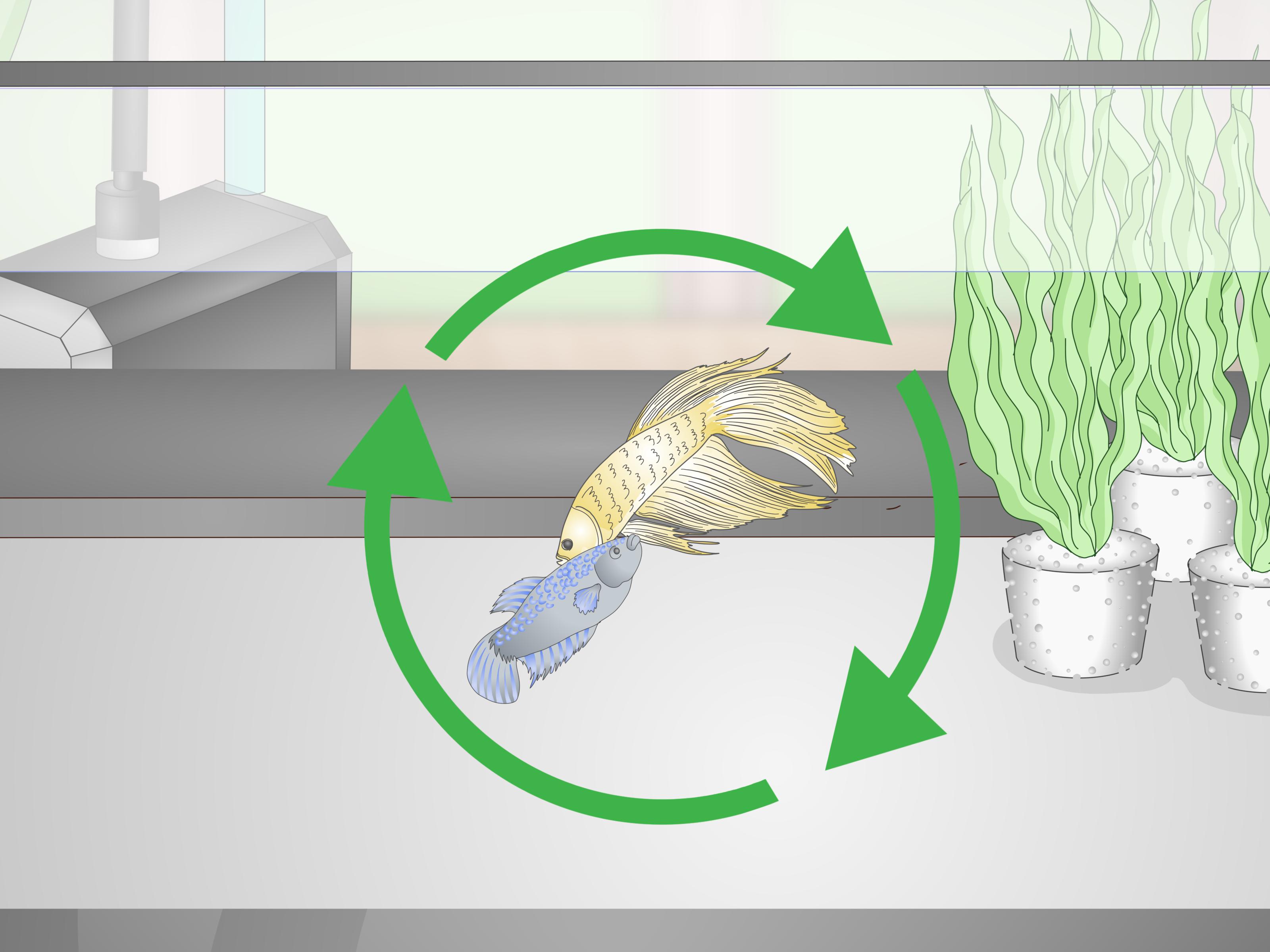
When the pair is ready, the male courts the female under the bubble nest. During the spawning embrace, he wraps his body around hers, eggs are released, and the pair often collect them together. The male then places the eggs into the bubble nest and continues guarding them.
Once spawning is finished, remove the female. This is standard practice because the male usually takes over nest duty and may become aggressive toward her after the eggs are laid. He becomes the one-fish security team.
Betta eggs usually hatch quickly, and the fry often hang from the nest for a short period before becoming free-swimming. Once the fry are swimming on their own, the male should usually be removed as well. At that point, your attention shifts from matchmaking to round-the-clock baby management.
How to Raise Betta Fry Without Losing Your Mind
Betta fry are tiny, delicate, and unimpressed by your optimism. Their first foods must be small enough to eat. That usually means infusoria, vinegar eels, microworms, powdered fry food, and then newly hatched baby brine shrimp as they grow. Many breeders prepare cultures before spawning even happens, because fry do not care that your order is “still in transit.”
Basic fry care tips
- Keep the tank warm and stable
- Use very gentle filtration or none at first if current is disruptive
- Feed tiny amounts several times a day
- Remove waste carefully to protect water quality
- Perform small, careful water changes rather than big dramatic ones
- Monitor growth rate, deformities, and aggression as the fry mature
As the juveniles grow, culling decisions may become necessary. This part is uncomfortable but important. Selective breeding means not raising every fish as future breeding stock. Fish with severe deformities, poor structure, or weak vitality should not continue in the line. Ethical breeders focus on welfare first and traits second.
Eventually, young males may need to be separated into individual containers as aggression develops. Yes, this can become a space-consuming operation very quickly. One successful spawn can turn your fish room into a tiny glass-box suburb almost overnight.
Keep Records Like a Real Breeder
If you want long-term success, keep a breeding log. Write down the parents, age, source, traits, date of spawn, hatch rate, survival rate, and what the fry looked like at each stage. Record which fish had strong finnage, which grew fastest, and which showed problems.
Without records, selective breeding turns into guesswork. With records, it becomes a system. You can identify which pairings produced the best color, which crosses improved body shape, and which lines should be retired before problems become locked in.
Useful things to track
- Color and pattern outcomes
- Tail type consistency
- Growth speed
- Fertility and hatch rate
- Temperament
- Health issues or deformities
Some breeders line breed to stabilize traits, while others outcross periodically to improve vigor. Both approaches can work, but neither should be done blindly. Too much close breeding without a plan can magnify defects just as easily as it can fix desirable traits.
Common Selective Breeding Mistakes
- Breeding for looks only: Color is great. A fish that cannot thrive is not.
- Skipping quarantine: Sick broodstock can wreck an entire project.
- Using an uncycled tank: Ammonia and nitrite are ruthless, especially with fry.
- Feeding heavily without more maintenance: This is how clean tanks become science experiments.
- Keeping parents together too long: Post-spawn aggression is very real.
- Failing to prepare fry food in advance: Tiny fish cannot live on your good intentions.
- Breeding too many traits at once: Focus creates better lines.
The Ethics of Breeding Bettas
Selective breeding should improve the fish, not merely intensify novelty. Breeding fish with severe structural issues, chronic swimming problems, or exaggerated finnage that harms mobility crosses an ethical line. There is a difference between refinement and distortion.
Ask whether your pairing is likely to create stronger fish, not just more marketable ones. Responsible breeders also think ahead about housing, culling, rehoming, and long-term care. Producing dozens or hundreds of fry without a plan for them is not ambitious. It is avoidable chaos with fins.
Experience-Based Lessons From the Breeding Room
The biggest lesson many hobbyists learn from selectively breeding bettas is that success rarely comes from the “perfect pair” alone. It comes from the boring stuff you are tempted to underestimate. The heater that holds steady. The sponge filter that does not blast the nest into next week. The tiny cultures of microworms you started before the fry hatched. The notebook you almost did not keep. Breeding is glamorous for about twelve minutes. After that, it is mostly consistency.
One common early mistake is falling in love with appearance before studying structure. A fish can have unbelievable color and still be the wrong choice for a breeding program. Many beginners pick the most dramatic male in the room, then wonder why the fry grow unevenly or show poor finnage balance. After a few rounds, experienced breeders often become less dazzled by color and more obsessed with topline, vigor, ray structure, and swim quality. It is a funny shift. You start the hobby saying, “Wow, that fish is gorgeous,” and end up saying, “Excellent shoulder placement.” That is when you know the transformation is complete.
Another lesson is that not every promising pair actually likes each other. On paper, a match can look perfect. In the tank, it can look like a very small divorce proceeding. Some pairs click quickly and spawn within a short window. Others posture for days, sulk, shred fins, or act like you have deeply insulted them. Smart breeders do not force it. They separate the pair, reassess, and move on if needed. The goal is not to win a stubbornness contest with a territorial labyrinth fish.
Raising fry teaches patience in a different way. At first, everything feels fragile. You worry about water depth, food size, temperature, and whether that one tiny fry is hanging oddly from the nest. Then the fry begin free-swimming, and suddenly your calm little breeding project becomes a feeding schedule with gills. You learn to value preparation. You also learn that small daily maintenance beats heroic rescue missions. Tiny, regular water changes and steady feeding usually outperform dramatic last-minute fixes.
Over time, breeders also discover that improvement is gradual. A single spawn may produce one or two standouts, not a whole tank of champions. That is normal. Selective breeding is a long game. You keep the best fish, learn from the rest, and make more informed pairings next time. In that sense, every spawn is part experiment, part education, and part humility check. The fish always have a way of reminding you that genetics does not read your plans.
Perhaps the most rewarding experience is seeing progress across generations. The first line might be inconsistent. The second may begin to stabilize. By the third or fourth carefully planned pairing, you may start seeing the kind of predictability you hoped for from the beginning: cleaner tails, stronger bodies, richer color, better balance. That is the moment selective breeding finally makes emotional sense. You are no longer just breeding bettas. You are shaping a line with intention, patience, and a lot of very damp hands.
Final Thoughts
If you want to selectively breed betta fish successfully, think like a breeder, not just a fan. Choose healthy broodstock, define your goals, give the pair an appropriate setup, manage water quality obsessively, and raise fry with patience and structure. Focus on health first, traits second, and novelty last.
The best betta breeding projects are not built on random pairings or wishful thinking. They are built on observation, recordkeeping, and ethical choices. In other words, they are built the same way great fishrooms are built: one smart decision at a time.

