
Beauty Tools & Accessories
How to Gain an Inch on Your Hips: 13 Steps
Aug
Wanting fuller hips is a perfectly reasonable fitness goal. Maybe you want a curvier silhouette, better lower-body proportions, stronger glutes, or jeans that f, the first thing to know is that gaining an inch on your hips is not a matter of finding one magical squat variation on social media.
Your adult pelvic bones will not become wider because you did 100 fire hydrants before breakfast. However, resistance training can increase the size and strength of muscles surrounding the hips, especially the gluteus maximus, gluteus medius, and other hip-supporting muscles. Hip circumference can also change with overall body-weight changes, although the location where your body stores fat is not something you can precisely command. n exactly one inch? Possibly, but no honest workout plan can guarantee an exact measurement by an exact date. Genetics, starting muscle mass, training history, food intake, recovery, and body composition all matter. The smartest approach is to focus on building muscle around the hips and glutes, measure consistently, and let the tape measure report the results.
Ready to give your lower body a serious construction project? Here are 13 practical steps for building fuller-looking hips.
Can You Really Make Your Hips an Inch Bigger?
Yes, hip measurements may increase as you build muscle or gain body mass. The important distinction is between changing bone structure and changing the tissues surrounding your hips.
The gluteus medius sits along the upper and outer portion of the hip area, while the gluteus minimus lies beneath it. These muscles help move the leg away from the body’s center and stabilize the pelvis. The larger gluteus maximus contributes heavily to the size and shape of the buttocks. Developing these areas may create a rounder, fuller appearance through the hips. training is the main tool for this job. Current American College of Sports Medicine guidance emphasizes that muscle growth responds to sufficient weekly training volume, while resistance can come from free weights, machines, bands, body weight, and home-based routines. In other words, your muscles do not care whether the resistance is wearing a luxury gym logo. n an Inch on Your Hips in 13 Steps
1. Measure Your Hips Before Starting
Before changing your workout, establish a baseline. Otherwise, three months from now you may stand in front of the mirror thinking, “I feel curvier… probably?” Scientific precision deserves slightly more than vibes.
Use a flexible measuring tape and wrap it around the fullest portion of your hips and buttocks. Keep the tape level with the floor. It should sit against your body without digging into the skin.
Measure two or three times and record the most consistent number. For future comparisons, measure under similar conditions, preferably at approximately the same time of day and wearing similar clothing.
Take front, side, and back progress photos as well. Muscle development may alter shape before a dramatic change appears on the measuring tape.
2. Train the Muscles That Actually Shape the Hip Area
If fuller hips are your goal, endlessly performing random leg exercises is inefficient. Your program should deliberately train the gluteus maximus and the muscles around the outer hips, particularly the gluteus medius.
The gluteus maximus contributes to hip extension and much of the visible mass of the buttocks. The gluteus medius and minimus help with hip abduction and pelvic control. Training multiple movement patterns is therefore more sensible than declaring squats the king, queen, mayor, and entire city council of glute training. ilding workouts should contain a combination of hip-extension movements, squatting or lunging patterns, and hip-abduction exercises.
3. Schedule Two or Three Lower-Body Workouts Each Week
Consistency beats the occasional heroic workout that leaves you walking downstairs sideways for four days.
Adults are advised to perform muscle-strengthening activities at least two days per week. For a specific muscle-building goal, you can organize two or three lower-body sessions throughout the week, depending on your fitness level and recovery. ACSM’s updated resistance-training guidance notes that greater weekly training volume can support hypertrophy, with roughly 10 weekly sets per muscle group offered as a useful target for muscle-growth programming. hedule might look like this:
- Monday: Glute and lower-body strength
- Thursday: Hip and glute hypertrophy
- Saturday: Optional lighter glute and abduction session
Beginners do not need to rush into three intense sessions. Two productive workouts performed consistently can accomplish far more than an overly ambitious routine you abandon after nine days.
4. Make Hip Thrusts or Glute Bridges a Priority
Hip-extension exercises deserve a prominent position in a hip-building routine. Glute bridges are accessible for beginners, while loaded hip thrusts offer a convenient way to gradually add resistance.
For a basic glute bridge, lie on your back with your knees bent and feet on the floor. Brace your midsection, press through your feet, and raise your hips. At the top, contract your glutes without aggressively arching your lower back.
When body-weight bridges become easy, progress to a resistance band, dumbbell, or appropriately set-up barbell hip thrust.
Try two to four working sets. Choose resistance that makes the final repetitions challenging while still allowing controlled technique. Mayo Clinic guidance recommends gradually increasing resistance as a current weight becomes easier rather than sacrificing form merely to lift a heavier number. ats to Build Overall Lower-Body Mass
Squats are not the only answer to bigger hips, but they remain a useful compound exercise. Depending on your variation and technique, squats train the glutes along with the quadriceps and other lower-body muscles.
Start with a body-weight or goblet squat if you are learning the movement. Keep your feet stable, control the lowering phase, and use a range of motion you can perform without pain.
As your strength improves, add load gradually. Options include dumbbell squats, front squats, back squats, and machine-based squat patterns.
Do not force your feet into a strange “perfect glute stance” copied from a 12-second video. Limb length, hip structure, and mobility vary. Find a stable position that allows you to squat comfortably and train hard.
6. Add Lunges and Step-Ups for More Glute Work
Lunges and step-ups deserve attention because they train one side at a time and challenge the gluteal muscles while requiring pelvic control. ACE’s review of glute exercises found step-ups and lunges among movements producing substantial gluteus medius activation. ons include:
- Reverse lunges
- Walking lunges
- Bulgarian split squats
- Front-foot-elevated split squats
- Dumbbell step-ups
If regular lunges irritate your knees or feel unstable, reverse lunges are often an easier variation to control. Start with body weight, master your balance, and then hold dumbbells.
Performing unilateral exercises can also expose strength differences between your left and right sides. Your stronger leg may be secretly doing group-project levels of extra work during bilateral exercises.
7. Train Hip Abduction for Fuller-Looking Outer Hips
People researching how to gain an inch on their hips often focus exclusively on the gluteus maximus. For a broader-looking hip area, do not ignore the gluteus medius and other hip abductors.
ACE identifies exercises such as side-lying hip abduction, clamshells, and band-based movements as ways to challenge the gluteus medius. Proper positioning matters because a large, sloppy leg swing can shift work away from the intended muscle. duction exercises include:
- Seated hip abduction
- Standing cable hip abduction
- Side-lying leg raises
- Banded lateral walks
- Clamshells
Use controlled repetitions and concentrate on the outer hip. You do not need to throw your leg toward the ceiling like you’re auditioning for an action movie.
8. Include Unilateral Exercises to Improve Shape and Symmetry
Single-leg and split-stance exercises can make each side of your lower body contribute independently. That makes them useful when you have noticeable strength or muscle imbalances.
Bulgarian split squats, single-leg Romanian deadlifts, single-leg glute bridges, and step-ups are all practical choices.
Begin with your weaker side when performing unilateral work. Match the number of repetitions on your stronger side rather than giving it bonus reps simply because it can do more.
Perfect visual symmetry is not a realistic human standard. Bodies are naturally asymmetrical. The goal is balanced muscular development and strong movement, not becoming a mirrored character from a video game.
9. Apply Progressive Overload
This is one of the most important steps in the entire plan.
Doing the same 20 body-weight squats with the same effort for the next two years is unlikely to maximize muscle growth. Your muscles adapt to familiar demands. Progressive overload means gradually increasing the training challenge as your capacity improves.
You can progress by adding weight, completing more repetitions, performing additional productive sets, improving range of motion, or making a movement more demanding. NASM and Harvard Health both describe progressively increasing resistance or workout volume as a fundamental part of continued muscle development. , suppose you perform three sets of 10 hip thrusts with a particular weight. Over several workouts, you reach three controlled sets of 15. Instead of repeating that forever, you could slightly increase the resistance and return to a lower repetition number.
Keep a workout log. Your memory is wonderful for remembering an embarrassing conversation from 2017 and surprisingly unreliable for recalling last Tuesday’s dumbbell weight.
10. Eat Enough Food to Support Muscle Growth
Building muscle requires training, but food provides the energy and materials that support recovery and tissue development.
If you continually eat less energy than your body uses, maximizing muscle gain becomes more difficult. NIDDK explains that body weight generally increases over time when calorie intake consistently exceeds calorie use. For healthy weight gain, Mayo Clinic and the Academy of Nutrition and Dietetics emphasize nutrient-rich, calorie-containing foods rather than depending on candy, chips, or sugary drinks. ople trying to build muscle, a small increase in daily food intake is enough. You might add an extra snack or slightly increase portions instead of launching a chaotic “see-food diet” in which every pizza becomes part of your fitness plan.
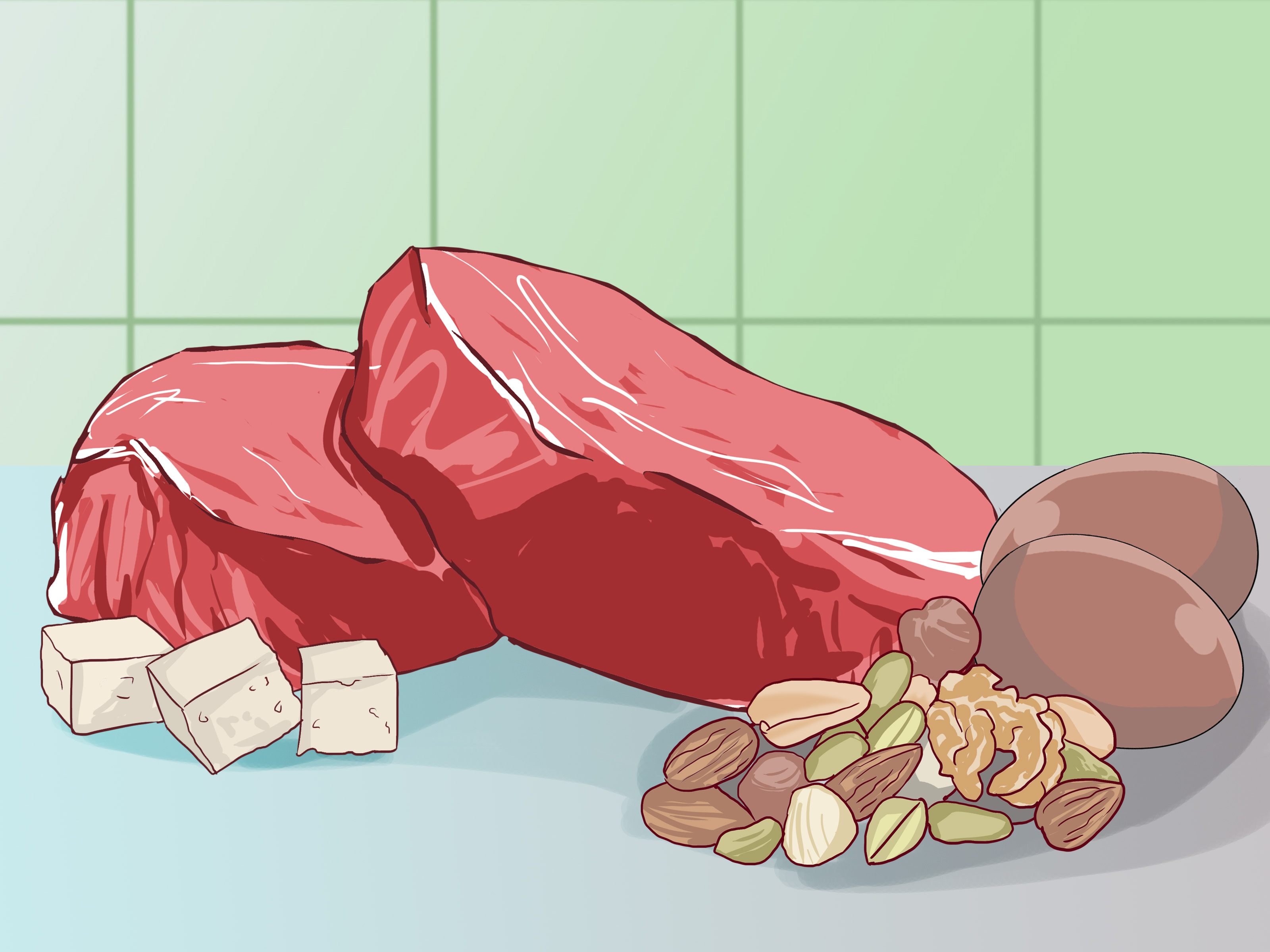
Helpful calorie-dense foods include nut butter, nuts, avocado, olive oil, eggs, dairy foods, soy foods, whole grains, and smoothies made with nutritious ingredients.
11. Include Protein Throughout Your Day
Protein is important for building and maintaining muscle tissue, but simply eating enormous quantities of protein will not magically enlarge your hips. MedlinePlus specifically notes that resistance exercise is necessary for muscle development, while protein supports tissue growth and repair. uality protein source in regular meals and snacks. Examples include:
- Eggs
- Chicken or turkey
- Fish
- Greek yogurt or cottage cheese
- Milk or fortified soy beverages
- Tofu and tempeh
- Beans and lentils
- Nuts and seeds
A balanced vegetarian eating pattern can support muscle development as long as it provides sufficient energy and varied sources of protein. You do not need to eat steak at sunrise while staring intensely at a squat rack. es are useful too, particularly for fueling hard exercise and replenishing energy after training. A post-workout meal combining carbohydrates and protein is a practical recovery strategy. our Glutes Time to Recover
More training is not automatically better training. Your workout provides the stimulus; recovery allows your body to adapt.
Mayo Clinic recommends giving a specific muscle group at least one full day of recovery between strength-training sessions. ACSM also identifies adequate sleep and nutritional support as important pieces of muscle building and exercise recovery. tain a regular sleep schedule and avoid hammering your glutes intensely every day. Mild muscle soreness can happen, particularly when you introduce new exercises, but sharp or persistent joint pain is not a fitness achievement badge.
If an exercise causes pain, stop and reassess the movement. Reduce the load, adjust your technique, or seek guidance from a qualified health or fitness professional when needed.
13. Track Your Progress and Adjust the Plan
Give your program enough time to work. Muscle growth is generally a gradual process, and NASM describes hypertrophy as something that develops slowly in response to repeated training and progressive demands. r hip measurement approximately every four weeks instead of every morning. Daily measurements can be influenced by tape placement and normal body fluctuations.
Review four areas:
- Is your hip measurement changing?
- Are your progress photos showing more shape?
- Are you getting stronger in your main exercises?
- Are you eating and recovering consistently?
If your strength is increasing but your circumference has not changed after a substantial period of consistent training, review your total training volume and food intake. You may need additional productive sets, greater resistance, or enough food to better support muscle gain.
Change one or two variables at a time. Rewriting your entire workout every Thursday because the internet introduced a new “secret glute exercise” makes progress difficult to evaluate.
A Sample Hip-Building Workout Routine
Here is a simple example for a healthy adult with basic resistance-training experience. Exercise selection and resistance should be adjusted to your current ability.
Workout A: Glute Strength Focus
- Hip thrusts: 4 sets of 6–10 reps
- Goblet or barbell squats: 3 sets of 8–12 reps
- Reverse lunges: 3 sets of 8–12 reps per leg
- Seated hip abduction: 3 sets of 12–20 reps
Workout B: Hip and Glute Muscle Focus
- Romanian deadlifts: 3 sets of 8–12 reps
- Bulgarian split squats: 3 sets of 8–12 reps per leg
- Step-ups: 3 sets of 10–12 reps per leg
- Cable or band hip abduction: 3 sets of 12–20 reps per side
- Glute bridges: 2 sets of controlled high-effort reps
Warm up with several minutes of comfortable movement and lighter practice sets before heavy exercises. Increase resistance gradually while protecting your technique. The CDC’s broader activity guidance recommends muscle-strengthening exercise at least twice weekly as part of an overall active lifestyle. takes That Can Slow Hip Growth
Doing Hundreds of Reps Without Increasing the Challenge
A burning sensation is not a direct measurement of muscle growth. High-repetition band exercises can be useful, but your overall program still needs progressive resistance and sufficient training volume.
Changing Exercises Every Week
Muscle confusion is often just workout confusion wearing a more marketable outfit. Keep important exercises in your program long enough to practice them and track performance.
Training Only With Squats
Squats can be valuable, but a varied routine that includes lunges, step-ups, hip extension, and hip-abduction work gives you more opportunities to challenge the muscles surrounding the hips. ACE’s evidence-based glute review specifically found meaningful differences in muscle activation among exercises. Little
You cannot expect your body to enthusiastically construct new muscle while chronically underfueling it. Prioritize regular, nutrient-rich meals with enough total food for your activity and body-composition goals.
Expecting Results in Seven Days
A temporary post-workout “pump” may make your glutes look fuller for a short time, but lasting muscular development requires repeated training and recovery. Judge progress in months of consistency rather than one dramatic weekend.
Experience Notes: What the Hip-Building Process Often Feels Like
One of the most useful lessons from following a hip-building program is that visible progress and workout progress do not always arrive together. During the first few weeks, many exercisers become stronger before they see a major difference in their hip measurement. A hip thrust that initially feels awkward may become smoother. Step-ups stop resembling an emergency balance test. You begin using heavier dumbbells and recover more comfortably between sets.
Then comes the mirror problem. You look at yourself every day, so gradual physical changes are remarkably easy to miss. This is why monthly pictures and consistent measurements can be more useful than repeatedly turning sideways in the bathroom mirror. A photo taken eight or twelve weeks later may reveal rounder glutes or additional outer-hip shape that seemed invisible during the daily routine.
Another common experience is discovering that the glute exercises you expected to love are not always the ones that work best in your personal program. Some people feel stable and powerful during squats but struggle to progressively load lunges. Others enjoy hip thrusts yet find Bulgarian split squats to be a personal disagreement with gravity. The solution is not to abandon difficult movements instantly, but neither is it necessary to build your entire routine around an exercise that repeatedly causes pain.
Technique often improves with repetition. Early in a program, a beginner may perform side-lying leg raises by swinging the leg far too high. Once the movement is slowed down and the pelvis stays stable, a much smaller motion can make the outer hip work harder. It is a humbling fitness moment: apparently the dramatic version was not automatically the effective version.
Food can also become an unexpected challenge. People who have spent years trying to eat less may find it psychologically strange to increase portions to support muscle growth. The easiest approach is often gradual. Adding Greek yogurt and fruit to breakfast, using a little more olive oil with dinner, drinking a smoothie, or including an additional sandwich can feel more sustainable than forcing down enormous bodybuilding meals.
Recovery becomes another noticeable part of the experience. At first, the temptation is to train glutes almost every day because the goal feels urgent. After several weeks, most people learn that a fatigued lower body does not produce magical workouts. Performance improves when hard sessions are separated by recovery and supported with regular sleep and adequate food.
Progress may also arrive unevenly. Your hip measurement might remain the same for several weeks and then show a small change. Strength can climb quickly on one exercise and slowly on another. One side may initially feel less coordinated. These differences do not necessarily mean the program is failing.
The most productive mindset is to treat gaining an inch on your hips as a training project rather than a deadline-driven emergency. Record your exercises. Try to improve your performance gradually. Eat in a way that supports your goal. Measure consistently. After eight, twelve, or more weeks, assess the trend rather than obsessing over one number.
Perhaps the best part of the process is that even when the tape measure is stubborn, a well-designed glute program can still leave you stronger and more confident in lower-body movements. Your goal may start with “I want one more inch,” but the ability to perform strong lunges, controlled step-ups, and heavier hip thrusts is a pretty satisfying side effect.
Conclusion: Build Fuller Hips With Patience and Progressive Training
Learning how to gain an inch on your hips begins with realistic expectations. You cannot reshape the bones of your adult pelvis with exercise, and you cannot choose exactly where body fat will accumulate. What you can do is train the gluteal and hip muscles consistently, apply progressive overload, eat enough nutrient-rich food, include adequate protein, and recover between demanding workouts.
Focus on hip thrusts or bridges, squats, lunges, step-ups, unilateral exercises, and hip-abduction movements. Record your training so that weights, repetitions, or productive volume gradually improve. Measure your hips under consistent conditions every few weeks and use progress photos to evaluate changes in shape.
Most importantly, allow time for the process. An inch of additional hip circumference is a specific measurement, but your individual timeline depends on genetics, training history, nutrition, and body composition. Build the habits first. The measuring tape can deliver its review later.
Note: This article provides general fitness information and is not individualized medical advice. The training and nutrition principles were synthesized from current guidance and educational material published by U.S. sources including the American College of Sports Medicine, CDC, Mayo Clinic, Cleveland Clinic, ACE Fitness, NASM, MedlinePlus/NIH, NIDDK, Harvard Health, the Academy of Nutrition and Dietetics, and the U.S. Office of Disease Prevention and Health Promotion. People with hip pain, injuries, chronic health conditions, or significant unexplained weight changes should discuss exercise and nutrition changes with an appropriate healthcare professional. “meta_title”: “How to Gain an Inch on Your Hips: 13 Smart Steps”,
“meta_description”: “Learn 13 practical steps to build fuller hips with glute training, progressive overload, nutrition, recovery, and realistic progress tracking.”,
“sapo”: “Want fuller, stronger-looking hips but aren’t sure whether endless squats will actually work? This practical 13-step guide explains how glute and hip muscle training, progressive overload, smart nutrition, and proper recovery can help increase hip size over time. You’ll learn which exercises deserve a place in your routine, how often to train, why outer-hip muscles matter, how to track your measurements, and which common mistakes may hold back progress. No miracle curves, magic bands, or fitness fairy dust requiredjust a realistic strategy for building your lower body.”,
“keywords”: [
“how to gain an inch on your hips”,
“how to get wider hips”,
“hip building exercises”,
“glute muscle growth”,
“bigger hips workout”,
“outer hip exercises”,
“progressive overload for glutes”
]
}

