
Body Care
“How Are You Doing Today?” A Survey for Starting Each Class – Faculty Focus
Jun
Note: This article synthesizes current teaching guidance on student well-being, formative feedback, classroom climate, Universal Design for Learning, and faculty-student connection into an original, publication-ready resource.
Every class begins before the first slide appears, before the attendance sheet loads, and before anyone bravely asks, “Will this be on the exam?” It begins with the human beings in the room. Some arrive energized, some arrive exhausted, and some arrive carrying the emotional equivalent of a backpack full of bricks, snacks, and unread emails. That is why a simple class-starting survey built around the question, “How are you doing today?” can become far more than a warm-up activity. It can become a practical tool for student engagement, classroom connection, and responsive teaching.
The idea, highlighted by Faculty Focus, is refreshingly simple: begin class with a quick anonymous check-in that asks students to rate how they are doing physically and mentally. No dramatic speeches. No therapy couch. No professor suddenly becoming a life coach with a whiteboard marker. Just a brief, structured invitation for students to pause, reflect, and let the instructor see the room more accurately.
In an age when student mental health, academic pressure, social isolation, and burnout are regular parts of campus conversations, this small survey does something many course policies only claim to do: it listens. Even better, it gives instructors real-time information they can use to make smarter teaching decisions before the class session goes off the rails like a PowerPoint animation from 2008.
Why Start Class With a Student Well-Being Survey?
A “How are you doing today?” survey works because it recognizes that learning is not separate from well-being. Students do not leave stress, illness, anxiety, family responsibilities, jobs, financial concerns, or sleep deprivation outside the classroom door. They bring all of it with them, often while pretending everything is fine because that is what college students have been trained to say.
Faculty members are not expected to diagnose mental health conditions or solve every personal problem. That would be unrealistic, inappropriate, and probably a fast track to needing your own wellness check-in. However, instructors can create learning environments where students feel seen, respected, and supported. A short anonymous survey is one low-barrier way to do that.
The classroom check-in also helps instructors move from assumption to evidence. Without feedback, a quiet class might look disengaged when students are actually overwhelmed. A low-energy discussion might seem like poor preparation when the real issue is that three major exams landed on the same week. A sudden dip in participation might reveal a pattern worth addressing, not a mysterious collective decision to become houseplants.
How the “How Are You Doing Today?” Survey Works
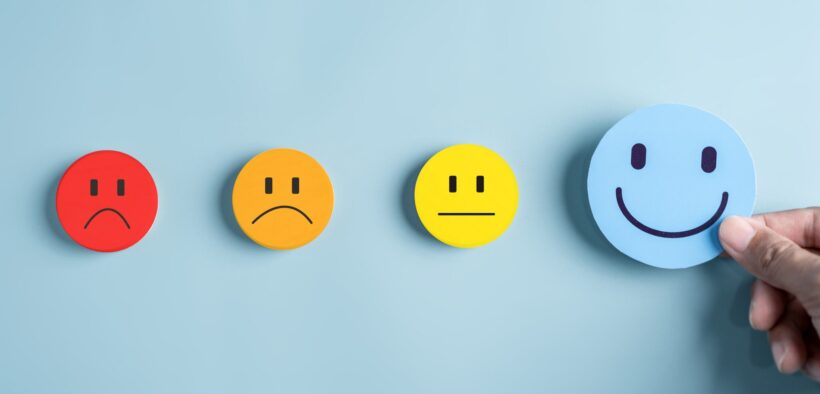
The survey can be beautifully simple. At the beginning of each class, students respond anonymously to two prompts: one about physical health and one about mental health. Each prompt can use a five-point scale, with “poor” on one end and “excellent” on the other. The instructor displays the survey as students settle in, collects the responses, and uses the class average as a quick temperature check.
Digital tools such as Mentimeter, Google Forms, Microsoft Forms, Poll Everywhere, Canvas quizzes, or other classroom response systems can make the process easy. In low-tech settings, students can submit anonymous index cards, colored sticky notes, or quick paper ratings. The tool matters less than the routine. The goal is not to create a massive data dashboard that requires its own committee. The goal is to gather useful information quickly and respectfully.
Sample Survey Questions
Here are practical starter questions instructors can adapt:
- How are you doing physically today? Rate from 1, poor, to 5, excellent.
- How are you doing mentally today? Rate from 1, poor, to 5, excellent.
- What is one word that describes your current energy level?
- What might help you participate today?
- Is there anything about today’s class pace that would support your learning?
For privacy, avoid asking students to disclose sensitive personal details. A check-in survey should not become a confessional booth with Wi-Fi. Keep it brief, optional when appropriate, and focused on learning conditions.
The Teaching Value of Real-Time Feedback
One of the strongest reasons to use a class-starting survey is that it gives instructors formative feedback. Unlike end-of-semester evaluations, which often arrive too late to help the students who wrote them, regular check-ins can shape the course while students are still enrolled. That is the pedagogical equivalent of adjusting your GPS before driving into a lake.
If the class average for mental well-being drops significantly during midterms, the instructor might slow the pace, offer a short review, clarify expectations, or build in a few minutes for planning. If physical energy is low, the instructor might use a brief pair-share instead of a long lecture, add a stretch break, or open with a low-stakes retrieval question rather than a high-pressure cold call. These are not lowered standards. They are smarter routes to the same learning goals.
Student feedback becomes especially powerful when instructors close the loop. After reviewing responses, say what you noticed and what you will do. For example: “I see today’s energy is lower than usual, so we will keep the first discussion in pairs before opening it to the full group.” That one sentence tells students their input matters. It also shows that feedback is not disappearing into the mysterious academic fog where old course evaluations go to nap.
Building Classroom Community Without Making It Awkward
Some instructors worry that asking “How are you doing today?” will feel too personal. That concern is fair. The key is to frame the survey professionally. This is not about prying into students’ private lives. It is about understanding the learning climate.
A good introduction might sound like this: “At the start of class, I’ll ask you to complete a brief anonymous check-in. You do not need to share personal details. I use the results to understand the room, adjust activities when possible, and help us notice patterns in workload, energy, and learning.”
That framing protects boundaries while still communicating care. It also helps students understand that the instructor is not collecting feelings for decoration. The survey has a purpose, and the purpose is better learning.
Why Anonymous Responses Matter
Anonymity is essential. Students are more likely to answer honestly when they do not fear being judged, singled out, or treated differently. A named survey may produce polite fiction: “I am excellent, thriving, hydrated, and fully prepared,” submitted by a student who has slept four hours and eaten one granola bar since yesterday.
Anonymous data helps instructors see trends without pressuring individual students to reveal private struggles. If a student wants direct help, the instructor can separately remind the class about office hours, advising, tutoring, counseling services, disability resources, emergency support, and other campus systems. The survey should open the door to support, not force anyone through it.
Connecting the Survey to Student Belonging
Student belonging is not created by one icebreaker, one inspirational quote, or one syllabus statement written in unusually friendly font. Belonging is built through repeated signals: you matter here, your experience counts, and this course was designed with real learners in mind.
A starting-class survey sends that signal consistently. It tells students that the instructor sees them as people, not just grade-producing organisms. This matters because students who feel connected to school and supported by adults are more likely to engage, persist, and participate in healthy academic behaviors. In higher education, belonging is especially important during transitions: first-year courses, gateway classes, large lectures, online programs, and courses with historically high withdrawal rates.
The survey also supports inclusive teaching. Students vary in background, confidence, language, disability, work obligations, caregiving duties, and prior educational experiences. A check-in gives quieter students, anxious students, commuting students, and students who rarely speak in class a simple way to influence the learning environment.
Using the Survey Without Turning Class Into a Group Therapy Session
Faculty should be clear about their role. A well-being check-in is not therapy. It is not medical screening. It is not a substitute for professional mental health support. It is a teaching practice that helps instructors notice patterns and respond appropriately within the boundaries of the classroom.
If responses suggest students are under strain, the instructor can do several practical things: remind students of support services, revisit deadlines when reasonable, clarify confusing assignments, create study plans, recommend campus tutoring, or simply acknowledge that the week is demanding. Sometimes the most helpful thing a professor can say is, “This is a heavy week. Let’s make the next step clear.”
Instructors should also know their institution’s referral process. If a student discloses immediate danger, crisis, or severe distress through any channel, faculty should follow campus protocols. A survey should never collect urgent crisis reports without a clear response system. For that reason, many instructors include a statement such as: “This survey is not monitored for emergencies. If you need immediate help, please contact campus support services or emergency services.”
What to Do With the Data
The survey data does not need to be complicated. Instructors can track class averages over time, note patterns around exams and deadlines, and compare energy levels across units. A simple spreadsheet is enough. If you enjoy elaborate charts, congratulations; this is your moment. If spreadsheets make you feel like you are trapped in a beige office maze, keep it basic.
Look for Patterns, Not Perfection
One low score does not mean the course is broken. One excellent day does not mean everyone has achieved enlightenment. Look for trends. Are mental health ratings lower before major exams? Does physical energy dip in evening classes? Do students report better readiness when assignments are previewed earlier? These patterns can guide small course adjustments.
Invite Students to Interpret the Results
Occasionally, share an aggregate chart with the class and ask what they notice. Students may identify patterns the instructor missed. They may say, “This was the week all our lab reports were due,” or “That was right after spring break, and nobody remembered how chairs worked.” Their interpretation turns the survey into a metacognitive activity. Students begin thinking about how stress, planning, sleep, and workload affect learning.
Practical Ways to Respond to Survey Results
The most important rule is simple: do not ask for feedback you are completely unwilling to consider. Students quickly recognize symbolic listening. If the survey never affects anything, it becomes another classroom ritual, like pretending the projector will work on the first try.
Here are realistic responses that preserve academic rigor:
- Begin with a two-minute recap when students report low confidence.
- Offer a choice between individual reflection and partner discussion.
- Pause for a short planning activity before a major deadline.
- Clarify assignment criteria when stress rises around assessments.
- Move a demanding activity later in class after a warm-up.
- Remind students of support resources without singling anyone out.
- Use a brief retrieval quiz instead of adding new content on an unusually low-energy day.
These adjustments do not water down the course. They help students access the course. That distinction matters. Good teaching is not about pretending every class session happens under ideal conditions. It is about designing learning that can survive reality.
Survey Design Tips for Busy Faculty
A useful class-starting survey should be short, consistent, and actionable. If it takes ten minutes to complete, students will treat it like homework wearing a tiny disguise. Aim for one to three questions. Use the same core prompts each time so trends are visible. Add an optional open-ended question only when you have time to read the answers.
Keep the Language Neutral
Use simple language such as “physical health,” “mental well-being,” “energy,” “readiness,” or “support for learning.” Avoid language that pressures students to explain trauma, disclose diagnoses, or perform positivity. “How are you doing today?” is powerful because it is open, ordinary, and humane.
Protect Student Privacy
Do not display individual responses. Share only aggregate results. If using word clouds, be cautious: a very small class can make responses identifiable. For small seminars, consider private instructor-only results or paper-based anonymous ratings.
Make Participation Low Stakes
The survey should not be graded for emotional honesty. If participation counts for attendance, students may rush through it or answer strategically. Better options include making it optional, using it as an ungraded entry routine, or counting completion without storing sensitive answers.
How This Fits With Universal Design for Learning
Universal Design for Learning, often shortened to UDL, encourages instructors to design learning environments that offer flexible ways for students to engage, access information, and demonstrate learning. A start-of-class check-in supports this mindset because it helps instructors notice barriers before they become bigger problems.
For example, if students consistently report low readiness before problem-solving sessions, the issue may not be laziness. It may be that pre-class materials are unclear, the workload is uneven, or students need a worked example before independent practice. The check-in does not provide every answer, but it points instructors toward better questions.
Common Mistakes to Avoid
The first mistake is asking too much. A daily survey with eight questions and three required reflections will quickly become a tiny administrative monster. Keep it lean.
The second mistake is overreacting to every result. If the class average dips once, you do not need to redesign the semester overnight while whispering, “The data has spoken.” Instead, observe, ask, and adjust proportionally.
The third mistake is failing to follow up. Students do not need every request granted, but they do need evidence that the instructor looked at the results. A quick comment, a small adjustment, or a transparent explanation can preserve trust.
The fourth mistake is treating the survey as emotional surveillance. The tone should be supportive, not monitoring. Students should feel invited, not inspected.
Classroom Experience: What This Check-In Looks Like in Real Life
Imagine a Monday morning class in a required first-year writing course. The instructor opens the room ten minutes early, turns on the projector, and displays a simple anonymous poll: “How are you doing physically today?” and “How are you doing mentally today?” Students enter with coffee, backpacks, headphones, and the gentle facial expression of people who have recently met an alarm clock and lost the argument.
During the first week, the survey feels slightly unusual. A few students laugh. One asks, “Do you really want to know?” The instructor smiles and says, “Only at the level that helps us learn together.” That sentence matters. It keeps the activity from becoming too personal while still showing that the instructor means it.
By week three, the routine is normal. Students answer while opening laptops. The instructor notices that the physical health average is steady, but the mental well-being score has dropped. Instead of ignoring it, she says, “I’m seeing lower mental energy today. We still need to work on thesis revision, but I’m going to start with examples before asking you to revise your own drafts.” The plan changes slightly, not dramatically. Students get a model first. The room settles. The work improves.
In another class, a biology instructor notices a predictable pattern. On days after lab reports are due, physical energy and mental readiness both fall. At first, he assumes students are procrastinating. After a short class conversation, he learns that many students also have chemistry problem sets due the same night. He cannot change another course, but he can post lab-report reminders earlier, provide a checklist, and spend five minutes explaining how to break the task into smaller steps. The survey turns frustration into design information.
In a large lecture hall, the check-in becomes a bridge between anonymity and community. Students may not know everyone in the room, but they can see that they are not alone. When the aggregate result shows that many classmates are tired, stressed, or uncertain, the silence feels less isolating. The instructor might say, “Looks like a lot of us are operating at medium battery today. Let’s plug into the material slowly.” Is it a little corny? Absolutely. Does it work better than pretending 150 students are fully alert at 8:00 a.m.? Also yes.
Online instructors can use the same approach. A short poll at the start of a synchronous Zoom session or the beginning of a weekly module can help students transition into learning. In asynchronous courses, a Monday check-in can ask students to rate workload pressure and identify where they need clarification. The instructor can then post a short announcement: “Several of you asked about the project rubric, so I recorded a five-minute walkthrough.” That kind of response makes online courses feel less like digital caves with due dates.
The most meaningful experiences often come from small changes. A student who rarely speaks may use the survey to say the pace feels too fast. A student juggling work shifts may appreciate a reminder posted earlier. A class facing midterm overload may benefit from ten minutes of structured study planning. None of these moments require heroic intervention. They require attention.
Over time, the survey can also teach students to monitor themselves. They begin noticing patterns: sleep affects focus, planning reduces panic, and asking for clarification early is better than silently entering the academic wilderness. That self-awareness is part of learning. A student who can say, “I am not ready today, and here is what would help me start,” is developing a skill that extends beyond the course.
The best version of the “How are you doing today?” survey is not sentimental. It is practical care. It gives instructors a better read of the room, gives students a low-risk voice, and gives the class a shared language for learning under real conditions. Some days the data will say, “We are ready.” Other days it will say, “Please proceed gently; humans are buffering.” Both are useful.
Conclusion: A Small Question With Serious Teaching Power
Starting class with “How are you doing today?” may seem almost too simple. Yet simple practices are often the ones that survive busy semesters. This survey helps instructors understand student well-being, adjust instruction, build trust, and create a more responsive classroom climate. It does not replace academic standards, campus counseling, advising, or thoughtful course design. It strengthens them by making the classroom more aware of the learners inside it.
Faculty do not need to become mental health professionals to care about student well-being. They need clear boundaries, humane routines, and a willingness to listen. A two-question anonymous survey can become a small but powerful ritual: students pause, instructors notice, and the class begins with reality rather than assumption. In higher education, that is not fluff. That is good teaching.

