
Makeup
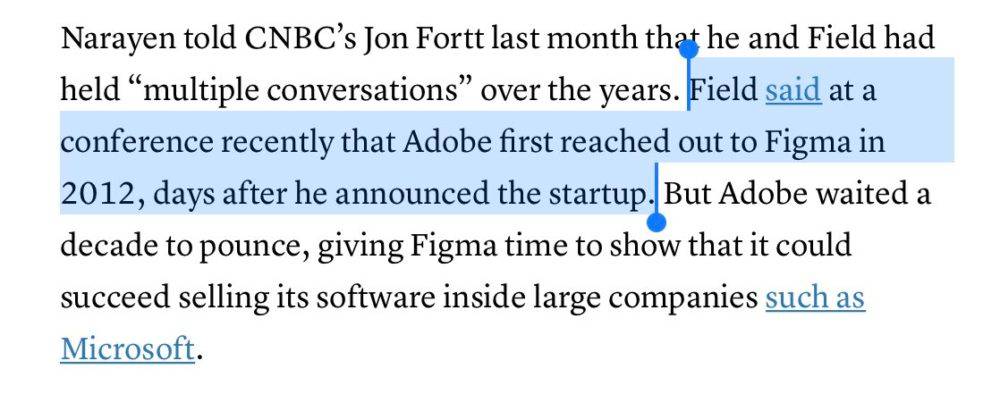
Figma: “We’d Been Talking to Adobe Since 2012”
Jun
In tech, some deals arrive like a lightning bolt. Others arrive like a calendar reminder that has been snoozed for ten years. Figma’s headline-grabbing relationship with Adobe belongs firmly in the second category. The phrase “We’d been talking to Adobe since 2012” captures more than a fun piece of startup trivia. It reveals how major acquisitions, strategic partnerships, product rivalry, and market disruption often grow out of long-running conversations that look boring from the outsideuntil one day they become a $20 billion announcement.
Figma, the browser-based collaborative design platform co-founded by Dylan Field and Evan Wallace, began as a bold bet that serious design work could move from desktop software into the cloud. In 2012, that idea sounded ambitious, maybe even slightly suspicious. Designers were used to powerful local tools, carefully arranged files, and the occasional tragic filename such as “final_FINAL_v7_reallyfinal.sketch.” Figma offered something different: multiplayer design, live collaboration, browser access, easy sharing, and a workflow that made product teams feel less like they were passing a fragile vase across a canyon.
Adobe, meanwhile, was not exactly a neighborhood lemonade stand. It was the creative software giant behind Photoshop, Illustrator, InDesign, After Effects, Premiere Pro, and a cloud empire used by millions of creators and enterprises. So when Adobe agreed in September 2022 to acquire Figma for approximately $20 billion in cash and stock, the design world reacted with equal parts shock, curiosity, panic, memes, and deeply concerned Slack threads.
But the most interesting part was not only the price tag. It was the timeline. Adobe and Figma had reportedly been in contact for years. The 2022 deal was not a random handshake after one great demo. It was the result of a decade-long relationship, proof that in business, as in design, the first draft is rarely the final version.
The Big Idea Behind Figma’s Rise
Figma’s original magic was simple to explain and hard to execute: make design collaborative by default. Before Figma, product design often involved exporting files, sending screenshots, leaving comments in separate tools, and hoping everyone was looking at the same version. It was a workflow held together by duct tape, coffee, and the phrase “Can you resend that?”
Figma changed the rhythm. Designers, product managers, developers, marketers, executives, and clients could all gather around the same file. Comments lived next to the work. Prototypes could be shared instantly. Design systems became easier to maintain across teams. Instead of treating design like a sealed studio, Figma treated it like a shared workspace.
This mattered because software development itself had become more collaborative. Engineers already had GitHub, product teams had Jira, teams had Slack, and documents had Google Docs. Design was overdue for its own multiplayer moment. Figma did not merely create another design tool; it updated the social architecture of product creation.
Why Adobe Wanted Figma
Adobe’s interest in Figma made strategic sense. Adobe had long dominated creative tools, but Figma had become the cool, fast-growing, web-first platform that younger product teams loved. Figma was not just stealing attention; it was shaping a new standard for how digital products were designed.
For Adobe, buying Figma would have meant adding a beloved collaborative product to its ecosystem and strengthening its role in product design. For Figma, joining Adobe could have brought resources, global reach, and access to a broader creative software universe. On paper, the pitch sounded like a power couple. In practice, regulators looked at the same picture and saw a competition problem wearing a very expensive jacket.
The deal also reflected a larger industry trend. Established software giants often acquire younger companies not only for revenue, but for momentum, talent, product philosophy, and category leadership. Figma had what every large company wants but cannot easily manufacture in a lab: passionate users who voluntarily evangelized the product. That kind of love is rare. Enterprise software usually inspires compliance, not affection. Figma inspired stickers, community events, and designers defending it online like it was a family member.
The $20 Billion Deal That Did Not Happen
Adobe announced the proposed acquisition in September 2022. The deal valued Figma at roughly $20 billion, a figure that immediately became one of the most discussed software acquisition prices of the decade. Critics wondered whether Adobe was overpaying. Supporters argued that Figma’s growth, influence, and product-led adoption justified the premium. Designers mostly asked the practical question: “Will Figma stay Figma?”
That fear was not irrational. Creative professionals have long memories. When a beloved tool gets acquired, users often worry about pricing changes, slower innovation, forced integrations, or the dreaded “enterprise roadmap,” which is where good ideas sometimes go to wear a blazer and disappear.
Figma’s leadership emphasized autonomy and continued product focus. Still, the regulatory process became increasingly difficult. Authorities in the United Kingdom and European Union raised concerns that the acquisition could reduce competition in product design software and adjacent creative tools. By December 2023, Adobe and Figma mutually agreed to terminate the merger, saying there was no clear path to regulatory approval.
The breakup was dramatic, but not disastrous for Figma. Adobe paid a large termination fee, and Figma continued operating independently. In startup mythology, this is the rare version of “we almost got bought” that ends not with awkward silence, but with a stronger balance sheet and a company still very much in the game.
What the Failed Deal Revealed About Competition
The Adobe-Figma story became a case study in modern antitrust thinking. Regulators were not only looking at what the companies sold at that exact moment. They were also asking what competition might look like in the future. Would Figma expand into areas where Adobe was strong? Would Adobe continue competing in product design? Would the acquisition remove an important independent challenger?
Those questions matter because software categories no longer stay politely inside their lanes. A design tool becomes a whiteboard. A whiteboard becomes a presentation tool. A presentation tool becomes a website builder. A website builder grows AI features. Before long, everyone is in everyone else’s lunchbox.
Figma’s evolution after the failed deal proved why regulators were paying attention. The company expanded beyond interface design into tools such as FigJam, Dev Mode, Slides, Sites, Make, Draw, and Buzz. These products pushed Figma deeper into brainstorming, developer handoff, AI-assisted prototyping, website publishing, illustration, and branded marketing workflows. In other words, Figma was no longer just where designers drew rectangles. It was becoming a wider platform for turning ideas into digital products.
Figma’s IPO Changed the Conversation Again
After the Adobe deal collapsed, many observers wondered what Figma would do next. The answer arrived through the public markets. Figma filed for an IPO and began trading on the New York Stock Exchange under the ticker symbol “FIG” in July 2025. The debut attracted enormous attention because it represented more than a financial milestone. It was a public test of whether investors believed Figma could thrive independently after walking away from one of the biggest software acquisition offers ever announced.
The market’s initial answer was enthusiastic. Figma priced its IPO at $33 per share, above its earlier expected range, and its shares surged in the first day of trading. The debut put Figma back in the spotlight and reframed the Adobe episode. Instead of being remembered only as “the company Adobe could not buy,” Figma became a symbol of the independent software company that kept building, kept expanding, and still found a major public-market audience.
Of course, life as a public company is not all confetti and bell-ringing photos. Public investors bring scrutiny. Quarterly performance matters. Product strategy gets analyzed like a detective board covered in red string. Still, Figma entered the market with strong revenue growth, a loyal user base, and a clear story: design is becoming central to how every company builds software.
Why “Talking Since 2012” Matters
The sentence “We’d been talking to Adobe since 2012” is powerful because it punctures a common myth: big deals are not usually sudden. They are often the visible ending of invisible relationship-building. Founders meet executives. Product teams compare notes. Partnerships get discussed. Competitive respect develops. Markets shift. A company that once looked too early becomes impossible to ignore.
In 2012, Figma was an idea with technical risk. Browser-based design sounded exciting, but professional adoption was uncertain. By 2022, Figma had become a major force in product design. Adobe did not just see a tool; it saw a platform, a community, and a workflow that had changed user expectations.
This is a valuable lesson for founders and operators. Strategic relationships are not useful only when someone is ready to write a check. They are useful because they compound. A conversation today may become a partnership next year, a distribution opportunity in five years, or an acquisition discussion a decade later. Business development is sometimes just planting seeds while wearing nicer shoes than usual.
Figma’s Product Strategy: From Tool to Platform
Figma’s strongest move has been expanding without losing the core feeling of collaboration. FigJam brought brainstorming into the same ecosystem. Dev Mode helped developers inspect designs and move closer to implementation. Slides allowed teams to tell stories using the same design language. Figma Sites, Make, Draw, and Buzz showed an ambition to cover more of the product lifecycle, from idea to prototype to marketing asset to live experience.
This platform strategy has risks. The more products Figma adds, the harder it becomes to stay simple. Nobody wants their beloved design tool to become a digital shopping mall where every button opens another button. But the opportunity is clear: if Figma can remain intuitive while expanding, it can become the shared canvas for product teams, not just design teams.
AI makes this even more interesting. Tools like Figma Make point toward a future where users can generate working prototypes from prompts or existing designs. That does not make design less important; it may make design judgment more important. When anyone can generate a screen, the advantage shifts to teams that know what should be generated, why it matters, and how it should feel.
What Adobe and Figma Teach About Timing
The Adobe-Figma saga is a masterclass in timing. Adobe may have identified Figma early, but early interest is not the same as the right deal at the right moment. Buying too early can be difficult if the company has not proven the market. Buying too late can be expensive or blocked. Waiting can provide certainty, but certainty usually comes with a higher price tag and more regulatory attention.
For Figma, saying yes to Adobe in 2022 was understandable. A $20 billion offer is not exactly a coupon for a free sandwich. It was a serious valuation and a chance to scale inside a massive creative software company. But when the deal failed, Figma did something equally important: it did not act like the story was over. It returned to the product, expanded the platform, and prepared for the public markets.
That resilience is the heart of the story. The best companies are not defined only by the deals they close. They are defined by what they build when the deal does not close.
Specific Examples of Figma’s Influence
1. Real-Time Collaboration Became the Expectation
Figma made live design collaboration feel normal. Today, teams expect shared files, comments, permissions, and multiplayer editing. A product manager can comment on a flow, a developer can inspect specs, and a designer can update components without sending a mysterious attachment named “newest-homepage-actually-newest.”
2. Design Systems Became More Accessible
Figma helped organizations scale design systems by making components, variables, libraries, and shared patterns easier to distribute. Instead of each team rebuilding the same button like it was a family recipe, companies could maintain more consistent interfaces across products.
3. Developers Moved Closer to Design
Dev Mode and design-to-code workflows reflect a larger shift: design handoff is no longer a single ceremonial event. It is an ongoing collaboration. Developers can inspect layouts, understand tokens, and work with design context earlier in the process.
4. Non-Designers Entered the Design Space
Figma’s growth has been fueled not only by professional designers, but also by product managers, marketers, founders, engineers, and stakeholders. This is why Figma’s story is bigger than interface design. It is about making visual collaboration a workplace habit.
Experience-Based Lessons From the Figma and Adobe Story
For anyone building a product, running a startup, managing a design team, or simply trying to survive another meeting where someone says “make it pop,” the Figma and Adobe story offers practical lessons that feel surprisingly human.
The first lesson is that relationships compound quietly. Many founders imagine strategic conversations as dramatic boardroom moments. In reality, most important relationships begin with small interactions: a product demo, a conference chat, a customer introduction, a casual “let’s stay in touch.” At the time, these moments may feel ordinary. Years later, they can become the foundation for something enormous. The key is not to treat every conversation like a sales pitch. The key is to build trust before you need it.
The second lesson is that users are the strongest negotiation leverage. Figma became valuable because people loved using it. Not tolerated it. Not accepted it because procurement approved it in 2016. Loved it. The product solved a real pain: design collaboration was messy, slow, and fragmented. Figma made the workflow feel lighter. When users pull a product into companies from the bottom up, executives eventually notice. Competitors notice too. Product-led growth is not magic; it is the result of making something useful enough that users become your unpaid distribution team, ideally without needing matching jackets.
The third lesson is that independence can be a strategy, not a consolation prize. When the Adobe deal collapsed, Figma could have been framed as a company left at the altar. Instead, it used the next chapter to expand its product suite and move toward the public markets. That is a useful mindset for any team. A failed partnership, missed acquisition, rejected investor, or delayed launch does not have to define the company. Sometimes the plan that falls apart creates pressure to build a better one.
The fourth lesson is that category boundaries are temporary. Figma began as a design tool, but its natural expansion moved into whiteboarding, presentations, developer workflows, websites, AI prototyping, marketing assets, and illustration. This is common in software. Once a product becomes the place where work begins, users want it to help with what happens next. The danger is feature bloat. The opportunity is platform power. The difference between the two is taste, restraint, and a very healthy fear of confusing your best users.
The fifth lesson is that timing is brutally important. Adobe’s early conversations with Figma show that recognizing a promising company is only the beginning. The real question is when to act. Too early, and the company may not be ready. Too late, and the price may soar or regulators may object. For founders, timing matters too. Selling can be smart. Staying independent can be smart. The mistake is pretending there is one universal answer. The right move depends on market conditions, team ambition, product momentum, investor expectations, and the founder’s appetite for chaos served quarterly.
Finally, the Figma story reminds teams that great products are not just feature lists. They are cultural shifts. Figma changed who could participate in design conversations. It gave teams a shared visual language. It made design files feel alive. That is why the Adobe relationship mattered so much: Adobe was not merely looking at another software asset. It was looking at a company that had changed how modern digital products are imagined, debated, and built.
Conclusion: A Decade-Long Conversation That Changed Design
Figma’s “we’d been talking to Adobe since 2012” story is not just about a deal that almost happened. It is about the slow burn of trust, the power of product-led adoption, and the way a startup can force an industry giant to pay attention. Adobe saw Figma early, watched it mature, moved to acquire it, and then walked away when regulators made approval unlikely. Figma, meanwhile, kept building.
The company’s journey from browser-based design experiment to public software platform shows how modern work is changing. Design is no longer a closed department. It is a shared process involving designers, developers, marketers, product leaders, executives, and increasingly, AI. Figma’s challenge now is to keep expanding without losing the clarity and speed that made people fall in love with it in the first place.
In the end, the Adobe-Figma saga proves that the biggest stories in technology are rarely overnight successes. They are long conversations, strange timing, hard product decisions, regulatory plot twists, and teams that keep shipping when the script changes. Not bad for a company that started with a browser, a big idea, and the belief that design should be multiplayer.
Note: This article is based on synthesized public information about Figma, Adobe, the proposed acquisition, regulatory developments, Figma’s IPO, and Figma’s product expansion. It is fully rewritten for original web publication and does not include source-link clutter in the article body.

