
Body Care
Designers Edge 8.5 In. Incandescent Clamp Light: A Practical Guide to Flexible Task Lighting
Jul
Some tools earn their keep by being flashy. Others earn it by quietly clamping onto a shelf, pointing at a problem, and making you wonder how you ever found that dropped screw without them. The Designers Edge 8.5 In. Incandescent Clamp Light belongs firmly in the second category.
This classic utility light is built around a simple idea: put focused light exactly where you need it. With an aluminum reflector shade, a spring-loaded clamp, and a corded design, it can serve as a temporary work light in a garage, basement, workshop, utility room, craft area, or storage space. It is not trying to become a smart-home chandelier or win an award for mood lighting. It is trying to illuminate the thing you are fixing, painting, sorting, cleaning, or unsuccessfully pretending does not need attention.
The appeal is easy to understand. Clamp lights are portable, inexpensive, and fast to reposition. They can direct light into corners where ceiling fixtures do a poor job, such as beneath cabinets, behind shelving, near a workbench, or inside a storage closet. The Designers Edge 8.5-inch design also uses a broad metal reflector, which helps aim more of the bulb’s output toward the work area instead of letting it drift around the room like a confused firefly.
What Is the Designers Edge 8.5 In. Incandescent Clamp Light?
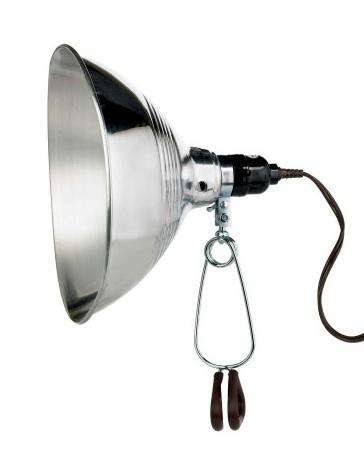
The Designers Edge 8.5 In. Incandescent Clamp Light is a portable clamp-mounted work light designed for general task lighting. Historical product listings describe an approximately 8.5-inch aluminum reflector shade, a heavy-duty clamp with non-slip grips, and a heat-resistant socket rated for bulbs up to 150 watts. Some listings describe a longer cord, while other archived product records show shorter cord versions, so buyers should always confirm the specifications printed on the fixture label and packaging before purchasing or using one.
Its design is simple but effective:
- An aluminum reflector directs light forward.
- A spring-loaded clamp attaches to many stable surfaces.
- A flexible neck or adjustable lamp head helps aim the beam.
- A corded connection keeps the light running without batteries.
- A socket accepts a compatible bulb selected by the owner.
That last point matters. The fixture is often sold without a bulb, which gives users flexibility but also puts the responsibility on them to select a bulb that is compatible with the socket, wattage rating, fixture design, and intended use.
Why an 8.5-Inch Clamp Light Still Makes Sense
Modern workshops are full of sleek rechargeable LEDs, magnetic work lights, strip lighting, and headlamps that make people look like they are preparing to repair the International Space Station. Those tools are useful, but a clamp light still has a distinct advantage: it can stay in one place and throw focused light exactly where it is needed.
The 8.5-inch reflector is large enough to provide a practical area of illumination without becoming bulky. A smaller reflector can create a more concentrated beam, but it may leave surrounding areas in shadow. A larger reflector can spread light more broadly, but it can become awkward in tight spaces. The 8.5-inch size sits in a useful middle ground for everyday tasks.
For example, a homeowner repairing a loose cabinet hinge can clamp the light above the work area instead of trying to balance a flashlight on a countertop. A hobbyist assembling a model can direct light toward tiny pieces without casting a shadow across the work surface. Someone organizing a basement shelf can finally determine whether that dusty box contains holiday decorations, old tax paperwork, or a collection of extension cords that somehow all belong to different universes.
Key Features That Matter in Real Use
Aluminum Reflector Shade
The reflector is the heart of this type of clamp light. The polished aluminum surface helps direct more usable light toward the target area. Instead of relying on a bare bulb that shines in every direction, the reflector creates more purposeful task lighting.
This is especially useful when working in spaces with limited overhead lighting. A garage may have a single ceiling fixture that leaves the workbench dim. A basement may have bright light in the center of the room but shadows along the walls. A clamp light can be positioned much closer to the job, which often improves visibility more than simply installing a brighter ceiling bulb.
Heavy-Duty Clamp
A clamp light is only as useful as its ability to stay put. The Designers Edge style clamp is designed to grip stable edges such as shelving, workbenches, boards, utility racks, ladders, and other suitable surfaces. Non-slip vinyl grips can help protect the mounting surface and reduce sliding.
Still, a clamp is not magic. It should never be treated as a permanent mounting system or attached to thin, unstable, damaged, or heat-sensitive materials. The safest setup begins with a sturdy support surface and a secure grip. If the light can wobble, fall, or swing into objects, it is not ready for use.
Adjustable Directional Lighting
The ability to reposition the reflector is one of the biggest benefits of a clamp light. Ceiling lights are fixed. Table lamps occupy space. Flashlights require one hand. A clamp light can aim downward, sideways, or at an angle while leaving both hands free.
That makes it useful for painting details, repairing household items, reading tool markings, sorting hardware, cleaning dark corners, and performing other tasks where shadows can turn a simple job into an accidental archaeology project.
Portable Corded Design
The corded design means the light does not need charging. That can be helpful during longer projects, especially when a rechargeable work light would need to pause for a battery break at the exact moment you finally found the right screw.
However, cords also require attention. Keep the cord away from sharp edges, door pinch points, standing water, walkways, and areas where it could become damaged. Never lift, suspend, or drag the fixture by its power cord.
Choosing the Right Bulb for a Clamp Light
The phrase “incandescent clamp light” refers primarily to the traditional fixture style and socket rating. It does not necessarily mean that an incandescent bulb is always the best choice today. In fact, for many general lighting jobs, a compatible LED bulb can be the smarter option.
Traditional incandescent bulbs produce a substantial amount of heat. Most of the electricity they consume becomes heat rather than visible light. That may be acceptable for a short-term task-lighting situation, but it also means the reflector, socket area, and bulb can become very hot.
A compatible LED bulb can provide similar brightness while using much less energy and generating less heat. For reference, a bulb producing around 800 lumens is commonly comparable to a traditional 60-watt incandescent bulb, while a bulb producing around 1,600 lumens is often comparable to a 100-watt incandescent bulb. Brightness should be selected by lumens, not just wattage.
Best Bulb Choices for Common Jobs
- General garage or workshop tasks: A bright LED bulb with a neutral or daylight appearance can improve visibility.
- Crafting and detailed work: Choose a bulb with good color rendering so paint, fabric, wood tones, and small markings are easier to see.
- Short-term repair projects: Use a bulb bright enough for the task without automatically choosing the highest wattage rating.
- Storage areas: A moderate-brightness LED bulb may be all that is needed for sorting boxes or locating supplies.
Always stay within the maximum bulb rating shown on the fixture. Do not assume that every bulb shape, bulb type, or high-output LED is suitable simply because it physically fits the socket. Read both the fixture label and the bulb package.
Safety Considerations: The Part That Is Not Optional
A clamp light can be very useful, but it is not a casual decoration. It is an electrical tool that can become hot, especially when used with incandescent bulbs. Good lighting should make a project easier, not turn it into an emergency story that begins with, “So, I thought it would be fine.”
Keep It Away From Flammable Materials
Do not position the reflector or bulb near paper, fabric, cardboard, sawdust, insulation, paint fumes, solvents, curtains, bedding, dry leaves, or other combustible materials. Incandescent bulbs and metal reflector shades can become hot enough to create a hazard when used carelessly.
Do Not Use It in Wet or Hazardous Locations
A standard clamp light should not be assumed suitable for rain, standing water, damp conditions, or areas with flammable vapors. A general utility light is not automatically rated for wet locations, hazardous locations, or explosive atmospheres. Use equipment specifically designed and listed for those environments.
Protect the Bulb From Breakage
Clamp lights are often used in active work areas, which means the bulb may be exposed to bumps, falling tools, swinging objects, or accidental contact. Keep the light positioned where it cannot easily be struck. If a protective guard is needed for the location, use a fixture designed with the appropriate guard or protection.
Inspect Before Use
Before plugging in the light, inspect the cord, plug, clamp, reflector, socket, and wiring area. Stop using the fixture if you notice cracked insulation, loose parts, damaged plug blades, scorch marks, exposed wiring, a weak clamp, or a bulb socket that feels unstable.
Give the Fixture Breathing Room
Do not cover the reflector, wrap it in fabric, place it inside a tight container, or allow objects to rest against the bulb. Heat needs room to dissipate. A clamp light should be treated like a small work fixture, not a device to be hidden behind clutter.
Where the Designers Edge Clamp Light Works Best
The Designers Edge 8.5 In. Incandescent Clamp Light is most useful when the goal is temporary, adjustable, close-range illumination. It is not meant to replace a full workshop lighting plan, but it can solve many small lighting problems quickly.
Garage and Workshop
A workbench is one of the most natural places for a clamp light. It can be positioned above a vise, aimed at a repair project, or used to brighten the interior of a cabinet or machine. The reflector helps direct light toward the work surface instead of into the entire room.
Basement and Utility Room
Basements often have poor lighting around appliances, shelves, plumbing access points, and storage areas. A clamp light can add temporary illumination while checking a water shutoff valve, sorting household supplies, or locating something that somehow got buried behind six boxes labeled “miscellaneous.”
Craft and Hobby Spaces
Model building, painting, sewing, woodworking, electronics repair, and other hobbies benefit from light that can be aimed precisely. A clamp-mounted reflector can reduce shadows and free up desk space compared with a traditional table lamp.
Cleaning and Organizing Projects
Sometimes a clamp light is most valuable during the least glamorous jobs. It can brighten the back of a closet, a utility shelf, a storage room corner, or the space under a sink. Better lighting makes cleaning faster because you can see what you are actually cleaning, which is both helpful and mildly rude.
Advantages and Limitations
Advantages
- Portable and easy to reposition.
- Directs light toward a specific task.
- Does not require permanent installation.
- Can free both hands for repair or craft work.
- Works well in garages, workshops, and storage areas.
- Compatible bulb selection allows users to choose brightness and color temperature.
Limitations
- It is not a substitute for permanent room lighting.
- Traditional incandescent bulbs create significant heat.
- The clamp requires a strong, stable mounting surface.
- The cord can create a trip or damage risk if poorly routed.
- It should not be used in wet, hazardous, or flammable-vapor environments unless specifically rated for those conditions.
Should You Buy a Designers Edge 8.5 In. Incandescent Clamp Light?
This type of clamp light is a good fit for people who need flexible, affordable task lighting and do not want to install permanent fixtures. It is especially practical for homeowners, DIY enthusiasts, hobbyists, garage tinkerers, and anyone who has ever tried to hold a flashlight with their teeth while using both hands for something else.
It may be less appealing for people who need cordless mobility, outdoor-rated lighting, built-in battery power, extreme durability, or a fixture intended for all-day industrial use. In those situations, a rechargeable LED work light, a magnetic mechanic’s light, a weather-rated fixture, or a professional-grade job-site light may be a better match.
For basic indoor utility lighting, though, the Designers Edge 8.5-inch clamp-light format remains useful because it solves a simple problem well: it puts light where the work is.
Real-World Experiences With an 8.5-Inch Clamp Light
The following examples describe common situations where a clamp light can be useful. They are practical scenarios rather than formal product testing results.
Experience 1: The Workbench Upgrade That Costs Less Than a Fancy Tool
A workbench can look perfectly lit until a project begins. Once a person leans over a small repair, the overhead light is suddenly blocked by the largest and least cooperative shadow in the room: their own head. This is where an 8.5-inch clamp light becomes surprisingly helpful.
Clamped to the side of a shelf or the back edge of a bench, the reflector can shine directly across the work surface. That angle makes it easier to read measuring marks, spot a stripped screw head, check paint coverage, or see whether a tiny part rolled beneath a tool tray. The light does not need to be permanently installed, and it can be moved from one side of the bench to another in seconds.
For many people, the biggest difference is not raw brightness. It is shadow control. A ceiling fixture lights the whole room, but a clamp light can illuminate the exact area where the hands are working. That is the difference between “I think this is the right bolt” and “Oh, that is definitely a washer covered in dust.”
Experience 2: The Basement Storage Rescue Mission
Basement storage areas have a talent for swallowing useful things. One minute you are looking for a screwdriver, and the next you are standing beside a box of cables from devices that no longer exist. A clamp light makes these moments easier because it can be attached to a shelf, beam, or stable support near the search area.
The wide reflector provides a bright pool of light that can make labels readable and dark corners visible. It is especially useful for sorting bins, cleaning shelves, checking around utility equipment, or organizing tools. Instead of holding a flashlight in one hand and moving boxes with the other, the clamp light stays aimed at the area while both hands remain free.
A practical habit is to clamp the light above shoulder height and angle it downward toward the workspace. This reduces glare and keeps the bulb out of the most active part of the area. The fixture should still be kept away from cardboard, fabric, loose paper, insulation, and anything else that could be affected by heat.
Experience 3: Crafting Without Turning the Desk Into a Lamp Store
Craft tables can become crowded quickly. There are paints, brushes, fabric, scissors, glue, tools, cups of water, snacks that should probably not be near glue, and at least one object that nobody remembers bringing into the room. A clamp light can help because it adds targeted lighting without occupying desk space.
For detailed activities such as model painting, sketching, sewing repairs, jewelry work, or small woodworking projects, the ability to change the light angle matters. A light placed slightly above and to the side can reduce shadows cast by the user’s hands. With a compatible LED bulb, the setup can also stay cooler than a traditional incandescent configuration.
The result is a work area that feels clearer and more organized, even when the table itself remains a heroic disaster zone.
Experience 4: The “I Only Need This for Ten Minutes” Project
Some household jobs do not justify installing new lighting, buying a large work lamp, or turning the garage into a movie set. You may need to check a loose hinge, replace a shelf bracket, sort screws, clean behind an appliance, or inspect a dark closet corner. A clamp light is useful precisely because it can be deployed quickly.
Clamp it to a stable nearby surface, direct the beam toward the task, and remove it when the project is finished. This short-term flexibility is where the simple utility-light design shines. It does not need an app, a Bluetooth pairing screen, a charging cable collection, or an inspirational startup sound. It just needs a safe location, a compatible bulb, and a problem worth seeing clearly.
Conclusion
The Designers Edge 8.5 In. Incandescent Clamp Light remains a practical example of old-school utility lighting done well. Its aluminum reflector, clamp-mounted design, and adjustable direction make it useful for workshops, garages, storage areas, hobby spaces, and temporary household projects.
The best modern approach is to pair the fixture with a compatible bulb that delivers the brightness you need without exceeding the fixture’s rating. For many indoor tasks, an LED bulb can provide strong illumination while reducing energy use and heat. Most importantly, use the clamp light thoughtfully: secure it to a stable surface, keep it away from combustible materials, inspect the cord and clamp before use, and follow the fixture’s label instructions.

