
Skincare
Curb Appeal Ideas, Makeovers and Photos
Jul
Some homes smile at you from the street. Others look like they are hiding from their own mailbox. That, in one slightly dramatic sentence, is the power of curb appeal.
Curb appeal is not just about impressing neighbors who mysteriously always seem to be watering something. It is about making a home feel cared for, welcoming, and visually pulled together from the very first glance. Whether you are getting ready to sell, trying to love your house a little more, or simply tired of walking up to a front porch that gives “forgotten rental from a sad movie,” the right exterior updates can completely change the mood of your property.
The good news is that great curb appeal rarely comes from one giant magic trick. It comes from a series of smart, well-edited choices: cleaner lines, healthier landscaping, stronger lighting, a more intentional front entry, and details that feel coordinated instead of random. The best makeovers are not necessarily the most expensive ones. They are the ones that make a home look finished.
Why Curb Appeal Matters More Than People Think
First impressions are wildly unfair, but they are also real. From the street, people make instant assumptions about a home’s condition, style, and value. If the lawn is patchy, the shutters are crooked, the porch light is dim, and the trim is peeling, the whole property feels more tired than it may actually be. On the flip side, a neat walkway, fresh mulch, trimmed shrubs, clean siding, and a confident front door color can make even a modest house feel polished and charming.
That is why curb appeal matters both emotionally and practically. Emotionally, it gives homeowners pride. Practically, it helps signal maintenance, care, and livability. A house that looks easy to love from the outside has already done half the work before anyone steps inside.
Curb Appeal Ideas That Actually Work
1. Start with the unglamorous fixes
Before buying giant planters or dreaming about a picture-perfect porch swing, deal with the basics. Wash the siding. Clean the windows. Repair loose railings. Straighten the mailbox. Patch cracked walkways. Replace anything broken, bent, faded, or hanging on by vibes alone.
This step is not flashy, but it is foundational. Dirt dulls color. Clutter kills charm. Even a beautiful exterior palette looks underwhelming when it is covered in dust, mildew, cobwebs, and neglect. A simple cleanup often creates the biggest visual difference for the least money.
2. Make the front door the star
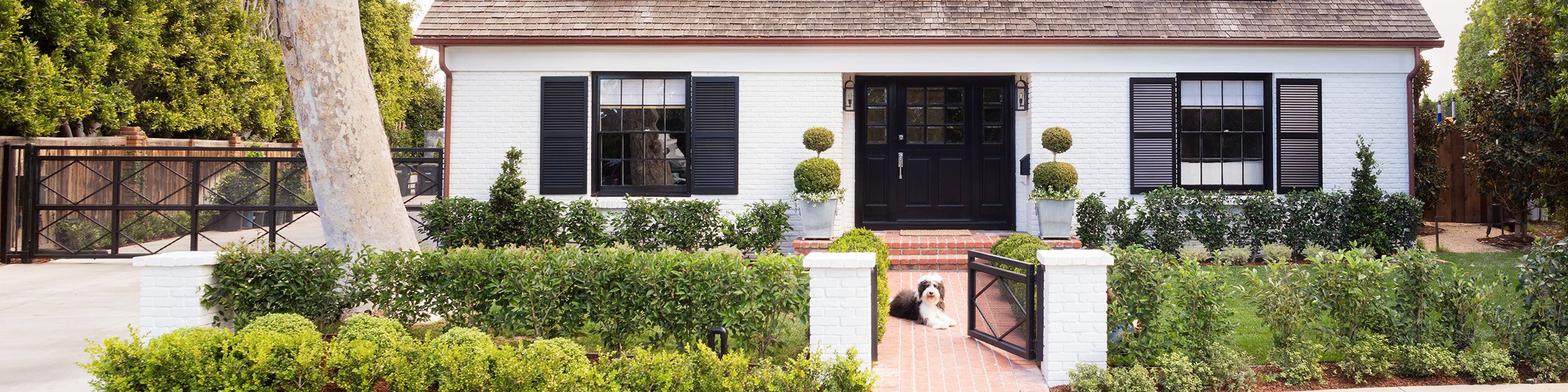
If the house has a face, the front door is the expression. A refreshed door can instantly sharpen curb appeal because it naturally pulls the eye toward the entry. Deep navy, classic black, rich red, muted green, and warm wood tones all work beautifully when they complement the home’s architecture.
And it is not just the color. Update the hardware. Add a better knocker if the style suits the house. Replace a flimsy light fixture. Add a seasonal wreath if that is your thing, but keep it tasteful. The goal is not “craft store exploded on the porch.” The goal is “someone thoughtful lives here.”
3. Use planters like punctuation marks
Large planters near the entry are one of the easiest ways to make a home look more expensive and more intentional. They frame the doorway, add height and softness, and create a focal point without requiring a full landscape redesign.
Choose containers that are appropriately scaled to the house. Tiny pots beside a large entry look apologetic. Oversized urns on a tiny stoop look like they are trying too hard. Stick with two matching planters or a balanced grouping, and fill them with plants that can actually handle the light conditions at your front door. A dead fern is not a design statement.
4. Layer landscaping instead of flattening it
The best front yards usually have depth. Think of landscaping in layers: low ground cover or edging in front, medium-height shrubs and flowers in the middle, and taller structure from ornamental grasses, small trees, or architectural plants in the back. That layering makes the yard feel composed rather than random.
Color matters, but structure matters even more. Evergreen shrubs, clipped forms, and repeated plant groupings create rhythm. Seasonal flowers can add sparkle, but they should not be doing all the work alone. Good curb appeal landscaping looks attractive even when nothing is blooming.
5. Give the walkway a purpose
A front walk should feel like an invitation, not a confusing obstacle course. If the path to the door is narrow, cracked, or visually disconnected from the rest of the yard, the entire entry can feel awkward. A wider walkway, clean edging, pavers, stone, or even simple gravel accents can make the route to the front door feel deliberate and welcoming.
Curves can soften a rigid facade, while straight lines can sharpen a more traditional exterior. The trick is matching the path style to the house, not forcing the house to cosplay as a Tuscan villa when it is clearly a suburban ranch.
6. Upgrade the lighting so the house works at night too
Curb appeal should not disappear after sunset. Good exterior lighting improves safety, but it also adds warmth and dimension. Entry sconces, pathway lights, uplighting on trees, and subtle architectural lighting help the home look finished instead of forgotten once the sun goes down.
Builder-grade fixtures are often too small and too bland for the front facade. Replacing them with fixtures that suit the style and scale of the home is a small move with major visual payoff. Warm lighting usually feels more inviting than harsh, bluish light that makes the porch look like a convenience store parking lot.
7. Do not ignore the little details
House numbers, a mailbox, door hardware, shutters, trim, and even the welcome mat all contribute to the first impression. These details are small enough to be overlooked and important enough to quietly shape the whole look.
When these pieces coordinate, the exterior feels curated. When they do not, the house can look visually noisy. Choose finishes that belong together. If the door hardware is matte black, the house numbers and light fixtures should not be off doing their own unrelated thing in shiny brass and brushed nickel. Design is teamwork.
8. Treat the porch like a room, not a storage shelf
A front porch earns its keep when it feels lived-in and welcoming. Even a very small porch can benefit from one bench, one chair, a compact bistro set, or a simple layered doormat moment. The idea is to create warmth without clutter.
Porches with too many random objects start to feel chaotic. Keep decor edited. One lantern, one plant, one seat, one outdoor rug can be enough. A porch should say, “Come in.” It should not say, “We panicked at the home goods aisle.”
9. Refresh the garage and facade for balance
On many houses, the garage door is visually massive. If it is dented, faded, or bland, it can drag down the whole exterior. Painting or replacing the garage door, adding decorative hardware where appropriate, or improving the landscaping around it can bring balance back to the facade.
The same goes for siding, brick, and trim. Sometimes the smartest makeover is simply a better color palette. Neutral body colors with stronger contrast on shutters, trim, or doors often feel timeless and broadly appealing. Bold can work, but bold without restraint can age badly.
Curb Appeal Makeovers: Three Smart Levels of Transformation
The weekend refresh
This makeover is all about speed and visual impact. Power-wash the exterior, repaint the front door, add two planters, replace the porch light, spread fresh mulch, trim overgrowth, and swap outdated house numbers. In just a few days, the house looks cleaner, brighter, and more finished.
The moderate makeover
Here, you go beyond cosmetics. Update the walkway, add layered foundation plantings, repaint trim, repair railings, improve porch furnishings, and reconsider the garage door. This level gives the home a stronger sense of design and can make an older exterior feel current without changing its character.
The full curb appeal overhaul
This is for homes with a truly tired exterior or for homeowners ready to commit to a transformation. It may include new siding or exterior paint, new windows, a redesigned entry, hardscaping, improved drainage, landscape lighting, and a total planting plan. The key to a great full makeover is restraint. Every material, color, and texture should support the same visual story.
How to Use Curb Appeal Photos for Better Inspiration
Photos are useful, but only if you read them wisely. Do not just copy the prettiest image on the internet and hope it works on your house. Instead, look at what the photo is actually teaching you.
Is the entry framed symmetrically? Are the shrubs scaled to the windows? Is the color palette limited and cohesive? Do the hardscape lines echo the architecture? Are there repeating materials, like black metal, warm wood, or natural stone, that make the whole exterior feel unified? Those are the lessons worth stealing.
Before-and-after photos are especially helpful because they reveal what changed. Often, the “after” is not more complicated. It is just cleaner, brighter, better proportioned, and more intentional. That is the real secret of most successful curb appeal makeovers. Not more stuff. Better editing.
Common Mistakes That Can Ruin Curb Appeal
The first mistake is overplanting. Shrubs that swallow windows and flowers stuffed into every square inch can make a front yard feel fussy and high maintenance. The second is mismatched updates. A sleek modern light fixture on a farmhouse-style house, paired with ornate house numbers and tropical planters, creates visual confusion.
Another mistake is going too trendy. Exterior design should last longer than a social media mood. If you want personality, add it in ways that are easy to change, such as the front door color, planters, textiles, or accessories. Keep the expensive elements timeless.
And finally, do not neglect maintenance. The most beautiful makeover in the world falls apart fast if the lawn goes shaggy, the mulch fades, and the porch fills with dusty decor and sad leaves. Curb appeal is not a one-time performance. It is an ongoing relationship with your own front yard.
Real Experiences With Curb Appeal Ideas, Makeovers, and Photos
One of the most interesting things about curb appeal is how often homeowners assume they need a major renovation when what they really need is a sharper eye. People tend to walk up to their own house every day without truly seeing it. Then one afternoon they take a photo from the street, and suddenly it becomes obvious: the porch light is too small, the hydrangeas are eating the walkway, the door color is timid, and the front steps look tired. A single photo can be brutally honest in the most useful way.
That is why so many successful makeovers begin with observation rather than demolition. Homeowners who take time to study their facade usually make better decisions. They notice where the eye lands first. They see what feels heavy, what feels empty, and what looks accidental. In real life, the best curb appeal transformations often come from solving those practical visual problems one at a time.
For example, many people discover that their home does not need more landscaping at all. It needs less, but better arranged. Pulling out overgrown shrubs, defining the bed lines, and adding a few well-scaled plantings can make the house look bigger and cleaner. Others learn that the front porch was never unattractive; it was simply underlit, cluttered, and missing a focal point. Add one bench, a larger fixture, and a pair of planters, and suddenly the entrance feels warm and finished.
There is also a strong emotional side to curb appeal that people do not always talk about. A fresh exterior can change how you feel when you pull into the driveway after a long day. It can make a house feel more like home, even if nothing inside has changed. People often describe this as a sense of pride, relief, or calm. That reaction makes sense. Visual order feels reassuring. A neat, welcoming exterior sends a small message every day that the place is cared for.
Photos play an important role in that process because they help homeowners track progress. Before-and-after images are not just satisfying; they are clarifying. They show that replacing dated hardware, repainting trim, and cleaning hard surfaces can make as much difference as more expensive projects. They also reveal something else: curb appeal is often about contrast. Dark hardware against light trim, warm wood against painted siding, soft plants against straight hardscape lines. The strongest photos are usually the ones where those contrasts are balanced well.
Another common experience is learning that restraint wins. Homeowners who try to include every idea they love often end up with a yard that feels crowded. The best results usually come when people choose a direction and stick with it. A classic traditional house looks best with tidy symmetry, clean paths, and timeless planting. A more modern home can handle bolder geometry and simpler greenery. Once the design matches the architecture, the makeover feels believable instead of forced.
In the end, curb appeal is less about showing off and more about making a home feel coherent. The homes that photograph well are usually the homes that feel clear in person too. They are not yelling for attention. They simply look cared for, easy to approach, and pleasant to come home to. That is the kind of makeover that lasts.
Conclusion
The best curb appeal ideas are not random upgrades thrown at the front of a house like spaghetti at a wall. They are deliberate choices that make the exterior cleaner, warmer, and easier to understand at a glance. Start with maintenance. Strengthen the entry. Use landscaping to frame, not overwhelm. Add lighting that works after dark. Edit the details so everything feels connected.
If you are planning a full exterior makeover, let photos teach you about proportion, repetition, and balance. If you are working with a smaller budget, focus on the front door, lighting, planters, cleanup, and path to the porch. Either way, the goal is the same: create a home that looks inviting before anyone even reaches the doorbell.
And that is the whole game of curb appeal. A house does not need to be flashy. It just needs to look like it has its life together.
SEO Metadata

