
Skincare
Artist Creates Relatable Comics Illustrating Her Gaming Habits, Social Mishaps And General Ineptitude At Life (35 Pics)
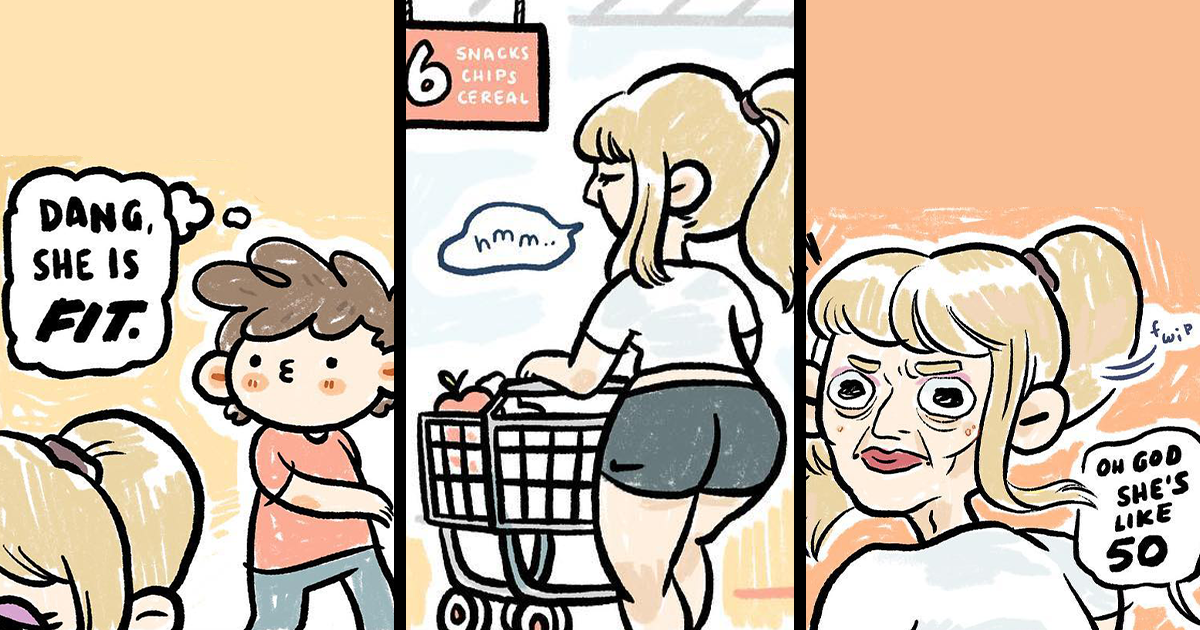
Jul
Some people keep a diary. Some meditate. Some call a friend and spend 47 minutes explaining a five-second awkward interaction with a grocery store cashier. Meg draws comics.
The artist behind Ilization that adulthood does not automatically install the competence upgrade everyone was promised. Her relatable comics take ordinary experiences and squeeze them into visual jokes that feel suspiciously like somebody has been monitoring the rest of us through our laptop cameras.
Meg began creating comics in 2016. Based in Pittsburgh, she has described cartooning as a way to document thoughts and feelings without having to maintain a traditional diary. Her first comic grew from her poor Christmas spending decisions, and her work later expanded into observations about games, awkward encounters, pop culture, mental health, and everyday life.
in this collection demonstrate the secret ingredient of successful relatable humor: specificity. The jokes do not need dragons, exploding planets, or a millionaire slipping on a diamond-encrusted banana peel. Sometimes all you need is a person, a controller, a questionable decision, and the crushing awareness that you have once again said the wrong thing with tremendous confidence.
Meet Meg, the Artist Turning Everyday Chaos Into Relatable Comics
Meg has been drawing on and off for much of her life, but her path toward autobiographical comics was less “grand artistic destiny” and more “perhaps I should put these feelings somewhere.” During her Fine Art studies at a community college, she considered herself a shy art nerd and found that illustrating her experiences made personal expression easier.
She initially shared comics on Facebook. Positive reactions encouraged her, and a friend suggested Reddit. Some of her funnier panels performed particularly well there, helping reinforce a lesson many internet artists eventually discover: audiences enjoy beautiful art, but they absolutely adore being personally attacked by a cartoon that understands their bad habits.
A Ve Pressure of Writing “Dear Diary”
The autobiographical quality of Meg’s work gives the comics their emotional backbone. Rather than recording every event chronologically, she takes a feeling, experience, or stubborn thought and transforms it into a short visual narrative.
Meg has explained that condensing an idea into four panels acts as a kind of mental download. Everyday life, mental health, and pop culture can all become raw material when an idea refuses to leave her head.
is deceptively demanding. First, the artist has to establish a recognizable situation. Then comes the escalation. The reader needs enough information to predict where events might go. Finally, the last panel either delivers the expected disaster or swerves into a different, preferably more embarrassing disaster.
It is visual comedy with the fat trimmed away. There is no room for a 16-page explanation of why ordering food over the phone is stressful. The face says it. The posture says it. The dialogue says it. By panel four, the protagonist’s remaining dignity has left the server.
Why Meg’s Gaming Habits Make Such Good Comic Material
Gaming humor works because video games are no longer a niche hobby practiced exclusively in dark basements by mysterious people surviving on cheese-flavored dust. The Entertainment Software Association reported in 2025 that 60% of American adults play video games weekly and that the average U.S. player is 36 years old. Gaming has become a familiar part of ordinary adult life.
so documented how deeply games are woven into young people’s daily lives and social connections. In a 2024 survey, 85% of U.S. teens said they played video games, while most teen players reported gaming with other people rather than exclusively alone.
Inn enormous audience that understands the language of gaming habits. These readers know the difference between saying “one more round” and actually playing one more round. Those two events have never met.
The Famous “I’ll Stop After This” Lie
A gaming session often begins with astonishing innocence. You are going to relax for 20 minutes. Perhaps complete a small quest. Maybe organize an inventory.
Suddenly, birds are outside. Actual birds. Morning birds.
Relatable gaming comics thrive on this difference between intention and behavior. The player views herself as a rational adult who understands clocks. The evidence suggests she has instead become an unpaid digital archaeologist collecting 73 fictional mushrooms because an NPC hinted that mushrooms might become important later.
Meg’s interest in gaming gives her a rich supply of familiar contradictions. Games can make players intensely focused on imaginary efficiency while the real laundry develops its own municipal government. A person who cannot remember to answer an email may know the exact location of every rare item in a fantasy map.
That contrast is funny because it is recognizable. In a game, objectives glow. Progress bars exist. Completing a task may produce triumphant music. Real life rewards cleaning the refrigerator with the discovery of an expired sauce nobody remembers purchasing.
Social Mishaps: Where Every Conversation Becomes a Boss Battle
Gaming may supply part of the material, but Meg’s social mishaps take relatability into another dimension. Almost everyone has experienced an interaction that seemed harmless at the time and became psychologically available for replay at 2:13 a.m.
Maybe you responded “you too” when a restaurant employee told you to enjoy your meal. Perhaps you waved back at someone who was greeting the person behind you. Maybe a casual joke emerged from your mouth with precisely the wrong tone and now your brain has scheduled a six-part documentary examining the incident.
These tiny moments are excellent comic fuel because the external event and internal reaction are wildly disproportionate. To everybody else, nothing happened. Inside the protagonist’s mind, emergency meetings have been called.
The Art of Drawing the Face We Make Internally
One advantage comics have over ordinary storytelling is exaggeration. A cartoonist can draw an emotional reaction the way it feels instead of the way it physically looks.
A minor embarrassment may transform the character into a hollow-eyed creature. A suspicious comment can summon an expression worthy of a detective who has just connected 37 murders to a single garden gnome. Mild annoyance can produce the face of an ancient ruler preparing to erase a civilization from recorded history.
Meg has said that drawing expressions, particularly grumpy ones, is one of her favorite parts of the creative process. That preference makes sense when so much of the comedy depends on communicating a complete emotional catastrophe in a small amount of space.
Readion saying, “She is uncomfortable.” The character’s expression has already filed the paperwork.
Self-Deprecating Humor Without Pretending Life Is Perfect
The phrase “general ineptitude at life” practically deserves its own webcomic genre. It captures the comic tension at the center of adult existence: people are expected to behave as though they understand what they are doing while quietly searching the internet for answers to questions such as “how long can chicken stay in refrigerator” and “is Wednesday too early to be tired for Friday?”
Meg’s comics do not depend on constructing an aspirational version of herself. The character can be messy, sarcastic, confused, tired, overenthusiastic about the wrong subject, or spectacularly underprepared.
That imperfection helps readers enter the joke.
Research and commentary on humor have long examined how self-effacing comedy can affect social communication. The American Psychological Association has discussed humor’s value in learning contexts, while research indexed by the National Institutes of Health has explored relationships among humor styles, social anxiety, and depression. Berkeley’s Greater Good Science Center has also noted that modest amounts of self-deprecating humor may make a person seem more approachable in certain social settings.
egative feeling should receive a punchline and a tiny comedy hat. Context matters. But humorous personal storytelling can create an opening for recognition. A reader sees a character fail at something absurdly ordinary and thinks, “Excellent. The species continues to struggle together.”
The Relatability Formula Behind These 35 Funny Comics
Why do some relatable comics travel quickly across social media while other jokes vanish into the algorithmic basement? There is no guaranteed formula, but Meg’s approach demonstrates several powerful storytelling habits.
1. Start With an Ordinary Problem
The situation should require almost no explanation. Overspending during Christmas, struggling to communicate, becoming too invested in a hobby, feeling socially uncomfortable, or questioning one’s own decisions are instantly recognizable experiences.
Meg’s first comic, for example, centered on badly budgeting Christmas spending. The problem is gloriously mundane. No villain is necessary. The credit card statement has entered the story and is already doing excellent villain work.
2al Reality
Good relatable comedy does not always reproduce events with courtroom accuracy. It captures the emotional truth.
You probably did not physically collapse into a pile of dust after an awkward interaction. Spiritually, however, eyewitnesses may disagree.
Meg has discussed the challenge of turning individualized experiences into broadly relatable content. That process can involve condensing or exaggerating scenarios and dialogue so the core experience fits a readable four-panel framework.
3. nize Themselves
The best “this is literally me” comics leave room for projection. A reader does not need to share every detail of Meg’s life. The broader emotional pattern is enough.
You might play a different game. You might have a different social fear. You may be remarkably responsible with Christmas money, in which case congratulations and please stop making the rest of us uncomfortable.
The moment of recognition comes from understanding the character’s logic, even when that logic is terrible.
4. Keep the Visual Language Accessible
Webcomics have become a recognized form of digital culture. The Library of Congress established a Webcomics Web Archive to preserve selected comics created specifically for online audiences, including work representing experiences and creators historically less visible in mainstream comics.
Th. A four-panel comic viewed on a phone needs readable expressions, dialogue, and timing. A creator does not have to make every background look like an architectural rendering. Sometimes a strategically furious eyebrow does more storytelling than 400 individually drawn bricks.
Smithsonian coverage of webcomics has similarly highlighted how creators such as Randall Munroe and other online cartoonists built distinctive audiences around specific combinations of personal interests, geek culture, sarcasm, and deceptively simple visual styles.
a Modern Digital Comic Voice
Meg’s influences also help explain her approach to dialogue and observational comedy. She has cited Bill Watterson’s Calvin and Hobbes as a major early inspiration, recalling her attraction to its snarky dialogue and watercolor artwork when she was a child. She has also mentioned newspaper strips Zits and FoxTrot as influences.
Those. Great comic strips can make a tiny episode feel complete. A conversation at breakfast, a complaint, or an irrational decision becomes a miniature story because of timing and character voice.
ItsMegComics carries that observational spirit into an internet-native environment. Instead of waiting for the Sunday comics section, readers discover strips through social platforms, share them with friends, and add some version of “WHY ARE YOU POSTING MY LIFE?”
The distribution system has changed. The human urge to laugh at ourselves has not.
Why Readers Love Comics About Being Bad at Life
Social media often displays achievement in polished rectangles. New job. Perfect vacation. Flawless kitchen. Morning workout completed before 5 a.m. by someone who appears suspiciously delighted to be conscious.
Relatable comics provide the counterprogramming.
They show the person who forgot why she walked into a room. The gamer who lost an entire evening to a “quick session.” The socially awkward human who planned a conversation and immediately abandoned the script after another person said “hello” with an unexpected inflection.
There is comfort in creative imperfection. Not because failure is automatically wonderful, but because a joke can shrink an experience that felt enormous. A humiliating moment becomes four panels. A strange thought becomes a character expression. A frustrating day becomes material.
Meg has said that reader reactions help keep her illustrating and that she enjoys making people laugh through an accessible medium. That relationship between artist and audience is central to the charm of relatable webcomics: the creator publishes a personal observation, and hundreds of strangers collectively discover that their private weirdness has a surprisingly large membership list.
35 l Personally Attacked” Moments
A collection of 35 relatable comics works almost like scrolling through a personality test where every answer is “unfortunately, yes.” Different readers connect with different situations, but the tone remains consistent: life is chaotic, people are strange, and the narrator is not pretending to have achieved enlightenment.
The gaming habits appeal to players who understand digital obsession. The social mishaps speak to chronic conversation replay specialists. The sarcastic opinions provide the tiny rebellious pleasure of hearing someone articulate an irritation you previously stored in the “probably shouldn’t say this aloud” section of your brain.
Most importantly, the comics feel personal without requiring a detailed biography from the reader. Meg presents her own experiences, but the emotional mechanics are universal enough to travel.
That is why a small comic about one person’s bad decision can produce thousands of variations of the same reaction: “Me.”
Personal Experiences That Explain Why Relatable Gaming Comics Hit So Hard
Anyone who spends enough time around games, online communities, and awkward human interactions eventually collects experiences that already feel structured like comic strips.
Consider the classic late-night gaming mistake. You finish an important real-world task and decide you have earned a little recreational time. This is responsible behavior. Mature, even. You launch a game at 9:30 p.m. with the confidence of someone who absolutely knows how clocks work.
The first mission takes 15 minutes. The second unlocks an interesting item. The item requires materials. The materials are near a side quest. The side quest introduces a character with a tragic backstory. Now you cannot quit because apparently abandoning a collection of pixels would be morally questionable.
You look at the clock.
2:46 a.m.
There is no reasonable explanation. Time itself has committed fraud.
The next morning adds the final panel. You wake up exhausted and solemnly promise to go to bed early that night. Somewhere, your gaming system quietly boots a tiny internal laugh track.
The Social Interaction You Rehearse and Still Somehow Fail
Another nearly universal comic experience begins before a conversation. You know you need to ask someone a simple question. Because you are a sophisticated adult, you rehearse.
“Hi, I wanted to ask about the appointment.”
Perfect.
Natural.
You have mastered language.
Then the person unexpectedly says, “Hey! How’s your day going?”
Your prepared mental software crashes.
“Appointment,” you reply.
Wonderful. Another successful encounter with the species.
For the other person, this may be a forgettable five-second exchange. For you, it becomes premium archival content. Your brain restores it periodically for remastered screenings, usually when you are trying to sleep.
This gap between external importance and internal significance is exactly why social mishaps work so well in comics. The artist can put both realities on the page. Panel one shows a tiny mistake. Panel two shows the normal world continuing. Panels three and four reveal the protagonist psychologically relocating to another continent.
When Real Life Has Terrible Game Design
Gaming also changes the way people joke about productivity. Games are unusually good at telling players what to do. There is a marker. A quest log. A clear number of required objects.
“Collect five herbs.”
Understood.
Real life says, “Get your life together.”
Excuse me, where is the map icon?
Even something simple like cleaning an apartment has hidden objectives. You begin with dishes. You notice the cabinet is disorganized. While fixing the cabinet, you find a battery and decide to test it. The battery belongs to a remote. The remote reminds you of a television setting you meant to change three months ago.
Two hours later, the dishes remain in the sink, but you now know exactly which picture mode produces the most accurate black levels.
Mission failed successfully.
The Strange Relief of Seeing Your Flaws Turned Into Jokes
Perhaps the strongest experience related to relatable comics is the moment an artist accurately illustrates a behavior you assumed was uniquely yours.
You see a character repeatedly postpone a tiny task because thinking about doing it has somehow become more exhausting than doing it. You laugh. Then you become slightly uncomfortable. Then you send the comic to a friend with a crying emoji so nobody notices the existential component of your reaction.
That recognition creates a temporary sense of community.
The artist is effectively saying, “I do this ridiculous thing.”
The reader responds, “Wait, me too.”
A third person enters the comments and announces that they have been doing the same thing for 20 years.
Congratulations. A support group has formed accidentally.
Meg’s particular mix of gaming habits, sarcastic humor, awkwardness, and everyday incompetence is effective because these subjects overlap naturally. People rarely experience life in clean categories. The person playing games until midnight may also hate phone calls, overspend during the holidays, overanalyze conversations, and possess strong opinions about a completely trivial inconvenience.
That messy combination feels human. It is also much funnier than a flawless protagonist who wakes at 5 a.m., drinks lemon water, completes yoga, answers every email, and has never spent 25 minutes choosing a fictional character’s hairstyle.
Conclusion: Sometimes Being Bad at Life Makes Great Art
ItsMegComics proves that creative material does not always arrive as a dramatic life event. Sometimes it arrives as a failed social interaction. Sometimes it is a sarcastic thought that refuses to leave. Sometimes it is the realization that you have spent an unreasonable portion of your evening doing something extremely important in a game and completely indefensible outside it.
Meg’s relatable comics transform those experiences into concise visual stories filled with expressive reactions and self-aware humor. Her background, early comic influences, interest in gaming, and willingness to turn personal shortcomings into jokes give the work a recognizable voice.
The 35 comics in this collection are funny because they do not present life as a graceful journey toward perfection. Life is apparently a series of side quests accepted accidentally while the main objective flashes “OVERDUE.”
And honestly? That sounds much more familiar.

