
Makeup
3 Ways to Deal With Big Sisters
Jun
Big sisters are a special category of human being. They can be your emergency stylist, unpaid therapist, secret snack supplier, and loudest criticsometimes all before breakfast. One minute she is defending you like a tiny family lawyer; the next, she is borrowing your hoodie and acting like your closet is a public library with no return policy.
If you are searching for how to deal with big sisters, chances are you are not trying to start World War III in the hallway. You probably want less arguing, more respect, fewer bossy comments, and maybejust maybethe right to exist without being corrected every twelve seconds. The good news is that sibling tension is normal. Brothers and sisters often compete for attention, space, privacy, independence, and the last slice of pizza. The better news is that you can improve the relationship without becoming a doormat or a dramatic reality-TV contestant.
This guide breaks the topic into three practical ways: communicate without exploding, set healthy boundaries, and turn rivalry into teamwork. These strategies are based on widely accepted family-relationship, child-development, and conflict-resolution guidance. They work whether your big sister is mildly annoying, extremely protective, bossy with Olympic-level dedication, or actually pretty great but still capable of pressing every button in your brain.
Why Big Sisters Can Be Hard to Deal With
Before you plan your escape to a sister-free island, it helps to understand why older sisters can be complicated. A big sister often has more experience, more freedom, and more confidence. That can make her helpful, but it can also make her act like the assistant manager of your life.
Older siblings may feel responsible for younger siblings, especially if parents often ask them to “watch out” for everyone. Sometimes that responsibility turns into caring support. Other times, it turns into bossiness with a ponytail. She may correct your choices, give unwanted advice, interrupt your privacy, or act as if being born first came with a crown.
Meanwhile, you may feel compared to her. Maybe she gets better grades, has cooler clothes, is trusted with more things, or seems to get away with everything. Those feelings can turn ordinary disagreements into full emotional thunderstorms. A comment like “That shirt looks weird” suddenly sounds like a personal attack on your entire existence.
The goal is not to “beat” your big sister. The goal is to create a healthier sibling relationship where both of you feel respected. You do not need to be best friends every day. You do need a way to live, talk, disagree, and recover without turning every conflict into a family courtroom drama.
Way 1: Communicate Without Starting a Sibling Volcano
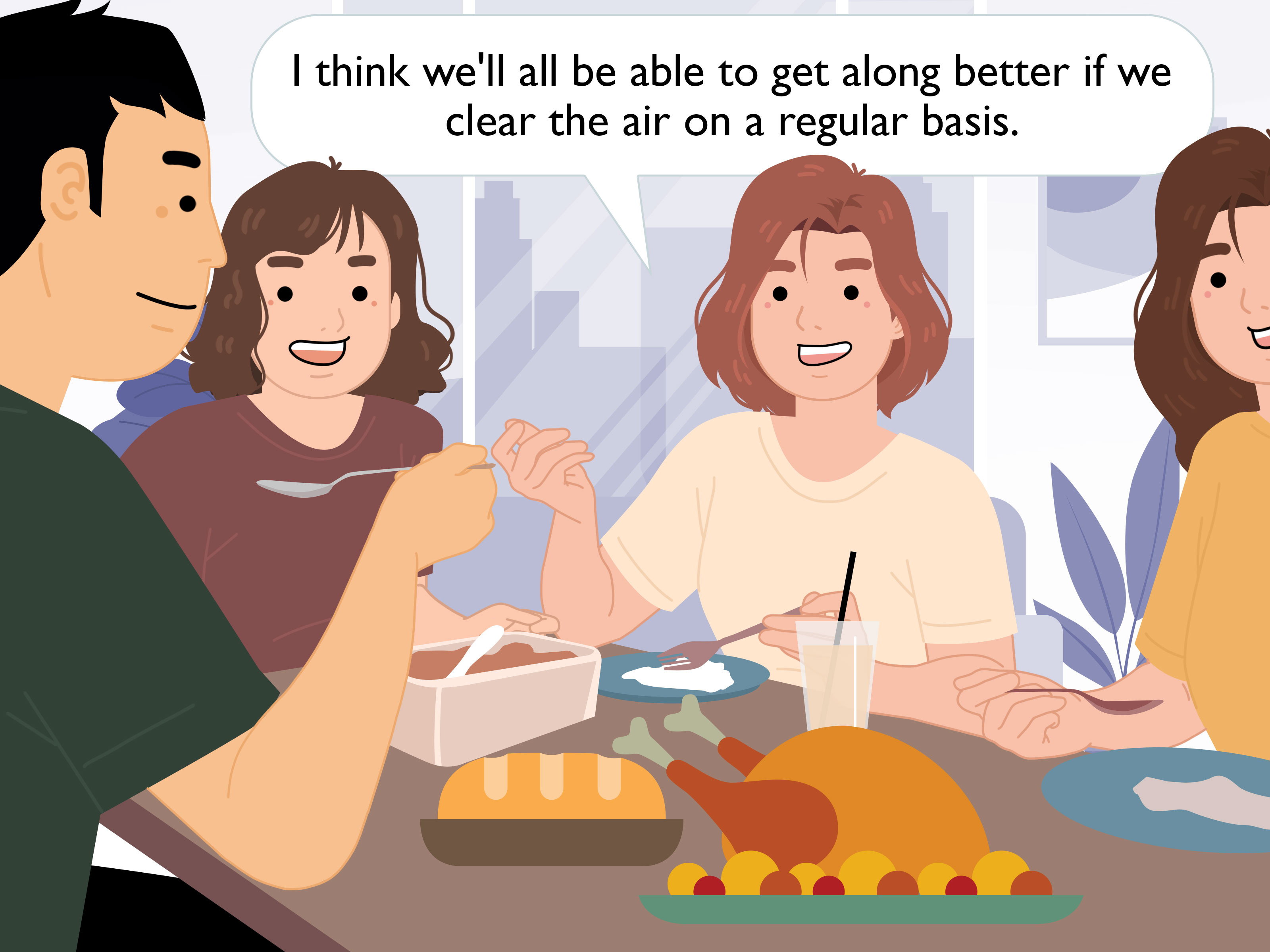
Communication is the first and most powerful way to deal with a big sister. Unfortunately, sibling communication often sounds less like a thoughtful conversation and more like two raccoons fighting over a sandwich. If you want your sister to actually hear you, timing and tone matter.
Choose the Right Moment
Do not start a serious conversation when both of you are already annoyed. If she just yelled at you for touching her makeup, and you are holding the evidence in your hand, that is not the perfect moment for a TED Talk about respect. Wait until things are calmer.
Try saying, “Can we talk later about what happened?” This gives both of you time to cool down. Calm conversations are more likely to solve problems because neither person is busy defending their ego like it is a national monument.
Use “I” Statements Instead of Accusations
One of the fastest ways to make a big sister defensive is to start with “You always…” or “You never…” Those phrases may feel satisfying, but they usually make the other person prepare for battle.
Instead, try “I” statements. For example:
- Instead of “You always boss me around,” say, “I feel frustrated when I am told what to do without being asked.”
- Instead of “You never respect my stuff,” say, “I feel upset when my things are used without permission.”
- Instead of “You think you are better than me,” say, “I feel hurt when my choices are compared to yours.”
This approach does not magically turn your sister into a peaceful forest creature, but it reduces the chance that she will feel attacked. It keeps the focus on the behavior and how it affects you.
Listen Even When You Want to Interrupt
Listening is annoying because it requires not talking. But if you want your big sister to listen to you, show her what that looks like first. You do not have to agree with everything she says. You simply need to understand what she means.
Maybe she is bossy because she feels responsible. Maybe she borrows your things because she assumes you do not mind. Maybe she teases you because that is how she tries to connect, even if her delivery needs serious software updates.
After she speaks, repeat the main idea: “So you are saying you were worried I would get in trouble?” or “You thought I would not care if you borrowed it?” This can calm the conversation because people are less likely to keep arguing when they feel heard.
Use Humor Carefully
Humor can help, but only if it is not mean. Saying, “Please stop managing my life like you are the CEO of Me Incorporated,” can make your point in a lighter way. But sarcasm that insults her will probably make things worse.
Good humor lowers tension. Bad humor throws glitter on the fire. Choose wisely.
Way 2: Set Boundaries Without Being Rude
Boundaries are not walls built to keep your big sister out forever. They are rules for how you want to be treated. Healthy boundaries help family members understand what is okay, what is not okay, and what happens if a line is crossed.
This is especially important with older sisters because they may be used to having more influence. If she has always helped choose your clothes, corrected your homework, entered your room, or spoken for you, she might not realize you want more independence now.
Know What Boundary You Need
Before you can explain a boundary, you need to know exactly what bothers you. “Stop being annoying” is not specific enough. Annoying how? Borrowing things? Reading your messages? Teasing you in front of friends? Giving unwanted advice? Telling parents everything?
Clear boundaries sound like this:
- “Please ask before borrowing my clothes.”
- “Do not come into my room without knocking.”
- “Do not joke about my crushes in front of people.”
- “I want to handle my own conversation with Mom and Dad.”
- “I am okay with advice, but not when it sounds like criticism.”
The more specific you are, the harder it is for your sister to claim she “did not know.” This is not a trap; it is clarity.
Say It Calmly and Repeat It Consistently
Boundaries work best when they are calm and consistent. You do not need a dramatic speech with background music. A simple sentence is enough: “I need you to ask before using my things.”
If she ignores it, repeat the boundary: “I said I need you to ask first.” If it keeps happening, add a consequence that you can actually follow: “If my things keep getting borrowed without asking, I am going to keep them in a different place.”
A consequence is not revenge. It is a way to protect your space. Revenge says, “You took my hoodie, so I will hide your phone charger and let chaos bloom.” A boundary says, “My stuff needs to be respected, so I am changing how I store it.” One is mature. The other is funny in theory but terrible in practice.
Respect Her Boundaries Too
This part is important: you cannot demand privacy while ignoring hers. If you want her to ask before borrowing your things, ask before borrowing hers. If you want her to knock, knock on her door too. If you want her not to tease you, avoid teasing her in ways that hurt.
Sibling relationships improve faster when both people feel the rules are fair. You do not have to be identical, but respect should go both ways.
Get Help When Boundaries Are Ignored
If your big sister repeatedly ignores your boundaries, involves threats, humiliates you, physically hurts you, or makes you feel unsafe, talk to a trusted adult. This may be a parent, guardian, school counselor, relative, coach, or another responsible adult.
Normal sibling conflict can include arguments, teasing, and frustration. But repeated cruelty, intimidation, or physical aggression should not be brushed off as “just siblings.” Safety matters more than keeping the peace.
Way 3: Turn Rivalry Into Teamwork
The third way to deal with big sisters is to stop treating every situation like a competition. This does not mean pretending rivalry does not exist. It means learning when to compete, when to cooperate, and when to let something go because you are tired and snacks exist.
Stop Comparing Your Life to Hers
Big sisters often seem ahead because, well, they are older. They may drive first, date first, stay out later, get a job first, or know how to talk to adults without sounding like a malfunctioning robot. That does not mean you are behind. It means you are at a different stage.
Comparisons create resentment. If you keep measuring your life against hers, every success she has may feel like a loss for you. Instead, use her experience as information. If she made a mistake, learn from it. If she found a shortcut, borrow the wisdom, not the insecurity.
You can say, “How did you study for that test?” or “What should I know before joining that club?” This changes the dynamic from competition to mentorship. Big sisters often love giving advice. The trick is asking for it before they launch a surprise lecture.
Create Small Moments of Cooperation
You do not need a dramatic sibling bonding ceremony. Start small. Watch one show together. Cook something. Team up on chores. Plan a gift for a parent. Help each other with outfits, homework, music, sports, or social situations.
Cooperation builds positive history. If the only time you talk is during arguments, the relationship starts to feel like a complaint department. Shared activities give your brain new evidence: “Wait, we can actually have fun together?” Shocking, yes. Useful, also yes.
Compliment Her Without Making It Weird
A sincere compliment can lower sibling tension. Big sisters may seem confident, but they have insecurities too. Try saying something simple like, “You were really good at explaining that,” or “Your outfit is cool,” or “Thanks for helping me earlier.”
Do not overdo it. If you suddenly deliver a five-minute speech about her greatness, she may suspect you broke something. Keep it casual and real.
Build Your Own Identity
One of the healthiest ways to deal with an older sister is to become more secure in who you are. You do not need to copy her or rebel against her just to prove a point. You can like different music, wear different styles, choose different hobbies, and have different goals.
When you know yourself better, her opinions lose some of their power. If she says, “That is weird,” you can think, “Maybe, but it is my kind of weird.” Confidence does not mean you never care what she thinks. It means her opinion is not the only mirror you use.
Common Big Sister Problems and What to Do
Problem: She Acts Bossy
Try: “I know you are trying to help, but I want to handle this myself.” If she keeps pushing, add: “I will ask if I need advice.” This respects her intention while protecting your independence.
Problem: She Borrows Your Stuff Without Asking
Try: “I am okay sharing some things, but you need to ask first.” You can also create categories: things she can borrow, things she must ask about, and things that are completely off-limits.
Problem: She Teases You Too Much
Try: “That joke actually bothers me. Please stop.” Say it directly. Laughing along when you are hurt can confuse the message. You do not have to make a joke out of your own discomfort.
Problem: She Tells Parents Everything
Try: “I understand if you are worried about something serious, but I want privacy for normal personal stuff.” If safety is involved, adults should know. If it is harmless personal information, ask for trust.
Problem: She Ignores You
Try building connection without demanding instant closeness. Ask for advice on something she knows well, invite her to do something low-pressure, or send a funny video. Relationships often improve through small repeated moments, not one giant emotional summit.
What Not to Do When Dealing With a Big Sister
Even if your sister is acting difficult, some reactions usually make things worse.
- Do not insult her appearance, intelligence, friends, or personal life. That creates wounds that last longer than the original argument.
- Do not drag parents into every tiny disagreement. Ask for help when needed, but try solving smaller issues directly first.
- Do not use silent treatment as a weapon. Taking space is healthy; punishing someone with icy silence for days is not.
- Do not assume she knows how you feel. Big sisters are many things, but mind readers are not usually included.
- Do not keep score forever. If every current argument includes a complete archive from 2019, nobody wins.
When Your Big Sister Is Also Your Best Ally
It is easy to focus on the annoying parts of having a big sister, but there are real benefits too. A big sister can explain family rules, warn you about mistakes, defend you from unfair treatment, and understand your home life in a way friends may not.
She may know exactly why a certain parent reaction bothered you. She may remember your childhood stories. She may be the person who laughs hardest at your weirdest jokes because she has witnessed your entire character development, including the awkward seasons.
Healthy sibling relationships do not mean constant sweetness. They mean repair. You argue, cool down, talk, adjust, and come back with more understanding. The goal is not perfection. The goal is a relationship where both people can grow up without feeling like they are always fighting for space.
Experience Section: Real-Life Lessons About Dealing With Big Sisters
Anyone who has lived with a big sister knows the experience comes with plot twists. She may be the person who teaches you how to match clothes, then five minutes later tells you that your outfit looks like “laundry with confidence.” She may give brilliant advice about friends, school, or dating, but deliver it in a tone that makes you want to move to another zip code.
One common experience is the “second parent” problem. Many younger siblings feel like their big sister has been promoted without permission. She reminds you to do homework, comments on your choices, tells you what Mom or Dad will say, and occasionally uses the phrase “I’m just trying to help,” which can be the sibling version of a warning siren. In these moments, the best response is usually not “You are not my mom!” shouted through a door. It may be true, but it rarely improves the situation. A better response is, “I know you care, but I need to make this decision myself.” That sentence is calm, clear, and much harder to argue with.
Another real-life lesson is that big sisters often tease because teasing is familiar. In many families, teasing becomes a language. The problem is that jokes can stop feeling funny when they hit a sensitive spot. Maybe she jokes about your grades, your crush, your voice, your style, or how you act around friends. At first, you may laugh because you do not want to seem too sensitive. But the resentment builds. Eventually, you explode over something tiny, like her breathing too loudly near your cereal. The better move is to name the issue early: “I know you are joking, but that one actually bothers me.” It may feel awkward, but awkward is better than a screaming match over breakfast.
Sharing space is another classic big-sister challenge. Bedrooms, bathrooms, chargers, clothes, snacks, and streaming accounts can become international conflict zones. The solution is not just “be nicer.” People need systems. If she borrows clothes, create a rule: ask first, return clean, and do not borrow anything from the no-touch list. If bathroom time causes drama, agree on a schedule before everyone is late and emotional. If snacks disappear, label them or divide them. It sounds simple because it is. Many sibling fights are not about deep betrayal; they are about unclear expectations and someone eating the good chips.
Over time, many younger siblings discover that a big sister is not only a rival but also a preview. She experiences things first. She may deal with friendships, school pressure, work, heartbreak, responsibility, and independence before you do. Watching her can teach you what to try and what to avoid. Her advice may not always be gentle, but sometimes it is useful. The trick is learning to separate the message from the delivery. If she says, “That study method is terrible,” you might hear criticism. But hidden inside could be a helpful point: maybe there really is a better way to prepare.
The most important experience-based lesson is this: your relationship can change. The sister who annoys you at thirteen may become the person you text first at twenty. The sister who acts bossy today may one day be the person who helps you move, celebrates your wins, and tells embarrassing childhood stories at exactly the wrong time. You do not have to force closeness, but you can build respect now. Small changesasking before borrowing, speaking calmly, apologizing when wrong, and choosing teamwork when possiblecan turn a tense sibling relationship into something stronger, funnier, and far less exhausting.
Conclusion
Dealing with big sisters is not about winning every argument. It is about learning how to communicate, set boundaries, and build cooperation without losing your personality in the process. Your big sister may be protective, bossy, helpful, dramatic, hilarious, annoying, wise, or all of the above before lunch. But with calmer conversations, clearer rules, and more teamwork, the relationship can become less stressful and more supportive.
Start with one change. Pick a calm time to talk. Set one boundary. Ask for one piece of advice. Share one activity. The goal is progress, not perfection. Sibling relationships are built over years, and every respectful conversation is a tiny deposit into the future. Also, hiding the remote is not a long-term conflict strategy. Tempting, yes. Sustainable, no.
Note: This article is written for general family and sibling relationship education. If a sibling relationship involves repeated physical harm, threats, intimidation, severe emotional cruelty, or fear, speak with a trusted adult, counselor, or appropriate support service.

