
Body Care
John Risley Chaise Lounge
Jun
Note: This article is written from synthesized real-world design history, auction records, vintage marketplace descriptions, and reputable American design references.
Why the John Risley Chaise Lounge Still Feels So Fresh
The John Risley Chaise Lounge is not the kind of chair that politely disappears into a corner. It has opinions. It has posture. It has that rare mid-century confidence that says, “Yes, I am furniture, but I also attended art school.” Whether you are looking at Risley’s woven Duyan lounge chair, a wrought iron lounge chair with ottoman, or one of his sculptural reclining forms, the first impression is always the same: this is a piece designed by someone who understood comfort, craft, humor, and visual drama.
John Hollister Risley was an American artist, sculptor, educator, and furniture designer associated with the postwar American craft movement. His work sits in that fascinating space between functional design and fine art. A Risley chaise lounge is not merely a place to stretch out after a long day; it is a three-dimensional drawing, a conversation starter, and occasionally the most interesting guest in the room.
Today, collectors search for John Risley furniture because it captures a specific mid-century mood: playful but disciplined, handmade but modern, elegant but never stiff. In a world full of bland beige seating, a Risley lounge chair is the design equivalent of a raised eyebrow.
Who Was John Risley?
John Risley was born in 1919 and became known for a wide range of creative work, from sculpture and decorative objects to seating, tables, and whimsical wrought iron forms. He studied at Amherst College, the Rhode Island School of Design, and Cranbrook Academy of Art, three educational environments that helped shape his understanding of proportion, material, and craft.
Risley later became a professor at Wesleyan University, where he taught sculpture and design fundamentals for decades. That teaching background matters when discussing his furniture. His chairs do not look accidental. Even the funny onesthe famous People Chairs, face chairs, lady rockers, and figurative benchesare rooted in strong design principles. The lines are light, the structure is considered, and the humor is built into the form rather than pasted on like a decorative mustache.
He also worked in environments that connected modern design with traditional craft. In the early 1950s, Risley and his wife, ceramicist Mary Kring Risley, spent time in the Philippines and Taiwan through international craft and design programs. This experience influenced his respect for handwoven materials, regional techniques, and the warmth that craft can bring to modern furniture.
What Is the John Risley Chaise Lounge?
The phrase John Risley Chaise Lounge can refer to several related pieces, but it most often points to a rare lounge chair and ottoman set or to Risley’s Duyan lounge chair, a sculptural reclining seat made with a woven sling supported by a black metal frame. Some examples combine a lounge chair and separate ottoman that interlock visually and functionally, creating a full chaise-like experience.
The Duyan lounge chair is especially important. Designed around the early 1950s and often associated with Ficks Reed, it typically features a handwoven rattan, cane, or bamboo seat suspended inside a black enameled iron or steel frame. The design has an hourglass-like shape, an airy profile, and a relaxed California modern feeling. It is one of those pieces that looks like it belongs on a sunlit terrace, beside a bookcase, or in the world’s most stylish nap zone.
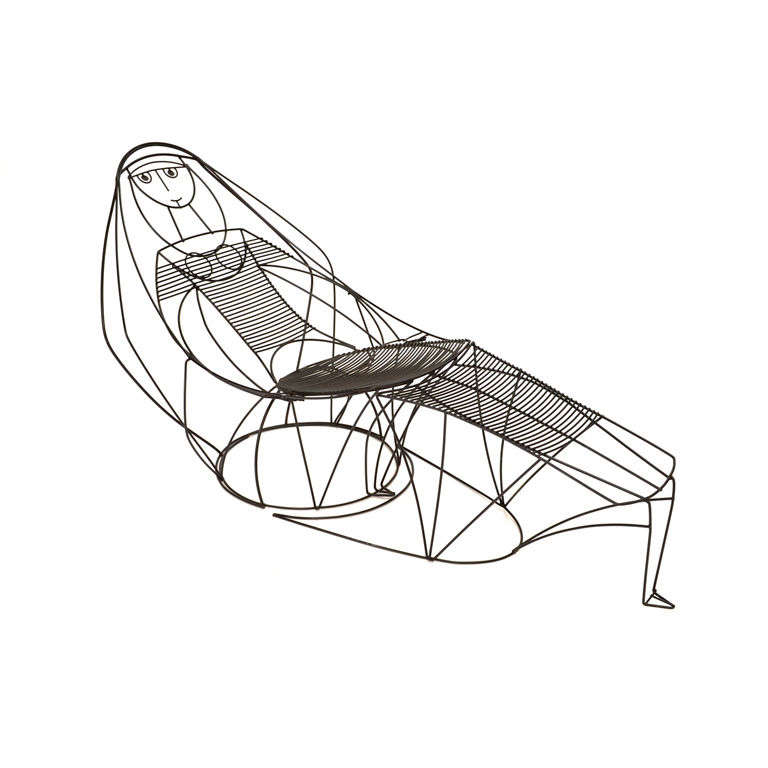
Other Risley lounge chair and ottoman sets lean more toward his sculptural wrought iron language. These pieces can resemble line drawings in space, using metal rods to form playful, open silhouettes. They are functional, but they also behave like sculpture. That dual identity is a huge part of their appeal.
Design Features That Make It Special
1. A Sculptural Frame
Risley had a sculptor’s eye, and his chaise lounge designs show it clearly. The frame is never just a frame. In the Duyan chair, the metal base creates a geometric outline that holds the woven seat like a hammock. In the wrought iron lounge chair and ottoman versions, the frame becomes expressive, almost like a sketch made permanent in metal.
2. Handwoven Texture
Many John Risley lounge chairs use rattan, cane, or bamboo. These materials soften the industrial feel of the iron or steel frame. The result is a balanced design: hard meets soft, black metal meets natural fiber, modern architecture meets weekend relaxation.
3. Indoor-Outdoor Personality
Risley’s metal furniture was often suitable for both indoor and outdoor settings, although vintage pieces now deserve more careful treatment. The open construction gives the chair visual lightness, making it ideal for patios, sunrooms, living rooms, or design-forward bedrooms.
4. A Sense of Humor
Mid-century design can sometimes take itself very seriously. John Risley did not. His furniture often has wit, movement, and personality. The chaise lounge may not be as overtly comic as his People Chairs, but it still carries that Risley spirit: practical enough to use, artistic enough to admire, and charming enough to make minimalist furniture look like it forgot to eat breakfast.
The Duyan Lounge Chair: Risley’s Relaxed Masterstroke
The John Risley Duyan lounge chair is one of the most recognizable forms connected to his seating work. “Duyan” suggests a cradle or hammock-like idea, and that description fits the chair beautifully. The woven seat appears suspended, inviting the body to settle into a gentle recline. It has the relaxed confidence of a hammock but the architectural discipline of a modernist lounge chair.
Typical examples include a black iron or steel frame, a woven rattan or cane sling, bamboo or wood details, and generous proportions. Auction and marketplace listings have shown variations in size, but many examples fall roughly in the range of 33 to 38 inches high, around 35 to 38 inches wide, and about 38 to 42 inches deep. Some versions include an ottoman, extending the lounging experience into full chaise territory.
The brilliance of the Duyan chair is that it looks casual without being lazy. It is breezy, but not flimsy. It is playful, but not childish. It is a chair that understands vacation energy but still pays its design-school tuition on time.
John Risley, Raymor, and the People Chair Connection
Risley is also widely associated with Raymor, the influential American distributor founded by Richards Morgenthau. Raymor helped bring modern design, craft objects, and imported decorative pieces into American homes during the mid-century period. Risley’s famous People Chairs, made from hand-welded steel rods and usually finished in black, became some of his best-known works.
These figurative chairs often depict human forms: women with elongated bodies, couples, playful characters, and whimsical silhouettes. They were made for sitting, but they also cast dramatic shadows and behave like sculpture. This matters when evaluating the John Risley chaise lounge because it shows the larger design language behind the piece. Risley did not separate furniture from art. A chair could support the body and still make the room grin.
Materials: Iron, Rattan, Cane, Bamboo, and Character
A John Risley chaise lounge is usually loved for its material contrast. The black metal frame provides strength, structure, and graphic clarity. The woven seat adds warmth, texture, and human touch. This combination is central to many mid-century modern lounge chairs, but Risley’s version feels especially personal because of his sculptural approach.
Rattan and cane bring an organic rhythm to the design. They show the hand of the maker, especially in braided edges and woven sling construction. Iron and steel provide the crisp outline. Together, they create a chair that feels airy rather than bulky. That is a major reason these pieces work in both large open interiors and smaller rooms where visual lightness matters.
Collectors should pay close attention to the condition of the woven elements. Original cane or rattan is desirable, but age can cause dryness, cracking, sagging, or breakage. A restored example can still be beautiful, but the quality of the restoration matters. Bad weaving is like bad bangs: technically fixable, but everyone notices.
How to Style a John Risley Chaise Lounge
In a Mid-Century Living Room
Place the chaise lounge near a low walnut coffee table, a textured rug, and a simple floor lamp. Let the chair breathe. Risley furniture has strong lines, so crowding it with too many accessories reduces its impact. A small pillow in linen or leather can add comfort without stealing the show.
In a Sunroom or Garden Room
The Duyan chair looks especially at home in bright spaces with plants, stone floors, or natural wood. Its woven body pairs beautifully with greenery. Add a ceramic side table, a stack of books, and suddenly the room looks like it has a subscription to every design magazine.
In a Bedroom
A John Risley lounge chair can turn an unused bedroom corner into a reading nook. Its sculptural quality makes it more interesting than a standard upholstered accent chair. Keep nearby decor simple: a small table, warm lighting, and maybe one throw blanket. Do not bury the chair under cushions. It has lines for a reason.
On a Covered Patio
Although many Risley pieces were designed with indoor-outdoor flexibility, vintage furniture should be protected from harsh weather. A covered patio or screened porch is ideal. Direct rain, intense sun, and humidity can damage old woven materials and metal finishes over time.
Buying a John Risley Chaise Lounge: What to Check
Because genuine John Risley pieces can be rare, buyers should be careful when evaluating listings. Some furniture is described as “in the style of John Risley,” which means it is inspired by his work but not necessarily made by him. That is not automatically bad, but it should affect price and expectations.
Authenticity
Many authentic Risley pieces are unsigned, especially earlier works. Documentation, provenance, dealer reputation, auction history, and comparison with known examples all matter. Later pieces may carry initials or stronger attribution, but absence of a signature does not automatically mean a piece is fake.
Condition
Look for stable joints, intact weaving, appropriate patina, and honest wear. Scratches, small nicks, and finish wear are common in vintage furniture. Structural weakness, broken cane, heavy rust, or poor repainting are more serious concerns.
Restoration Quality
A restored John Risley chaise lounge can still be highly desirable if the work respects the original design. Powder coating, re-caning, or rattan repair should be done carefully. Over-restoration can remove charm, while under-restoration can leave you with a chair that looks great until someone actually sits down.
Price
Prices vary widely depending on rarity, condition, provenance, and whether the piece is a Duyan chair, a lounge chair with ottoman, or a figurative wrought iron design. Auction examples have appeared in the low thousands, while retail gallery listings can be higher. Exceptional or rare sets may command premium prices, especially when professionally presented by respected dealers.
Why Collectors Love It
The appeal of the John Risley chaise lounge comes from its unusual mix of qualities. It is collectible but usable. It is artistic but not precious. It is mid-century modern but not the same chair everyone already has on their Pinterest board. In a market full of Eames, Wegner, Saarinen, and Bertoia, Risley offers something more eccentric and less predictable.
Collectors also appreciate the handmade feeling. Risley’s work reflects the postwar American craft movement, where artists and designers challenged the boundary between art object and household object. His chaise lounge is not simply a product; it feels like a piece made by a person with a torch, a sketchbook, and a very healthy dislike of boring furniture.
John Risley Chaise Lounge vs. Other Mid-Century Lounge Chairs
Compared with famous molded plywood or upholstered mid-century lounge chairs, Risley’s chaise lounge feels lighter and more sculptural. It does not rely on thick cushions or heavy shells. Instead, it uses line, tension, woven texture, and negative space. The closest comparisons might include Bertoia’s wire furniture, Franco Albini’s rattan work, or early California modern designs that blend craft with relaxed living.
Yet Risley remains distinct. His work has humor and character that many modernist pieces intentionally avoid. Where some chairs aim for pure efficiency, Risley’s furniture seems interested in personality. It wants to be useful, yes, but it also wants to wink at you from across the room.
Care and Maintenance Tips
To preserve a John Risley chaise lounge, keep it away from extreme moisture, harsh sunlight, and rough handling. Dust metal frames with a soft cloth. Avoid abrasive cleaners that can damage old finishes. For woven cane or rattan, use gentle cleaning methods and avoid soaking the material.
If the chair needs repair, consult a professional restorer familiar with mid-century furniture and woven materials. A skilled restorer can stabilize the piece without erasing its history. Remember, patina is not dirt. Vintage character is part of the charm. The goal is not to make the chair look like it was born yesterday; the goal is to make it look like it has lived a very interesting life and still has excellent posture.
Experience Notes: Living With a John Risley Chaise Lounge
Living with a John Risley chaise lounge is different from living with ordinary seating. Most chairs are background characters. They support you, behave themselves, and maybe match the curtains. A Risley chaise lounge does something else: it changes the rhythm of the room. You notice it when you walk in. Guests notice it before they notice the television. Even people who claim they “do not know anything about design” usually pause and ask, “What is that chair?” That is the moment the Risley magic begins.
The first experience is visual. The open metal frame creates shadows that shift during the day. Morning light can make the chair look delicate and architectural. Afternoon light can bring out the warmth of the woven seat. At night, under a floor lamp, it becomes moodier and more sculptural. It is not a flat object. It keeps changing, which is one reason collectors do not get bored with it.
The second experience is tactile. The woven surface has more life than a typical upholstered cushion. It has texture, tension, and a handmade rhythm. Sitting in a Duyan-style lounge chair feels different from sinking into a foam-filled recliner. It is more supportive, more suspended, and more connected to the materials. You become aware of the curve of the seat and the way the frame holds it. That may sound dramatic for a chair, but good design has a way of making everyday actions feel slightly more intentional.
The third experience is conversational. A John Risley chaise lounge is excellent at breaking social ice. It invites stories about mid-century design, vintage hunting, American craft, auction finds, and the eternal question: “Is it art, or can I sit on it?” The correct answer is usually “yes.” In a living room, it works almost like sculpture with benefits. In a sunroom, it becomes the place everyone secretly wants to sit. In a bedroom corner, it can make even a pile of unread books look curated.
There is also a practical lesson: a chair this distinctive needs space. Do not trap it between bulky furniture or hide it behind a plant the size of a small dinosaur. Let the silhouette show. Pair it with simple materials: wood, stone, linen, wool, ceramic, or glass. Avoid over-accessorizing. One pillow is fine. Twelve pillows turn the chair into a decorative marshmallow, and nobody asked for that.
Owners also learn to respect age. Vintage woven furniture is beautiful, but it is not indestructible. You should sit thoughtfully, clean gently, and protect it from harsh outdoor conditions. The reward is a piece that continues to look alive. It does not feel mass-produced or anonymous. It feels personal, witty, and quietly confident.
That is the real joy of the John Risley chaise lounge. It gives you a comfortable place to rest, but it also gives the room a point of view. It suggests that furniture can be useful without being dull, elegant without being uptight, and artistic without needing a velvet rope around it. In other words, it does what great design always does: it makes daily life a little more interesting.
Conclusion
The John Risley Chaise Lounge remains a standout piece for collectors, decorators, and anyone who loves furniture with both brains and personality. Whether you are drawn to the woven Duyan lounge chair, a rare lounge chair and ottoman set, or Risley’s broader world of wrought iron seating, the appeal is clear. His work blends sculpture, craft, humor, and comfort in a way that still feels surprisingly modern.
For buyers, the key is to study materials, condition, provenance, and attribution carefully. For owners, the key is to give the piece room to shine. A John Risley chaise lounge does not need much styling help. It already knows who it is. And frankly, that confidence looks fantastic in a living room.
SEO Tags

