
Makeup
Person Of Interest ID’d In UnitedHealthcare CEO Slaying: Ex-Ivy League Student Luigi Mangione
Jun
The identification of Luigi Mangione after the fatal shooting of UnitedHealthcare CEO Brian Thompson transformed a five-day manhunt into one of America’s most closely watched criminal cases. What began with surveillance images and a “person of interest” label soon expanded into state and federal prosecutions, arguments over contested evidence, and a furious national debate about health insurance, online celebrity, and the difference between understanding public anger and excusing violence.
A Midtown Shooting That Became a National Fixation
Shortly before dawn on December 4, 2024, Brian Thompson was walking toward the New York Hilton Midtown, where UnitedHealth Group was preparing to hold its annual investor conference. Police said a masked gunman approached from behind and shot the 50-year-old executive in what investigators described as a targeted, preplanned attack. Thompson was taken to a hospital and pronounced dead.
The setting amplified the shock: a busy Manhattan block crowded with hotels, offices, cameras, and commuters. The shooter nevertheless escaped, first on foot and then by bicycle, triggering a search that crossed city and state lines.
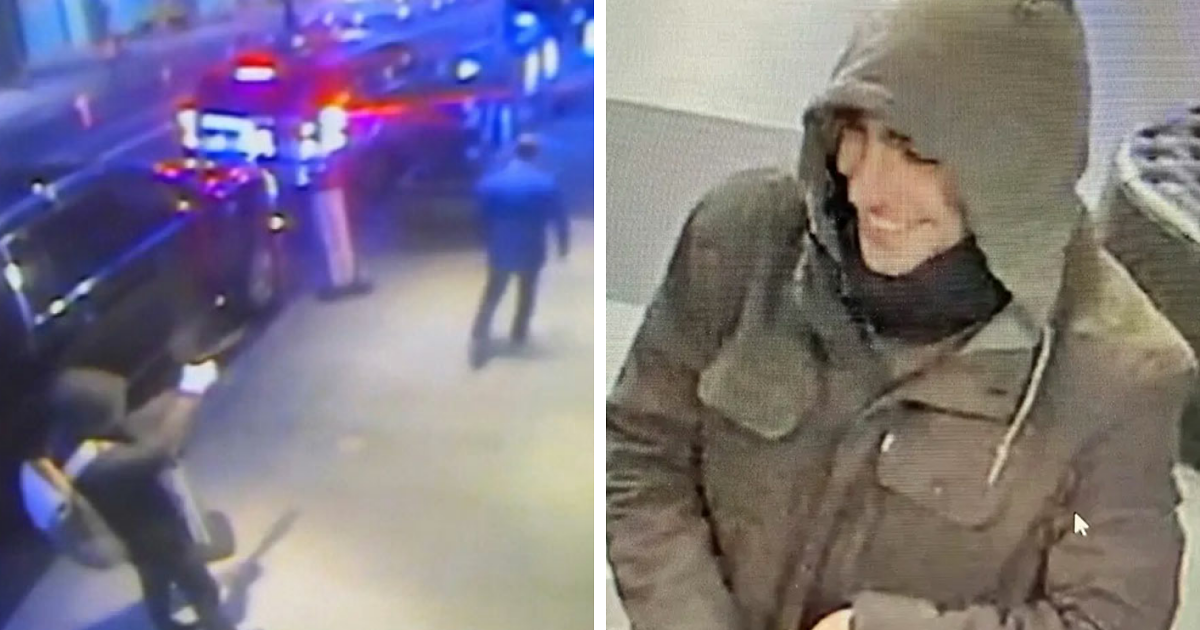
Surveillance images became digital wanted posters. Online detectives inspected every backpack, mask, and eyebrow angle as if they had graduated from the University of Pause-and-Zoom, producing useful attention alongside rumors with the nutritional value of packing peanuts.
How Luigi Mangione Entered the UnitedHealthcare CEO Case
Five days after the shooting, officers approached Luigi Mangione inside a McDonald’s in Altoona, Pennsylvania, after people there thought he resembled the man in circulated photographs. Mangione, then 26, allegedly presented identification bearing another name and carried a backpack that became central to the prosecution.
Police alleged that the bag contained a privately made 9 mm firearm, a suppressor, identification documents, and material critical of the insurance industry. Pennsylvania authorities filed firearms, forgery, and false-identification charges; New York officials soon charged Mangione in Thompson’s killing.
Why “Person of Interest” Was an Important Early Label
A person of interest is someone investigators believe may have useful information or a possible connection to a case. It is not a formal finding of guilt, and it is not always the same as being a suspect. In Mangione’s case, the label aged quickly because prosecutors filed criminal charges within hours. Still, the distinction matters. Breaking-news terminology is a snapshot, not a verdict laminated for eternity.
Who Is Luigi Mangione?
Mangione grew up near Baltimore, graduated from the Gilman School in 2016 as his class’s valedictorian speaker, and later earned bachelor’s and master’s degrees in computer science from the University of Pennsylvania in 2020.
After college, he worked in technology and lived for a time in Hawaii. Reporting described an intelligent, social young man and examined online posts about back problems, spinal surgery, reading, technology, and modern life.
Those details are background, not a courtroom-ready explanation. Academic success does not make violence impossible, chronic pain does not prove motive, and a reading list is not a psychological autopsy. Real lives, annoyingly, refuse to organize themselves into tidy screenplays.
What Prosecutors Allege Happened
Prosecutors allege that Mangione planned the attack, traveled to New York, monitored Thompson’s movements, and shot him outside the hotel. Their case relies on surveillance, travel records, documents, writings, and items allegedly recovered at arrest.
Investigators reported finding “delay,” “deny,” and “depose” written on ammunition at the scene. The words echoed criticism of insurer claims practices and became an internet slogan. Prosecutors cite writings attributed to Mangione as evidence of hostility toward the industry.
The defense has challenged the legal theories, searches, public statements, and evidence. Those disputes matter: constitutional protections do not disappear when a case becomes famous enough to develop an unofficial merchandise ecosystem.
The Charges Have Changed Since the Arrest
The New York State Case
A Manhattan grand jury initially indicted Mangione on charges that included first-degree murder in furtherance of terrorism, second-degree murder, weapons offenses, and possession of a forged instrument. In September 2025, a judge dismissed the terrorism-related murder counts, ruling that the allegations did not satisfy the relevant New York terrorism statute. The second-degree murder charge and other counts remained.
In May 2026, the state judge issued a mixed evidentiary ruling. Prosecutors were permitted to use the alleged firearm and notebook recovered from Mangione’s backpack, while some other items were suppressed because of problems with an earlier search. The decision gave each side something to cite and neither side a reason to order balloons.
The state trial is scheduled for September 8, 2026. Mangione has pleaded not guilty to the remaining state charges. If convicted of the most serious state count, he could face a lengthy prison sentence, potentially including life imprisonment under applicable sentencing rules.
The Federal Case
Federal prosecutors separately charged Mangione with stalking-related offenses, murder through use of a firearm, and a firearms count involving a silencer. The Justice Department later announced its intention to seek the death penalty.
That path changed in January 2026, when a federal judge dismissed the federal murder and firearms counts. The ruling turned on the technical relationship between the statutes: the judge concluded that the stalking charges did not qualify as the necessary underlying “crime of violence” for those counts. Federal prosecutors declined to appeal the death-penalty ruling.
Two federal stalking counts remain, and they can still carry severe penalties, including the possibility of life imprisonment. A separate federal trial is scheduled for later in 2026, although dates in this fast-moving case have shifted more than once.
Brian Thompson Was More Than a Name in a Headline
Brian Thompson joined UnitedHealth Group in 2004 and became UnitedHealthcare’s CEO in April 2021 after senior roles in government, Medicare, retirement, and finance businesses. The insurance division covers tens of millions of people.
Thompson was also a husband, a father of two, a colleague, and a member of a family suddenly forced to grieve in public. Any serious account of the case has to resist turning him into a corporate logo with a pulse. Criticism of an industry can be legitimate and urgent; erasing the humanity of a person who was killed is neither.
Institutions make consequential decisions, but they are staffed by executives, nurses, claims specialists, representatives, and contractors. Threats against workers do not repair appeals, lower premiums, or obtain prescriptions.
Why Health Insurance Anger Flooded the Conversation
The reaction did not emerge from a vacuum. Americans have long reported frustration with medical bills, networks, prior authorization, treatment delays, and denied claims. In late 2024, Gallup found only 44% rated U.S. healthcare quality excellent or good, a 24-year low.
An AP-NORC survey conducted after Thompson’s death found that roughly eight in ten adults placed a great deal or moderate amount of responsibility on the person who committed the killing. At the same time, nearly seven in ten believed insurance profits and coverage denials bore at least some responsibility for the conditions surrounding it. The result captured a grim dual reality: most people rejected the shooting while many also viewed the health insurance system as deeply broken.
Federal scrutiny and health-policy research have examined prior-authorization requests, denial rates, and technology in Medicare Advantage coverage decisions. Insurers say prior authorization reduces waste and clarifies coverage; patients and clinicians say it can become an obstacle course where the hurdles have hurdles.
The issues must not be collapsed. A prosecution asks whether the government can prove specific crimes beyond a reasonable doubt. Reform asks how laws, appeals, prices, incentives, and corporate practices should change. One belongs in court; the other belongs throughout democratic life.
When the Internet Turns an Accused Person Into a Symbol
Mangione’s arrest triggered online fascination: praise of his appearance, defense-fund donations, memes, and folk-hero narratives. Critics called the response a dehumanizing celebration of Thompson’s death. True crime, political protest, celebrity fandom, and algorithmic gasoline blended together.
The internet compresses complexity into an image macro but struggles with due process. Hero worship and automatic demonization both distort facts. A defendant deserves a fair trial, while a victim’s family deserves to mourn without seeing a death treated as a content franchise.
Criticism of insurers should target evidence, policy, incentives, and reformnot fantasies of retaliation. Anger can power democratic change; it becomes destructive when it auditions bullets as policy arguments.
What to Watch as the Luigi Mangione Case Moves Toward Trial
The state jury must decide whether prosecutors prove beyond a reasonable doubt that Mangione was the masked shooter and committed the charged offenses. Disputes will likely involve identification, forensics, surveillance, writings, police procedures, and insurance-industry context.
Jury selection will be especially delicate. Potential jurors may have encountered the surveillance images, memes, documentaries, commentary, fundraising campaigns, or strong opinions about American healthcare. The court does not need people who have lived in a cave since 2024; it needs jurors capable of setting outside material aside and deciding the case on admitted evidence.
The state and federal cases arise from the same alleged conduct but use different statutes and sovereign authority. The defense says preparing for back-to-back proceedings is unfair and burdensome. Appeals and pretrial rulings may move dates again.
Experience Notes: How to Follow a High-Profile Case Without Losing the Plot
Following the UnitedHealthcare CEO shooting case offers a useful, if sobering, lesson in news literacy. The first practical experience is learning that early labels expire quickly. “Person of interest,” “suspect,” “defendant,” and “convicted offender” are not interchangeable. Each describes a different legal stage. When an old headline resurfaces, check its publication date before treating it as a current summary. Breaking news is wet cement; it may look solid while footprints are still appearing.
The second experience is building a source ladder. Start with court rulings, indictments, official filings, and on-the-record statements. Then use established news organizations to explain what those documents mean. Treat anonymous social-media accounts, cropped screenshots, and dramatic “body-language analysis” as entertainment until independently verified. A blue check mark is not a substitute for chain of custody.
Third, separate evidence about the defendant from evidence about the healthcare system. A report on prior-authorization denials may explain why the case resonated with the public, but it does not identify the shooter. Likewise, an alleged notebook entry may be relevant to motive, yet it does not settle every dispute over identity, intent, or admissibility. Context can illuminate a case without doing the jury’s work.
Fourth, resist biography-as-destiny. Readers often search a defendant’s education, family, medical history, favorite books, and old posts for the one detail that supposedly explains everything. That instinct creates satisfying narratives and bad analysis. Millions of people experience pain, alienation, professional success, political anger, or online obsession without committing violence. Mental-health speculation is especially risky when it is unsupported by records or expert testimony.
Fifth, keep the human scale visible. Brian Thompson’s death affected a family, colleagues, witnesses, first responders, court staff, and ordinary insurance workers who later faced threats. Mangione’s family also confronted public shock and scrutiny. Jurors will eventually carry the burden of separating admissible evidence from a cultural storm. Remembering those people helps prevent the story from becoming a video game with red and blue teams.
Sixth, distinguish a courtroom outcome from a policy verdict. An acquittal would not prove that the insurance system works well, and a conviction would not validate every criticism made about insurers. Criminal trials resolve charged conduct under defined legal standards. They are poorly designed referendums on national healthcare, corporate power, wealth inequality, or public pain. Treating one defendant as the answer to all of those questions burdens the case with work no jury can perform. A sound reading habit is to write the legal question and the policy question on separate lines, then check which one each new fact actually addresses.
Finally, know when to close the tab. Constant exposure to violent footage, angry commentary, and speculative updates can make a person feel informed while actually becoming more anxious and less accurate. Choose one or two reliable daily summaries, read primary documents when available, and skip recycled outrage. The case will be decided through evidence and law, not by whoever posts the most dramatic thread before breakfast.
Conclusion
The identification of Luigi Mangione ended one phase of the manhunt but opened a much longer legal and cultural struggle. The public record now contains serious allegations, contested evidence, evolving charges, and two separate prosecutions. It also contains a broader argument about healthcare affordability and insurance practices that will outlast any verdict.
The responsible position is not complicated, even if the case is: preserve the presumption of innocence, recognize Brian Thompson’s humanity, reject political violence, examine the evidence carefully, and keep demanding lawful reforms to systems that patients believe are failing them. Courtrooms decide criminal liability. Democracies decide what must change next.
SEO Metadata

