
Makeup
Relativity Space Changes Course On Path To Orbit
Jun
Relativity Space has never been the kind of rocket company that sneaks quietly into the room. It arrived with giant metal 3D printers, a bold promise to reinvent rocket manufacturing, and a small launch vehicle called Terran 1 that looked like the future had been extruded layer by shiny layer. Then came the plot twist: after one dramatic flight, Relativity retired Terran 1 and shifted its attention to a much larger, reusable rocket called Terran R.
That is the heart of the story behind Relativity Space changes course on path to orbit. This is not simply a tale about a rocket that did not reach orbit. It is about a startup learning, adapting, and choosing the market it believes will matter most over the next decade. In aerospace, changing course is not a sign of weakness. Sometimes it is the only way to avoid building the perfect rocket for yesterday’s business plan.
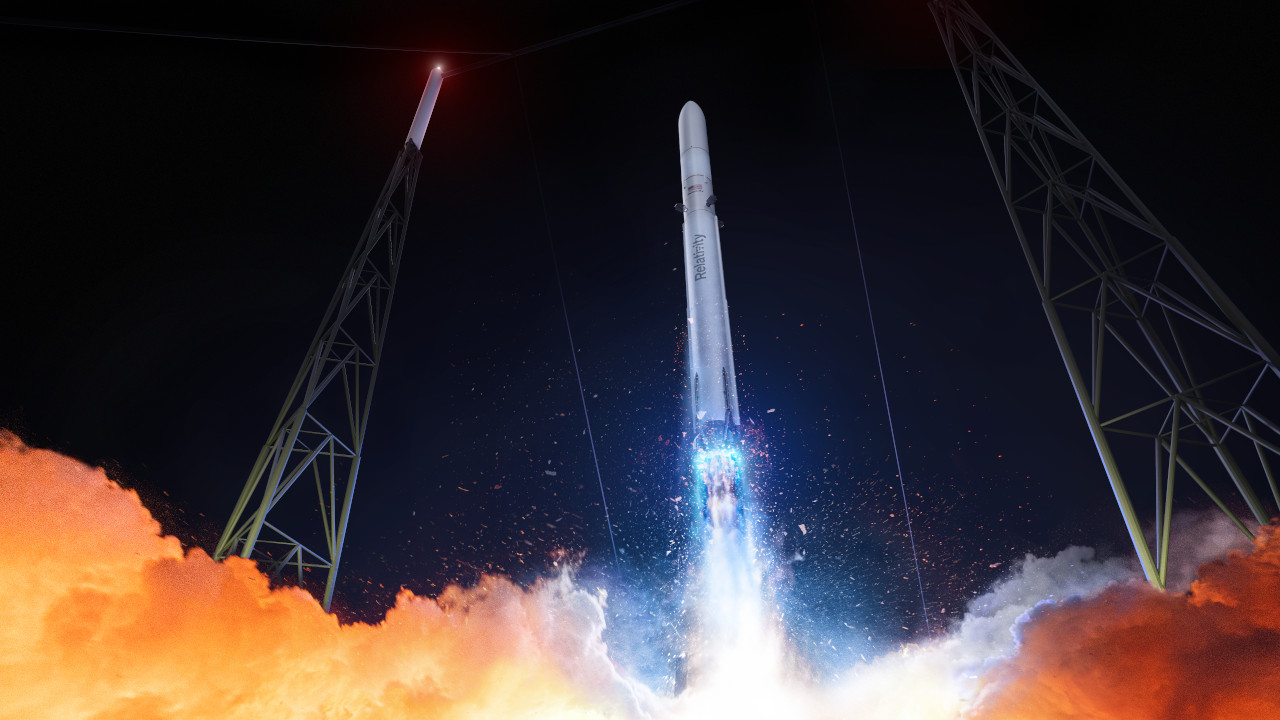
The company’s new strategy centers on Terran R, a medium-to-heavy-lift reusable launch vehicle designed for large satellite constellations, commercial payloads, government missions, and ambitious future space infrastructure. Instead of trying to perfect a small-lift rocket in a crowded market, Relativity Space is betting that bigger payload capacity, faster production, and reusable economics will offer a stronger path to orbit.
From 3D-Printed Wonder to Real-World Rocket Lessons
Relativity Space first gained attention for its radical manufacturing philosophy. The company wanted to use large-scale metal additive manufacturing to reduce part counts, simplify supply chains, and speed up iteration. In normal human language: fewer tiny rocket pieces, fewer chances for things to go sideways, and fewer meetings where someone asks why a bracket needs three vendors and a minor miracle.
Terran 1 became the symbol of that vision. The small-lift rocket was designed with a high percentage of 3D-printed components, including major structures and engines. Its debut mission, named “Good Luck, Have Fun,” launched from Cape Canaveral in March 2023. The rocket cleared the pad, survived Max-Q, and demonstrated that a highly 3D-printed orbital-class rocket could fly through the most stressful part of ascent.
That achievement mattered. Max-Q is the point where aerodynamic pressure on a launch vehicle peaks, and rockets do not get participation trophies for surviving it. Terran 1 proved that Relativity’s printed structures and propulsion systems were not just impressive factory-floor theater. They could handle flight.
But Terran 1 did not reach orbit. After stage separation, the upper stage experienced a failure, preventing the vehicle from completing its orbital mission. For many companies, that would have meant preparing a second attempt with the same rocket. Relativity chose a different route. It treated Terran 1 as a pathfinder, gathered the data, and moved on.
Why Relativity Space Retired Terran 1
The decision to retire Terran 1 after one flight surprised many space watchers. After all, getting through first-stage flight on a debut launch is no small thing. Many launch startups would happily frame that result, hang it in the lobby, and politely ignore the upper-stage part at investor dinners.
Relativity’s reasoning was strategic. The small launch market had changed. Satellite operators were increasingly building larger spacecraft, deploying bigger constellations, and looking for launch providers that could move serious mass to low Earth orbit. Meanwhile, rideshare options from larger rockets had made dedicated small launch a tougher business. Small rockets still have a role, but the commercial prize was shifting upward.
Terran 1 was interesting. Terran R could be much more than interesting. It could compete in a category where demand is tied to broadband networks, national security payloads, Earth observation constellations, in-space logistics, and future commercial infrastructure. Relativity Space essentially decided that proving orbit with the wrong product was less valuable than building the right product faster.
Terran R: The Bigger Bet
Terran R is now the centerpiece of Relativity Space’s orbital ambitions. The vehicle is designed as a two-stage reusable rocket with significantly more lift capacity than Terran 1. According to Relativity’s published performance targets, Terran R is intended to carry up to 23,500 kilograms to low Earth orbit with downrange landing, 5,500 kilograms to geosynchronous transfer orbit with downrange landing, and up to 33,500 kilograms to low Earth orbit in an expendable configuration.
Those numbers put Terran R in a far more commercially relevant lane. It is no longer chasing only the small satellite crowd. It is aiming at the kind of missions that require scale: multi-satellite deployments, larger commercial spacecraft, government payloads, and constellation replenishment. In other words, Terran R is built for customers who show up with a payload manifest, not a shoebox.
The rocket is powered by Aeon R engines on the first stage and a vacuum-optimized upper-stage engine. The propulsion system uses liquid oxygen and methane, a propellant combination favored by several next-generation launch vehicles because it supports performance, reusability, and cleaner engine operations compared with kerosene-based systems.
The Manufacturing Pivot: Still 3D Printing, But Less Dogma
One of the most important parts of Relativity Space’s course change is not just the move from Terran 1 to Terran R. It is the shift from “print as much as possible” to “print where it makes the most sense.” That may sound less flashy, but it is probably more mature.
Early Relativity messaging emphasized extremely high levels of 3D printing. Terran 1 was a technological statement: look what additive manufacturing can do. Terran R is a business statement: look what manufacturing flexibility can deliver when tied to customer demand.
For initial Terran R versions, Relativity has described a hybrid manufacturing approach that includes aluminum alloy tank barrels along with additive manufacturing for complex components. This matters because rockets are not built to win debates on LinkedIn. They are built to fly, scale, and meet schedules. If traditional manufacturing is faster, cheaper, or more reliable for a specific structure, using it is not betrayal. It is engineering with fewer bumper stickers.
3D printing remains a powerful tool for Relativity Space. It can reduce part counts, enable complex geometries, and shorten development cycles for certain engine and structural components. But Terran R shows that the company is willing to let mission requirements, production timelines, and economics drive the design.
A Leadership Shift Adds Another Plot Twist
Relativity’s strategic reset also came with a major leadership change. In 2025, former Google CEO Eric Schmidt became CEO of Relativity Space, while co-founder Tim Ellis continued supporting the company as a board member. Public reporting also described Schmidt as providing significant financial backing and taking a controlling stake.
That move gave Relativity Space something every launch startup needs: patient capital, operational discipline, and a leader familiar with scaling complex technology organizations. Of course, rockets are not search engines. You cannot simply “move fast and break things” when the thing being broken is a methane-powered skyscraper leaving Florida at several times the speed of sound.
Still, Schmidt’s arrival signaled that Relativity was not winding down after Terran 1. It was recapitalizing, refocusing, and trying to turn a bold manufacturing thesis into an orbital transportation business. For a company chasing SpaceX, Rocket Lab, Blue Origin, and other serious players, focus is not optional. It is oxygen.
Why the Market Is Pulling Relativity Toward Bigger Rockets
The launch market has changed dramatically over the last decade. Small satellites became popular, then constellations became massive, then customers started asking for launch providers that could offer capacity, cadence, reliability, and price discipline all at once. It is the aerospace version of ordering coffee: everyone wants it hot, fast, cheap, custom, and somehow still artisanal.
SpaceX reshaped expectations with reusable Falcon 9 launches and frequent rideshare missions. Rocket Lab expanded from small launch into larger vehicle development with Neutron. Blue Origin continues to pursue New Glenn. Government customers want resilient access to space. Commercial satellite operators want backup options and schedule assurance. The result is clear: the market rewards launch providers that can carry meaningful mass and fly often.
Relativity Space’s decision to focus on Terran R reflects that reality. A small rocket can serve dedicated missions, but a reusable medium-to-heavy-lift vehicle can address a larger set of customers. Terran R is designed to be more relevant to modern constellation economics, where operators may need to deploy or refresh many satellites over time.
Customer Demand and Launch Agreements
Relativity Space has publicly emphasized a large backlog of launch service agreements for Terran R. The company has pointed to commercial, government, and telecommunications customers as part of its future launch base. SES, a major satellite operator, expanded its multi-launch agreement for Terran R, reinforcing the idea that established space companies are interested in alternatives for medium-to-heavy-lift launch capacity.
These agreements matter because rockets are expensive to develop before they ever earn a dollar from flight. A strong customer pipeline helps justify the cost of engines, tooling, launch infrastructure, testing, hiring, and the many unglamorous tasks involved in turning a rendering into a vehicle that does not ruin everyone’s week.
However, agreements are not launches. Relativity still needs to finish development, qualify hardware, complete integrated testing, secure launch readiness, and demonstrate orbital performance. The company has momentum, but the scoreboard in launch is brutally simple: orbit counts.
Launch Site Progress at Cape Canaveral
Terran R is planned to launch from Launch Complex 16 at Cape Canaveral Space Force Station in Florida. That location is more than a scenic beach-adjacent rocket parking spot. Cape Canaveral offers access to critical orbital inclinations, established range infrastructure, and proximity to a deep aerospace workforce and supplier base.
Relativity’s 2026 company updates have highlighted progress on launch infrastructure, stage integration, flight hardware, propellant systems, water tower construction, liquid natural gas storage, avionics, thrust structures, and other pieces of the launch campaign puzzle. These updates show a company moving from design and development into the less glamorous but more revealing world of hardware integration.
That stage of rocket development is where optimism meets plumbing. Feedlines must fit. Engines must pass acceptance testing. Avionics must communicate. Structures must survive loads. Ground systems must behave. Every bracket, valve, cable, weld, sensor, and software routine gets a vote.
The Risk of Changing Course
Relativity Space’s pivot is bold, but it is not risk-free. By retiring Terran 1 before reaching orbit, the company left itself without a completed orbital success on its résumé. That gives critics an easy argument: prove you can reach orbit before building something much bigger.
It is a fair concern. Orbital launch is unforgiving. Scaling up from a small vehicle to a larger reusable rocket introduces new challenges in propulsion, structures, stage separation, guidance, thermal environments, recovery operations, manufacturing cadence, and launch operations. Bigger rockets do not simply mean bigger tanks. They mean bigger everything, including consequences.
But there is also risk in staying the course too long. If Terran 1 no longer matched the best commercial opportunity, continuing to fly it could have consumed time, talent, and money that Terran R needed. Relativity Space appears to have made the classic startup trade: accept short-term criticism in exchange for a shot at a larger market.
What Relativity’s Course Change Says About Space Startups
The Relativity Space story is a useful reminder that space startups are not judged only by vision. They are judged by execution. A compelling idea can open doors, attract capital, and recruit brilliant engineers. But eventually, hardware has to fly. Customers have to be served. Costs have to make sense. The rocket has to stop being a pitch deck with engines.
Relativity’s early brand was built around additive manufacturing. Its next chapter will be judged by whether Terran R can deliver reliable orbital access. That is a healthier standard. The space industry does not need manufacturing theater. It needs launch systems that work, scale, and expand access to orbit.
If Terran R succeeds, the Terran 1 flight may be remembered not as a failure but as a compressed learning campaign. If Terran R struggles, critics will argue that Relativity moved on too soon. That tension is what makes the company fascinating. It is building in public, under pressure, in a market where gravity is only one of the problems.
Experience Notes: What This Course Change Feels Like From the Outside
Watching Relativity Space change course feels a bit like watching a talented chef abandon a beautiful appetizer because the restaurant suddenly needs to serve a banquet. Terran 1 was elegant, unusual, and full of personality. It made people pay attention. But the market’s appetite was moving toward larger, more capable launch systems, and Relativity decided not to spend years perfecting a dish fewer customers wanted to order.
The experience offers a few practical lessons for anyone following aerospace, startups, or advanced manufacturing. First, a technology breakthrough is not the same as a business model. Terran 1 showed that large-scale 3D-printed rocket hardware could fly. That was meaningful. But the company still had to ask whether the vehicle served the strongest market. The answer appears to have been no.
Second, iteration is not always linear. Many people imagine progress as a staircase: build Terran 1, fly Terran 1 again, reach orbit, then build Terran R. Relativity chose a different pattern: build, fly, learn, pivot, scale. That looks messy from the outside because it is messy. But aerospace history is full of programs that changed shape after reality entered the chat.
Third, manufacturing philosophy should serve the mission, not the other way around. Relativity’s move toward hybrid manufacturing may disappoint fans who loved the purity of the 3D-printing vision. But practical engineering often rewards selective innovation. Use the advanced process where it creates advantage. Use proven methods where they reduce risk. Rockets are already hard enough without turning every component into a philosophical statement.
Fourth, the launch business is deeply shaped by customer timing. Satellite operators do not care how futuristic a rocket factory looks if their spacecraft cannot get to orbit when needed. Terran R must prove not only that it can fly, but that it can support a dependable launch cadence. Reliability will matter as much as novelty.
Finally, Relativity’s course change is a reminder that ambition must keep negotiating with physics, finance, and market demand. That negotiation can be uncomfortable, but it is where real companies are made. Terran R now carries more than payload mass. It carries the credibility of Relativity’s decision to stop chasing a smaller milestone and pursue a larger opportunity.
Conclusion: A Bigger Rocket, A Sharper Strategy
Relativity Space has changed course on its path to orbit by retiring Terran 1 and focusing its resources on Terran R. The move reflects a broader shift in the launch market toward larger reusable vehicles, stronger constellation demand, and the need for scalable manufacturing. Terran 1 proved important technology, but Terran R is the company’s attempt to build a business around that technology.
The coming years will determine whether the pivot was visionary or premature. Terran R must still complete development, reach the pad, fly successfully, and prove that Relativity can deliver the reliability customers expect. But the strategy is clear: build for the market that is growing, not the market that made the original pitch sound exciting.
In the rocket business, changing course is not embarrassing. Missing the market is. Relativity Space has chosen its new path. Now it has to do the hardest thing in aerospace: make the rocket, the economics, and the timing all arrive in orbit together.

