
Body Care
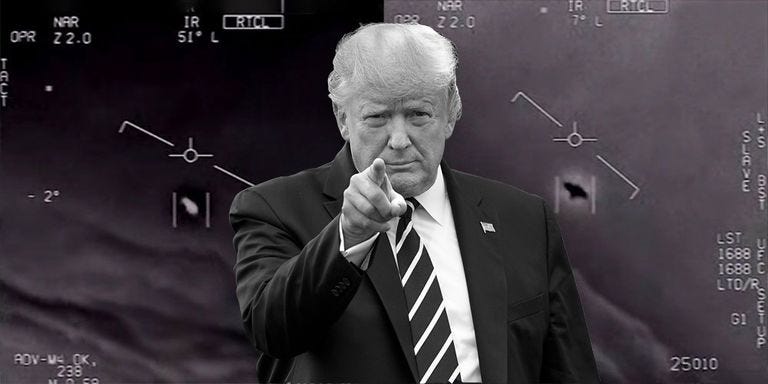
Are UFOs Real? Trump Acknowledges UFOs, Threatens Military Action
Jun
Note: This article uses the phrase “threatens military action” in the same broad, headline-style sense used in past coverage of Donald Trump’s UFO comments: when asked about UFOs, he pivoted to praising U.S. military strength. It does not mean the United States has formally declared war on aliens, which would be difficult to schedule, budget, and explain at a press briefing.
Are UFOs real? The answer depends on what you mean by “UFO.” If you mean unidentified flying objects, then yes, they are real in the most literal sense: people, pilots, military personnel, law enforcement officers, and sensors have reported objects or lights in the sky that could not be immediately identified. If you mean alien spacecraft piloted by interstellar tourists with questionable parking habits, the answer is much less dramatic: no public U.S. government report has confirmed extraterrestrial visitors.
That tension is exactly why the topic keeps pulling America back in. UFOs sit at the weird intersection of national security, science, politics, secrecy, pop culture, and the human desire to look up and whisper, “Okay, but what was that?” The conversation grew even louder after Donald Trump repeatedly discussed UFOs, Roswell, alien life, and government files. In 2026, he directed federal agencies to identify and release files related to extraterrestrial life, unidentified anomalous phenomena, and UFOs, citing intense public interest. Earlier, in a 2020 interview, when asked about a Pentagon UFO task force, Trump said he would “take a good, strong look” at it, then launched into a boast about the power of the U.S. military.
That was enough for headline writers to put on the tinfoil party hat: Trump acknowledges UFOs and threatens aliens with military action. Was it official policy? No. Was it extremely on-brand political theater? Absolutely. But behind the jokes is a serious question: what does the U.S. government actually know about UFOs, and why are officials still releasing files?
UFOs vs. UAPs: Why the Government Changed the Name
The term “UFO” has decades of baggage. Say it at a family dinner and someone will mention Roswell before the mashed potatoes arrive. Government agencies increasingly use “UAP,” which originally meant unidentified aerial phenomena and now often means unidentified anomalous phenomena. The newer term is broader and less loaded. It can include objects or events in the air, in space, near the sea, or across domains that are not immediately explainable.
This language shift matters. “UFO” makes people think of flying saucers. “UAP” makes investigators think of data quality, sensor errors, drones, balloons, aircraft, satellites, atmospheric effects, foreign surveillance, and yes, the small category of cases that remain unresolved. The name change is not proof of aliens. It is proof that officials are trying to make the subject sound less like a midnight radio show and more like an aerospace safety problem.
What Trump Actually Said About UFOs
Trump’s UFO comments have usually mixed curiosity, skepticism, secrecy, and showmanship. In 2020, Fox News host Maria Bartiromo asked him about the Department of Defense setting up a UFO task force and whether UFOs exist. Trump responded that he had heard about the issue and would check on it. Then he pivoted to discussing the strength of the U.S. military, emphasizing weapons, equipment, and defense spending.
That answer was vague enough to feed multiple interpretations. To some, Trump was simply bragging about military rebuilding. To others, it sounded like a warning shot across the bow of any cosmic trespassers. Imagine aliens traveling light-years only to discover that Earth politics comes with campaign-style sound bites. Somewhere in the universe, a saucer may have turned around after hearing, “We have the strongest military.”
Trump has also commented on Roswell, the famous 1947 incident in New Mexico that remains the Super Bowl of UFO lore. When asked whether he would “open up” about aliens and Roswell, he said he would not talk about what he knew but called Roswell “very interesting.” That phrase did a lot of work. It revealed nothing, confirmed nothing, denied nothing, and still managed to keep the internet awake for another week.
The 2026 UFO File Releases: More Smoke, Still No Alien Fire
In 2026, Trump directed agencies to review and release government files related to alien life, UAPs, and UFOs. The move followed years of pressure from lawmakers, journalists, researchers, military witnesses, and citizens who believe the government has hidden too much for too long. Several batches of documents and videos were released, including files describing glowing orbs, disc-like objects, unusual lights, and sightings reported by military or government personnel.
Some of the newly discussed cases sound like they were generated by Hollywood’s prop department after too much coffee. One involved a “potato”-shaped object near Colorado Springs, reportedly seen by Army personnel. It was described as pale, shimmering, and covered with irregular panels or scales. Investigators suggested a possible light effect, but the explanation was offered with low confidence. Another case described orange and red orbs appearing above a ridgeline, with smaller lights seeming to emerge from larger ones. There were also reports of red spheres, strange lights, and older documents involving disc-shaped craft-like descriptions.
Here is the important part: vivid does not mean verified. Strange does not mean extraterrestrial. A report can be fascinating and still not prove aliens. The government can release files that say, “We do not know what this was,” without secretly meaning, “It was definitely Gary from Alpha Centauri.”
So, Are UFOs Real?
Yes, UFOs are real as unidentified observations. That is not controversial anymore. The U.S. government has acknowledged that some pilots and sensors have detected things that analysts could not immediately classify. Congress has held hearings. The Pentagon created the All-domain Anomaly Resolution Office, known as AARO, to investigate reports using a more organized framework. NASA commissioned an independent study team to examine how better data could help researchers understand UAPs.
But “real” is not the same as “alien.” A UFO is simply something unidentified. A birthday balloon becomes a UFO if it is seen from the wrong angle, recorded on shaky video, and uploaded with spooky music. A drone, satellite, aircraft, weather phenomenon, sensor glitch, or reflection can all become mysterious when the available evidence is incomplete. Many UAP cases are resolved as ordinary objects after better analysis. Others remain unexplained because the evidence is too limited, not because the explanation must be extraordinary.
Why the Military Cares About UAPs
The military does not need to believe in aliens to care about unidentified objects. If something is flying near training ranges, military bases, warships, aircraft, or restricted airspace, it matters. It could be a drone. It could be foreign surveillance. It could be a balloon. It could be a private aircraft operating where it should not be. It could be sensor confusion. Whatever it is, commanders need to know whether it poses a safety risk or a security threat.
This is where the topic becomes less science fiction and more air-traffic management with classified headaches. Fighter pilots moving at high speed need clear airspace. Military exercises require reliable tracking. If radar, infrared cameras, visual witnesses, and other sensors disagree, the problem becomes operational. Even a harmless object can become dangerous if it distracts pilots or appears in the wrong place at the wrong time.
That is why the UAP debate has shifted from “Do you believe?” to “How do we collect better data?” Better reporting systems, standardized sensor information, and reduced stigma for pilots can help officials separate the ordinary from the truly puzzling.
NASA’s View: Less Drama, More Data
NASA’s approach to UAPs is almost aggressively sensible, which is rude to people who came for laser beams. The agency’s independent study emphasized that the available data is often too poor to support firm conclusions. Many sightings are brief, blurry, anecdotal, or recorded by systems not designed for scientific investigation. NASA recommended better data collection, stronger analysis, transparency, and the use of scientific tools.
This matters because science is not built on vibes, rumors, or “my cousin saw something near a cornfield.” Science needs measurements, repeatability, calibration, context, and independent verification. If an object moves in a way that appears extraordinary, researchers need to know the sensor angle, distance, speed, atmospheric conditions, camera settings, and possible sources of error. Without that, even a dramatic video can become a Rorschach test in night-vision green.
Congress Wants Answers, Too
Congressional interest in UAPs has grown significantly. Lawmakers have held hearings featuring military veterans and former intelligence officials. Some witnesses have claimed that the government knows far more than it has admitted. Others have focused on aviation safety, stigma, and the need for better reporting. Members of both parties have pushed for more transparency, partly because the issue is popular with the public and partly because secret programs, if they exist, raise oversight concerns.
The bipartisan angle is unusual. In Washington, politicians can argue about the weather while standing in the rain. Yet UFO transparency has attracted figures across party lines. The reason is simple: everyone likes disclosure until it threatens their own secrets. Lawmakers want to know whether agencies are withholding information, whether taxpayer money is being spent without proper oversight, and whether national security risks are being ignored.
The Best Explanations for Many UFO Sightings
Most UFO sightings do not require aliens. Common explanations include balloons, drones, satellites, aircraft, birds, weather effects, flares, atmospheric phenomena, camera artifacts, reflections, classified military technology, and simple misidentification. The modern sky is crowded. Satellites streak overhead. Consumer drones buzz around neighborhoods. Military exercises use flares and advanced aircraft. Weather balloons drift. Smartphone cameras struggle in low light. Add distance, surprise, and human imagination, and the ordinary can become spectacular.
That does not mean every witness is wrong or foolish. Pilots, soldiers, police officers, scientists, and ordinary citizens can all see something real and still misinterpret it. Human perception is powerful but imperfect. Sensors are useful but not magical. A radar return is not a confession. A glowing dot is not a passport stamp from another galaxy.
Why People Want to Believe
UFO stories endure because they touch something deeply human. We want the universe to be bigger than our routines. We want mystery. We want proof that we are not alone. We also love the possibility that the government knows something and is doing a terrible job hiding it, because that theory feels both thrilling and weirdly plausible.
There is also a cultural reason UFOs keep coming back. From “The X-Files” to “Independence Day,” American pop culture has trained people to connect strange lights with hidden truth. UFOs offer a rare topic where skeptics, believers, veterans, scientists, conspiracy theorists, lawmakers, and late-night comedians all gather around the same glowing campfire.
Trump, UFOs, and Political Theater
Trump’s UFO comments work politically because they let him occupy several positions at once. He can sound curious without making a scientific claim. He can promise transparency without revealing classified details. He can tease “interesting” information while leaving room for suspense. And when asked about UFOs, he can pivot to military strength, which turns a weird question into a familiar campaign message.
This is classic political communication: take a strange topic, attach it to strength, secrecy, and public interest, then let the audience fill in the blanks. The result is a headline machine. For believers, Trump’s remarks suggest the door is opening. For skeptics, they are another example of theatrical ambiguity. For everyone else, they are a reminder that UFOs may be the only issue capable of making cable news even stranger.
What the Government Has Not Proved
Despite decades of sightings, hearings, leaked videos, official reports, and public fascination, the U.S. government has not publicly proved that extraterrestrial spacecraft have visited Earth. AARO has stated that it has found no verifiable evidence that any UAP sighting represents extraterrestrial activity or that the government or private industry has possessed alien technology. NASA has also emphasized that there is no confirmed evidence of extraterrestrial origin in the available UAP data.
That conclusion disappoints some people, but it is not the same as saying every case is solved. “No evidence of aliens” and “some cases remain unexplained” can both be true. The serious position is not blind belief or lazy dismissal. It is disciplined curiosity: investigate the cases, improve the data, protect witnesses from ridicule, and avoid jumping from “unknown” to “interstellar visitors with excellent mood lighting.”
What Would Count as Real Proof?
Real proof of extraterrestrial visitation would require more than a blurry video or an impressive witness. It would require physical evidence, multiple independent measurements, clear chain of custody, transparent analysis, and confirmation by qualified experts. A recovered material with non-human engineering would need to survive testing by independent laboratories. A signal from an alien craft would need verification. A public landing on the National Mall would help, though parking enforcement might still issue a ticket.
The key is independent confirmation. Extraordinary claims need evidence that can be examined by people who do not already agree. That is how science protects itself from wishful thinking. It is also how society avoids confusing mystery with certainty.
Experiences Related to UFOs, Trump’s Comments, and the Military Question
To understand why this topic feels so powerful, imagine a typical modern UFO experience. Someone is walking outside at night, maybe taking out the trash or letting the dog pretend to be a wolf. They look up and see a bright object moving strangely. It is too slow for a meteor, too quiet for a helicopter, too bright for an ordinary plane, and too weird to ignore. They pull out a phone, record a shaky clip, and suddenly the sky has become personal.
That experience is common because it begins with uncertainty. The witness is not necessarily claiming aliens. They are saying, “I saw something I cannot explain.” That is a reasonable statement. The trouble begins when the internet arrives wearing a cape. One person says it is a drone. Another says it is a classified aircraft. A third says it is clearly an alien scout ship. Someone adds dramatic music. Within hours, the original mystery has grown a mythology.
Trump’s UFO remarks plug directly into that emotional circuit. When a president says he will look into UFOs, people listen. When he says Roswell is interesting, imaginations sprint. When he directs agencies to release files, disclosure communities treat it as a major moment. And when he answers a UFO question by praising the strongest military in the world, the story practically writes its own punchline: America may not know what the objects are, but apparently it wants them to know we have excellent defense contractors.
For military personnel, the experience is different. A pilot who sees an object near a training range does not have the luxury of treating it like a campfire story. The pilot needs to know whether the object is a collision hazard, an adversary system, a sensor anomaly, or something else. Reporting should be easy, serious, and stigma-free. No pilot should have to choose between safety and being mocked as “the UFO person” in the squadron group chat.
For scientists, the experience is also frustrating. Many cases arrive with too little data. A researcher may want to help but cannot calculate speed without distance, cannot identify movement without camera angle, and cannot rule out ordinary explanations without context. In other words, the most exciting cases are often the least useful scientifically. That is why NASA and other experts keep repeating the same unglamorous advice: collect better data.
For the public, UFOs remain a mirror. Skeptics see human error and hype. Believers see secrecy and patterns. Officials see risk management. Journalists see headlines. Politicians see attention. Somewhere between all those perspectives is the truth: UFOs are real as reports and observations, but aliens remain unproven. The mystery deserves investigation, not hysteria. The jokes are fun, but the serious work is better sensors, clearer rules, more transparency, and less stigma.
So, are UFOs real? Yes, in the sense that unidentified objects and unexplained sightings exist. Has Trump acknowledged the topic? Absolutely. Did he turn a UFO question into a celebration of military power? Also yes, and history will have to decide whether that was strategic messaging or the first diplomatic incident with a civilization we have not met. But are UFOs confirmed alien spacecraft? Not based on public evidence. The truth is still out there, but so are drones, balloons, satellites, flares, camera glitches, and the occasional airborne potato-shaped mystery with excellent branding.
Conclusion
The UFO debate has finally moved from the fringe into mainstream government, science, and national security conversations. Trump’s comments and file-release directive added political drama to a subject already rich with mystery. Yet the responsible answer remains balanced: UFOs are real as unidentified phenomena, but there is no public proof that they are alien spacecraft. The most credible path forward is not panic, mockery, or blind belief. It is transparency, better data, serious reporting, and a willingness to admit that “we do not know yet” is sometimes the most honest sentence in the room.

