
Body Care
How to Keep Bees in Minecraft: 11 Steps
Jun
Keeping bees in Minecraft is one of those projects that starts with “I just need a little honeycomb” and ends with you building a glass-roofed apiary, naming every bee, and yelling at a campfire because one worker flew too close to the smoke. Welcome to beekeeping, block edition.
Minecraft bees are more than adorable flying marshmallows with stripes. They help pollinate crops, produce honey bottles, create honeycomb, and unlock useful crafting options like beehives, candles, honey blocks, honeycomb blocks, and waxed copper. If you want a renewable honey farm, a prettier garden, or simply a peaceful corner of your base that buzzes like a tiny engine, bees are worth learning.
This guide explains how to keep bees in Minecraft in 11 clear steps. You will learn where to find bees, how to move them safely, how to craft beehives, how to harvest honey without causing a winged riot, and how to build a bee-friendly setup that actually works.
Why Keep Bees in Minecraft?
Bees are useful because they connect farming, crafting, decoration, and redstone automation. A small bee colony can support a crop garden by carrying pollen over plants. A larger colony can produce steady honey bottles and honeycomb. Honey bottles can be consumed, turned into sugar, or crafted into honey blocks. Honeycomb is used to craft beehives, candles, honeycomb blocks, and to wax copper so it stops oxidizing.
In other words, bees are not just cute. They are tiny agricultural interns who work for flowers and occasionally get stuck on fences.
How to Keep Bees in Minecraft: 11 Steps
Step 1: Find Bees in the Right Biomes
The first step is finding bees in the wild. Bees usually appear near bee nests attached to trees. Look in flower-rich biomes such as plains, sunflower plains, meadows, flower forests, forests, birch forests, and similar wooded areas. If you see flowers and trees together, slow down and scan the leaves and trunks.
Bee nests are natural blocks. They are not the same as beehives, which players craft. A bee nest can hold up to three bees, and bees leave the nest during the day to search for flowers. They return after gathering pollen, slowly increasing the nest’s honey level.
Step 2: Bring the Right Tools Before Touching Anything
Do not walk up to a nest and start swinging like a lumberjack with a grudge. Bees are neutral mobs, which means they are peaceful until provoked. If you break their nest or harvest from it incorrectly, nearby bees will attack.
Before starting, gather these items:
- Flowers to lure and breed bees
- Shears to collect honeycomb
- Glass bottles to collect honey
- A campfire to calm bees during harvesting
- A Silk Touch tool if you want to move a bee nest with bees inside
- Wood planks and honeycomb to craft beehives
- Fences, trapdoors, or glass if you want to build an enclosed apiary
The campfire is the hero item here. Without it, harvesting honey or honeycomb can turn your cozy cottage into a bee courtroom, and you are definitely the defendant.
Step 3: Wait Until the Nest Is Full
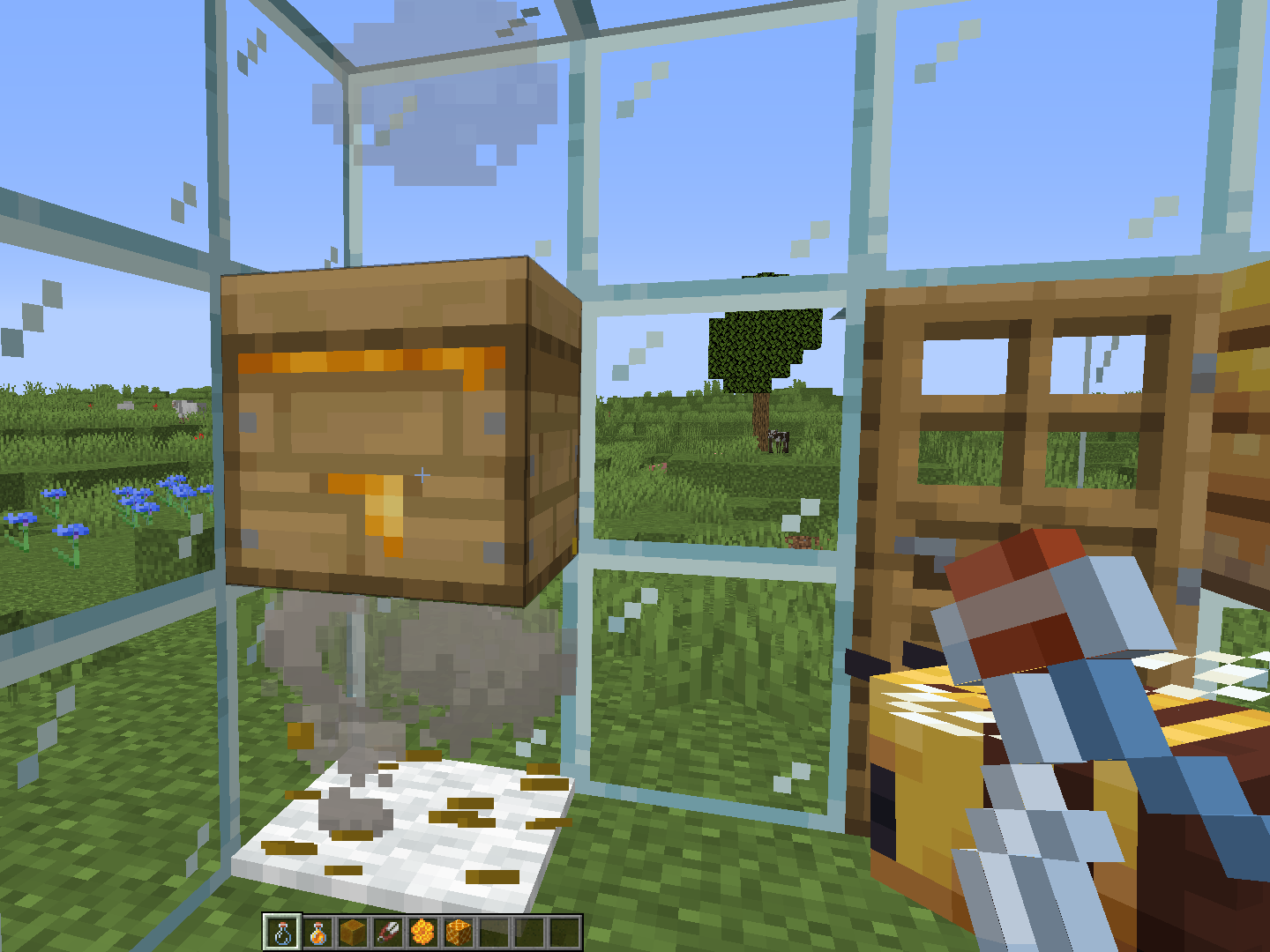
A bee nest or beehive must reach honey level 5 before you can harvest honey or honeycomb. You can tell it is ready when the block shows golden honey dripping or glowing on the outside. If it still looks dry, the bees are not finished.
Bees build up honey by visiting flowers, collecting pollen, and returning to the nest or hive. Each successful trip increases the honey level. To speed things up, place flowers close to the nest so bees do not have to fly far. Short commutes are good for bees, just like they are good for everyone who has ever stared sadly at traffic.
Step 4: Use a Campfire to Keep Bees Calm
Place a lit campfire below the nest or beehive before harvesting. Smoke calms the bees and prevents them from becoming aggressive when you collect honey or honeycomb. In a simple setup, put the campfire directly underneath the hive or nest, leaving enough room for smoke to rise.
Be careful with placement. Bees can take fire damage if they fly too close to an exposed campfire. Many players protect the fire with blocks, trapdoors, or a design that keeps bees away from the flame while still allowing smoke to reach the hive. In Java Edition, smoke can work through certain setups differently than in Bedrock Edition, so test your design before trusting your entire colony to it.
Step 5: Collect Honeycomb with Shears
When the nest or hive reaches honey level 5, use shears on it to collect honeycomb. A successful harvest gives honeycomb and resets the honey level. Honeycomb is essential because it lets you craft beehives, candles, honeycomb blocks, and waxed copper.
If you harvest without smoke, bees inside and nearby may attack. A bee that stings a player will die shortly afterward, so angering bees is bad for you and tragic for them. Use the campfire. Save the bees. Save yourself. Save your armor durability. Everyone wins.
Step 6: Collect Honey with Glass Bottles
If you want honey instead of honeycomb, use an empty glass bottle on a full nest or beehive. This gives you a honey bottle. Honey bottles can be consumed, crafted into sugar, or combined into honey blocks.
Honey blocks are especially useful in redstone builds because they are sticky but do not stick to slime blocks. Builders use them in flying machines, elevators, doors, traps, and parkour designs. Even if you are not a redstone expert, honey blocks are fun because they slow movement and reduce fall damage when players slide down them.
Step 7: Craft Your Own Beehives
Once you have honeycomb, craft beehives so you can keep bees near your base. The recipe is simple: place three wooden planks in the top row, three honeycombs in the middle row, and three wooden planks in the bottom row of a crafting table. Any wood type works.
Beehives function much like bee nests, but they are player-made. Each beehive can house up to three bees. Place hives near flowers so your bees can work efficiently. If you build multiple hives, leave enough space so bees can enter and exit without getting trapped by blocks, fences, or decorative chaos. Minecraft bees are charming, but they do not have advanced air traffic control.
Step 8: Move Bees Safely
There are two easy ways to move bees. First, hold a flower and walk slowly toward your new apiary. Bees will follow you while you hold the flower. This is simple, but bees can get distracted, stuck, or left behind if the trip is long.
The cleaner method is to move an occupied bee nest with a Silk Touch tool. Wait until bees return to the nest, usually at night or during rain, then break the nest using Silk Touch. The bees stay inside the nest when it drops. Place the nest at your new location, and your bees will emerge when conditions are right.
If you use this method, avoid breaking the nest without Silk Touch. Without Silk Touch, the nest is destroyed, and you may also upset the bees. That is not relocation; that is demolition with witnesses.
Step 9: Breed Bees with Flowers
To grow your colony, feed flowers to two adult bees. They will enter love mode and create a baby bee. Baby bees grow into adults over time, and you can speed up growth by feeding them more flowers.
Most flowers work, including small flowers and tall flowers. Keep a flower farm nearby so you always have breeding supplies. More bees mean faster honey production, but remember that each nest or hive only holds three bees. If you breed too many without enough homes, bees may wander around looking confused, like guests at a party where nobody labeled the bathroom.
Step 10: Build a Bee-Friendly Apiary
A good Minecraft apiary should be safe, efficient, and easy to harvest. Place beehives near flowers, protect them from mobs, and leave clear flight paths. Fences or glass walls can help keep bees contained, but do not block hive entrances. Bees need access to flowers and their homes.
Here is a practical layout:
- Place beehives in a row at eye level.
- Put flowers two to five blocks away from the hives.
- Place campfires safely below harvesting points.
- Use trapdoors, slabs, or barriers to reduce fire accidents.
- Add lighting to prevent hostile mobs from spawning nearby.
- Keep Nether portals away from bees so they do not accidentally wander into another dimension.
You can design the apiary as a rustic garden, greenhouse, underground farm, mountain terrace, or floating sky-bee sanctuary. Bees do not care about aesthetics, but you do, and that is enough.
Step 11: Automate Honey and Honeycomb Collection
Once you understand manual beekeeping, automation is the next step. Beehives and bee nests can output a redstone signal through a comparator based on honey level. When the hive reaches level 5, the signal can trigger a dispenser.
Put shears in the dispenser to collect honeycomb, or glass bottles in the dispenser to collect honey bottles. Use hoppers and chests to collect the drops. The basic idea is simple: bees gather pollen, hive reaches honey level 5, comparator detects it, dispenser activates, items go into storage.
For beginners, start with one hive and one dispenser. Once it works reliably, expand the design. Large honey farms are possible, but small farms are easier to troubleshoot. If your system fails, check whether the dispenser faces the hive, whether the hive is reaching level 5, whether bees can access flowers, and whether items are being collected properly.
Common Mistakes When Keeping Bees in Minecraft
Harvesting Too Early
If the hive is not full, using shears or bottles will not produce what you want. Wait for visible honey on the outside of the block.
Forgetting the Campfire
This is the classic mistake. No smoke means angry bees. Angry bees mean poison, panic, and tiny buzzing regret.
Blocking the Hive Entrance
Decorations are great, but bees need room to enter and exit. Keep the front clear and avoid crowding the hive with blocks.
Building Too Far from Flowers
Bees need flowers to make honey. If flowers are far away, production slows. Place flowers close to the hives for faster cycles.
Moving a Nest Without Silk Touch
If you break a natural nest without Silk Touch, you will not move it properly. Get Silk Touch first if you want to relocate a full nest.
Best Uses for Bees, Honey, and Honeycomb
Once your bee setup is running, you can use the resources in several ways. Honeycomb is excellent for crafting more beehives, decorating with honeycomb blocks, making candles, and waxing copper builds. Waxed copper is useful when you want copper roofs, pipes, statues, or steampunk-style bases to stay at a specific color stage.
Honey bottles are useful as food and crafting ingredients. They can be turned into sugar, and four honey bottles can make a honey block. Honey blocks are popular in redstone because of their movement properties. They can also be used creatively in parkour courses, elevators, and decorative builds where sticky golden blocks look right at home.
Bees also make gardens feel alive. A wheat field with bees floating between flowers is more charming than a silent crop rectangle. Even practical players can appreciate the atmosphere. Sometimes the best build upgrade is not diamond, netherite, or redstone. Sometimes it is a chubby bee doing laps around a poppy.
Extra Experience: What Keeping Bees in Minecraft Teaches You
Keeping bees in Minecraft is one of the best small projects for learning how the game’s systems connect. At first, it looks like a simple animal-care task: find bees, give them flowers, collect honey. But after a little experimenting, you realize beekeeping touches exploration, crafting, farming, mob behavior, redstone, base design, and even risk management.
My favorite way to start is with a tiny starter apiary beside a crop field. I place two or three hives along a fence, scatter flowers nearby, and build a small roof so the area feels intentional. Then I add campfires underneath the hives, usually hidden in the floor or tucked below trapdoors. The first time the hive fills with honey, it feels strangely satisfying. You are not mining diamonds or fighting the Ender Dragon. You are just watching a small system work. That is part of the magic.
The biggest lesson is patience. Bees do not produce honey instantly. They fly out, find flowers, gather pollen, return home, and repeat the process. If you stand there staring at the hive, it can feel slow. But if you build the bee area near crops, storage, or your main path, honey production becomes passive. You go about your regular survival chores, and every so often the hives are ready. It is like having a tiny side business run by insects.
Another useful experience is learning to design for mob movement. Bees are wider and clumsier than they look. They bump into fences, hover near fire, and occasionally choose the worst possible route back to the hive. A good apiary gives them simple paths. I prefer open space in front of hives, flowers close by, and protective glass walls if the base is crowded. The goal is not to trap bees in a decorative prison; it is to guide them gently so they do not wander into caves, lava, portals, or your friend’s “temporary” creeper hole.
Beekeeping also encourages better resource planning. One hive is cute. Six hives are productive. A full automatic farm can generate more honeycomb than you expected. Before scaling up, decide what you need. Are you waxing a copper roof? Making candles for a castle? Building honey block contraptions? Decorating a bakery? Your answer changes the size and style of your farm.
Finally, bees add personality to a base. Minecraft can become very mechanical when every build is optimized for output. Bees soften that. They make a farm feel less like a machine and more like a place. You hear buzzing, see movement, and get useful items in return. That is a rare combination: practical, peaceful, and slightly ridiculous. In a game where you can punch trees, fight dragons, and visit the Nether, keeping bees is a reminder that sometimes the best adventure is convincing three fuzzy workers to move into a wooden box next to your carrots.
Conclusion
Learning how to keep bees in Minecraft is simple once you understand the basics: find a nest, use flowers, wait for honey level 5, calm bees with a campfire, harvest with shears or bottles, and expand with crafted beehives. From there, you can build a beautiful garden apiary, a practical honeycomb supply, or a fully automatic honey farm powered by redstone.
The secret is treating bees like a system, not just another mob. Give them flowers, space, safety, and enough hives, and they will reward you with honey, honeycomb, better crops, and a base that feels more alive. Also, they are adorable. That is not a technical advantage, but it absolutely counts.

