
Skincare
8 Of The Most Bizarre Tiger King Revelations
Aug
Note: This article is based on real public information, official records, and reputable U.S. reporting about Tiger King, Joe Exotic, Carole Baskin, Doc Antle, roadside zoos, big cat ownership, and the legal fallout that followed the Netflix phenomenon.
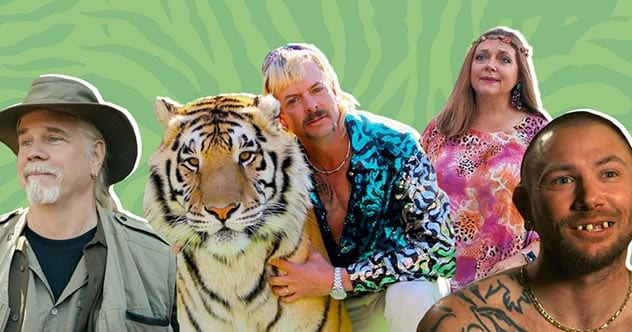
When Tiger King: Murder, Mayhem and Madness landed on Netflix, viewers thought they were clicking on a quirky documentary about exotic animals. What they got instead was a rhinestone-covered tornado of big cats, political campaigns, country music videos, missing-person theories, feuds, lawsuits, federal crimes, and more mullets than any reasonable wildlife enclosure should contain.
The series became one of the strangest pop culture events of the early 2020s because it did not feel scripted, even when life at the Greater Wynnewood Exotic Animal Park looked like a reality show that had escaped containment. At the center was Joe Exotic, the self-styled “Tiger King,” a former Oklahoma zoo operator whose rivalry with animal rights advocate Carole Baskin spiraled from trash talk into a federal murder-for-hire conviction.
But the most bizarre Tiger King revelations were not just about one man in a sequined shirt. They exposed a wider world of private big cat ownership, cub-petting attractions, questionable animal welfare practices, amateur fame-chasing, legal loopholes, and people building entire identities around animals that should never have been props in the first place. Below are eight of the wildest revelations from the Tiger King saga, explained with context, analysis, and just enough humor to survive the madness.
1. Joe Exotic Was Convicted in a Real Murder-for-Hire Plot
The most shocking revelation is also the most legally serious: Joe Exotic, whose real name is Joseph Maldonado-Passage, was not merely accused of dramatic threats against Carole Baskin. He was convicted in federal court on two murder-for-hire counts, along with wildlife-related crimes involving the Lacey Act and the Endangered Species Act.
The feud between Joe and Baskin had already become volcanic by the time federal investigators entered the story. Baskin, who ran Big Cat Rescue in Florida, had long criticized roadside zoos and cub-petting operations. Joe responded with videos, insults, lawsuits, and a level of public rage that made daytime soap operas look emotionally restrained. Eventually, prosecutors said that his threats crossed the line from performance into criminal conduct.
Federal authorities said Joe tried to hire two different men to kill Baskin. A jury found him guilty in 2019. In 2020, he was sentenced to 22 years in prison, later reduced to 21 years after resentencing. The fact that a Netflix-famous zoo operator went from internet spectacle to a long federal sentence remains one of the strangest true-crime arcs in modern pop culture.
The bizarre part is not only that a murder-for-hire case happened inside the world of private tiger owners. It is that the whole thing seemed to grow from a media feud that became a personal obsession. Tiger King showed how entertainment, ego, and anger can create a dangerous feedback loop. One minute someone is filming a rant. The next, federal prosecutors are reading the transcript.
2. The Tiger Crimes Were Not Just Background Noise
Many viewers focused on the murder-for-hire plot, but the wildlife charges were central to Joe Exotic’s conviction. According to federal records, the case included violations related to falsified wildlife records, interstate animal sales, and the killing of five tigers.
That detail changed the tone of the story. The tigers were not just scenery behind the human chaos. They were victims of a system that turned rare animals into inventory, attractions, bargaining chips, and social media magnets. Prosecutors said records were falsified to make animal sales look like donations or exhibition transfers. In other words, the paperwork was allegedly wearing a fake mustache.
The series made it easy to remember the loud humans, but the quieter tragedy was the animal trade itself. Big cats require specialized care, secure habitats, expensive diets, veterinary oversight, and highly trained handlers. They are not oversized house cats with premium stripes. They are apex predators, and keeping them in roadside attractions for profit creates obvious risks for both animals and people.
This revelation matters because it widens the story beyond Joe Exotic’s personality. Tiger King became a viral circus, but underneath the memes was a serious animal welfare issue. The documentary pulled back the curtain on a business model that often depended on breeding cubs, letting tourists pose with them, and then facing the difficult question of what happens when those adorable cubs become 400-pound adults with opinions and teeth.
3. Joe Exotic’s Country Music Career Was Not Quite What It Seemed
One of the funniest and weirdest Tiger King revelations involved Joe Exotic’s music videos. Songs like “I Saw a Tiger” and “Here Kitty Kitty” became instant internet artifacts: part country ballad, part diss track, part wildlife PSA, part fever dream from a karaoke machine in a taxidermy shop.
But reports later made the whole thing even stranger: Joe was not necessarily the voice behind the songs he appeared to perform. Vanity Fair reported that musicians Vince Johnson and Danny Clinton created and performed songs associated with Joe Exotic, while Joe lip-synced in his homemade music videos.
This detail is almost too perfect for the Tiger King universe. Joe was not just running a zoo, running for office, hosting internet shows, and feuding with animal activists. He was also starring in music videos where the performance of authenticity was part of the act. The brand was louder than the facts, and somehow that feels like the entire series in one cowboy-hatted nutshell.
The music videos also show how Joe used media as a weapon. “Here Kitty Kitty,” for example, dramatized ugly allegations about Carole Baskin and her missing husband, Don Lewis. It was less a normal music video than a personal attack with a chorus. In the attention economy, Joe understood something very modern: if you cannot win the argument, make the argument bizarre enough that people keep watching.
4. The Don Lewis Mystery Became a National Obsession
Carole Baskin’s former husband, Don Lewis, disappeared in 1997 and was later declared legally dead. Tiger King revived public interest in the cold case, turning it into one of the most discussed mysteries connected to the series.
The documentary explored theories, speculation, family frustration, and Joe Exotic’s inflammatory claims. Baskin has repeatedly denied involvement in Lewis’s disappearance, and no one has been charged in connection with the case. Still, the series made millions of viewers suddenly act like amateur detectives with Wi-Fi, coffee, and perhaps too much confidence.
The bizarre revelation was not simply that the case remained unresolved. It was how quickly a serious missing-person story became part of meme culture. Jokes, social posts, parody videos, and wild theories spread online almost immediately. That reaction says as much about viewers as it does about the show. True crime can create attention, but attention is not the same thing as evidence.
The renewed spotlight did have a real-world effect. Authorities in Florida publicly asked for new leads after the documentary became popular. That is one reason the Don Lewis chapter remains complicated: the show generated jokes, but it also revived interest in an actual family’s unanswered questions. The lesson is simple and uncomfortable: behind every viral mystery is someone’s real grief.
5. Joe Exotic Ran for President and Governor
Before most people knew Joe Exotic as Netflix’s tiger-owning chaos engine, he had already tried to enter politics. He ran as an independent candidate for president in 2016 and later pursued the Libertarian nomination for governor of Oklahoma in 2018.
This is one of those facts that sounds like a rejected comedy sketch until you remember it actually happened. Joe’s campaigns blended anti-establishment messaging, personal branding, animal park promotion, and the kind of campaign videos that make political consultants reach for antacids. His slogans, speeches, and public persona were outrageous, but they also reflected a larger trend: fame and politics increasingly overlap in strange ways.
In Tiger King, campaign manager Joshua Dial became one of the more grounded figures in the surrounding circus. His presence highlighted how Joe’s ambitions pulled ordinary people into extraordinary dysfunction. The campaign scenes were funny at first glance, but they also showed how the zoo operated as a stage for Joe’s endless self-promotion.
The bizarre part is not that Joe lost. That was predictable. The bizarre part is that his campaigns were not entirely disconnected from the same skills that made him famous later: spectacle, direct-to-camera rants, slogans, costumes, and a talent for getting attention. In a media environment where visibility can feel like credibility, Joe Exotic understood the showmanship part alarmingly well.
6. Saff Saffery Returned to Work After a Tiger Attack
Among the most unforgettable moments in Tiger King was the story of Kelci “Saff” Saffery, a worker at Joe’s zoo who lost part of his arm after a tiger attack in 2013. According to interviews, Saff chose amputation rather than years of reconstructive surgeries and returned to work soon after.
This revelation stunned viewers because it compressed the entire danger of the roadside zoo world into one human story. Big cats are not props. They are not mascots. They are not oversized Instagram accessories. They are wild animals with instincts that do not pause because someone has a film crew nearby.
Saff’s reaction was also striking. He took responsibility for the incident, describing a break in protocol. That calmness made him stand out in a series full of loud personalities. In a show where nearly everyone seemed to be auditioning for a spinoff, Saff came across as practical, measured, and focused on the animals.
The episode revealed how normalized risk had become inside that environment. A tiger attack that would shut down most workplaces became, in the logic of the zoo, another crisis to manage before the next visitor arrived. It is one of the clearest examples of how the show’s “bizarre” moments often had serious ethical questions hiding underneath them.
7. Doc Antle’s Legal Troubles Continued After the Show
Tiger King introduced viewers to Bhagavan “Doc” Antle, owner of Myrtle Beach Safari, whose polished image and exotic animal empire seemed like a more organized version of the same controversial industry. But the legal fallout around Antle did not end when the Netflix credits rolled.
In 2023, Antle pleaded guilty to federal wildlife trafficking and money laundering charges. In 2025, the U.S. Department of Justice announced that he had been sentenced to prison, fined, ordered to serve supervised release, and required to forfeit animals and money. Prosecutors said the case involved illegal wildlife transactions and laundering funds.
This revelation reframed Tiger King as more than a story about one chaotic zoo in Oklahoma. It suggested that the broader exotic animal world contained recurring patterns: baby animals used for profit, complicated ownership transfers, questionable paperwork, and charismatic operators presenting themselves as conservationists while critics questioned the business model.
Antle’s case also shows why the series had such staying power. The people featured in it did not vanish after the first season became a hit. Their legal, personal, and professional stories kept developing, often in ways that made the original documentary look less like a closed chapter and more like the trailer for a much larger investigation.
8. Tiger King Helped Push Big Cat Ownership Into the National Spotlight
Perhaps the biggest long-term revelation was not about Joe, Carole, Doc, or any single personality. It was about America’s private big cat problem. Tiger King helped many viewers realize that private ownership of lions, tigers, cougars, leopards, and other large cats was more widespread than they assumed.
The Big Cat Public Safety Act, enacted in December 2022, created major federal restrictions on private big cat ownership and public contact with big cats, including cubs. The law targeted the exact kind of cub-petting and photo-op business model that Tiger King had made impossible to ignore.
This may be the most important revelation of all: the show was funny, outrageous, and meme-friendly, but it also helped educate the public about a real animal welfare and public safety issue. Once people saw how cub-petting attractions worked, it became harder to pretend that tiger selfies were harmless entertainment.
There is irony here. A documentary filled with personal feuds and outrageous behavior ended up contributing to a broader conversation about regulation, conservation, and animal exploitation. Viewers arrived for the mullet. Many left asking why private individuals were allowed to keep apex predators in the first place. That is a pretty unusual route to public policy awareness, but then again, nothing about Tiger King took the normal road.
Why These Tiger King Revelations Still Fascinate People
The reason Tiger King continues to fascinate audiences is that it operates on several levels at once. On the surface, it is a chaotic true-crime story with unforgettable characters. Underneath, it is a study of fame, ego, exploitation, grief, obsession, and the uniquely American belief that if you own enough land, cameras, and confidence, you can build your own kingdom.
The bizarre revelations work because they are not random. They all connect to the same central theme: people trying to control wild things, whether animals, public image, personal enemies, political dreams, or unresolved mysteries. The tragedy is that wild things do not stay controlled for long.
Joe Exotic wanted to be a star, a politician, a singer, a zoo king, and a folk hero. Carole Baskin wanted to end private big cat exploitation and protect her reputation against accusations she denied. Doc Antle built a polished animal attraction that later came under legal scrutiny. Workers tried to survive inside unstable environments. The cats, meanwhile, had no say in becoming symbols, props, evidence, or content.
That is why Tiger King remains so strange. It is not merely “weird television.” It is a bizarre mirror held up to a culture that loves spectacle, rewards outrageous branding, and sometimes forgets that real harm can hide behind entertainment.
Experience Section: What It Feels Like to Revisit Tiger King Now
Revisiting Tiger King today is a very different experience from watching it during its first viral explosion. At first, many viewers treated the series like a guilty pleasure: a strange binge-watch full of unbelievable characters, quotable lines, and scenes that made people pause the TV just to ask, “Did that really happen?” It was the kind of show that made group chats come alive. Someone would mention Joe’s music videos, someone else would bring up Carole Baskin’s missing husband, and suddenly everyone had become a documentary critic with the intensity of a federal investigator.
But with time, the viewing experience becomes less purely funny and more uncomfortable. The jokes are still there, because the series is undeniably absurd. Joe Exotic’s wardrobe alone deserves its own museum exhibit, preferably one with flame-resistant glass. Yet the more you think about the workers, the animals, the injuries, the legal cases, and the families affected by unresolved tragedy, the harder it is to treat the show as simple entertainment.
One common experience for viewers is the feeling of being pulled in by spectacle and then slowly realizing the spectacle has a cost. At first, the tigers look like part of the scenery. Then you start noticing how many animals are being bred, moved, caged, handled, and monetized. A cub in someone’s arms may look cute for five seconds on camera, but the bigger question is what happens when that cub grows up. That question lingers long after the episode ends.
Another experience is the emotional whiplash. Tiger King can make you laugh in one scene and feel disturbed in the next. It has the rhythm of a dark comedy, but the consequences are real: prison sentences, missing-person pain, animal suffering, traumatic workplace incidents, and communities left to deal with the aftermath. That tonal contrast is part of what made the series so addictive and so controversial.
For writers, marketers, and pop culture observers, Tiger King is also a case study in accidental branding. Joe Exotic understood attention long before he had a global audience. He used video, slogans, music, fashion, conflict, and personality to create a recognizable character. The problem is that attention without responsibility can become a bonfire. It may light up the internet, but it can burn everything nearby.
The lasting experience of Tiger King is therefore not just shock. It is reflection. The series asks viewers to examine why they were entertained, what they ignored while laughing, and how quickly a real-world issue can become a meme. That does not mean people were wrong to be fascinated. The story is fascinating. But the deeper takeaway is that bizarre revelations are only valuable if they lead to clearer understanding. Otherwise, we are just standing outside the cage, staring at the stripes, and missing the warning sign.
Conclusion
The eight most bizarre Tiger King revelations reveal far more than one eccentric man’s downfall. They expose a world where exotic animals became business assets, personal feuds became media content, and fame turned dangerous behavior into viral entertainment. From Joe Exotic’s murder-for-hire conviction to the strange music videos, from the Don Lewis mystery to Doc Antle’s later legal troubles, the story remains unbelievable because it is real.
Yet the most important lesson is not that people can be strange, although Tiger King certainly submits a mountain of evidence. The real lesson is that spectacle can distract from suffering. Behind the memes were animals in cages, workers in risky environments, families seeking answers, and laws trying to catch up with an industry that had operated in the shadows for too long.
Tiger King became famous because it was bizarre. It remains relevant because its strangest revelations forced millions of people to look more closely at big cat ownership, roadside zoos, and the cost of turning wild animals into entertainment. That is a legacy even louder than Joe Exotic’s wardrobe.
SEO Tags

